Showing posts with label ebooks. Show all posts

Thursday, April 19, 2018

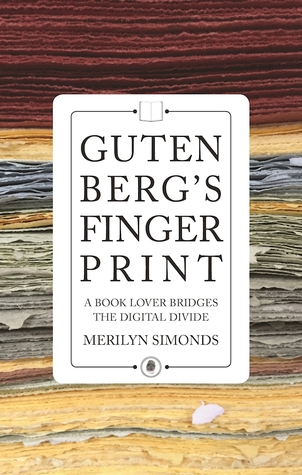
Gutenberg's Fingerprint by Merilyn Simonds

I chanced upon this on the library and it was an immediate borrow for me! Gutenberg’s Fingerprint is a story about how a book is made and the history of books (and ebooks).

Gutenberg’s Fingerprint starts when Marilyn teams up with Hugh, from Three Hellbox Press, to publish a limited edition run of her collection of flash fiction called The Paradise Project.

As Marilyn digs deep into the process of making a book - from making the paper to typesetting to stitching the papers together - she talks about the history of the book. At the same time, she’s preparing an ebook version of The Paradise Project, which gives her opportunities to muse about ebooks and the future of books.

Merilyn is clearly passionate about books, both as an object and for the things they mean. When she talked about picking a font, I started getting interested even though I’m normally a default font kind of person (although I admit that I like to write in Garamond).

She’s also even-handed about ebooks too. While she loves the printed word, she also talks about the advantages of ebooks as well.

That said, she’s not very accurate when it comes to self-publishing. The stats she cites are those that don’t include Amazon, although it would have been easy enough for her to go to Author Earnings (and the book was published in 2017 so the data should have been available when she wrote it).

Plus, she makes the claim that it’s harder to survive as a writer now when a quick look at people like Mark Dawson, Joanna Penn, or even the people at Kboards make a convincing case that it is, in fact, easier than ever to make a living as a writer.

Overall, I really enjoyed this. This book is basically an exploration of the book with a fellow bibliophile, making it a very fun read. I’m glad I read this in the printed form too.

Friday, November 25, 2016

Instafreebie Group Giveaway


Happy Thanksgiving everyone! (If you celebrate)

Guess what? I'm participating in my first ever group giveaway! Please forgive the two three exclamation marks in a row because I'm just so excited!

The giveaway is for Horror and Urban Fantasy books. There are 45 books in total, and you get get most of them free from Instafreebie! (And if it's not a free copy, it'll be a free sample)

In particular, I really recommend The Ninth Circle by Lincoln Cole (link leads to my review) and Underneath by M.N. Arzu (again, link leads to review, if you want to read more). I read and enjoyed both of them very much, and if you think they sound good from my review, then definitely go pick them up - The Ninth Circle is free and Underneath is a free sample.

Again, hope you have a great weekend!

Get your free books here

Monday, September 26, 2016

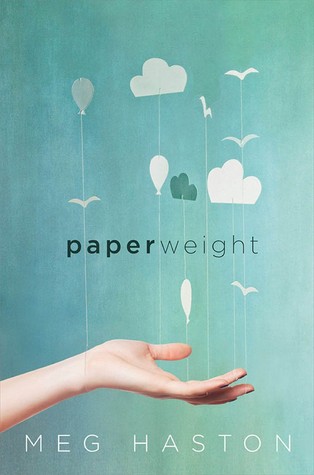
Paperweight by Meg Haston

I heard about this book from PD Workman's Teaser Tuesday, and it intrigued me enough that I borrowed it from the NLB eReads program!

Paperweight is an incredibly sad, incredibly hopeful book (but only hopeful towards the end). It follows Stevie (Stephanie), who is checked into an eating disorder clinic against her will.

Stevie is determined not to get better because she has a plan. She's going to make sure she disappears/dies on the one year anniversary of her brother's death because she's the one who killed him.

Of course, she's not technically (or even morally) the one who killed him, but she feels the guilt, and she's very adamant on feeling the guilt. But slowly, despite her unwillingness to listen, her therapist makes her think, and she forms friendships with the other girls.

I'm not going to describe more of the plot because it would lead to spoilers, but rest assured, it's sensitively written and I liked the pacing. As the days pass, we find out more about what happened to Stevie's brother, and after she reached the lowest point, she slowly begins to get better.

Stevie is not charming, but it's easy to feel empathy for her. The more I read, the more I was rooting for her to be able to heal, and not to succumb to her disease and guilt.

The ending is hopeful enough. It's not perfect, and there wasn't an emotional blowout (the kind that is satisfying for the reader to read) with two characters that I expected, but Stevie is on her journey of healing, not reaching the end, so it's only natural for there to be a few loose ends.

This book isn't for young kids because of some adult language, but I would encourage everyone else to read this.

Wednesday, August 3, 2016

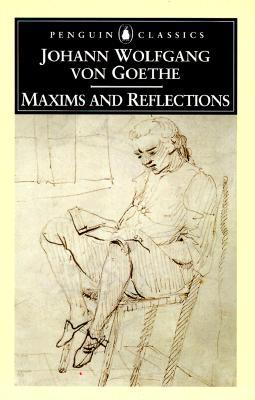
Maxims and Reflections by Johann Wolfgang von Goethe

I'm not sure why I decided to borrow this book, but I did. Basically, it's a collection of Goethe's passing thoughts, which is really strange because I don't think I've read Goethe before (I know, I'm terrible. I should probably remedy that soon).

Maxims and Reflections is basically a book of quotes. Some, I really liked, such as:
"Books, we find, are like new acquaintances. To begin with, we are highly delighted if we find an area of general agreement, if we feel a friendly response concerning some important aspect of our life. It is only on closer acquaintance that differences begin to emerge, at which point the great thing is not immediately to recoil, as may happen at a more youthful age, but to cling very firmly to areas of agreement and fully to clarify our differences without on that account aiming at identity in our views."
or
"Fairytale: presents impossible events under possible or almost impossible conditions as though they were possible.
Some, I disagreed with (although I can't really find one, because I made way too many bookmarks). And there are more than a few that I think will cause debate, such as
"Anyone who doesn't know foreign languages knows nothing of his own" 
and
"None clamour for freedom of the press except those who want to misuse it." 
Basically, although this book is full of short quotes, it's going to take a very long time to read. In fact, I think the best way to read it is in short bits and pieces, thinking over what he says. Which is why this book took me much longer than I expected to read it, and got a bit too heavy for me at the end (or rather, I decided to read the last third in one sitting and the last section really just flew by me).

Perhaps I should come back to this book one day in the future, when I have more time/a paperback copy and don't have to return it in 21 days.

Thursday, July 28, 2016

Originals by Adam Grant

I've been wanting to read it for a while, so I was super excited when it was finally in the NLB's system!

Originals is on how originality comes about, and how you can increase your originality in practical ways. Adam Grant (he also wrote Give and Take, which I read earlier this year), sifts through many different studies for us to give us what is the most important info. While reading this, I made so many bookmarks that I'm just going to list them briefly here. After all, I have to return this book, so I want to make sure I can come back and look at it later.

Chapter 1: Creative Destructions starts with how the author missed a chance to invest in an original (and later hugely successful) business, and he looks at why he missed it. But first, who are originals? According to the book:
"Originality itself starts with creativity: generating a concept that is both novel and useful. But it doesn't stop there. Originals are people who take the initiative to make their visions a reality."
Apparently, most originals are tempered risk takers. In other words, they know how to hedge their risks (which is why their businesses tend to succeed - they've thought of why they could fail, and take steps to avoid those results). Apparently, "the entrepreneurs whose companies topped Fast Company's recent most innovative lists typically stayed in their day jobs even after they launched."

In addition, once you temper the risk, aka have a balanced risk portfolio, you can actually take more risks. The book puts it better "having a sense of security in one realm gives us the freedom to be original in another". So it's extreme risks (like starting your own company) tempered with extreme caution (keeping your own day job). Of course, not everyone fits this mould, but it seems like a majority do.

Chapter 2 is on how to recognise original ideas. According to the book, "the biggest barrier to originality is not idea generation - it's idea selection". And this is probably why the most profiling people have the highest originality, and their best work is during their most prolific output (like Einstein). So if you want to be original, brainstorm like crazy.

And this does make sense, like, the writers who write the most unique stories tend to have more story ideas than they can write, and I guess having so many ideas lets them pick and choose the best to write (I'm still working on getting there).

Oh, and "broad and deep experience is critical for creativity", which is to say, specialise, but don't just stick to your speciality. Venturing outside your field can be a source of creative insight.

Chapter 3 is on how to communicate your ideas effectively. Basically, there are two things in a social hierarchy: power (what you can make people do) and status (how much people like and will listen to you). You need to build status if you want people to listen to you. If you lack status/are presenting to higher-ups, leading with the weak spots may disarm the listeners and help you persuade them instead.

Also, don't target agreeable people (who won't want to rock the boat). Target people who have a history of originality.

Chapter 4 is on how procrastination can help originality. But it's a specific type of procrastination: you have to be motivated to solve the problem. If you are, procrastinating allows the brain to mull over it for longer, plus take in more ideas from the outside world.

Chapter 5 is on coalition, and basically, you want an original to be a tempered radical. What you propose may be super against the norm, and to get the mainstream to accept it, you have to frame it in such a way that you can understand it. For example, the women's suffrage got a lot more support after they framed their argument differently - they pointed out that women who could vote could vote for legislation that concerned them (like the Temperance Movement).

Chapter 6 is on how siblings affect originality and yes, I am shortening things as I write 😂 But basically, this chapter is all "younger siblings tend to be risk takers", though it does say that birth order is more about how you raise kids (so it's not set in stone), and that this is still a controversial topic. I did read "The Birth Order Book" before (available in the MGS library), so the ideas here weren't completely new to me.

Chapter 7 is on company/group cultures and there are lots of points but my main takeaway is that groupthink hinders originality (duh), and that instead of just a devil's advocate, you need someone who really does think differently from the rest. Although in the short term, a strong culture does help a company grow better.

So uh, I guess it depends on which strategy you take? Or perhaps you can change tack halfway through.

The last chapter is on all those negative emotions. They introduced the concept of 'Defensive Pessimism', which I thought was interesting. Basically, "when self doubts creep in, defensive pessimists don't allow themselves to be crippled by fear. They deliberately imagine a disaster scenario to intensify their anxiety and convert it into motivation."

Oh, and if you're upset, venting doesn't actually help (or so the studies say).

The book ends with a list of actions that you can take to become more original, which I think is really useful (I actually want a copy of this). Apart from the summary, I don't really have much to say. The fact that I took copious notes shows that I was interested in this and thought it was useful, and the book is really easy to read.

I did skip quite a lot of stuff in this review/summary, so if what I said interests you, you should definitely check out the book to get more information. Singaporeans/NLB members, you can get it from the eBooks lending program.

Ok, next wish for the NLB: Grit by Angela Duckworth!

Wednesday, July 13, 2016

Afraid of the Dark by James Grippando

To be honest, I wanted to read Gone Again, the 12th book in the series, because of Lectus' review. But, the NLB e-Reads programme didn't have it, so I borrowed Book 9 because the title sounded interesting, and I really wanted to see if this could work as a standalone.

Afraid of the Dark starts with the "innocent girl gets killed" scene, but with a slight twist - there's someone at the scene, and they have the name of the killer. And then it goes from bad to worse. A few years later, Jack (the hero of the story), takes on the case of a gitmo prisoner, who turns out to be the missing suspected killer, who is then killed, and really, the story just gets more confusing from there on.

Because the book started with Vince (the cop that found the girl and then was blinded), and the accusation of Jamal (the gitmo prisoner) as the killer, I was unsympathetic to Jamal for most of the book, even though he had a pretty solid alibi. I guess that's how powerful dying testimony can be. Anyway, I had immense sympathy for Vince and Chuck (the father of the victim), and didn't really get what Jack was doing.

And despite the fact that this series is about Jack, he was not my favourite character. In fact, he seemed to just get in the way of other characters, which I guess is a good thing, but didn't really affect the ending anyway. Or perhaps he's there because of the story with his FBI fiance, Andie (Andie is awesome, by the way).

Still, I gobbled up this book in two days. The previous book was one that I couldn't finish, so I really loved the fact that this kept me turning page after page. The chapters are pretty short too (about four or five pages on my iPad), so it was easy to fit in a chapter or two here and there.

I will definitely be looking out for other books in the series. I mean, if they're all this gripping, I have nothing to lose.

Monday, July 11, 2016

Murder in Ancient China: Two Judge Dee Mysteries, Translated by Robert Van Gulik

I haven't read Judge Dee before, so I was quite happy to find two of his stories released as an ebook. And since they're short, I thought I'd just review each individual story:

The Murder on the Lotus Pond

First line for The Murder on the Lotus Pond:

"From the small pavilion in the centre of the lotus pond he could survey the entire garden, bathed in moonlight. "

I should say before I start that I don't have any experience with Chinese mysteries. Apart from the TVB dramas "A Pillowcase of Mystery" and "Xi Yuan Lu", I have no idea what ancient China was like and how they solved crimes back then.

The first story was definitely interesting, and more like a Western mystery than I expected. It's got a twist, a almost super-sleuth, a beautiful young woman, etc. I guess some things really do transcend culture.

I thought Mrs. Meng was an interesting character - even though she's not the main character (not even close to it), she's essentially the hooker with a heart of gold character, and I would have liked to see more of her.

Murder on New Year's Eve

First line of Murder on New Year's Eve:

"When Judge Dee had put away the last file and locked the drawer of his desk he suddenly shivered."

Just finished the second story, and it's really very charming. I won't give the ending away, but I had a smile on my face at the end of it.

Oh, and the start, where they mention his three wives really reminded me of Xi Yuan Lu - specifically the ending of the first season, where Song Ci ends up with his two wives. And that's all I wanted to say - that I was reminded of it.

This story starts with what looks like a murder, and the lonely Judge Dee goes and investigates right away. And then... One thing leads to another hahaha. Really can't say without giving it away.

By the way, you really shouldn't read the starting note for this, because it does give the twist away. Or at least, that's what I thought when I read it after the story (didn't read it before).

Oh, and I realise that I'm really not used to how they transliterated the Chinese here haha. It's quite different from the hanyu pinyin that I'm used too.

That said, I would totally read more of Judge Dee. These stories are short and satisfying, and I would like to see if by reading more, certain characters would be more fleshed out.

Monday, July 4, 2016

The Stone Child by Dan Poblocki

I don't remember how I found this book, but it made it into my wish list in the NLB catalogue.

The Stone Child follows Eddie, the new kid in town, and his new friends Harris and Maddie. Eddie is a big fan of the horror writer Nathaniel Olmstead, but trust me, you do not want these books coming to life. Unfortunately, they do for Eddie. Plus, his mom accidentally got into things (though she doesn't know), and well... let's just say that as cliched as it sounds, Eddie has to go save the world. Or at least his town.

I really enjoyed this book, especially as it kept me guessing throughout. I can honestly say that I didn't see the end coming (unlike Zootopia, which was good (not horror though), but which ending was pretty obvious at the one hour mark). I'm glad that it was a happy ending though, because a sad horror ending is just "throw book at wall" material.

Eddie and his friends are pretty likeable too, though they sometimes very very close into trope territory, with the new kid, the weird goth kid, etc. But thankfully, they stay realistic. The character that was closest to "cardboard" to me was Maggie, but I think that was because she was introduced the latest, and before she entered, the kids already stereotyped her (and as awful as that is, it informed my understanding of her). But Eddie and Harries were really fun to read, no complaints there.

I'm definitely reading more from this author. And if this isn't a series, well, I hope that one day, he'll write the Nathaniel Olmstead books as well. They sound like they'll be fun, scary reads as well.

Wednesday, June 29, 2016

Give and Take by Adam Grant

You've probably heard of the saying "nice guys finish last". Well, that's an incomplete truth. In fact, nice guys and gals (aka the givers) finish first and last.

So, why do givers occupy both extremes? This book aims to investigate why, teach you the difference between givers and takers, and figure out how givers can make their giving work to their advantage.

I actually requested this book because the one I wanted to read, The Originals, wasn't available. But, I have no regrets. The book is interesting, easy to read, plus it uses many, many studies to buttress it's points. I ended up taking many notes, which in my typical oversharing fashion, I'm going to copy here.

First: we should beware first impressions. Apparently, takers "tend to form glowing first impressions", because they are good at kissing up. You want to find out their true character? Look at how they treat their subordinates.

Second, there's something called "expedition behaviour". Basically, it involves putting the group ahead of the individuals, and like the name suggests, was coined by the National Outdoor Leadership School. And according to astronauts, it's also why they succeed in space.

Kinda interesting, especially since in Asia, the idea of the group before the individual was pretty prevalent. I wonder how the rise of individualism will affect those dynamics (and this has nothing to do with givers haha). (Sorry, that was a random digression.)

Also, responsibility bias is a real thing. We tend to overestimate our own contributions to a project. However, we can somewhat mitigate this effect if we take the time to appreciate what our partner/other group members have actually done. This is something that I can certainly agree with. I once worked with someone that tore my hair out, and I was tempted to tell everyone that I did 99% of the work. But, when I thought about it, I realised that all the work up to the actual analysis of the data plus the writing and revising of the paper was actually split equally, so I revised my contribution down to 80% (which according to my teacher, was still too high).

Third, psychological safety is important if you want people to take risks. I think this is self-explanatory.

Fourth, if you are a supremely qualified person, showing some of your weakness, i.e. Being intentionally vulnerable will make you more likeable. If you're mediocre though, this does not work at all.

Fifth, apart from fight or flight, there's another response to stress called "tend and befriend". Basically, we seek out people in order to "receive joint protection in threatening times".

And by the way, the way for givers not to be taken advantage of is to give strategically. Or as the book puts it, be "otherish". Basically, think of others as you act.

I also liked the idea that when givers negotiate, they should use a "relational account". Basically, think of the people who are depending on the giver to do a good job. Apparently that's really effective.

And this brings us to the end of my notes.

I really liked this book. Apart from being interesting, it also reinforced the idea that fighting my selfish impulses is the right thing to do. So even though the book isn't religious at all, it reminded me to be more Christ-like in my actions.

Plus, it also reassured me that I don't need to answer every single email that comes my way. I want to help, but I have to help smart. Oh! I just realised, this relates to what @untraceme was talking about in her Dayre!

I really do recommend this book. If you're Singaporean, it's available in the NLB's eReads program, so you don't even have to go to the library to borrow it.

Saturday, February 27, 2016

Scribd Subscription Service Review - Is It Worth It?


I've had this title saved as a draft for goodness knows how long. In a way, I'm glad I didn't write the post when I first intended to, because Scribd underwent some major changes after that. But now that I have only one week left of my free subscription (managed to get two new months, then no more), I think it's finally time to write down my thoughts.

If you haven't heard of it, Scribd is a book subscription service. It's got it's own dedicated app, and tons and tons of books. Or at least, it used to.


Since I first heard about Scribd, it underwent two major changes.

First, it greatly reduced the number of romance novels in its catalog. Since I probably read mainly non-fiction on it, it didn't really affect me.

And now, from March onwards, Scribd will be giving each customers three full reads from a best-selling catalogue, and unlimited reads from another list of books. So it's not longer a true subscription service, but more of a hybrid.

To be honest, before I heard about the second piece of news, I was very seriously considering getting a subscription for Scribd. It has quite a few non-fiction books that my library's ebook lending service doesn't, and since I'm in Japan, English books are fairly expensive. It would have been worthwhile.

But with this new change in policy, well, I probably won't. Unless the unlimited reads catalog happens to have all the books I want to read. The reason is that in that time between my two Scribd free subscription periods, I managed to get all the books I wanted via NetGalley and the library's ebook service. Everything else, I noted down to borrow in Singapore. Occasionally, I'd find something in BookOff (a second hand bookstore in Japan) or in that one occasion, when Junkudo had a sale on foreign books.

In other words, because Scribd doesn't seem like good value for money, I'll probably just stick with the free alternatives, and delay reading the books that I'd probably read straightaway otherwise. Unless say, I have to do some research and Scribd is the only place that has the book (and the book is much more expensive to buy). That's probably the only time I can see myself getting a subscription, for a little while.

I totally get why Scribd has to change its offering. It's offering full payouts to authors, which means that voracious readers like me a bleeding it dry. But as much as I want to support Scribd, it's not cost-effective for me to do so.

To double back to the question in the title: is this worth it? Well, if you're living in a place where books are expensive and scarce and you don't read much, yes, I think Scribd would be worth it for you. But if you intend to read a lot every month, the reading limit will probably annoy you. In that case, I'd stick to my annoyance-free alternatives.

If you want to try it yourself, you can get two free months by clicking on this link (and I'll get an extra month). I think if it was free, I could live with the three books thing, but it all comes down to money... (and the lack of it)

Thursday, December 17, 2015

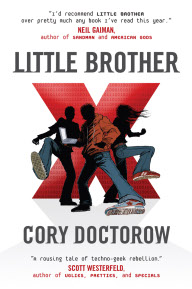
Little Brother by Cory Doctorow

Little Brother by Cory Doctorow is about a teen who gets illegal detained and tortured by the Department of Homeland Security (DHS) after a terrorist attack. The nation steps up its surveillance in the name of safety, and the teen (Marcus) vows to get back at the DHS.

So he creates the xnet, which is an underground network, and before he knows it, he's the face of a movement. Well, not technically, because he operates under a pseudonym, but his pseudonym is considered a leader.

The good about this book: it can be really scary. I'm guessing most of the technology the book describes is already here, and may be in use. The detaining and stuff are here too. So this is a ramped up version of what's going on today.

The bad: the technical stuff can get a little heavy at times. It would be OK if it's for world building, but parts of it reads like a manual for kids. Which it probably is, but I'm not found of instructions/messages disguised as stories. The political message was much better handled, since I guess the whole story was inspired by it. The story is the message, so the need for preaching was reduced.

Oh, and I'm not sure if this is a good or bad thing, but each chapter starts with a dedication to a certain bookstore. I love bookstores a lot, but when I'm in a story, I just want to read what happens next. I'm not as interested in knowing where I can buy the book - I already have places where I regularly get my book fix (plus, a lot of these bookstores aren't available in Japan/Singapore). I learnt how to ignore the dedications pretty quickly though.

Even with the technical overload and the bookstore stuff, would I read the next book?

Absolutely.

Once you finish reading the first half of the book, which is where the explanation of the TOR stuff and all that is, the book starts to pick up speed and I really started worrying for Marcus and his friends, hoping that the DHS would get their comeuppance. And they did (in a a manner that totally rocked).

By the way, the author chose to give the ebooks for free, so if you want to read it, just google and I think you can download a copy.

Monday, May 25, 2015

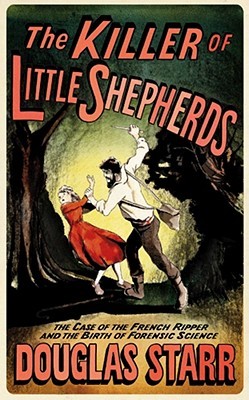
The Killer of Little Shepherds by Douglas Starr

So lately, I've been in a bit of reading slump. One of my seminars has monthly book reports (multiple books), and reading three Japanese books in three days basically killed all my drive I had to read. Really. All I was reading, for a time, were comics (thankfully, there's Scribd). It wasn't until I picked up this book that the reading slump was broken, and I managed to finish the book (in about two days, so I'm closer to form).

This book has two components: One follows the case of Joseph Vacher, a serial killer akin to Jack the Ripper (I believe he's called the French Ripper). The other follows Dr. Alexandre Lacassagne and his colleagues, detailing how the created the field known as forensic science. The two characters don't actually meet until near the end of the book, but their stories are told simultaneously. So you have alternating chapters, one about a criminal, and one about a crime-fighter. It could have been jarring, but I didn't really mind. In fact, the author managed to link the two stories by showing how the new methods were or were not used.

Towards the end of the book, it moves away from the story of forensics into the story of the insanity plea. Vacher tried to convince the court that he was insane at the time of the murders, and Dr. Lacassagne tried to do the opposite. Personally, I don't believe Vacher was insane. I think he was a person who, after being jilted and without a job, gave in to the voice of evil and started killing. I don't think he was insane in the sense that he did not know he was committing a crime and thus not legally responsible.

Another aspect of the book I thought interesting was when it explored the lives of those who were falsely accused of being killers. We might think that the internet age is the age that never forgets, but that's not true. Many of the people falsely accused had their reputations ruined for good, and they had to move away for face mob justice. Even the sentencing of Vacher didn't change things, and the families of some victims insisted that this other guy was the real killer.

This is contradictory, but I thought the book was both morbid and hopeful. It's morbid because, hey, it's a story about a serial killer who struck at random and killed many innocents. How much sunshine and rainbows can you put into a story like that? But, it's hopeful because it showed the birth of forensic science, and that there are people in this world who will fight against the monsters.

Friday, April 10, 2015

Storm without End by R.J. Blain

I'm so glad that I read Storm Without End just before Storm Surge (the sequel) came out. Because by the time the book ends, you'll want to purchase the next one.

Storm Surge starts with Kalen, the Rift King, as he's out of his kingdom. Why? We don't know, but the poor guy is going to undergo a lot of suffering before the book ends. At the same time, his guardians are out there searching for him, because if he dies, the Rift will Ride. Ok, I don't know what that really implies, but it's a cool phrase that's repeated quite a few times.

Kalen, the poor guy with the worst luck in this book, is a young 30 year old Rift king who's been reigning for 15 years. Because of his small size and missing arm, people can underestimate him. Even I underestimated what he could do, although I could see he was smart. But at the end of the book, I found out just how powerful he is, which justified the reasons why the Rift King was so feared.

Apart from Kalen, there are a few other characters, like his father Breton and his - whoops, almost had a spoiler there. Suffice to say, Kalen's familial relations are complicated, even if we don't include his many, many adopted foals (sons/daughters. The Rift seems to love their horse and horse-inspired terms). Anyway, Breton comes across to me as a really sweet guy, although as a Guardian, I'm pretty sure I'd be scared of him if I met him.

As for the Rift, well, I haven't really figured out what it was. I know slightly more about this world at the end of the book than at the start, but I can't say I know everything. I know, for instance, how Kalen becomes the Rift King (and how Rift Kings are made), but the reason why the Rift King is so important, I still don't know.

This book basically builds up for the next book. This world that R.J. has built is very unfamiliar to me, so the time spent on getting to know it should pay off in the later books. At least, given the promising cast of characters so far, I hope it does.

Disclaimer: I received a free copy of this book from the author in exchange for a free and honest review.

Tuesday, April 7, 2015

The Rift by J.T. Stoll

This one requires a pretty big disclaimer, so let me get it out of the way (I'll repeat it again later). Not only did I receive a free copy from the author, I happen to know the author. He's one of the WriteOn members, and I have traded critiques for it. That said, I've done my best to be objective.

The Rift follows four, well, they're not really friends, so perhaps averaging out their relationships, I'd say acquaintance? There's Vero, who's dating Pieter, who brought her on a double date with his friend Neil and Gloria. I suppose Pieter is the friend in common. Anyway, there are these four kids, and on the double date which wasn't really working out, they come across a dying soldier from another world. He warns them of a coming invasion, gives them special weapons then dies. The rest of the book would be about the four trying to decide what to do, and running away from two of the evil soldiers that slipped in when the first soldier did.

Because this book is the first in the series, a lot of the space is there for the laying of groundwork. Sure, the kids are running and learning how to deal with their weapons, but the threatened invasion is absent for most of the book. But, the start at the end does focus on the other world (which gave me a shock, because Chapter one and the Prologue seemed so drastically different), tying this to the overarching plot.

I liked Vero and her family, and I hope to see more of them in the next books. As for the other three, they did have their appearances, but I felt Vero was the strongest character, and I liked her the best. Gloria sort of, faded, into the background until the end. Neil and Pieter were basically opposites - One super enthused about getting a quest like in a video game while the other is just trying to get away from it.

This book was short, but I'm not lying when I say that I enjoyed it. I'm the sort that likes reading about people mastering new skills and new environments, so while I do wish that the story was a bit longer and had more about the other world, it was still a fun and fairly read for me.

Disclaimer (the second one): I received a free copy of the book from the author in exchange for a free and honest review.

Friday, February 27, 2015

The Dress Shop of Dreams by Menna Van Praag

HEY EVERYONE! I don't normally do this, but I found out that Cindercast: A Tale of Tides (Volume 1) by Michael BlackBourn, which is a book I've been wanting to get, is free for Thursday and Friday (I believe US time? So anyway, go get it! The link I included is to the Amazon US store, but I managed to get it on my Amazon Japan store for free too!

*******

I really, really wanted to like this book. It's got a pretty cover, comparisons to authors I like and an interesting sounding story. But, I didn't. Not really. It's really sad, because everyone else seems to really love it.

The Dress Shop of Dreams is about Cora, the scientist who doesn't open her heart, Walt, the guy who's always loved her with the radio-perfect voice, Etta, Cora's grandmother, Milly, the woman who listens to Walt's voice on the radio and fell in love and Dylan, Walt's boss. Those are a lot of people, and they all have their separate stories. Oh wait, there's also Henry, the policeman.

One problem I have is that all the separate stories never feel like they're tied together. If it weren't for the fact that Cora and Etty are related by blood, and that Henry has been in love with Cora (although he promptly got in a relationship with Milly at the start of the book), there are no links. Cora suddenly embarks on a quest to find out what really happened to her parents at the mysterious fire (that was an unexpected turn), and Henry just gives up after one attempt at the start of the book. Meanwhile, Etta just interferes and then has her own thing going on.

I suppose I could see connections and all that if I cared for the characters. But I always felt this gulf, as though they were distant figures across a huge, fast-flowing river, and I only see what's going on. It may be the present tense narrative, which works wonderfully in many novels (like the book I reviewed yesterday, Broken Monsters), but not this. I just kept feeling like the author was telling, not showing the whole way, and it made me feel detached (also, I checked my notes and there were a few sudden jumps from the head of one character to another, which was a bit dizzying).

For me, this book just lacked the magic spark. Plenty of others love it, so if you're curious, it's worth borrowing the book or reading a sample to see whether you like it. It just didn't quite make the cut for me.

Disclaimer: I got a free copy of this book from the publisher via NetGalley in exchange for a free and honest review.

Thursday, August 21, 2014

Darkness Watching by Emma L. Adams

Although this isn't the type of book I normally read, the synopsis the author gave was so intriguing that I accepted the offer of a free book in exchange for a free and honest review (ha! Disclaimer is done(; )

Darkness Watching centers around Ashlyn, or Ash, as it's shortened. She's an English major, and a perfectly ordinary girl. Except that she can see demons. To make it worse, they start appearing around the time of her university applications, which results in her getting accepted to only one university - Blackstone University. She seems to be safe from the demons there, but she soon realises that she isn't normal, and that she needs to find out more about herself.

I really liked the two sides of Ashlyn's life. There's the quiet, bookish girl (she and her roomates have a Disney night! That is definitely needed for me! And a Studio Ghibli night too!), and there's the girl that can shoot fire out of her hands and see demons. Her life is similarly divided, with her "normal" friends (her roommates) and her "Gaming" friends (who are actually a group of outcast wizards. I got the sense that Ash considered both groups equally important, which was something I really appreciated.

The only thing I want more of, is to learn more about the Venantium, the group of sorcerers who maintain the barrier keeping the human and demon world divided. From the synopsis, I thought they would play a more significant role, but they were sort of like the bogeyman - talked about a lot, but not interfering that much (the villain turns out to be someone else entirely).

As for the romance, well, I support Ash and Leo! They seem really suitable for each other. As for Ash and David, well nope. Don't see it happening, and I didn't see any sparks. But don't worry, there isn't a love triangle here, even though I just named two guys and one girl. The David/Ash thing happens earlier.

All in all, I enjoyed this book. It was an interesting story, and I really liked Ash as a main character.

Disclaimer (again): I received this book free from the author in exchange for a free and honest review.

Monday, August 4, 2014

The Sandman by Alex Stargazer

This book sounded so good. I mean, an unconventional heroine, a mysterious entity (the Sandman), the two meeting. It had the trappings of a good bildungsroman. But, the book really disappointed me.

Now this book grew out of a an English GCSE paper. Nothing wrong with that, stories have come from stranger places, and I remember enjoying writing stories during my O Levels. But, this story is just too short.

First, is Leila an unconventional person ("everything a girl like her shouldn't be")? All we have as proof is that she doesn't want to marry an odious man in her village. Name me one girl who will gladly marry a man she doesn't like. This shows nothing about her. After all, did she take any concrete steps to get out of the marriage? No. She just followed the sound of a child's voice and got lost. All we have to know that Leila is unconventional is that the author has told us. Even though this story is short, the character building could have been so much better if Leila started her journey by defying her father rather than just getting lost. She does end by resolving to tell her father that "life was for people. Money was for cowards", but resolve is fine and dandy. Many people resolve to do things. Then they break them. We call these New Year Resolutions. Again, it shows nothing.

Second, is the Sandman the symbol of critical thought? All we have to go is by his own self-description and one statement about Adam and Even (that Adam was afraid of Eve because she knew things he didn't). I'm going to leave aside the theology criticism because the Bible (and I suppose the Q'uran as well) doesn't give us a clear motive. If you're interested, you can read this article.

To me, this isn't enough. I can call myself "the modern day Helen of Troy", but that doesn't mean I'm beautiful. Or, I can call myself "the biggest book blogger" and cite one tiny award I win, but that doesn't mean anything. To put it simply, the Sandman suffers from the same problem as Leila - they are not fully explored.

At the end of the book, the author analyses his own paper and tells you "what to take away from this." This, in my view, is a no-no. Books are meant to inspire questions, not have the authors tell you exactly what they mean. As a former Literature student, I'm pretty sure that my interpretation of any text would have been hampered if the author came out and told me "I wrote this book with this message." In my view, the author should have used the extra pages to build on the story, instead of expounding his message. Curious readers can do the interpretation and analysis for themselves, thank you very much.

To sum, the failing of this book is that it over-reaches itself. As a short story, it might work if the characters were given a bit more character, or the issue explored more fully. But, it tries to do both, and that's where the book fails - it doesn't get the chance to explore anything fully. Add that to an unnecessary analysis, and the book goes from a "short story with potential" to "a story that tries to be deep but comes across as pretentious (at least to me)."

Disclaimer: I received this book from the author through BookBlogging in exchange for a free and honest review.

Tuesday, July 29, 2014

Teaser Tuesday - Into the Light by Nicole Weider

Tuesday again? That means I am one week close to exams! And the end of the year. And growing up. And ok, you get the picture. Life is passing by me pretty quickly.

Right now, I'm reading Into The Light by Nicole Weider. Nicole is a former model, and the founder of Project Inspired. I got the book from that site, and her story has been captivating so far.

My teaser:
"Life in Hollywood was a crazy existence that was both seductive and soul-destroying. Trying to make it to the top looks so glamorous."

What is your teaser this week?

Friday, July 25, 2014

A Hollow Dream - Eternal Autumn by Andrew Van Wey

Back when I was still living in Singapore, I was approached to review Forsaken by Andrew Van Wey. I loved, and raved over, it so much that I was given the opportunity to review A Hollow Dream of Summer's End. That was almost two years ago, so imagined how surprised I was to learn that there is a sequel to A Hollow Dream of Summer's End, and yay, I got a review copy for that too!

Without giving too many spoilers, Aiden from the first book has died. And now, he's in Everland, a world completely different from the world we know. Here, Aiden meets his grandfather, a city of children, a charismatic leader and a whole host of secrets. What's a dead boy to do?

Ok, that last sentence made it sound as though this book is for kids. It's not. The language is stronger is this book, and the horror is for adults too. Aiden goes through "trials", where he sees the lives of those left behind. That's going to speak to adults, or anyone that has contemplated death. And trust me, those trials were scary. It hit very close to me, being one of those who have lost a loved one.

The strength of this book has to be in the immersive world. As the new kid, Aiden gets to learn about this strange world, and we learn with him. It's fascinating, and I don't think that the depths of this strange limbo has been fully dealt with. In fact, the plot of this book hinges on how this world works - this is where the setting really ties in with the plot.

I'm so glad that there's a sequel, because I want to read more. Horror's not really my genre, but I'm making an exception for all of Andrew Van Wey's books. They're addictive reading - if you want to stay up all night reading with a flashlight (or with the artificial light from an ereader), choose one of his books.

Disclaimer: I received a free copy of this book from the author in exchange for a free and honest review. The gushing was done of my own free will.

Wednesday, July 23, 2014

Hipstopia by R.A. Desilets

Hipstopia was written by Google+'s +Rachel Desilets. In fact, I got to know about the book through Google+! Does this make me hipster? I'm not sure, since I don't even know what a hipster is.

But, even with my woeful lack of knowledge of contemporary culture and subculture, I found this short novel to be an entertaining read. It envisions a world where the hipsters have broken away from America to form.... Hipstopia. There, everyone is unique - which is to say that everyone smokes, drinks coffee and wears glasses. That would be me, except that I don't smoke or drink coffee. Darn, I wanted to ride on one of those scooters too!

Anyway, while Hipstopia seems like the perfect place, free of marketing from the Big Corporations (and with seven, count'em seven choices!), it's not. At least that's what Jay, the right hand man of the guy running Hipstopia is starting to find out. When he gets sent to quiet a disturbance, he meets prisoner number forty seven, a beautiful girl that grabs his attention immediately. Add that to a shock that he receives when he accidentally kills someone and Jay is disillusioned with the place.

Personally, I found Jay's escape from Hipstopia too easy. While this book is supposed the first in a series, the latter half felt rather free of conflict. Sure, there's a covert war going on between Hipstopia and the rest of America, but Jay seems to resolve his problems a bit too easily.

Overall though, this was an entertaining book. I'm not sure if I want to read more yet, but I suppose the blurb of book two (which I haven't seen yet) will convince me yes or no.