Showing posts with label others. Show all posts

Sunday, December 31, 2017

2017 Reading Roundup

I'm cutting it very close, but here's my roundup for this year! This year as more eventful than most and reading really became my escape. I only did one challenge, because I didn't want to put pressure on my reading time, and I think that was the right decision.

SEA Reading Challenge Update

Anyway, last year I decided that I wanted to read more stories set in SEA, written by SEAsian writers. It turned out to be way harder than I thought, because the NLB doesn’t have much of an e-selection and I was in Japan for most of the year.

Books that I read for the SEA Reading Challenge (All links lead to the review)

1. The Gift of Rain (Malaysia)
2. Illustrado (Philippines)
3. Last Night I Dreamed of Peace (Vietnam)
4. The Woman Who Had Two Navels and Tales of the Tropical Gothic (Philippines)
5. Land of the Meat Munchers (Singapore)
6. The Kite of Stars (Philippines)

So by my own standards, I’m an ‘exchange student’.

Half the books are from Philippines. I’m not sure why, but maybe their literary history is longer? When I search for books from the other SEA countries, I mostly find non-fiction, mostly written by someone not from that country. If it’s fiction by someone from that country, a lot of it is about leaving the country and settling in the states, which is not what I’m looking for.

Or maybe it’s just the kind of books NLB has.

I also realised that I’m not very interested in literary fiction. Literary fiction does have its merits, but I want to see fun stories. Why must ‘writing about SEA’ = ‘writing serious’? Why can’t we write genre and just have them in SEA like it’s normal? (Okay, maybe this is because I’m not a literary fiction person in general)

On the bright side, I have seen more mysteries coming up. They just aren’t really in ebook format.

My favourite books from this year

In a stunning reversal from last year, only 2 of the 6 favourite books for this year are non-fiction. I’m not sure if it’s because I read so much awesome non-fiction last year that it’s hard for this year's books to compare, or if it’s because I’ve been more conscious of great fiction. Probably a bit of both.

And now, my top 6 books of the year:

1. The Bear and the Nightingale by Katherine Arden
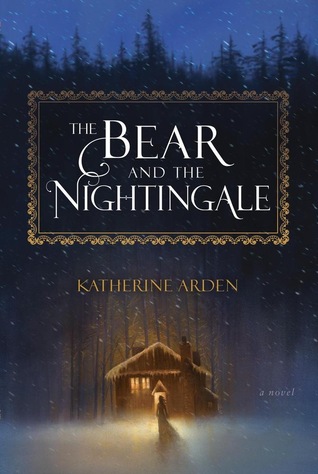

By now, I trust that you have caught on to the fact that I LOVE FAIRY TALES. And The Bear and the Nightingale is one of the best fairytale inspired story that I’ve ever read, which is why it’s one of my favourites for the year.

The Bear and the Nightingale is inspired by Russian fairytales. Vasya, the protagonist, has received an enchantment passed down from her mother and grandmother, allowing her to see and talk to the magical creatures around her.

However, her idyllic world is shattered when her father remarried, bringing her stern stepmother into their lives. Where Vasya sees magic, her stepmother sees demons.

What I love about this book (apart from the fairy tale references) is the world building and the nuanced characterisations. So basically the whole thing.

The second book, The Girl in the Tower, is already out (review to come) and it’s awesome so go read that too!

2. Uprooted by Naomi Novik
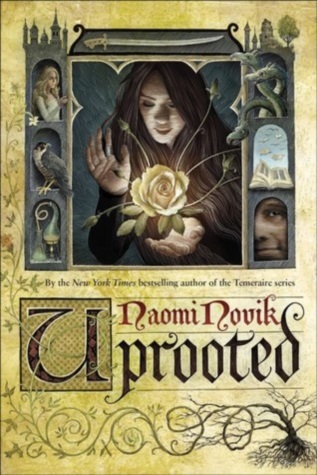

Uprooted is a bit hard to explain, but there’s Agnieszka, a witch whose magic is differen from the norm, a dragon who’s a wizard and not evil, Kasia, the best friend and a sentient forest. It also manages to fit a trilogy’s worth of content in one book without feeling rushed.

Like The Bear and the Nightingale, this book has a definite “fairytale” feel and I really enjoyed it.

3. The Radium Girls by Kate Moore


Right now, we are all aware that radium is life-threateningly dangerous. But way back in the days of WWI, radium was thought to be healthy and scores of girls were hired to paint the dials with radium. However, when they started to sicken (and die), the companies that hired them denied that it was due to radium and did their best not to pay them compensation.

The Radium Girls is the story of the girls who worked with radium. Their work saved the lives of soldiers, but in return all they got were damaged bodies. This story is important and the book does an amazing job of showing us both the big picture and the individual girls affected.

Definitely a must-read.

4. The Woman Who Had Two Navels and Tales of the Tropical Gothic by Nick Joaquin
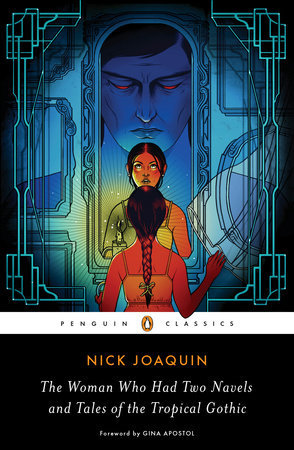


I read this for the SEA Reading Challenge this year and it was amazing! Totally worth the challenge.

The Woman with Two Navels and Tales is the Tropical Gothic is a collection of short stories. The language is amazingly beautiful and even if I don’t get the stories, they make me feel. The stories contain the heat of the place, the dense humidity, the chaos of life and is both universal and specific.

Truly amazing.

5. The Shadow of the Wind by Carlos Ruiz Zafon
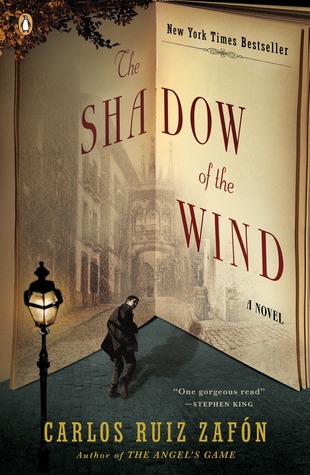


I was introduced to this book when a friend sent me the third book in the series and I decided that I had to read the first book first.

The Shadow of the Wind is a coming of age + mystery about books (like how awesome is that?) The story starts when Daniel (the protagonist) is brought to the Cemetery of Forgotten Books and allowed to take one book back. The book that calls to him is The Shadow of the Wind by Julian Carax.

As Daniel grows up, he finds out that someone has been buying and burning copies of Carax’s novels. As he slowly makes friends and enemies, he does his best to find out who Julian Carax is and why someone is targeting his books.

Not only is this wonderful story about books, it manages to balance the mystery and Daniel’s coming of age story perfectly.

Totally a book for bookworms.

6. Ghosts of the Tsunami by Richard Lloyd Parry
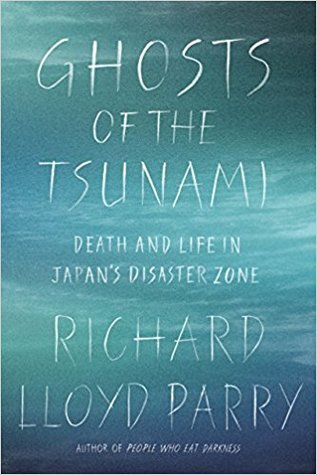

Some books are hard to read but they’re necessary. Ghosts of the Tsunami is about the aftermath relating Okawa Elementary School, where a series of tragic misdecisions led to the deaths of 74 out of 78 students and 10 out of 11 teachers.

When you face a tragedy this big, you’ll want answers. But answers weren’t forthcoming, and the parents ended up taking things into their own hands.

By focusing on the emotions and reactions of the survivor parents, the book touches on issues of grief, survivor’s guilt, the feeling of loss, how they started rebuilding, and how the community reacted.

This is one of the most powerful books that I’ve read this year.

2018 Reading Plans

I don’t really have a number goal (I normally just set it to 100 so I can get the Goodreads counter), but I’m hoping that working in Singapore doesn't affect my book reading habit. There are quite a few series that I intend on continuing, like Bryant and May, the Shardlake mysteries, the sequel to Three Dark Crowns, etc so I hope they get read in 2018. Plus the backlist from authors like Cyril Hare to explore.

And of course, I have my perpetual growing TBR list to conquer as well.

What I would like to do more of is the SEA Reading Challenge. I definitely want to see if I can read more than 6 books in 2018 because it’s kind of sad that I don’t know much about the writers and stories around me. Hopefully being in Singapore will help.

I guess these are my plans. I really don’t think I can put too much on (so no other challenges) because reading is my way of relaxing and too many reading challenges/goals just make it stressful. I’ve got enough stress as it is.

Sunday, October 29, 2017

My Ideal Reading Space

About a month ago, Arhaus contacted me and gave me a post idea: talk about my ideal reading space. That sounded really fun and I agreed immediately. I spent some time browsing the Arhaus site (because I'm not a furniture person and didn't really know where to start) and in my ideal world, if I had unlimited funds:


My books would go in this Athens Grand Wall Unit. They have it in white too, but I thought that brown was a friendlier colour. Hopefully all my books would be able to fit into this (and if they do, then I have reason to buy more).

For lighting, I was looking at this Sylvanna chandelier.  Ideally, the room would have loads of natural light but I do read at night and I like how this chandelier looks like!


And then I got stumped about where I was actually going to read the books. After a while, I realised that I needed to divide by weather. For hotter climates like Singapore or Japan in summer/late spring/early autumn, I don't need chairs. All I want is a comfortable rug, like this Myknes rug:

As long as I can sprawl out somewhere with a book in hand, I'll be happy. And if I want to sit up, I'll just lean against the bookshelf. For winter, however, I'll want a kotatsu. A kotatsu is basically a heated table with blankets to trap the heat. It's fantastic and once you're in a kotatsu, you will never want to leave. Personally, something like the one on 99% Invisible would be perfect.


If I were in Japan during winter and I had a kotatsu and that huge bookshelf, I would probably never leave my spot (except to get tea and snacks, I suppose).

Disclaimer: I did not get paid for this post and the links in this post aren't affiliate links.

Saturday, October 21, 2017

Bookish Mystery - Meanderings of Memory

A week or two ago, I noticed that I was approaching 1500 posts for this blog. I thought it would be nice to do something special for that post and stumbled across this bookish mystery soon after.  Coincidence?

Yes, probably but what a happy coincidence it is.

According to the Wikipedia article on this, Meanderings of Memory is a lost book. Despite the fact that it was cited as a "first or early source for over 50 entries" in the first edition of the Oxford English Dictionary (OED), the current OED editors (and presumably by extension, everyone else) have not been able to locate a copy.

This mystery came to light in 2013, when a staffer involved in the ongoing revision of the OED sought to verify the earliest citation of the work but couldn't find the source (Meanderings of Memory). After looking at the original archival slips, it appears that these citations were from someone called Edward Peacock, who by all accounts was a credible source.

Unable to find the book, the OED posted an open appeal for information (this was before they found out that who the contributor was). While it is possible that the book never existed, Edward Peacock's other contributions were reliable, and the book has been found in several catalogues, making it unlikely to be a hoax.

Meanderings of Memory is supposed to have been written in 1852 by someone named 'Nightlark' (which was probably a pseudonym). Veronica Hurst, the chief bibliographer hypothesizes that based on the language, Meanderings of Memory may be a "flowery" book of poetry "five to ten pages long". It's also possible that the reason why a surviving copy doesn't exist is because the book was pornographic or published through some unusual method.

Both the comments on the OED appeal page and a Reddit thread throw up some interesting theories, such as the possibility that Edward Peacock was Nightlark. Another theory I read suggests that since the Latin epigraph of the book (which we know from the catalogues) reference a Philomena, who in Greek mythology transformed into a nightingale, this could mean that Nightlark was a lady poetess. If you're interested, I would suggest reading both pages for more information and theories.

I'm not sure if this is a mystery that will ever be solved, but it's certainly one of the more interesting bookish mysteries that I've come across!

Saturday, February 11, 2017

Silence: Movie Review

On January 21, Silence was released in Japan! It's directed by Martin Scorsese and has spent 26 years in the making! As a big fan of the book (to the point where my Extended Essay was a comparison analysis of Silence and The Man Within), I was at the first showing at Hakata's T-Joy theatre on the first day.

Also, I discovered Snow! 
The film was amazing and I definitely recommend everyone to watch it (and read the book) once it's out in a theatre near you. So obvious, to try and get you to do that, I'm going to share my thoughts on the film.

Warning: this is going to be all rambly, possibly incoherent and very likely spoiler-ish. You've been warned.

First things first: between Silence the novel and Silence the film, the novel will always win. It has a greater complexity to it (at least for me), and it was what got me interested in Japan. That being said, the movie was fantastic. I've been waiting for this since last March when I heard that it was being filmed. So you can imagine my excitement.

Silence, if you've never heard of it, is a novel by Endo Shusaku, a Japanese who happened to be Catholic. He wrote lots of great novels, but Silence happens to be considered his masterpiece. The story is about two Jesuit priests who have arrived in Nagasaki. It's the Tokugawa era, and Christians are severely persecuted. The two priests have heard rumours that their teacher, Ferreira, has apostatized and came to find out the truth, plus minister to the faithful.

As you can imagine, this is not a happy movie. The scenes of torture are many and varied, and music is largely absent. The atmosphere of the book was carried over pretty well, and I love the movie for that.

So anyway, one of the priests is Rodrigues and it is his story that we follow. He's played by Andrew Garfield, but I managed not to see Spider-Man after five minutes. Rodrigues meets Kichijiro (Yosuke Kubozuka), a complex guy who repeatedly apostatizes and then returns. And if you're interested, Kichijiro was one of the main characters I analysed for my EE. Sorry, forgot to say that I loved this so much I dissected it for my EE. (When I found this was going to be a movie, I emailed my EE teacher immediately)
Christ did not die for the good and beautiful. It is easy enough to die for the good and beautiful; the hard thing is to die for the miserable and corrupt.
I'm not doing a very good job of it, but the story explores the themes of faith and love - whether one can apostatise and still be a Christian, and whether it is better to apostatise to save a few or to remain firm and to bring about more martyrs.

And I think the book does a better job of exploring this moral dilemma. In the film, it is more obvious (to me, anyway), that these men are making the selfish choice when they commit apostasy. I should note that when I was talking about this film to my friend, she thought that the moral dilemma was very well-conveyed, so it may just be me, because I've been thinking about it ever since I read the book. So anyway, my thoughts:

Despite the protests of love and of the inability for the Japanese to truly understand Christianity (something I don't agree with), it feels to me that these men apostatized for the sake of their minds rather than for others. The scene where Ferreira first meets Rodrigues, and the look of unease when he is called "at peace", shows that this was done for their sakes, not for others.

These are men who have understood the glory and reward of martyrdom but not its suffering. They have remembered the words "suffer unto me" but not the words "I did not come to bring peace, but a sword". In short, they have only a one-sided understanding of Christianity. But that is something a lot of us have, especially with the rise of things like the Prosperity Gospel.

And like Kichijiro says, persecution is trying. In times of ease, it's easy to be a good Christian, but when it's your life on the line, can you do the same?

I do believe Kichijiro when he says that in another time, he would have lived and died a good Christian. In fact, I think the fact that he repeatedly tries to overcome his weak nature shows great courage - something that Rodrigues and Ferreira don't really show.
"[B]ut our Lord was not silent. Even if he had been silent, my life until this day would have spoken of Him."
The ending definitely has more complexity than the middle portion, and I enjoyed the fact that the state of Rodrigue's faith was left unanswered, and invites the reader to draw her own conclusions.

Plus, even though I was just all "this wasn't as complex as the book", I do realise that there are limitations to what the visual medium can do, even with voiceovers, and I think this is as complex as it could have been.

I heard that Silence is going to be released in Singapore, so please spend some time watching it. It won't be a comfortable film - and I mean for everyone, even Christians - but it is thought-provoking and beautifully shot. I haven't spent much time on that, but really, the film was gorgeous.


And to end, another Endo quote, though it isn't from Silence:
True religion should be able to respond to the dark melodies, the faulty and hideous sounds that echo from the heart of men. (From Scandal)
Now, I feel like re-reading Silence, Scandal and the other works of Shusaku Endo (and the works that I haven't read before).

Saturday, January 28, 2017

Happy Chinese New Year

Happy Chinese New Year!

祝大家新年快乐!

Totally missing the celebrations back home, so I really, really hope that everyone is having a great 初一 :D My cousin also drew this for Chinese New Year, and she gave me permission to share it, so I hope you enjoy:


Sunday, January 22, 2017

What (Nonfiction) Do Singaporeans Read?

Singapore's Nonfiction Bestseller List

Last Saturday, an article titled "Can Singaporeans Read?" appeared in The Straits Times. I have loads of things to say about it, but these two passages caught my eye:
"One clue to what Singaporeans read is provided by The Sunday Times' bestseller list. The list of non-fiction books should be seen as a national wall of shame. Instead of looking at the world and trying to understand how it is changing, Singaporeans indulge in self-help books. 
[...] 
Even the titles are embarrassing. They include Money: Master The Game And Jumpstart Your Priorities. Week after week, Singaporeans drown themselves in self-help books. The underlying assumption of many Singaporeans seems to be that if I take care of my individual self, I will be fine."
There are basically two claims here:

1. Singaporeans indulge in self-help books.

2. Singaporeans read embarrassing self-help books.

I don't know why, but I was intrigued by the statement, so I went to verify it. Basically, I decided to take about one year and one week's worth (so 2016 and the first week of 2017) best selling titles and see how many weeks they spent on the chart, and what their genre was.

I determined genre by going to Goodreads and reading the book description and seeing which "shelves" the book has been assigned. Normally, there's one that stands out and I took that as the genre (ignoring the "nonfiction" shelves). In certain cases, like Elon Musk, a book could be shelved as Technology or Biography, so I put the main genre as whatever was more and listed the second "genre" in a separate column

By the way, something is off with the Strait's Times site so I only ended up with 50 weeks worth of bestsellers, but I think 500 data points should be enough.

First up, let's look at the most popular books. In this case, I defined popular books in terms of staying power (i.e. How many weeks they stayed on the Best Seller list). These are books that have been in high demand for a long time.

The complete list:


The image may be a little hard to read, but the top 10 books are:

1. When Breath Becomes Air by Paul Kalanithi (46 weeks)

2. Elon Musk by Ashlee Vance (45 weeks)

3. Connectography by Parag Khanna (36 weeks)

4. A Hakka Woman's Singapore Stories by Lee Wei Ling (35 weeks)

5. Never Give Up: Jack Ma In His Own Words by Suk Lee and Bob Song (23 weeks)

6. Winning With Honour by Lim Siong Guan and Joanne Lim (21 weeks)

7. Warren Buffett's Ground Rules by Jeremy C Miller (20 weeks)

8. The 21 Most Powerful Minutes In A Leader's Day by John C Maxwell (20 weeks)

9. Inventology: How We Dream Up Things That Change The World by Pagan Kennedy (18 weeks)

10. Primary Greatness by Stephen R Covey (17 weeks)

Out of these 10 books, 4 are biographies/autobiographies, 3 are on business/economics and only 3 are on self-help. Self-help doesn't even make the top 5.

Clearly, Singaporeans are not drowning themselves in self-help books. But I was on a roll at this stage, so here's the breakdown of books by genre (I included both the main and secondary genre because you never know why someone reads a book):


Business/economics related books are the largest genre at 33%. Self-help is the second at 17%, but it wins only by 1 percentage point to biography/autobiography which is 16% of the list. And as the top 10 books showed, biography/autobiography has a lot more staying power.

Looking at this and the rankings, I am reasonable confident in saying that no, Singaporeans do not indulge in self-help books. In fact, they have an interest learning from others (as seen by the biographies) and learning about the outside world (as seen by books like Connectography: Mapping the Future of Global Civilisation, which spent 36 weeks on the bestseller list).

Incidentally, the books mentioned in the article - Jumpstart your Priorities (the author seems pretty popular too) and The Money: Master Your Game - spent 10 and 4 weeks respectively on the best seller list. Jumpstart your Priorities is number 20, and The Money is much lower.

Limitations of the data

The bestsellers list is a "compilation of lists from Books Kinokuniya, MPH, Times and Popular Bookstores". In order words, it doesn't factor in library loans or the ebook market. I don't know how big each of these left-out segments are, but it's possible that adding them in could switch the top books quite drastically.

Still, if the purchasing trends offline are the same online, and are similar to books being borrowed, then I'm reasonable confident that the conclusions I made will hold.

Thoughts on 'Can Singaporeans Read by Kishore Mahbubani'

My criticisms start with the title, which may not be very fair if the author didn't choose it. But it's one of the rare question-style questions where answering "no" would be a mistake.

Can Singaporeans read?

Obviously. I think our education has given us at least rudimentary reading and writing skills.

The title might be better phrased as 'Do Singaporeans read?' but since the author is accusing us of reading too much of one genre, that isn't really appropriate either.

Perhaps the most accurate (but spoiler-y) title would be "Do Singaporeans read too much self-help books?"

The first section of the article is on the changes in the world. Not much to comment on here. It then segues into 'some people were surprised about these changes but not me' sort of thing, plus a mention of the author's book. Personally, I don't think surprise = did not know. They could have read the predictions and just didn't believe it but whatever.

And then it goes into the section that raised my eyebrows, the 'Wall of shame' that is our nonfiction bestseller list (although it seems that he and I are looking at two very different lists).

To be honest, what is the problem with reading self-help? If self-help is what gets someone to start something new, to face a problem, to move to a better place, then bravo for self-help books.

Sometimes, you need to help yourself before you can help the world.

And besides, what is the definition of self-help? There are corny titles, but what about books like Grit by Angela Duckworth (also on the list) and Peak by Anders Ericsson (didn't see it on the list but you should read it). Both books could be classified as self-help, but they are based on research and could be used to create programmes that help others.

The author also says that
"(As an aside, I'd like to point out that the New York Times has created a sensible precedent of separating self-help books from the serious books, and I think other papers, including The Sunday Times, should emulate this practice.)"
Personally, I think that the New York Times Bestseller list, while famous, has its own problems and it's a bit disingenuous to invoke it without acknowledging that. After all, this is the list that created the Children's section in response to Harry Potter, the list that at one time could be bought, the list whose controversies include the specific exclusion of books it doesn't like (like Ted Cruz). The rules are constantly changed (no more multi-author box sets, and too bad for you if most of your fans like to buy from Amazon) and it's not an unreasonable conclusion that the NYT bestsellers list is not as impartial as one might think.

I mean sure, we could separate the list into thousands of sub genres, but then what's the point? Like I said before, what's so bad about self-help?

People read books for different purposes, and maybe people read self-help because they find something valuable in it that 'serious' books don't have. Besides, how do we know that these people aren't reading the latest articles instead of books? Books, especially those published by traditional publishers, have a fairly long lead time.

For example, a book on Industry 4.0 may become obsolete one month after it comes out because of how rapidly the industry is changing. At least in my personal experience, articles and conversations at trade fairs were far more relevant and easier to get my hands on.

In summary, I have three problems with this article:

1. Casting self-help books as a problem

2. Ignoring the possibility that Singaporeans are getting their information about the outside world from sources other than books.

3. Inaccurately describing the reading habits of Singaporeans.

Friday, December 23, 2016

Dayre Book Recommendations

Merry Christmas in advance!! I don't intend to blog over the Christmas to New Year season (except for a round up post), but that's mostly because I really need to finish my graduation thesis during the winter break.

Anyway, I've been using a blogging/social media site called Dayre. It's smartphone based, and you basically update your day in 500 character posts. Everything posted within one day gets collected into one long post. I use it mostly to blog about my daily life, but I do ocassionally talk about books and got to know a few other bookworms! A few days ago, I asked them for book recommendations, and I figured that since it's the season of giving, I should share them here too!

Dayre uses usernames, which I wrote as @username. And after each recommendation, I wrote my thoughts (basically whatever is after the colon is by me, just so I don't cause more confusion).

From @samanthatya

- Dead Girls of Hysteria Hall by Katie Alender: Available from NLB so I have this bookmarked! The blurb indicates it's about the secrets of an asylum (ok the title indicates this too)

- The Butterfly Garden by Dot Hutchison (hopefully I have the right book): Haven't found this yet, but it looks so fascinating! About girls who have been kidnapped and tattooed to be 'butterflies' by a madman.

Samantha wrote a post on why she loves reading and gave some awesome recommendations! It's focused on fairytale retellings (especially the darker ones), so you should click on the link if you're interested.

From @enigg

- The Silmarillion by J. R. R. Tolkien: I have this on my bookshelf! But I think it's best appreciated if you've already read LOTR, because it's basically the myths of the world

- Game of Thrones by George R. R. Martin (also recommended by @crystalhzf ): I've read the first book, and while I quite liked it, it reminded me of an extremely violent Taiwanese drama (think 'Ai'). Perhaps I'll read the second book sometime.

From @happygo_lucky

- Chicken Soup for the Soul: I loved this series when I was younger too! It's so heartwarming and an easy read.

- The Miniaturist by Jessie Burton: Funnily enough, I think I've actually read the first chapter, and then for some reason stopped. I wonder why, since I rarely give up so early.

From @kyaro

- Half the Sky by Nicholas D. Kristof: the blurb shows that this is about women's rights, and it has a lot of good reviews too! Will have to check this out.

- As a Man Thinketh by James Allen: This sounds like a self-help on how your mind affects your actions. Hope I didn't misread the blurb :p

From @sarahfied

- Flowers in the Attic by V. C. Andrews: she's currently reading this one, and I think I read it a long time ago, but I can't remember if I liked it or not. And since it was before I started blogging about books (I think? Definitely before I started Goodreads), I have no review to reference.

From @puffyjoy

- The Black Isle by Sandi Tan: A friend's review says this is an alternate imagining of Singapore, which is definitely intriguing. Gotta look for this next time I want to read some local fiction (though another review says China but I suppose if you're not familiar with Singapore...)

From @vanduhlism

- Divided Minds by Pamela Spiro Wagner and Carolyn S. Spiro: This is on schizophrenia, which is something that I know next to nothing about. Another non-fiction book for the TBR list (I feel like I might go on a non-fiction binge soon, but so many fiction books to read too!!)

From @mulanthesecond

Historical fiction recommendations:

- Books by Anchee Min, especially Empress Orchid: I have the book, but I can't recall if I read it or not :p Guess I'll have to reread to find out.

- Books by Yip Mingmei: I took a quick look at Goodreads and Secret of a Thousand Beauties caught my eye. It looks to be about Ghost Brides, which should be interesting.

- Books by Lisa See: I have Shanghai Girls on my TBR but I haven't gotten round to reading it. I really should!

Political Science Recommendations:

- From Dictatorship to Democracy by Gene Sharp

- Democracy Kills by Humphrey Hawksley

Both books sound interesting but Democracy Kills especially so! Sounds thought provoking.

About North Korea:

- The Invitation-Only Zone by Robert S. Boynton: this is on the North Korean abduction project. I haven't read anything about this so it sounds fascinating!

From @panthera

Most of the books are animal-related nonfiction! I haven't read any of them, and they look pretty interesting so I'll have to check them out sooner or later. They were written in a post hashtagged #Claudiareads, and I don't have the link at hand, which means I can't link it now ><

- The Elephant Whisperer by Lawrence Anthony

- Part of the Pride by Kevin Richardson

- American Zoo by David Grazian

- The Sixth Extinction by Elizabeth Kolbert

- In the Shadow of Man by Jane Goodall (yeah, that Jane Goodall!)

- Jame Herriot's trilogy: All Creatures Great and Small and the rest (I saw these in the MG library and always thought about reading them but never really picked them up)

- The Corfu Trilogy by Gerald Durrell

From @alwaysmore

- A Little Life by Hanya Yanagihara: Sounds like a very powerful character driven novel about 4 classmates. And coincidentally, I heard good things about it today, so I hope to get to read it in the future.

Every time I start to think that I read a lot, something comes along to remind me that there are tons of books that I haven't read yet. All I know that is in 2017, I'll have lots of books to look out for!

Friday, November 25, 2016

Instafreebie Group Giveaway


Happy Thanksgiving everyone! (If you celebrate)

Guess what? I'm participating in my first ever group giveaway! Please forgive the two three exclamation marks in a row because I'm just so excited!

The giveaway is for Horror and Urban Fantasy books. There are 45 books in total, and you get get most of them free from Instafreebie! (And if it's not a free copy, it'll be a free sample)

In particular, I really recommend The Ninth Circle by Lincoln Cole (link leads to my review) and Underneath by M.N. Arzu (again, link leads to review, if you want to read more). I read and enjoyed both of them very much, and if you think they sound good from my review, then definitely go pick them up - The Ninth Circle is free and Underneath is a free sample.

Again, hope you have a great weekend!

Get your free books here

Saturday, July 16, 2016

Books I have Forgotten (Help!)

Today, I thought I'd talk about books that I have forgotten. As embarassing as it is, there are books that I've read but then forgot the title. Some (like The Race for the Lost Keystone), I've managed to rediscover, but these few are gone for good. So I figured that I might as well commit what I remember of them to this blog, and see if I can find them again (or if anyone can recognise them).

1. The one that ends with an irish name

I remember reading this in my school's Primary school library (though I might have graduated by then), so this is probably a middle grade book. I don't remember much, but I think a girl had to move and/or she had a new sister (maybe stepsister?) on the way. The front and middle are all blurry. I do remember, at the end, she was invited to help name the baby, and Aislinn was one of them, which is why I think the book might have been set in Ireland.

2. The one about the teacher

I actually may have found this book, but I haven't been able to read it yet, so I can't confirm if it's the one I'm thinking of. Basically, I remember a teacher coming to a cold place to teach, and there was something about fish. I keep thinking "North Pole", but one day, I decided to try something else (like Alaska) and fount "The Year of Miss Agnes". From the blurb, it seems like the correct one, but I really don't know. I'm definitely going to borrow it and read it to check though.

Oh, and the reason why the book made an impression on me was because I borrowed it and read it on a holiday.

3. The one about the Butterfly Boy

Ok, this one... I remember that it was next to The Year of Miss Agnes or whatever the teacher book was. So author name should start with the same letter.

What I remember about the book: girl has to do science project with strange boy. Strange boy sleeps in a cocoon-like bed, drinks something like nectar. The boy may or may not have wings. I remember their project was on butterflies and he gained confidence in the end? Or maybe he did have wings and he showed it off as they did their presentation on butterflies because someone ruined the original presentation?

4. The one inspired by Edgar Allen Poe

This should be easiest one, BUT IT DOES NOT SEEM TO EXIST.

I read it when I was in Cambodia in Sec 2. It was from the library and pretty old (I sort of remember yellowed pages), so it's definitely fairly old. For the record, Sec 2 was about 8 years ago.

What I remember: boy goes to some creepy house, Poe stories are clues, and in the end, someone was bricked behind a wall a la The Cask of Amontillado.

I have searched for stories based on The Cask of Amontillado, but I can't seem to find it.

Has anyone heard of any of these books? I really would love to read them again.

Saturday, February 27, 2016

Scribd Subscription Service Review - Is It Worth It?


I've had this title saved as a draft for goodness knows how long. In a way, I'm glad I didn't write the post when I first intended to, because Scribd underwent some major changes after that. But now that I have only one week left of my free subscription (managed to get two new months, then no more), I think it's finally time to write down my thoughts.

If you haven't heard of it, Scribd is a book subscription service. It's got it's own dedicated app, and tons and tons of books. Or at least, it used to.


Since I first heard about Scribd, it underwent two major changes.

First, it greatly reduced the number of romance novels in its catalog. Since I probably read mainly non-fiction on it, it didn't really affect me.

And now, from March onwards, Scribd will be giving each customers three full reads from a best-selling catalogue, and unlimited reads from another list of books. So it's not longer a true subscription service, but more of a hybrid.

To be honest, before I heard about the second piece of news, I was very seriously considering getting a subscription for Scribd. It has quite a few non-fiction books that my library's ebook lending service doesn't, and since I'm in Japan, English books are fairly expensive. It would have been worthwhile.

But with this new change in policy, well, I probably won't. Unless the unlimited reads catalog happens to have all the books I want to read. The reason is that in that time between my two Scribd free subscription periods, I managed to get all the books I wanted via NetGalley and the library's ebook service. Everything else, I noted down to borrow in Singapore. Occasionally, I'd find something in BookOff (a second hand bookstore in Japan) or in that one occasion, when Junkudo had a sale on foreign books.

In other words, because Scribd doesn't seem like good value for money, I'll probably just stick with the free alternatives, and delay reading the books that I'd probably read straightaway otherwise. Unless say, I have to do some research and Scribd is the only place that has the book (and the book is much more expensive to buy). That's probably the only time I can see myself getting a subscription, for a little while.

I totally get why Scribd has to change its offering. It's offering full payouts to authors, which means that voracious readers like me a bleeding it dry. But as much as I want to support Scribd, it's not cost-effective for me to do so.

To double back to the question in the title: is this worth it? Well, if you're living in a place where books are expensive and scarce and you don't read much, yes, I think Scribd would be worth it for you. But if you intend to read a lot every month, the reading limit will probably annoy you. In that case, I'd stick to my annoyance-free alternatives.

If you want to try it yourself, you can get two free months by clicking on this link (and I'll get an extra month). I think if it was free, I could live with the three books thing, but it all comes down to money... (and the lack of it)

Wednesday, December 23, 2015

Invaluable.com Dream Literary Collection

It's close to Christmas (only two days away!) so I thought it'd be fun to do something different. The folks at Invaluable.com, an auction site, contacted me about making a dream literary collection and I thought it'd be fun. Since it's almost Christmas (I'm not going to stop saying that, it took me long enough to get into the Christmas Spirit this year), it sort of ended up as a Christmas wish list of books.

By the way, I should state upfront that I'm not getting paid for this in any form. I'm participating because I want to. Making wishes never hurt.

Anyway, I started out browsing the rare books on invaluable.com and taking note of perfectly good books that I've been wanting.

Like a First Trade Edition of The Tale of Peter Rabbit, because my inner child said so.


And I don't know how many of you were reading this when I was still in IB, but I did write an EE (Extended Essay) comparing Shusaku Endo's Silence and Graham Greene's The Man Within. Sadly, I didn't see these two books, but I did see a first edition of The End of the Affair.


I'm always up for some Graham Greene.

And for the inner child (again), I saw a special edition of Elsie Dinsmore, which I remember reading in the primary school library (I can't remember if I was actually still a primary student at that time, because I spent a lot of time there, even during Secondary School).


This comes with another story called "Rab and his Friends". Never heard of it, but I'm always open to reading more books.

And then, things got... slightly strange. After clicking through pages of medical and legal texts (hi medical and lawyers doing research!), I found that there were Japanese and Chinese books here! You can imagine my eyes sparkling right now, if you want.

The first one I saw was this lot of four Chinese picture books


It looks unassuming, but when I clicked on a preview image...


PRETTY.

And then I saw a Japanese cloth-bound book


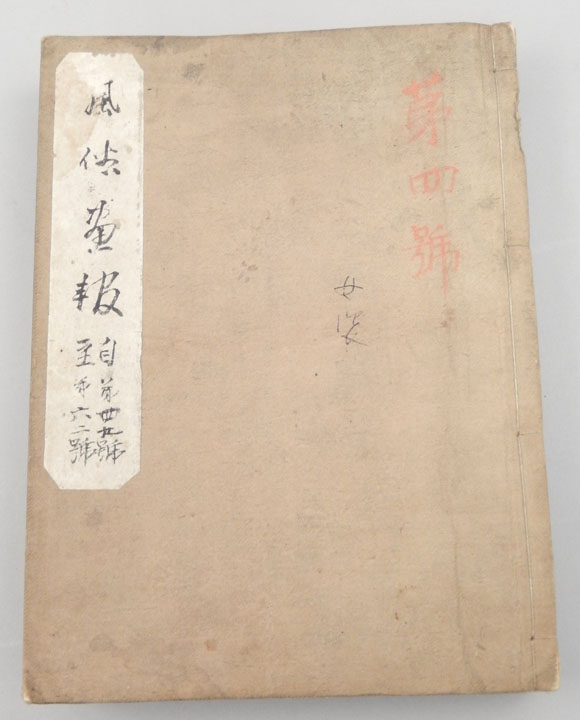
And you know, I'm not good at old Japanese. I know enough of standard Japanese to take all my classes in it, but old Japanese stumps me. So I clicked on the book not expecting to understand anything. And then I realised it was full of pictures.


This is when I got excited and went to search for other Japan-related books (I searched for Chinese stuff too, but nothing else caught my eye). And that's how I found the Accordion Book.


According to the description, the whole thing is made of one long piece of paper, and has a bunch of paintings, calligraphy (poetry? short stories? I have no idea) inside.


Looks like a combination of both to me. Makes me want to go learn the old Japanese, but my brain probably won't be able to handle it.

The last book I found is a ukiyo-e (woodblock) collection from the artist Utagawa Hiroshige, called "53 Stations of Tokkaido". I've always liked ukiyo-e, even if I suspect I'm not appreciating it properly, ever since I saw a ukiyo-e exhibition.


I guess I just love the lines and the colours.

This was actually pretty fun. I like looking at pictures of books, and if I had money, I'd probably be bidding on the Chinese picture book and the 53 Stations of Tokkaido, because they are beautiful. And maybe the Accordion one too.

Once again, all the listings can be found at Invaluable.com . Thanks for inviting me to do this, it was really fun :D

Saturday, December 5, 2015

Self-Published: The Nutcracker King

I don't really know how to announce this, so I'm just going to come right out and say it - I've self-published my first novella!

The Nutcracker King was one of the stories that I wrote for last year's NaNoWriMo rebel project, and after one year of rewriting, fiddling with the sentences, and general procrastination due to fear of embarking on the next step, I finally worked up the courage to self-publish.

Of course, this wouldn't have been possible without a lot of people. The Google+ community got me back into writing as a habit and gave me many self-publishing role models, and WriteOn gave me more author friends like M.N. Arzu and Lincoln Cole, who not only provided me with encouragement, but took away all my silly excuses not to self-publish. And the Dayre community - I just entered the community, but all of them have been lovely and supportive.

And of course, my friends, like James who did a mock-up cover that got me so excited I immediately opened D2D accounts and started formatting. And Rachel, who did the actual cover. And everyone else, who spent the time listening to me talk about how I want to publish without pouring cold water on my dreams (as well as reading my first drafts).

Now, things that most people will probably be concerned about:

How will this affect my reviews? 

The bottom line is: it doesn't. I may, however, be more picky about books in the fairytale retelling genre, and only review those that I really love. But on the whole, it should be business as usual - honest reviews about the books I read (thankfully, I love most of the books I read, so I don't foresee any problems here).

Without further ado, The Nutcracker King:


Synopsis:
What if there was no ‘Happily Ever After’? 

It has been eight years since the defeat of the Mouse King. Marie has never told the Nutcracker she loves him, and he has never broken the curse. Instead, Marie dances her nights away at Marzipan castle every night, while the Nutcracker tries to break the curse. Desperate, he uncovers a dark secret about his kingdom, and decides to use the knowledge to reverse the curse. In the end, who will get their happily ever after - Marie or the Nutcracker?

This story is a roughly 30,000 word novella.

As a new author, I'd really love some reviews (and sales. But I'm focusing on reviews first). If anyone would like a review copy, please email me at eustacia.tan[at]gmail.com, letting me know if you would like an ePub or mobi copy, and I'll send one to you straight away. Review copies are available until the 12th of December.

And to end, buy links! My novella is available on:
Amazon (link leads to the .com site)
Kobo
Scribd
Apple
Nook
Oyster
Page Foundry
Tolino (Can't find the link, sorry)

Friday, December 4, 2015

Coursera: Fantasy and Science Fiction: The Human Mind, Our Modern World (Part 6)

I'm posting this a day earlier than usual, because I'm probably going to have some news tomorrow. Anyway, for the last week, I read Ray Bradbury's The Martian Chronicles (review to come). It's pretty good, and I really enjoyed it.

Locusts: A Close Analysis

As a "book of stories pretending to be a novel"[1], the stories in The Martian Chronicles stand alone while simultaneously fitting within a larger theme. This essay will focus on the story "Locusts", analysing it closely with an eye to how it fits within the book.

Situated within the first half of the book, this story is foretells the effect humans have on Mars. From the title alone, it is clear that the human migration to Mars is akin to a locusts plague. Like one of the ten plagues in the Bible [2], the humans will overrun Mars and strip it bare, as they do in the later stories. Within the story itself, Mars is changed "into a shape that was familiar to the eye", but markedly different from its original form. The plague of humans changes the face of the planet, like a locusts plague changes its affected area.

The story starts with the rockets, as they land on Mars. The changes they bring are instantaneous, such as transmuting "water to steam", and they permanently change the environment, through fire on the "bony meadows" and "rock to lava". This imply a lasting and large change for the planet.

In the middle section, men are building colonies on Mars. This would not be a strange sight, but the diction that Bradbury uses, by calling the men "steel-toothed carnivores" and describing their movements as "scuttled", something rather inhuman, makes the reader aware that man is the foreign, invading species here. The rockets may be described as "locusts", but the true plague on Mars are the humans.

Unfortunately, the story does not have a hopeful ending. Apart from the "ninety thousand people" who have already arrived, "more, on Earth, were packing their grips", and the locust plague will continue.

In summary, this story frames the invading humans as a destroyer of Mars, much like a plague of locusts.

Sources

[1]: Eller, Jonathan R., and William F. Touponce. Ray Bradbury: The Life of Fiction. Kent, Ohio: Kent State UP, 2004. Print.
[2]: The plague of locust is, specifically, from Exodus 10: 1-20

All quotes not cited were taken from The Martian Chronicles by Ray Bradbury

Grade: 4

What I learnt: People will pick up on your little mistakes. Plus, a close analysis is ok, but people tend to want more complex themes.

Wednesday, October 28, 2015

PSA: Going on a short break

Hey everyone, just a brief note to say that school has finally caught up to me, and I'll have to take at least a one week break. I'll be working on my third year essay, and doing some work in Saga as part of my seminar. 

In the meantime, enjoy a picture of the sunset I took today. 


Saturday, May 9, 2015

WriteOn: (Almost) 2 Months Out of Beta

I've previously blogged about WriteOn, and even did a comparison with Figment and Wattpad. I also mentioned that this was really a recommendation of the site while it was in Beta, but as of March 11, the site has gone public. Now that almost 2 months have gone by, I thought it's time to provide an update.

Actually, I wanted to do this a month ago, but then school started and boom. All my time was gone.

Anyway, before I even start, here's a relevant post on Feedback. It's a relevant post because it affects how strongly I recommend WriteOn, but that's something that I'll be talking about later.

First off, let's talk about the obvious changes:


The site has undergone a revamp, and it's much, much brighter now. The notifications also disappear after you check them (unlike the past, where you were permanently "notified"), and they have numbers too. Author reads of their own story are no longer counted (this was a cause of much joy), and comment statistics are also included, so that uh, you can see how many comments other people have written, I guess.

A lot of new members have also come in, and they have really awesome stories with them. I'm really enjoying reading them.

But, and this is a big but, the tone of the site seems to be going downhill slowly. I talked about it on the Feedback post, but it's getting "risky" to give constructive criticism. Authors with thin-skin will call you a hater and/or naive/ignorant/stupid, and dog-piling has occurred.

I also don't think this is related, but I know at least one member who gave awesome, detailed feedback who left the site. She wasn't bullied, but she wasn't getting feedback back. There's another member who has stopped giving feedback because she was dog-piled on. That means that the quality of feedback is lower compared to the early-beta days.

The forum too, has gotten meaner, and that's thanks to one member. She speaks as though she won the Nobel Prize for Literature and Man Booker Prize and what have you, referencing her work constantly instead of, I don't know, Shakespeare or Austen or Twain. If you dare to disagree with her, you're an idiot. Oddly enough, she likes to rail against the Western Education she received, but somehow I'm the dumb one. A real puzzle, that one. But then again, I'm dumb.

My forum participation has basically gone down to threads where I "know" the posters and am pretty sure that divisive personalities won't be participating in.

The mods have stepped in once or twice (pretty much after the storm), but not enough to make me feel like this is an actively moderated community.

Does that mean WriteOn is doomed? Nah.

While I'm not going going to be recommending the site as wholeheartedly as I did before, it's still my writing site of choice because I've made the most friends there. I've found a small group of users whose opinions I trust and that's where most of my activity takes place. I will give feedback if asked, and I do reach out now and then, but for the most part, I'm just in my tiny little circle that I'm trying to slowly expand.

Just to be clear, there are a lot of awesome people on WriteOn. It's not the next Wattpad (yet), but tt's still a good community if you want feedback. I'm still hopeful that the small group bringing it down will either eventually get tired and quit, or that we'll be able to "block" users.

Thursday, April 2, 2015

Easter Break!

Hey everyone! I've got tons of reviews waiting to post, but it's Holy Week and I don't have much time to be on the Internet. Plus, I've got to prepare to go back to Japan, because I leave Monday night.

I'll probably see everyone next Tuesday (if I can).

Please enjoy this photo of flowers :D 

Friday, March 13, 2015

Rest in Peace, Sir Terry Pratchett

I think by now, everyone has heard of the terrible news. Of course, Terry Pratchett's twitter puts it so sadly yet wonderfully.


I love Terry Pratchett's Discworld books, and they have made a huge influence on me. They've been my travel companions many times as well.

To misquote the emperor from Mulan, "You don't find a writer like that every dynasty."

R.I.P. Sir Terry Pratchett


Friday, February 20, 2015

Book Tag: Would You Rather?


Happy Chinese New Year everyone! I could do another book review, but I saw this on open invitation on The Written Word and thought it would be fun!

So.... Would you rather...

1. Read Only Trilogies or stand-a-lones? 

Stand-a-lones, definitely. I like series, but I'm terrible at following up.

2. Read Only Female or Male Authors?

Uh, I don't really look at the names. Female? Maybe? I can live with just reading Sarah Dessen and Hilary Mantel and the like.

No wait. That means I have to give up Chesterton and C.S. Lewis and Tolkien.

On second thought, I'll pick male authors.

3. Show at Barnes-n-Noble or Amazon?

Amazon. I've never been to a Barnes-n-Noble, because I don't live in the the States.

4. All books become movies or TV shows?

I always thought TV shows are for series and movies for standalones. Um, I have to pick? Movies, I guess. I mean, like Question 1, I'm terrible at following up, and I'll quickly get swamped with things I want to watch.

5. Read 5 pages per day or 5 books per week?

Five books a day! Ok, week, but I think I already do that...

6. Be a professional reviewer or author?

Weird as it may sound, author! But ideally, both! And a superhero-businesswoman! (I was the weird kid)

7. Only read your top 20 favourite books over and over or always read new ones you haven't read before?

I'll be doing the re-read, although deciding on the top 20 favourite books will be really hard.

8. Be a librarian or a bookseller?

Bookseller! (One of my many dreams) There'll be a lot more freedom to decide what to stock, how to decorate the store seasonally, and install a snack corner/cafe.

9. Only read your favourite genre, or every genre except your favourite?

I'm not sure if I have a favourite genre. Uh, but I guess I'll stick to just that one if I have to choose. It'll be interesting to see what I like to read.

10. Only read physical books or e-books?

I know we're in the midst of the ebook revolution, and I have way too many physical books as it is, but physical books all the way!

End! Feel free to join in if this catches your eye!

Monday, December 22, 2014

Merry Christmas and Happy New Year!

Hey everyone! My mom announced a last-minute trip, so I won't have access to my computer for a while. So, I figured I'll take the chance for a blogging break till the New Year for a blogging break (unless I get time in between Christmas and New Year).

In advance,

MERRY CHRISTMAS AND HAPPY NEW YEAR!


Saturday, December 6, 2014

WriteOn vs Wattpad vs Figment


UPDATE: This post is really out of date, and I'm no longer using WriteOn, for reasons the reasons in this blogpost. I still have an account there, but I don't use it anymore.

Previously, I wrote about WriteOn, my new writing site of choice. Since I've wrote about it, WriteOn has made a few more changes, Wattpad did an update, and I've did NaNoWriMo on WriteOn, and I thought it's time for a comparison between the three writing sites (Click the link to see my previous post about Figment vs Wattpad). Of course, some of this information may become moot when WriteOn comes out of beta - I'll do another followup post then.

Creating a multi-chapter story
WriteOn: Creating a story is extremely easy. Click on the "Create" tab, and start. You can add chapters, save, move chapters around, add your cover, spend as much time making your book perfect as you want without having to post your story. I've typed, saved and exited, and come back, without any problems. Everything is in one page, and it's extremely easy to use.

Wattpad: There is a create button, but it seems to lead you to the My Works page (or is that just me?), from which I have to click on the new story button. And everything seems to be published as soon as you hit create - there's no testing here (not without deleting it anyway. And one thing about Wattpad that annoys me is that I cannot toggle between chapters very easily. I have to write, go back to the main page, and then edit. It's only one extra step, but I imagine it'll be very annoying if I'm doing major edits.

Figment: Like Wattpad, Figment's "Start writing" button on the main page leads you to the writing page, from which you create a new story. On the bright side, the organisation of the story is similar to WriteOn. You can add chapters, move them around, edit the actual contents, all on the same page.

Winner: WriteOn, followed by Figment. Wattpad is still too clumsy for me. 


In lieu of the site logo, here's a screenshot of the site. 
Cover Creator
WriteOn: I believe that the cover creator in WriteOn is the same as KDP. I'm not sure, because I've never published on KDP, but that's what I heard. Anyway, the cover creator here has many different pictures you can use (you can also search by category or enter a keyword), a few templates (6 image-based templates and 4 Non-image based templates), and font size and choice customisation. It's not as good as Canva (on which I'll base all comparisons), but for a free program, there's a decent amount of changes you can make. I don't recall a default cover.

Wattpad: Wattpad used to have the worst cover creator. Or at least, I didn't remember a cover creator, just the option between an awful default cover (still awful - it's your profile picture with the cover) or your own upload. But, I was pleasantly surprised to find that they had a creator from March of this year (which explains a lot, I haven't tried looking for a cover creator since... quite a few years ago). There is a very limited number of pictures (I think 10, or less), and the option to change font choice and size, and I think colour. There are no template options.

Figment: Although it possibly has the nicest default template (it's clean simple, although you don't have your title or name on it), the cover creator is now tied with Wattpad (since it improved). You have a choice of certain backgrounds (I think the number of choices are about the same as Wattpad), although none of them are pictures, and I think two places where you can place the title, with very limited font choices.

Winner: Canva. Oh wait, sorry. I mean WriteOn, for sheer choice. And then Figment and Wattpad are tied.


Getting Readers
WriteOn: Since it's still in Beta, there are more writers than readers. Not the best way to build up a fan-base, especially since you need to log in just to read the stories, but who knows what will happen once it leaves beta mode?

Wattpad: I think there's very little competition for Wattpad so far. There are way more readers than authors on this site, plus a reader-friendly mobile app (my sister uses it), and if you know how to work it, you might be able to develop a following. I've never had any success, even in the days where I was actively reading other people's works, but it's worked for a lot of people. But be warned, there are some big-named writers there, so you face a lot of competition.

Figment: Figment is probably where I get the most unknown eyes on my story. Even with me doing very little, every now and then, I get a notification that someone liked my story and/or reacted to it. So something is working there. Readers can also read the story without logging in, but they can't vote or react.

Winner: Depending on the person, either Wattpad or Figment. For most, it might be Wattpad, since they have mobile apps that make it easy for people to read your stories. WriteOn isn't in the running, since it's still in beta and is closed off from all non-member readers. 

Getting Feedback
WriteOn: I've gotten the best feedback on WriteOn so far, hands down. Perhaps it's because of the site culture that they've been trying to inculcate, plus the fact that authors can customise their feedback requests (you can tick areas "e.g. characters, plot, proofread" AND include a personal message "hey, I think my MC is whiny, what do you think?"). But I don't know why, on average, my feedback received on WriteOn has been the most helpful and longest. You can request feedback in the "Ask and ye shall receive" subforum. This may change when WriteOn goes out of beta, although I'm very optimistic by the discussion about how to encourage good feedback taking place in the forums.

Wattpad: I don't actually recall getting feedback. From my impression, Wattpad is for your nice, polished stories (despite what the site says in their interview with The Verge), not for getting beta feedback. Of course, it's possible that in certain genres that I don't write in (like fanfiction), Wattpad may be good to get beta-readers.

Figment: The second-best feedback I've gotten is from Figment. Some members make it a point to leave detailed, useful feedback, while others just give general encouragement. You can also request feedback in the forums.

Winner: WriteOn, followed by Figment. This order may change when WriteOn comes out of beta, but who knows. Wattpad is trailing behind. 


Others
WriteOn: Apart from an active forum, WriteOn has what they call Feedback Fridays, where you participate by reading someone's book, giving feedback, and having others give feedback to you. It's all managed through the weekly thread. There's also Thank You Tuesday, started by Katie Adee, who gave the best feedback ever (and she wrote pretty fantastic children's stories), where you're reminded to thank your readers and reviewers in your status. They're also getting a few authors to come in now and then to do interviews and give feedback on member stories, which is really awesome and helpful. And, they just started a bookclub to give members who have completed their novels beta readers. Ok, I started it, after getting permissions from the mods. I heard something about genre-specific clubs coming up in the future.

WriteOn mod squad/team: Oh, and I can't not mention the WriteOn team. They've been extremely receptive to feedback, with one active subforum for member complaints/bugs found. And it's not just talk, we've had changes suggested by members implemented. If they keep this up, WriteOn will really develop into an awesome community.

Wattpad: I'm not really on there, so I can't say, but they seem to have annual contests, like the Wattys. And of course, the aforementioned famous authors putting their books up (although I've not heard anything about them giving feedback). Depending on your genre, their contents might be your thing.

Figment: I know of Figment ambassadors and several contests, as well as a prompt of the day. The contests tend to generate a lot of swap requests (more for hearts than anything), but that's only natural, I think. There are also excerpts of novels there.

Winner: Depends on whether you're more of a reader or writer. Writeon's extra features are geared more to writers, while Wattpad seems geared to readers. Figment is probably closer to the writer segment, although quite a few of their contests seem to be to promote new releases. 

Overall
So, which is the site for you? It depends on whether you want readers or feedback. For feedback, I really reccomend WriteOn, especially if you do not write in YA (WriteOn has a lot more different types of writers that can give feedback). Wattpad is the established go-to site to get readers, so if you have a polished permafree, you might want to put it there. Figment is very much like Wattpad to me, only easier to create stories, so between Wattpad and Figment, I'll choose Figment. But for now, my writing site is WriteOn, for the feedback I've gotten.

Note: While I'm totally recommending WriteOn now, please keep in mind that this is my experience of WriteOn in beta. As more people join, the tone and culture of the site is going to change (I've already noticed some changes, as have a few members that joined even earlier). It might become something like Wattpad in the end, it might be like Figment, but it might (and I hope it does) remain like it is now.