Showing posts with label autobiography/biography. Show all posts

Monday, August 6, 2018

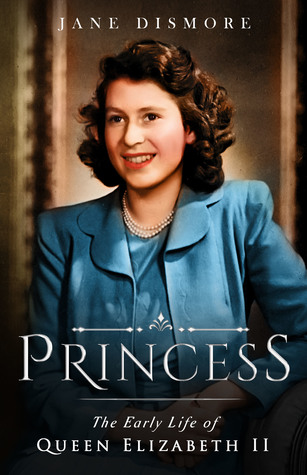
Princess by Jane Dismore

I was intrigued as soon as I saw this book on NetGalley because I don't know anything about Queen Elizabeth before she became queen (I didn't even know how she looked like when she was young!). So when I heard that this book also contained unpublished material from letters and interviews, I decided to request for it.

Princess is a sensitively written account of Queen Elizabeth's early life. It starts off with the moment she became queen (very sadly, she was one of the last people to know) and then backtracks to when she was born before going forward from there. It covers her childhood, marriage, and life as a newlywed.

I was actually pretty surprised at how normally her parents raised her. You always hear of extravagant lifestyles but it seems like Queen Elizabeth and her sister were raised to be as down to earth as possible. Part of it may have been the times where they grew up, but it seems like a part of it is also due to her parents and their personality. I felt that they had a very genuine and loving relationship, which was very touching.

Also touching was her relationship with Prince Phillip. Because she eventually marries him, the book does touch on key moments of his life before they met. There isn't anything scandalous in their love story, but it's a very sweet account.

The one thing that surprised me while reading was the Duke and Duchess of Windsor. I didn't really have any views about them because I knew nothing about them except that the King abdicated to marry Wallis Simpson, so it was a shock to find out that both of them had pro-Nazi views. I’m definitely going to side-eye anyone who praises Wallis Simpson now.

Overall, this was an interesting and informative account of Queen Elizabeth’s early life. The only thing I wish it added were photos of key moments - while they are probably just one google search away, it would be nice to be able to flip to them in the book. Hopefully it’s just my advance copy that doesn’t have pictures because I think it would add a lot to have them.

Disclaimer: I got a free copy of this book from the publisher via NetGalley in exchange for a free and honest review.

Friday, August 3, 2018

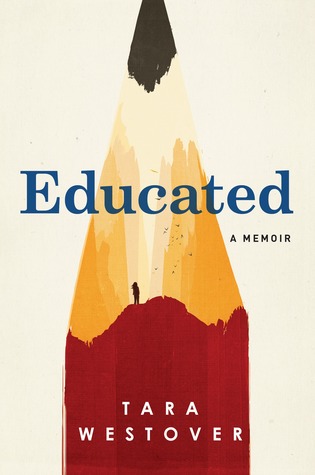
Educated by Tara Westover

I heard so many good things about this book that as soon as I saw that the NLB had an ecopy, I placed a hold on it. And all the rave reviews were true - this did not disappoint.

Educated is the memoir of Tara Westover. She was raised by a paranoid father who saw government conspiracies and a mother who drifted into alternative healing (oddly enough, her mother never indicated that chakras and essential oils were incompatible with Mormonism).

Due to this unusual family dynamic, Tara never went to school or even socialised much with people her age. Luckily, she had an amazing voice and brothers who managed to go to university, which gave her a longing for the wider world. So although she was afraid that her actions would betray her family, she started teaching herself to read.

This book was simply absorbing and I couldn’t put it down. Tara and her brother Tyler are amazing for the way they managed to gain an education. But the ways that her family stayed trapped was heartbreaking, especially the way they let her older brother Shawn rule the family with his temper. Their emotional manipulation was really off the charts and my heart broke whenever I saw Tara doubt herself.

This book was also a hopeful one because I saw how people would come to Tara’s aid when she needed it most. People that stood out were her bishop in her ward, who gave her a space to talk it out and got her monetary support, as well as the various professors who recognised her academic talent and encouraged her.

Oh yeah, and even though Tara and her community are all Mormon, this book isn’t about really about religion. While Tara does struggle with some tenets of her faith, she never explicitly casts it off, instead impartially talking about the Mormons and non-Mormons who helped her. It’s clear that religion wasn’t the sole or even main reason for her childhood (though it did play a big part) - her dad’s mental illness probably was.

I would highly, highly recommend this book. It is an amazingly well-written read about how one woman managed to overcome her childhood with the support of people in her life. And do you know what I want to read next? Her PhD thesis. It sounds fascinating.

Monday, July 23, 2018

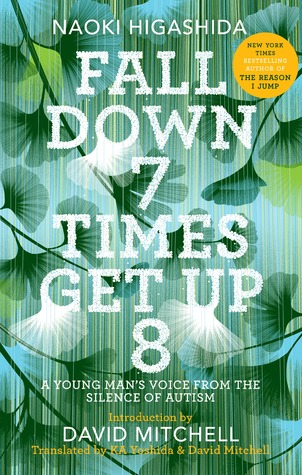
Fall Down 7 Times Get Up 8 by Naoki Higashida

Someone from Church lent me this and it is so good! Written by the same author of The Reason I Jump (which I haven’t read but really want to now), this book contains the thoughts of a young man who happens to be severely autistic.

Naoki Higashida writes using an alphabet grid, without anyone else’s hand touching his, so you can be sure that the words in this book really did come out of his mind. And when you look at the subjects he muses about, his poetry, and his short story, it’s clear that he has an extra-ordinary mind.

In this books, he talks about his struggles to learn and communicate, as well as encourage all neurotypical people not to give up on people with autism, because they do want to live their best life and they can pick up our emotions. If this wasn’t a library book, I would have highlighted so many quotes, such as:
"On the surface, a sheltered life spent on your favourite activities might look like paradise but I believe that unless you come into contact with some of the hardships other people endure, your own personal development will be impaired."
And I probably would have bookmarked all his poetry. I’m normally not a poetry type of person, but I find that his poems inspire and uplift, even when they look on the slightly more unpleasant side of life. Two that I particularly liked are Rumours and Words - look out for them if you're reading the book!

I would totally recommend this book! It’s a moving and uplifting insight into a person that we might not even think we can communicate with. The beauty of his words show that there is deep potential within everyone, and that we should not be so quick to write off people as unable to contribute to society.

Definitely read this if you have the chance!

Tuesday, January 23, 2018

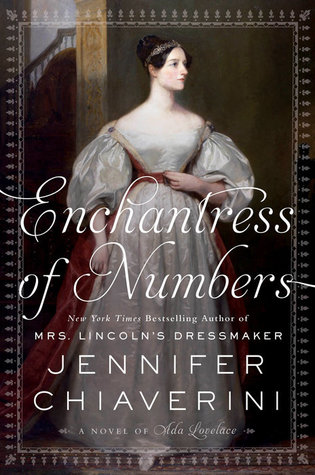
Enchantress of Numbers by Jennifer Chiaverini

I don't know much about Ada Lovelace, the woman who is sometimes credited as the first computer programmer, which is why I jumped at this chance to read this "work of fiction inspired by history." To put it another way, this is a biography of Ada Lovelace written in the first person, which means that parts of it must be fictionalised.

Ada Lovelace was the daughter of Lord Byron, the poet, and Anne Isabella Noel Byron, 11th Baroness Wentworth and Baroness Byron. She was doubly unlucky in her parents, because her father was abusive and openly cheated on his wife and her mother managed to be both emotionally distant and manipulative at the same time. To avoid Ada from becoming 'insane' like her mother believed her father was, she was taught mathematics from an early age.

The book starts with the meeting and marriage of Lord Byron and Lady Byron (the only chapter to be written in the third person) and ends soon after Ada publishes her work on Charle's Babbage's Analytical Engine. Her work was supposed to be a translation of a French paper, but she added notes to it that soon eclipsed the original.

I found this book to be absorbing and hard to put down, although it's hard to know what was true and what is not - for example, Ada's gambling addiction is only very briefly mentioned. Since it was written in the first person, I very strongly felt for Ada and her different trials. Despite her privileged rank and her intellect, she was continually made to oppress her 'Byron side' and made to feel guilty for simply having feelings.

The chapter titles are all inspired by verses from Lord Byron's poems, which I thought was interesting.

If you want a purely factual biography, this is probably not a good idea. The author admits that liberties have been taken, although she tried to adhere as closely to the historical record as possible, so it's up to you to decide if you're comfortable with that.

Disclaimer: I received a free copy of this book from the publisher via Netgalley in exchange for a free and honest review.

Monday, November 13, 2017

The Russian Countess by Edith Sollohub

The Russian Countess is an autobiography of Countess Edith Sollohub, born Edith Natalie de Martens. She was born and raised in Pre-Communist Russia and was unfortunately trapped in Russia after the revolution. This autobiography focuses on her life before the revolution and how she did her best to survive and escape after.

My first surprise came when I read the introduction of the book and found that it was written in English. I had assumed that this was translated, and to be honest if I didn't know that it was written in English, I would have assumed it was a very well-done translation because the English was really natural.

The second surprise was of her experience during the revolution. I don't know what I expected, but whatever I read was a surprise. Perhaps the fact that she wasn't put in jail immediately surprised me. Or perhaps it was because of how little the spirit of communism seemed to be in everyone. I had this image that most people wanted to become communist, but the book made it seem like most people were indifferent to it, or at best using it opportunistically.

Although this book provides a fascinating look into what it was like to live through revolutionary Russia, I do think that it doesn't provide a whole picture. Edith was supported in large part by her servants, who were still faithful to her. In fact, another thing that surprised me was that even after the revolution, she managed to keep a governess for her boys and her first escape was with a few servants. Certainly not the number she used to have, but it was definitely not zero. I think life for an ordinary person or even a person of nobility who was not well-liked would have been very different.

Not that I'm saying that this book isn't worth reading. Far from it. I really enjoyed reading it and I am in awe of how talented and resourceful Edith was. I just realised that I have to be careful not to take one person's account and assume that it applies to everyone living through that event.

Disclaimer: I received a free copy of this book from the publisher via NetGalley in exchange for a free and honest review.
Monday, October 23, 2017

Mother Tongue by Christine Gilbert

I picked this book up because language learning is something that interests me, even if I'm not very good at it. Mother Tongue is Christine's account to achieve 'a level of fluency' of Chinese, Arabic, and Spanish by spending about 6 months in China, Lebanon, and Mexico.

Since Christine only studied Spanish before the experiment, I was quite skeptical about whether this could be done. After 6 months of intensive Japanese, I could get around and go on a holiday, but I definitely would not describe myself as having achieved 'a level of fluency'.

To spoil the book (look away now if spoilers irk you!), the effort to learn Chinese was a failure, Arabic was much more successful and Christine probably had the most success with Spanish.

Interspersed with her account of how she tried to raise trilingual kids is her research on how we learn languages. I was pleased to know that Professor Cook, who is 'one of the foremost respected second-language acquisition academics in the world' recommends immersion + formal instruction in learning a foreign language, which is how I learned Japanese.

There are also plenty of musings on language and culture in the book, as Christine learns and considers the impact of culture on learning a language, whether being bilingual means that you're automatically bicultural, and if living overseas automatically means you have to either live like a native or in an expat bubble or if you can find your own balance.

I found this to be an interesting read. Christine was very honest about her failures and this led me to celebrate her successes with her. While the reason for this experiment was to make her son bilingual, I felt that there was more focus on her language journey. I think that resonated more than me than a story on how to teach your kids a second language would, but if you're a parent looking for ways to raise bilingual kids, you may not find many ideas here.

If you're interested in learning a new language or you're learning one, you may be interested in this book. I really enjoyed reading this and it made me more determined to make sure that I don't forget my Japanese after I move back.

Quotes I liked:

"If you learn another culture, it changes you. I mean, it'll start with trivial things like words for new concepts that you didn't have before. I don't think that you start off wanting to change, you start off wanting to learn, and the learning itself changes you." 
"[Y]ou have to fall in love with the culture to learn it."

Wednesday, October 4, 2017

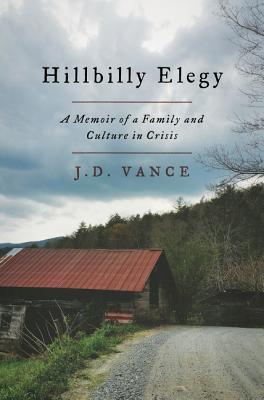
Hillbilly Elegy by J. D. Vance

Sidenote: I'll be heading on vacation with my sister for the next few days and I am definitely not bringing my computer with me. So, no posts for about a week(: Looking forward to reading time and then reading about what everyone read when I'm back!

This book has been on my TBR list for ages because I've heard people bring it up constantly since Trump got elected. Since I've heard both good and bad things, I figured that I had to read this myself and decide. And now that I've finished it, I've decided I'm in the "this is good, you should read it" camp of people.

Hillbilly Elegy is the memoir of J. D. Vance, a guy who grew up in Middletown (Rustbelt city) and Jackson (Appalachian town). Despite his dysfunctional background, he managed to do something that very few of his peers managed to do - go to university and then to Yale Law School. Just the words "Yale Law School" sound impressive to me, but reading about his childhood made me realise that his achievement really was amazing and something of a statistical anomaly.

While J. D. Vance does cite statistics and studies in this book, it is, at heart, a memoir and not an academic study. Its focus is on the story of a poor white family, and by telling that story, I as the reader get to understand the thinking and values of a community completely unfathomable to me. Which is pretty much the power of reading.

I think expectations are important in reading this book. This book has definitely been hyped up and I've seen things like "this helps to understand why Trump won" (spoiler: there isn't really a discussion about Trump, although there is a discussion on why people like Vance's family vote the way they do). But this book is essentially a memoir, not a discussion of a community (though it does a good job of helping one understand/start to understand the community). You also shouldn't expect a comparison between poor white communities and the African-American community, which has also been historically disadvantaged. To repeat: this is the story of a family and not an academic study.

By the way, one random thing that caught my eye is the connection this book has to Battle Hymn of the Tiger Mother, which is definitely not something I expected when I read this book. But when J. D. Vance went to Yale, one of his mentors was Amy Chua and she basically encouraged him to write the book. I checked and it's the same Amy Chua (and now I feel like re-reading her book).

If you're in the mood for a memoir, I would definitely recommend this book. If you're like me and live/grew up in Singapore, J. D's life will be completely unfamiliar to you. And that is precisely why you should read about it.

Wednesday, August 23, 2017

In Order to Live by Yeonmi Park

I saw this on @twofronteeth 's Dayre at the end of June and thought it sounded interesting so I added it to my TBR. After over a month, I finally picked it up and it is a really good (though heavy) read.

In Order to Live is a memoir of Yeonmi Park's life in North Korea and China. She was born and raised in North Korea, and for a time being, did fairly well despite her family not being part of the elites anymore.

Her father was very entrepreneurial and he managed to put food on the table. There was even a black market where they could get goods from China and DVDs of South Korean shows! But one day, he was arrested and her family suddenly struggled to survive.

The method Yeonmi and her mother took was to escape to China, which was said to have food and jobs. But even though they risked their lives to get there, China was no paradise. The women found that they would be sold to Chinese men as wives and had to live in the shadows, constantly looking over their shoulder. And yet Yeonmi managed to live on, and she eventually managed to bring her mother to South Korea, where she finally resumed her education and without intending it, ended up as the face of a movement.

This is an incredibly powerful book and I would encourage everyone to read it. North Korea is basically a boogeyman right now and Yeonmi's memoir helps to reveal what life is really like there (and let's face it, even reporters with the best intentions will not be as accurate as someone who actually grew up in North Korea). She is candid about the hardships of life and the brainwashing that goes on, but she also shows the strength that people can have even in the worst situations.

If you've ever wondered what it's like in North Korea, or why people would risk their lives to escape, or even why people haven't risen up against their Dear Leader, you have to read this book. It's not just the story of an incredible person, it's also a peek into how an entire society can be brainwashed and it gives one the hope that people can 'wake up' from the brainwashing. Trust me, you won't regret reading this.

Monday, May 15, 2017

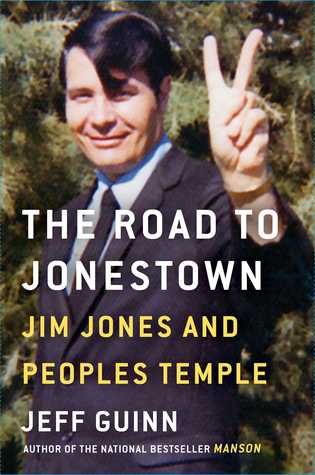
The Road to Jonestown by Jeff Guinn

About two years ago, I read A Thousand Lives, which introduced me to the horrific tragedy at the Peoples Temple (which also gave birth to the phrase "drinking the kool-aid"). The Road to Jonestown is a biography of Jim Jones and the Peoples Temple, but it feels a lot more detailed than A Thousand Lives. It does contain information from interviews, so that is probably a huge factor.

The first time I read about the Peoples Temple, I thought that it was a huge tragedy. This time, my feelings are a lot more complicated. Jim Jones was probably a megalomaniac and towards the end, the Peoples Temple was definitely a cult, but it did a lot of good work at the start. If the book is to be believed, Jim Jones did a lot to integrate Indianapolis (by the way, if someone like Jim Jones turns out to be one of the pioneers in integration, clearly there is an apathy problem with the city). Plus, it seems like a lot of his followers started to follow him because he offered concrete help and welcomed both black and white people.

I guess one way of summarising all the complications would be to look at Marceline, Jones' wife. He did a lot of terrible things to her (not least is the cheating) and she did consider leaving him, but in public, she was always supportive of him. And this is a woman described in her introduction as a strong Christian. It seems like she saw something in him that made her willing to ignore all the red flags and support him almost until the end.

Oh, and my feeling of how a lot of people were complicit in this was reinforced in the book. Jones was able to gain legitimacy through admission into the Disciples of Christ, despite the fact that his teachings weren't even close to theologically sound. Instead, the organisation decide to overlook the flags and his stinginess because they saw him as a model of progressive Christianity (why they didn't just encourage their existing Churches to be more active in social matters is a mystery to me).

This book is exhaustive and depressing. It seems like the Peoples Temple had great promise, and if anyone else but Jim Jones was in charge (or if he was divested of power early), if could have done a lot of good. Instead, it will forever be remembered for the tragedy that occurred.

Disclaimer: I got a free copy of this book from the publisher via NetGalley in exchange for a free and honest review.
Wednesday, May 10, 2017

Manderley Forever by Tatiana de Rosnay

I read Rebecca a long time ago and remember that I loved it, so I decided that I had to request this biography of Daphne du Maurier!

Manderley Forever is told in two parts. One is the author's own journey to various places of significance in Daphne du Maurier's life, which opens each chapter, and the other is the biography, told in the style of a novel (with third person narration).

To be honest, the author's pilgrimage didn't feel necessary, and I wouldn't have missed anything if it was cut. It just wasn't long enough and didn't enhance the story of Daphne du Maurier's life to me (and I didn't feel a connection with the author either).

Another quibble I have is that the book talks a lot about how Daphne feels at times and it does so with no room for ambiguity. It does seem very well-researched but I do wonder how accurate one can be at guessing at the emotions of someone else - were the letters and other materials that survived that comprehensive?

That being said, the book succeeds very well as a biography. The writing style was a little weird at first, but by the end of the book, I felt like I had come to know Daphne du Maurier pretty well. And even more importantly, it made me want to read all of her books (pity the NLB only has 3 of her books in ebook form). So I will. I'm going to start with Rebecca, even if she did get sick of it, and read the other two between books.

Disclaimer: I got a free copy of this book from the publisher via NetGalley in exchange for a free and honest review.

Friday, April 7, 2017

Catherine the Great by Robert K. Massie

This book was recommended to me by one of my friends on Dayre, who also recommended Ekaterina, a Russian drama on Catherine the Great! Both are really good, and I'd recommend watching the drama and reading this one after the other.

So I didn't really know who Catherine the Great was, so I'm going to pretend that you don't either and give you a very brief introduction.

Catherine the Great (born Sophia Augustus Fredericka) was a noble-born German girl who ended up being married to the heir to the Russian throne (who was also German). Her mother thought herself cleverer than she was and didn't give Sophia much love, and her husband didn't love or respect her either.

Trapped in a loveless marriage in a foreign court, Sophia (who was renamed Catherine after converting to Orthodoxy) made the best of a bad situation by endearing herself to the Russians, overthrowing her husband after he became emperor and becoming Empress herself. Seriously a "when life gives you lemons" sort of person.

I have so much respect for Catherine after reading this, not only because of how she made the best of her situation but because she seemed to genuinely love Russia and ruled with its best interests in mind. She not only corresponded with great thinkers, she put what she had learnt into practice by writing Nakaz, which laid the guiding principals upon which she hoped Russia's new laws would be founded.

Sadly, she didn't get to carry out her ideas as she wanted to (because even autocrats need the support of the nobility and army), and she didn't manage to end serfdom even though she wanted to, but I was genuinely impressed by what she managed. Russia is huge and she not only governed it, she tried to better it.

Her attempts to improve the Russian healthcare system were more successful and in 1768, she was the first to be vaccinated against smallpox, to show Russians that it was safe. That put her ahead of continental Europe, which shunned it as dangerous (and considering that anti-vaxxers still exist today, this really shows how forward thinking she was).

I found this book to be easy to read, although some controversial issues (like whether she married a Potemkin) seemed to be glossed over. I'm not a scholar though, so this is purely just an impression of how disputed it might have been, because I was expecting a little bit more discussion on it.

If you're in the mood for a biography, I'd recommend this. I mentioned in my review of the three royals who ruled before WWI (George, Nicholas and Wilhelm) that they seemed to be victims of the birth (although I may not have used those exact words), but Catherine shows that you aren't trapped and that one can rule well even if they weren't brought up to do so.

Thursday, February 2, 2017

The Soy Sauce Towkay by Alfred Yeo

My mom passed me this book quite some time ago, but I didn't get around to reading it till now. It's a biography of Yeo Thian In, and by extension Yeo Hiap Seng, the company that he founded.

The Soy Sauce Towkay focuses on Yeo Thian In (the "towkay" in question) and his Christian faith. And the fact that my Church is mentioned probably explains why my mom knew about this book. And if you're not Singaporean or Malaysian, "towkay" means "boss" in English.

The book is divided into four parts: the background, as in what happened before the company was founded, the founding of the company and how it grew (I didn't know that Yeos started out with Soy Sauce! I only know it for the drink), the Yeo family, and more background, this time on Christianity in China, Chinese business practices, etc. The appendix is a discussion on what makes a business Christian.

And I think in the second part, on the business, they have a chapter about how soy sauce is made, so there's more background there.

I don't know if it's because the book is fairly short, but Yeo Thian In remained a distant historical figure throughout. Unlike some biographies which can resemble novels in style, this read more like a history book.

In addition, I wish that the book went into more detail. For example, it was mentioned that the Yeo family didn't join the Hokkien Association because of religious beliefs, but I would have liked a lot more detail on how that might make doing business more difficult (or not, but it seems like a disadvantage).

That being said, I'm still glad that I read the book, because it's a part of Singapore history that I didn't know, and that I think it's worth knowing. We tend to focus on the same few individuals (like Tan Tock Seng) in our history classes and museums, so it's nice to read about someone else.

Wednesday, January 18, 2017

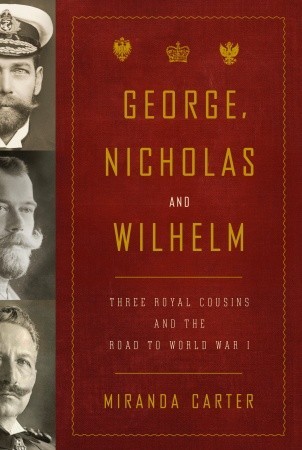
George, Nicholas and Wilhelm by Miranda Carter

I'm not sure why, but when I saw this book in the "free books" box, I decided to pick it up. Like the title says, George, Nicholas and Wilhelm is about King George, Tsar Nicholas II and Kaiser Wilhelm II. Well, actually King George only appeared towards the end - his grandmother Queen Victoria and his uncle King Edward VII ruled for way more pages than him. But these three dudes were cousins so his name goes on the title too.

This is a biography so it is fairly heavy reading. But I found it captivating enough that it was easy to read several chapters a day and not have your head spin because there are way too many people in this (I basically only remembered the three cousins and their wives, King Edward and Queen Victoria).

After reading this, I felt quite a lot of sympathy for them, especially Nicholas. Wilhelm was not very likeable, but it was very clear that all three of them were in over their heads. In fact, a big reason why George was still King at the end of the war was that by that time, the monarchy in England was largely ceremonial (though not without its influence, as Queen Victoria showed). Like someone in the book said, if Nicholas was King of England, he probably would have been well-liked.

The three were let down by the fact that they didn't have an adequate education and that they were surrounded by sycophants for most of their lives and weren't used to taking criticism. This was probably most disastrous for Nicholas and Wilhelm, since they actually had to run their country. Although in the case of Nicholas, the fact that Russia is so huge and not doing so well then meant that the odds were stacked against him from the start.

If you're interested in European history, you'll probably enjoy this book. It's a big book, but I found it fairly easy to read (as long as you have enough time because the individual chapters were pretty long as well).

Wednesday, January 4, 2017

The Grand Tour by Agatha Christie

This is definitely a book for Agatha Christie fans. I think it'd make a good companion to Agatha Christie's autobiography (which I really liked).

The Grand Tour is basically Agatha Christie's account of an 11-month vacation she took with then-husband Archie. They visited South Africa, Australian, New Zealand, Honolulu and Canada. Most of the book are her letters to family, with the preface and epilogue written by her grandson.

The book is supposed to be letters + pictures, but for some reason, most of the pictures wouldn't load on my iPad. So I really can't comment on that.

The letters, though, reminded me of blogs! She basically wrote a summary of all that was noteworthy (often by day - except in Hawaii where their days were alike, and perhaps a few other places). So it's all about where she meant and who she met rather than a memoir of what she learnt/experienced during the journey.

And you really shouldn't expect character portraits either. The only major 'character' is Belcher, a sometimes charming, often pompous and annoying man who was leading the group. Apparently he was also one of the few that made it into her novels as a character too!

I wouldn't go into this book expecting an overarching narrative, or something to explain the reasons (or hint at reasons) why some time after this trip, Agatha Christie would disappear for some time. Instead, enjoy the record of her journey, and if you've been to any of the same places, see how it's changed since she visited.

Wednesday, December 21, 2016

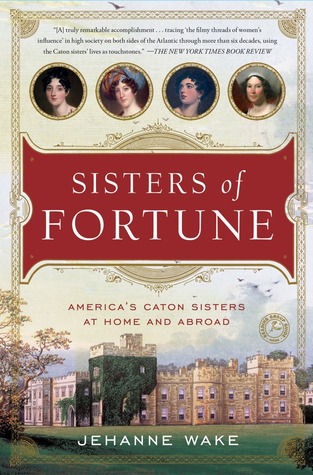
Sisters of Fortune by Jehanne Wake

Sisters of Fortune is the biography of the Canton sisters, the four granddaughters of Charles Carroll of Carrollton, one of the signers of the Declaration of Independence. As this implies, the girls came from an extremely privileged (and wealthy) background.

Perhaps unusually, all four of them were raised to be smart, independent women. They could discuss politics, knew why they thought and believed the way they did, were money savvy (and even invested!), and they even chose who they were going to marry (OK, this was the Regency era so I'm not sure if that's normal or not).

The bulk of the book is about when three of the four sisters went to England. They were: Marianne, Elizabeth (Bess), and Louisa. The one who stayed behind was Emily. And in the end, all three of those who went ended up married to British aristocracy and assimilated into British society, well before the age of the American 'Dollar Princess'.

This book is fascinating and detailed. It's a little formal, as are most biographies, but still very readable. If you're interested in how the upper class of that time lived, then you're in for a treat.

And by the way, I don't think that I have a favourite sister. I think all four of them are amazing and admirable women. They all chose different paths, but they had their own agency throughout, which is the most important thing (not gonna make any judgements on who has the happy ending).

If you're into biographies, then you should definitely get this. I really enjoyed reading it, and not only is it pretty rare to see how women acted in history (at least in history books), and I think transatlantic incidences are even rarer. (Of course, this is based on my limited history knowledge, since I didn't take formal lessons past O Levels).

Wednesday, October 26, 2016

Kierkegaard: A Single Life by Stephen Backhouse

Funnily enough, I've never read any of Søren Kierkegaard's works, even though I've heard of his theories before. And before reading this, I wanted to read something, but I couldn't really find it in public domain or in the library. So I decided to just go ahead and read it.

Kierkegaard is aimed at the general reader and is meant to be accessible. Happily, it delivers on the promise.

The book starts when Kierkegaard dies. And then it looks back towards his life, from when he was a student to when he started getting notoriety. Each chapter tends to focus on one aspect or one stage of life, such as his doomed love affair, his period of supposed dormancy, etc. Søren Kierkegaard comes across as a flawed human being - irritating, but with a purpose that came to dominate his life. I thought that this was summed up very well by his two wills:

One was to his ex-fiance, whom he never stopped loving, even though he purposely rejected her and made her give up on him. This is the part of him that the book calls "the champion of individuality"

One included instructions for the following to be put on his headstone:
"In a little while
I shall have won,
Then the entire battle
Will disappear at once.
Then I may rest
In halls of roses
And unceasingly,
And unceasingly
Speak with my Jesus"
The second half of the book is an overview of his works, which is helpful now that I'm looking for one of his works to start with (but when I can actually find it).

The book truly lives up to its promise - it is an accessible introduction to the man and his works.

Disclaimer: I received a free copy of this book via Netgalley in exchange for a free and honest review.

Tuesday, October 4, 2016

Teaser Tuesday - Sisters of Fortune

Hey everyone! Hope you've had a good start to the week(:

Right now, I'm reading Sisters of Fortune, a biography of the Caton sisters. I picked this up for RM 5, and so far, I'm enjoying it! It's a bit formal in tone, but that's par for the course when it comes to biography.

My teaser:
"While Louisa could turn to her religious faith and memories of Felton and their married life, she could not turn to their children for consolation. Her childlessness became more poignant in widowhood." (page 168)
What about you? What are you reading?

Teaser Tuesdays is a weekly bookish meme, hosted by Jenn of Books and a Beat. Anyone can play along! Just do the following:
  • Grab your current read 
  • Open to a random page 
  • Share two (2) “teaser” sentences from somewhere on that page 
  • BE CAREFUL NOT TO INCLUDE SPOILERS! (make sure that what you share doesn’t give too much away! You don’t want to ruin the book for others!) 
  • Share the title & author, too, so that other TT participants can add the book to their TBR Lists if they like your teasers!

Monday, August 8, 2016

The Code of Love by Andro Linklater

My exams are finally finished, and I managed to finish reading this book as well! It's not a light read, but it's an interesting one.

The Code of Love basically has two stories: One of a mathematician trying to break a coded diary, and one of a couple during WWII. Obviously, the two stories are intertwined, and the diary is from Donald (one half of that couple), who wrote the diary as a Japanese POW. The diary was sent to the mathematician by his wife (other half) Pamela.

Let's just get this out of the way: the decoded diary is not very interesting.

But, I think the story is in how the diary was decoded, as well as the experiences that the two of them went through. While Pamela did stay safe in England, she didn't exactly have a quiet life. Plus, she's away from the guy she loves, even though the war (SPOILER ALERT) ended up damaging their marriage. (Woah, I just got P!NK's Just Give Me A Reason in my head all of a sudden).

As for Donald - like I mentioned, he was a POW, and that was not a good thing to be. Especially not under Japanese rule. It was interesting to see another side of the wartime experience (I did learn about the death railway and such in history class), although it felt very "white". I mean, set in Asia, but all "white". Still, it is primarily about one person, so I can't fault the book for that.

I think people interested in the "personal lives" of people who lived through WWII will enjoy this book.

Wednesday, July 6, 2016

The Tank Man's Son by Mark Bouman

The Tank Man's Son is supposed to be a memoir as powerful as Angela's Ashes. Since I loved that, I had high expectations of this. While the book isn't quite Angela's Ashes (and let's face it, it would be tremendously difficult to live up to that), it is a moving read.

Mark Bouman is the Tank Man's Son. He grew up with an overbearing, Neo-Nazi father, who (as his mother said), "valued things and used people". Among other things, his father got a tank, even though the family was struggling to get by. Hence the reputation as the Tank Man's Son, and a huge struggle to fit in. The story is quite sad for most of the book, but it does have a happy ending, as Mark learns his true worth in the eyes of God and manages to pull his life together and even learn to forgive his father.

Oh, and while there was a trigger warning about language, I found it pretty mild. Or at least, it's pretty run of the mill for most fiction aimed at adults.

In fact, if I were to complain about something, I would say that I was more interested in how a Neo-Nazi managed to get by in America without any one (aka the CIA or FBI) taking note. But the book was short on details. So to me, his dad was more of an abusive dad, which while no less tragic, isn't exactly "neo-Nazi".

Overall, though, I really enjoyed this memoir. While the subject matter was dark, this was an ultimately inspiring book about how God can use anyone.

Disclaimer: I got a free copy of this book from the publisher via NetGalley in exchange for a free and honest review.

Thursday, June 30, 2016

Forgiving my Daughter's Killer by Kate Grosmaire

I finished this book much faster than I expected. I opened it up mainly so I could use it for a Teaser Tuesday, but the next thing I knew, I was done with the book.

Forgiving My Daughter's Killer is, like it's title says, about forgiveness. Kate's daughter Ann was killed by her boyfriend, and the book is about how she and her husband coped with her death, eventually ending in them seeking for restorative justice.

I have to say, Kate and her husband Andy have much bigger hearts than I do. They forgave Ann's killer, Connor, almost at once. There was very little of that "he must pay for what he did" type of rage that most people would feel. This is probably a result of them practicing forgiveness every day. So the lesson is: don't hold small grudges. It makes it harder to forgive the big ones.

And I think the concept of restorative justice is very interesting. According to the book, restorative justice is based on three principles:

1. Crime is a violation of people and interpersonal relationships
2. Violations create obligations on the part of the offender
3. The central obligation is the right the wrongs.

Of course, this is dependent on the criminal to realise that he's done wrong - if he thinks that what he does is right, restorative justice is not going to have an effect.

I really liked this book. While I hope never to have to experience that kind of tragedy (and I hope no one ever does), her message of continually practicing forgiveness is one that I really should be taking to heart. She and her family is living proof that it's healthier to forgive than to hold a grudge.

Disclaimer: I received a free copy of this book from the publisher via NetGalley in exchange for a free and honest review.