I read this on a long bus trip, and found out that it's not light enough to be travel reading material - I will definitely have to reread this one day to more fully absorb everything.
Anyway, Philosophy & Terry Pratchett is a collection of essays divided into four categories:
1. Self-perception, Narrative and Identity (4 essays)
2. Social and Political Philosophy (3 essays)
3. Ethics and the Good Life (4 essays)
4. Logics and metaphysics. (2 essays)
Some essays read like an essay analysing Discworld, while others read as though Discworld was added to a discussion on philosophy. On the whole, though, I found parts two and three to be the most interesting ones, although that's probably because of the topic than the writing style. In particular, essays on the Witches on Lancre and Death tended to be the most interesting ones, no matter which category they were in.
You won't need to have an understand of philosophy to read this, though it will be helpful, but you'll want to have read most (if not all) of all the Discworld books before reading this. I haven't read a few and didn't get the reference to certain plot elements.
This is review is rather short but there isn't much to say. If you're a Discworld fan and are interested in exploring the different ways that we can view the Disc, then there's a good chance that you'll be interested in it (assuming you don't mind some academic language).
Showing posts with label philosophy. Show all posts
Thursday, April 13, 2017
Wednesday, August 3, 2016
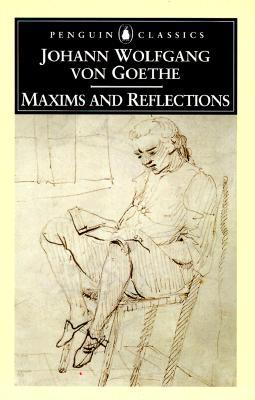
Maxims and Reflections by Johann Wolfgang von Goethe
I'm not sure why I decided to borrow this book, but I did. Basically, it's a collection of Goethe's passing thoughts, which is really strange because I don't think I've read Goethe before (I know, I'm terrible. I should probably remedy that soon).Maxims and Reflections is basically a book of quotes. Some, I really liked, such as:
"Books, we find, are like new acquaintances. To begin with, we are highly delighted if we find an area of general agreement, if we feel a friendly response concerning some important aspect of our life. It is only on closer acquaintance that differences begin to emerge, at which point the great thing is not immediately to recoil, as may happen at a more youthful age, but to cling very firmly to areas of agreement and fully to clarify our differences without on that account aiming at identity in our views."or
"Fairytale: presents impossible events under possible or almost impossible conditions as though they were possible.Some, I disagreed with (although I can't really find one, because I made way too many bookmarks). And there are more than a few that I think will cause debate, such as
"Anyone who doesn't know foreign languages knows nothing of his own"and
"None clamour for freedom of the press except those who want to misuse it."Basically, although this book is full of short quotes, it's going to take a very long time to read. In fact, I think the best way to read it is in short bits and pieces, thinking over what he says. Which is why this book took me much longer than I expected to read it, and got a bit too heavy for me at the end (or rather, I decided to read the last third in one sitting and the last section really just flew by me).
Perhaps I should come back to this book one day in the future, when I have more time/a paperback copy and don't have to return it in 21 days.
Labels:
ebooks
,
non-fiction
,
philosophy
,
western
Tuesday, October 7, 2014
Teaser Tuesday - Why Grow Up by Susan Neiman
My first teaser tuesday since I came back to Japan! This book is one of the birthday presents that I got last week. Since 21 = adult in Singapore, I supposed I got this book to reflect/push me to grow up.Anyway, my teaser:
"This is what Kant meant when he wrote that growing up is less a matter of knowledge than courage. The gulf between is and ought can turn into an abyss, sometimes, all the more if you understand that it isn't an accidental occurrence but a feature of most of the experience you will ever have." (page 122)Really enjoying this book so far!
What is your Teaser Tuesday?
Labels:
non-fiction
,
philosophy
,
teaser tuesday
,
western
Friday, June 20, 2014
Reason and Persuasion: Three Dialogues by Plato by John Holbo
If you follow me on Google+ (link leads to my Google+ page for your convenience), you might know that I take Coursera courses occasionally. One course which I took (and really really enjoyed) was Reason and Persuasion: Three Dialogues by Plato held by the National University of Singapore (NUS).
I took the course because Plato and Socrates influenced so much of Western philosophy. There's a quote by Alfred North Whitehead which states:
This book consists of a translation (which is in easy-to-read English) of Euthryphro, Meno and Republic Book I, as well as summaries and John Holbo's explanation of the different passages.
What I liked about this book (and the course) was that it was very easy to understand. Not a lot of technical terms are used, and there are many illustrations (and quite some humor) used in the explanation sections.
And this book actually came in handy. I'm currently studying a book called The Greek Ideal of Man for English class (which I'm not doing so good in, since it's basically a Japanese test for me) and the things talked about in this book - like the shadows in the cave analogy. It made the class more interesting for me, since I knew what the book was talking about and could agree/disagree with the arguments in the book.
For someone who was new to Plato and Socrates, this book was a great introduction - approachable and understandable. I highly reccomend this (and the associated Coursera course) for those who are interested in diving into Platonic and Socratic philosophy.
I took the course because Plato and Socrates influenced so much of Western philosophy. There's a quote by Alfred North Whitehead which states:
The safest general characterization of the European philosophical tradition is that it consists of a series of footnotes to Plato.So obviously I had to take the course. And this was the assigned reading, provided free of charge by the lecturer John Holbo (who also wrote the book, with some help from his wife).
This book consists of a translation (which is in easy-to-read English) of Euthryphro, Meno and Republic Book I, as well as summaries and John Holbo's explanation of the different passages.
What I liked about this book (and the course) was that it was very easy to understand. Not a lot of technical terms are used, and there are many illustrations (and quite some humor) used in the explanation sections.
And this book actually came in handy. I'm currently studying a book called The Greek Ideal of Man for English class (which I'm not doing so good in, since it's basically a Japanese test for me) and the things talked about in this book - like the shadows in the cave analogy. It made the class more interesting for me, since I knew what the book was talking about and could agree/disagree with the arguments in the book.
For someone who was new to Plato and Socrates, this book was a great introduction - approachable and understandable. I highly reccomend this (and the associated Coursera course) for those who are interested in diving into Platonic and Socratic philosophy.
Labels:
ebooks
,
non-fiction
,
philosophy
,
western
Thursday, June 5, 2014
Plato and a Platypus Walk into a Bar by Thomas Cathcart & Daniel Klein
Ah, airport bookshops. Like I said in my Teaser Tuesday, I get strangely drawn to non-fiction there. And I try to make it a habit to buy at least one book while passing through an airport.
Now, the main question for this book is 'can you really understand philosophy through jokes like the subtitle claims?'. And the answer is what I learnt in Theory of Knowledge, history and just about every humanities class "Yes, to a certain extent."
Yes because this book does contain many jokes and they do explain philosophy. But, this isn't just full of jokes, they actually *gasp* explain the jokes. Or use the jokes as illustration for explanations. So no, just reading the jokes will not help you understand philosophy. You have to read the explanations too. But the jokes do help in understanding (hence the "to a certain extent".)
One of my friends has read it before and he told me that I'd be in stitches. Well, I did chuckle quite a bit, but not as much as he probably did. For example, not all jokes in the feminist section (especially the one about the woman in the plane about to crash) were funny. In fact, the one about the plane was downright sexist. But to be fair to the book, they did admit it was over the top. However, the authors never clearly stated their position, so I'm not sure whether they were trying to undermine feminism in that section (especially since they talked about the 'Politically incorrect joke' and how it can make a joke seem funnier).
Oh, and they have this bit about argument from analogy (and why it's a bad argument). One group they singled out for attention were the creationists. I can understand the need for examples, but I felt that they should have also added that atheists use arguments from analogy as well. For example, Richard Dawkins has said that
So basically, other than the argument from analogy section, and the feminism section (which had a joke which, in my opinion, really shouldn't have been there), this was a pretty good book. Most of the jokes work. However, I can't really say if it makes philosophy accessible to the beginner. I've had quite a lot of previous exposure to philosophy, so this was more of a refresher course than anything.
(1)The Genius of Charles Darwin, Series 1, (UK) Channel 4 TV: Sat 11 Oct 2008.
Now, the main question for this book is 'can you really understand philosophy through jokes like the subtitle claims?'. And the answer is what I learnt in Theory of Knowledge, history and just about every humanities class "Yes, to a certain extent."
Yes because this book does contain many jokes and they do explain philosophy. But, this isn't just full of jokes, they actually *gasp* explain the jokes. Or use the jokes as illustration for explanations. So no, just reading the jokes will not help you understand philosophy. You have to read the explanations too. But the jokes do help in understanding (hence the "to a certain extent".)
One of my friends has read it before and he told me that I'd be in stitches. Well, I did chuckle quite a bit, but not as much as he probably did. For example, not all jokes in the feminist section (especially the one about the woman in the plane about to crash) were funny. In fact, the one about the plane was downright sexist. But to be fair to the book, they did admit it was over the top. However, the authors never clearly stated their position, so I'm not sure whether they were trying to undermine feminism in that section (especially since they talked about the 'Politically incorrect joke' and how it can make a joke seem funnier).
Oh, and they have this bit about argument from analogy (and why it's a bad argument). One group they singled out for attention were the creationists. I can understand the need for examples, but I felt that they should have also added that atheists use arguments from analogy as well. For example, Richard Dawkins has said that
“Nobody has actually seen evolution take place over a long period but they have seen the after effects, and the after effects are massively supported. It is like a case in a court of law where nobody can actually stand up and say I saw the murder happen and yet you have got millions and millions of pieces of evidence which no reasonable person can possibly dispute.” (1)I would think that the fair thing to do was to point out that both sides use this argument.
So basically, other than the argument from analogy section, and the feminism section (which had a joke which, in my opinion, really shouldn't have been there), this was a pretty good book. Most of the jokes work. However, I can't really say if it makes philosophy accessible to the beginner. I've had quite a lot of previous exposure to philosophy, so this was more of a refresher course than anything.
(1)The Genius of Charles Darwin, Series 1, (UK) Channel 4 TV: Sat 11 Oct 2008.
Labels:
humour
,
non-fiction
,
philosophy
,
western
Monday, May 5, 2014
Roald Dahl and Philosophy edited by Jacob M. Heid
I think most kids read Roald Dahl. Well, I'm not sure about kids today, but when I was a kid, everyone was reading Roald Dahl. Him and Enid Blyton. But today, I want to talk about Roald Dahl.
Roald Dahl was the guy that wrote Charlie and the Chocolate Factory. And Matilda. And well, a bunch of other stuff, including the short stories that I only discovered when I grew up (and that's a good thing because his short stories are dark). The whole premise of this book is that Roald Dahl's books are excellent material to use when talking about philosophy because of that element of darkness in the books. After all, all this books start of with people in dire straits - Charlie is starving to death, Matilda is neglected and abused, James is an orphan abused by his guardians, etc.
Topics in this book include:
- Matilda, Existentialist Superhero
- Of Mice and (Posthu)Man: Roald Dahl's The Witches and Ethics beyond Humanism
- Matilda and the Philosophy of Education: or, What's an Education for?
- Shattering the Glass Elavator: Authencity and Social Order in the Works of Roald Dahl
- The Fantasically Just Mr. Fox: Property and Distributive Justice According to Foxes and Other diggers
and so on. There is a total of 16 topics in this book. Some are easier to digest than others, but on the whole, if you're familiar with Roald Dahl, you should be able to understand what the authors are talking about,
My favourite chapter is Matilda and the Philosophy of Education: or, What's an Education for? In this chapter, three schools of education - essentialism, progressivism and romanticism is examined through the book Matilda and its various characters. I admit, it's not the first topic that comes to mind when I think of Matilda (I think of bullying when I think of this book - bullying by adults), but I found this to be an eye-opening read.
I'm definitely saving up for a hard-copy of this book.
Disclaimer: I got a free copy of this book from the publisher via NetGalley in exchange for a free and honest review.
Roald Dahl was the guy that wrote Charlie and the Chocolate Factory. And Matilda. And well, a bunch of other stuff, including the short stories that I only discovered when I grew up (and that's a good thing because his short stories are dark). The whole premise of this book is that Roald Dahl's books are excellent material to use when talking about philosophy because of that element of darkness in the books. After all, all this books start of with people in dire straits - Charlie is starving to death, Matilda is neglected and abused, James is an orphan abused by his guardians, etc.
Topics in this book include:
- Matilda, Existentialist Superhero
- Of Mice and (Posthu)Man: Roald Dahl's The Witches and Ethics beyond Humanism
- Matilda and the Philosophy of Education: or, What's an Education for?
- Shattering the Glass Elavator: Authencity and Social Order in the Works of Roald Dahl
- The Fantasically Just Mr. Fox: Property and Distributive Justice According to Foxes and Other diggers
and so on. There is a total of 16 topics in this book. Some are easier to digest than others, but on the whole, if you're familiar with Roald Dahl, you should be able to understand what the authors are talking about,
My favourite chapter is Matilda and the Philosophy of Education: or, What's an Education for? In this chapter, three schools of education - essentialism, progressivism and romanticism is examined through the book Matilda and its various characters. I admit, it's not the first topic that comes to mind when I think of Matilda (I think of bullying when I think of this book - bullying by adults), but I found this to be an eye-opening read.
I'm definitely saving up for a hard-copy of this book.
Disclaimer: I got a free copy of this book from the publisher via NetGalley in exchange for a free and honest review.
Labels:
ARC
,
non-fiction
,
philosophy
,
western
Saturday, March 10, 2012
Lord of the Rings and Philosophy
Despite being a bookworm, I only read Lord of The Rings after the hype passed, when I was 16/17 (and the movie came out when I was, what? 12?) And the only reason I read it was because my friend assured me that once you get past the hobbits, it's not boring any longer. And I really have to thank her, because the book was amazing. So, I'll naturally read any book related to it, such as this one: LOTR and Philosophy.
The book is divided into 5 parts: The Ring, The Quest for Happiness, Good and Evil in Middle-Earth, Time and Mortality and Ends and Endings. The five parts are quite comprehensive for a book this short, it covers things like the environmental themes, the pursuit of happiness, modernism, etc.
One thing I learnt was about Gyges ring, which Tolkien might have based The One Ring on. This ring was used in Plato's "Republic" as a reason why there's no need to live a moral life. It's actually quite interesting when you think about it; throughout the book, the Ring tempts all with the promise of power (like how the Gyges ring gave the shepherd the kingdom in the end). But perhaps extrapolating from the story, we see that the power from the ring doesn't bring happiness. Gollum is a wretched creature and I don't think many people will want to be Sauron.
So, I could go through each chapter (that was from chapter one) and talk about all the things that I learnt. But then, it'll be way too long and I'm sure you'd rather read the book. But the only other chapter I want to mention is Chapter 14 - Talking Trees and Walking Mountains: Buddhist and Taoist Themes in The Lord of the Rings.
Why in the end, the author does admit the the similarities are superficial, I still don't understand how people would interpret LOTR in a Buddhist way. Tolkien was, by all accounts, a devout Roman Catholic so I would presume that any religious influence would be Christianity. Plus, he was a scholar of Western Mythology so I would think that the Eastern religions are very unlikely to influence his writings. Plus, if you take the whole talking trees and stuff, it actually ties in with Christianity. Like the chapter says, Tolkien emphasises stewardship, a Christian concept that originated when God gave Adam dominion over the earth. And the whole Ents thing, well, is it possible that he was influenced by Luke 19:40 which says " 'I tell you,' he replied, 'if they keep quiet, the stones will cry out.' "? If you've read anything that could shed light, please tell me, I'm actually quite interested in finding out.
The book is divided into 5 parts: The Ring, The Quest for Happiness, Good and Evil in Middle-Earth, Time and Mortality and Ends and Endings. The five parts are quite comprehensive for a book this short, it covers things like the environmental themes, the pursuit of happiness, modernism, etc.
One thing I learnt was about Gyges ring, which Tolkien might have based The One Ring on. This ring was used in Plato's "Republic" as a reason why there's no need to live a moral life. It's actually quite interesting when you think about it; throughout the book, the Ring tempts all with the promise of power (like how the Gyges ring gave the shepherd the kingdom in the end). But perhaps extrapolating from the story, we see that the power from the ring doesn't bring happiness. Gollum is a wretched creature and I don't think many people will want to be Sauron.
So, I could go through each chapter (that was from chapter one) and talk about all the things that I learnt. But then, it'll be way too long and I'm sure you'd rather read the book. But the only other chapter I want to mention is Chapter 14 - Talking Trees and Walking Mountains: Buddhist and Taoist Themes in The Lord of the Rings.
Why in the end, the author does admit the the similarities are superficial, I still don't understand how people would interpret LOTR in a Buddhist way. Tolkien was, by all accounts, a devout Roman Catholic so I would presume that any religious influence would be Christianity. Plus, he was a scholar of Western Mythology so I would think that the Eastern religions are very unlikely to influence his writings. Plus, if you take the whole talking trees and stuff, it actually ties in with Christianity. Like the chapter says, Tolkien emphasises stewardship, a Christian concept that originated when God gave Adam dominion over the earth. And the whole Ents thing, well, is it possible that he was influenced by Luke 19:40 which says " 'I tell you,' he replied, 'if they keep quiet, the stones will cry out.' "? If you've read anything that could shed light, please tell me, I'm actually quite interested in finding out.
Labels:
non-fiction
,
philosophy
,
western
Thursday, February 24, 2011
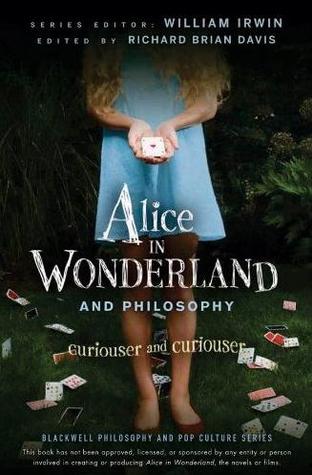
Alice in Wonderland And Philosophy
I was early for robotics on Tuesday so I went to the library to (hopefully) find EE-related stuff rather than stay by myself in the room. While I didn't find anything directly related to my EE, I did find this book: Alice in Wonderland and Philosophy; curiouser and curiouser. It's a series of essays edited by William Irwin (series editor) and Richard Brian Davis.
It's actually an interesting read. While I have read books inspired by Alice in Wonderland (such as the King in the Glass... at least, I think that's the name); I haven't actually read the book, or even thought about it in a vaguely literary way. I suppose it's because I never did manage to make sense of the disney movie, which I probably saw when I was too young to comprehend.
But this book does introduce a lot of interesting ideas (such as Alice in Wonderland being a metaphor for a drug trip, although I agree with the author that that is probably an overeading), notably, the concept of jam-yesterday-jam-tomorrow but never jam today. It makes a lot of sense as to why experiences (such as school) seem so unpleasant now but are fun/enjoyable before we start school, when we finish school.
Another, more important 'lesson' I took away was the idea of a social contract. A social contract is simply an unspoken agreement between members of society to behave a certain way. Because Alice is not a member of Wonderland, she continually rejects and breaks their social contract. I was reading it when I realised that this was how I could tie my new EE topic together. I was looking at the idea of repeated betrayal in two characters, but couldn't really really see what was going on. But now I realise, that they are, in effect, breaking the social contract between them and society. With this focus, I can probably do an EE that (hopefully) will not have to change again.
I feel like reading Alice in Wonderland and Through the Looking Glass now, but I guess it'll have to wait. EE calls.
It's actually an interesting read. While I have read books inspired by Alice in Wonderland (such as the King in the Glass... at least, I think that's the name); I haven't actually read the book, or even thought about it in a vaguely literary way. I suppose it's because I never did manage to make sense of the disney movie, which I probably saw when I was too young to comprehend.
But this book does introduce a lot of interesting ideas (such as Alice in Wonderland being a metaphor for a drug trip, although I agree with the author that that is probably an overeading), notably, the concept of jam-yesterday-jam-tomorrow but never jam today. It makes a lot of sense as to why experiences (such as school) seem so unpleasant now but are fun/enjoyable before we start school, when we finish school.
Another, more important 'lesson' I took away was the idea of a social contract. A social contract is simply an unspoken agreement between members of society to behave a certain way. Because Alice is not a member of Wonderland, she continually rejects and breaks their social contract. I was reading it when I realised that this was how I could tie my new EE topic together. I was looking at the idea of repeated betrayal in two characters, but couldn't really really see what was going on. But now I realise, that they are, in effect, breaking the social contract between them and society. With this focus, I can probably do an EE that (hopefully) will not have to change again.
I feel like reading Alice in Wonderland and Through the Looking Glass now, but I guess it'll have to wait. EE calls.
Labels:
non-fiction
,
philosophy
,
western
Subscribe to:
Posts
(
Atom
)