Showing posts with label literature. Show all posts

Thursday, October 18, 2018

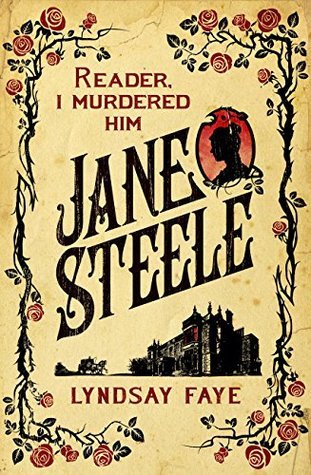
Jane Steele by Lyndsay Faye

This book was a large reason why I finally read Jane Eyre - a serial killer satire of Jane Eyre sounded amazing. The peek that Wendy at Literary Feline gave into the book intrigued me and I decided that I had to read it.

Jane Steele is a big fan of Jane Eyre. However, she and Jane Eyre are vastly different - starting with the fact that she’s a serial murderess. But inspired by the book, Jane Steele decides to pen her memoirs.

This book is basically what happens when you take Jane Eyre and ask “what if I made her a feisty girl?” When faced with danger, this Jane repeatedly chooses the “fight” response, rather than flight or to bear the whole thing.

I found that many of my objections to Jane Eyre were addressed in this book. For example, this Jane is openly affectionate to her ward, Sahjara, who is an enchanting character in her own right. In general, I thought the non-Jane female characters here were a lot more sympathetically written and showed Jane’s generosity of spirit (no matter how evil she thinks herself).

I also found Charles Thornfield, the Mr. Rochester of the book, to be a decent human being. He has his demons, same as Rochester, but he managed to hold on to his sense of decency and never locked anyone (first wife or not) in an attic.

Speaking of the characters in this book, I absolutely loved how they came to life and participated in the story. Jane Eyre was very much about Jane and her experiences and feelings. Jane Steele has Jane become involved in the lives of the people around her, which lead to both mystery and adventure. Needless to say, I found the plot (and characters) of this book to be much more entertaining.

It’s pretty rare that I say this, but I like this satirical look at Jane Eyre much more than the original story. If all the Jane Eyre adaptions are this good, then I definitely will not regret reading the original anymore.

Wednesday, September 26, 2018

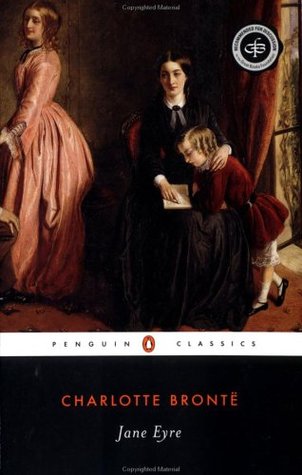
Jane Eyre by Charlotte Bronte

I’ve finally finished Jane Eyre! I am, as usual, embarrassingly behind the times.

So a little history about my experience with this book. By the time my two youngest siblings were born, my parents had twigged onto the fact that I liked books and got me one new book for each new sibling (to help the transition, I think?). The books I received were Jane Eyre and Wuthering Heights and unfortunately, I did not like them. I couldn’t even finish them. For some strange reason, the language made my head hurt. So I put them aside.

When I grew up, I had even less reason to read Jane Eyre. I heard that Bronte spoke disparaging of my favourite Jane Austen (and I reread her books all the time) and was like ‘clearly she doesn’t have good judgement'.

Then, I found out about Jane Steele, the rewriting of Jane Eyre where Jane becomes a murderess. That sounded fun, and since I’m the type that would like to read the original before reading the rewrite, I decided that if I could read Dickens and Braddon, I could probably handle Bronte.

Well, I just finished the book and while I liked it well-enough, I didn’t love it.

If you haven’t heard of the plot of Jane Eyre, basically Jane Eyre is this despised child who becomes a governess who falls in love with a pompous guy who has his mad wife locked in an attic.

My biggest impediment to enjoying the book wasn’t the language (surprisingly), but Jane herself. There were parts where I was like “you go girl” (mostly the parts where she stands up for herself) but she came off as someone who thought herself superior which made it hard to like her.

In fact, while Jane acts like she has low self-esteem, the way the book is written makes it sound like she delights in how she thinks lowly about herself. And more than that, the way she thinks of girls and women who are not like her is off-putting. There are two bright, vivacious girls in the novel - Adele, the girl she teaches, and Miss Oliver.

Adele is somewhat spoilt but charming child and while Jane professes to have an affection for her, you never really see or feel it. And despite her horrible childhood, she’s happy when Adele becomes a “pleasing and obliging companion: docile, good-tempered, and well-principled.” Her Aunt Reed was definitely horrible, but didn’t she want Jane to basically be what Adele became (okay she had some family issues but her charges against Jane were her attitude and behaviour)

Not to mention that she doesn’t seem to mind the fact that Adele’s dad is determined not to acknowledge her. Even though Jane grew up an orphan and probably knows what Adele feels.

As for Miss Oliver, she’s this slightly flighty but essentially good-natured heiress who makes friends with Jane. After acknowledging her charms, Jane just has to add “she was not profoundly interesting or thoroughly impressive.”

All this, plus the fact that Jane the narrator doesn’t give Adele and Miss Oliver the space to develop into well-rounded characters made Jane come off as the self-superior kind which I found to be fairly irritating.

And let’s not get me started on Mr Rochester; who is only superficially similar to another pompous character: Darcy from P&P. Darcy was pompous and socially awkward but he had a good heart. Mr Rochester basically promised himself to someone (think of what happened in Sense and Sensibility) and got her to break it off. Not to mention locking his wife in the attic and trying to force Jane into bigamy.

Overall, I’m glad I’ve finally read Jane Eyre because she’s an important part of Western literature. The language is a little heavy but there were points in the novel where I was genuinely rooting for, and admiring, Jane and her principles. That said, I don’t see this book as something that I will return to over and over again.

Thursday, June 14, 2018

Tree and Leaf by J. R. R. Tolkien

I wanted to try challenging my mind a little so I picked up Tree and Leaf, a collection by Tolkien! It made me miss my literature days because I felt like I missed a lot. This collection consists of;

- On Fairy-Stories: I’ve actually read this essay before but I found it so hard to read the first time round! Shows you how much my mind has rusted. It was much better the second time round and I managed to appreciate it.

This essay explores the definitions and origin of fairy tales in a fairly academic but lyrical style (as odd as that description is). Personally, I prefer Chesterton’s chapter (The Ethics of Elfland) in Orthodoxy even though it looks at fairy tales in a very different (and less academic) way.

- Mythopoeia: This was a lovely poem although I didn’t completely understand it.

- Leaf by Niggle: I really enjoyed this short story about a man named Niggle, who neglects preparing for his eventual journey to paint a leaf. But his painting is always interrupted by his neighbour and though Niggle doesn’t like it, he more often than not helps him out. Apparently Niggle might have been a stand-in for Tolkien himself, which is something interesting to consider!

- The Homecoming of Beorthnoth Beorthelm’s Son: this is apparently a play inspired by a myth and I would normally be into this sort of stuff but I:

a. Tend to be very inept at understanding plays
b. Didn’t really get the three part structure of this

So it was kinda wasted on me.

Like I said at the start, this book made me wish I was still actively studying literature because I think I would have understood it a lot better if I was still using those muscles. Still, it was a good change from what I’ve been reading.

Friday, June 1, 2018

Contested Will by James Shapiro

Contested Will is basically non-fiction literary mystery which looks into the question: who wrote the plays attributed to Shakespeare?

If you haven’t heard, there’s some debate into the authorship of the Shakespeare plays. The first section of the book deals with how this debate even arose. To sum, by the time people grew interested in the life of Shakespeare, the people who knew him were dead. And thanks to a man name Malone, they started thinking that details of Shakespeare’s plays revealed details about Shakespeare’s life. And because people can be snobs, they started thinking that a glover’s son couldn’t possibly have written all these wonderful plays. In fact, his plays must have been written about someone worthy and two of the strongest contenders are Francis Bacon and Edward de Vere, 17th Earl of Oxford.

Parts two and three of the book look at how the theories of Bacon and Oxford as Shakespeare came about by tracing the history of the arguments through the people who advocated for them. For Bacon, he covers Delia Bacon (very sympathetically) and Mark Twain. The Bacon theory is very much connected to ciphers. For the Oxford theory, he talks about Freud and Looney and this theory is very conspiracy-theory and based on supposed similarities in life events. Perhaps it’s because Shapiro is a Shakespearean scholar and hence skeptical of the Bacon and Oxford theory, but I didn’t find the proponents for the alternative candidates very convincing.

In the last section, Shapiro uses early Shakespearean texts and what contemporary writers said to argue (more convincingly, in my opinion) that William Shakespeare did indeed write his own plays.

The Shakespearean authorship question isn’t very well-known, but if you like literature and mysteries, I think you’ll enjoy this book. It’s not only well-written, it’s well-researched (he doesn’t have a bibliography, he has a bibliographic essay!)

Thursday, December 14, 2017

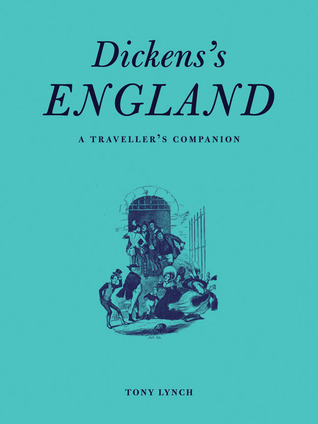
Dickens's England by Tony Lynch

This book caught my eye because it seemed out of place in the travel guide section. But I am planning to go to the Charles Dickens museum, so I decided to read it. And you know what? This is a really delightful guidebook.

Organised alphabetically, this book covers the two lives of Dickens - the actual England where he lived, worked, and traveled, and the fictional England that his characters inhabited. There is a chronology in front, and then the book delves into the various locations. For the actual England, the book talks about the events that took place when Dickens visited or lived in that location. For fictional locations, the book talks about scenes that take place (with quotations) and locations that inspired certain buildings.

For some reason, I expected this place to focus on London, so I was pleasantly surprised at the amount of non-London places that were covered. There were also a lot of 'tourist spots' like Westminster Abbey, Bath, and Stratford-upon-Avon in the book, which gave me even more to look forward to.

Also, I realised that Dickens was a very well-traveled guy, at least when it came to England.

I think this would be a good "guidebook" to read before or during a trip to England. Charles Dickens is a hugely influential English writer and if you're interested in literature, you might find your trip enriched by all these additional pieces of information.

Wednesday, November 29, 2017

Persuasion by Jane Austen

Since I will be going to Bath, I decided to reread Persuasion, Jane Austen’s last novel and the one staring her oldest heroine

At 27 years old, Anne Elliot is a confirmed spinster. Ignored by her vainpot father and older sister, she’s more or less given up to romance. But when her father has to rent out the family home, she finds that the new tenants have a connected to Captain Wentworth, the man she loved and rejected all those years ago.

And of course, Captain Wentworth reappears in her life. And soon after, her long lost cousin (and her father’s heir) also reappears, with his ways seemingly mended and with great interest in Anne too.

What I had forgotten about the book is that the first half doesn’t even take place in Bath! It takes places at Anne’s younger sister’s home in Uppercross and most of the groundwork drama happens here too. To be honest, Uppercross feels more ‘real’ than Bath.

My least favourite character in this book has to be Mrs. Russell. Anne’s family are all vapid and egocentric to a certain degree (her married sister being the most tolerable), but Mrs. Russell holds the ignoble decision of persuading Anne to break off her first engagement to Captain Wentworth. For all the praise Anne gives her for being a sensible woman, she seems almost as shallow-minded as Anne’s family, except her shallowness manifests differently.

As for Anne and Wentworth, I feel like their romance is the most unique out of all of Austen’s books. Unlike all other Austen heroines, Anne and Wentworth have a past and they know each other. The romance is more of cutting through eight years of distance and misunderstandings to show the constancy of love.

(Plus Anne is still older than me so I can look up to her.)

It’s always a pleasure to read Austen. I want to read Dickens and the time-travelling Shakespeare books first, but if I have the time before the trip, I’d like to read Northanger Abbey, the other Bath novel, as well.

Monday, November 20, 2017

More BBC Radio Dramas to Listen to

This isn't the usual book review, but I opened the BBC iRadio app today and saw a lot of interesting radio dramas, so I thought I'd share in case you're like me and haven't opened it for some time either.


The first is Agatha Christie's Murder on the Orient Express. Unfortunately, the first episode has already expired, but I started from the second and could still follow it along. Each episode is about 30 minutes which makes it easy to listen to. If you don't have the app, you can find the episodes on this page. 


I haven't listened to Sherlock Holmes but this is on my to-listen list (along with a ton of podcast episodes). If you've already listened, let me know what you think! The page is available here.


This is another series that I haven't listened to yet, but I've always enjoyed the BBC's adaptations so I'm sure I'll enjoy this too. Emma is a really fun Jane Austen novel and I look forward to listening to this too. If you're on a computer, this is the link to the page.


I'm currently listening to this and I'm enjoying it very much! Then again, I love Pride and Prejudice so it would have to be a really bad adaptation for me not to like it. If you want to listen, you should go to this page. 

Let me know if you've listened to any of these, or if you've got any recommendations! 

Thursday, October 26, 2017

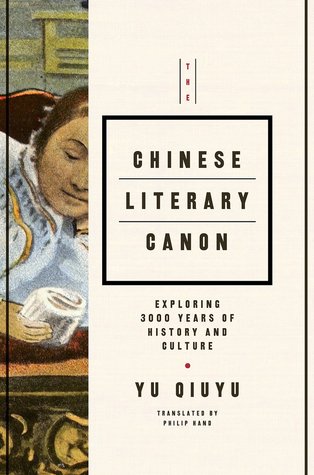
The Chinese Literary Canon by Yu Qiuyu

Every now and then, I feel guilty that I don't know more about Chinese literature (don't ask me why, I just do). But the problem is, I don't know where to start to learn about it. So when I saw this book while browsing through NLB's catalog, I thought it would be a good way to learn about Chinese literature.

To be honest, I almost gave up after the first chapter. The first chapter is the introduction and there were so many names referenced that I got thoroughly lost and thought I would never understand. But I decided to continue reading and the book got much, much better.

The Chinese Literary Canon is basically a series of essays exploring various aspects of Chinese literature in chronological order. The writing is expressive and elegant and it feels like a passionate teacher is standing in front of you, delivering a lecture (an interesting lecture, I should add). This isn't an unbiased account of history, this is one man's summation of his view of Chinese literature and the passion shines through every word.

There is so much of the book that is quotable, which is to say it rings true to me. For example, when talking about myth, the author writes:
"Why are myths and legends so often treated with contempt by historians? For one, they do not respect the boundaries of time and space, and because they free our imagination."
And when talking about Ruan Ji and his flouting of convention, the author notes that:
"This is a story that we have seen a thousand times throughout history: The prodigal son is often more true to the kernel of meaning than the most well-trained mommy' boy who follows every rule."
And when talking about the Tang Dynasty, the author touches on the idea of cultural purity and notes that:
"In truth, excessive purity is like a glass plate. It may be highly polished and crystal bright; but it is still small, thin, fragile. One day, some slight pressure will crack it, and it will cut your fingers. 
And in any event, isn't glass a compound? Can it really claim purity?"
There was only one chapter that struck me as slightly odd. In the chapter on Chinese archaeology, the author talks about the disruption the fall of the Qing dynasty has on the progress of Chinese archaeology, but completely neglects to talk about the effect of the cultural revolution and World War II. It may be that there is nothing worth talking about, but I found the gap to be odd.

I will not pretend that reading this has given me a grasp of the Chinese literary canon. While I feel like I understand more than I did before, large parts of the book still elude me. In the end, I read and let the words flow over me, grabbing what I could and letting go of the rest. I don't know if it's possible, but I would like to learn a bit more about Chinese literature and then reread this book, to see what a second reading would bring.

Thursday, July 13, 2017

The Monster and the Critics by J. R. R. Tolkien

It's a good thing that this is a book of essays because it's easy to read about one a day (although it's not a light read). The Monsters and the Critics is a collection of essay/lectures given by J. R. R. Tolkien. The essays are:

Beowulf: The Monsters and the Critics: I realised how rusty the 'literature' part of my brain was because this was difficult for me and it's not aimed at a scholarly audience!

On Translating Beowulf: see comments above

Sir Gawain and the Green Knight: this was interesting and didn't feel as hard - perhaps because I have some knowledge of Arthurian legends?

On Fairy Stories: love, love, loved this! (see quotes below)

English and Welsh: I will never be able to pronounce Welsh words and I doubt I will learn it but it was a cool essay

A Secret Vice: Tolkien's made-up language appears here.

Valedictory Address to the University of Oxford: on his department and even though he claims to be a poor lecturer, I wish I had the chance to attend one of his lectures based on the essays here

The essays here, while not scholarly, are definitely not as easy as a TED talk. They take work while reading, but the effort is definitely worth it.

And by the way, I have tons of saved quotes from On Fairy Stories, like:

"Faerie is a perilous land, and in it are pitfalls for the unwary and dungeons for the overbold."
"The realm of fairy-story is wide and deep and high and filled with many things: all mannethe of beasts and birds are found there; shoreless seas and starts uncounted; beauty that is an enchantment, and an ever or sent peril; both joy and sorrow sharp as swords. "
"Faerie contains many things besides elves and fays, and besides dwarfs, witches, trolls, giants, or dragons: it holds the seas, the sun, the moon, the sky; and the earth, and all things that are in it: tree and bird, water and stone, wine and bread, and ourselves, mortal men, when we are enchanted."
And lots more. But too many quotes and I would probably just end up transcribing the entire essay. n addition, I think it's worth reading the footnotes here too, because Tolkien's footnotes feel like he's talking directly to you which makes them entertaining and unlike most footnotes.

I'm not going to say that all Tolkien fans should read this because it's not really aimed at them (I think). But if you're interested in mythology or philology, this is for you. And if you're a fan of Chesterton, or just a fan of fairy stories, On Fairy Stories is definitely a must-read.

Friday, July 7, 2017

Fahrenheit 451 is on the BBC!

I opened up the BBC iPlayer radio app and I found out that they are doing a series on Fahrenheit 451!!!

Source
It's only available for a month so go listen to it if you're interested!

I really love Fahrenheit 451 (perhaps because I had to study it for 2 years) and I'm totally looking toward to listening to it! I've finished the first chapter so far and I can't tell which parts have been abridged (though I wonder if it even needs to be abridged since it's so short anyway). The opening, at the very least, is how I remember it.

Each episode (so far) is 15 minutes long so it's very easy to find pockets of time to listen to an episode.

If you're interested in listening, you can check it out here or on the app (which is free! Just go to 'drama')

Monday, May 29, 2017

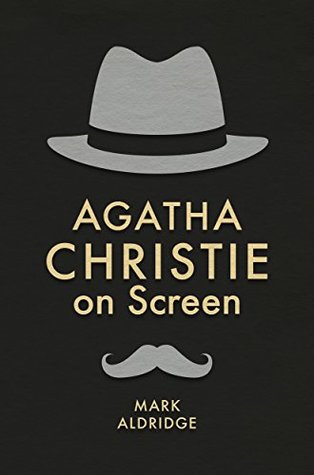
Agatha Christie on Screen by Mark Aldridge

Like the title says, Agatha Christie on Screen is about the movie and TV adaptations of her work. The focus is mainly on the American and British productions, but there is a small discussion of the other European and Asian countries as well towards the end. It's also an academic work, so the language is rather formal (though not as formal as some papers that I've read).

The book is structured chronologically, starting with the first films (which were silent films). It shows how good her timing was because her books were perfect for TV/movies (or so the book says multiple times). The discussion is mainly a recap of the movie and a review of its merits which is another way of saying that there are lots of spoilers here. But if you're a Christie fan, you'll probably have read most of this.

I actually haven't watched any of the dramas, movies or the anime inspired by Agatha Christie, but the anime does sound pretty good. Most of the other adaptions seem to veer more on the comedic side, which isn't really what I'm looking for.

By the way, the multiple discussions on Marple and Poirot make me feel like I should try reading the Marple series (I'm mainly a Poirot fan). I never knew she was this popular and perhaps it's time for me to try and understand why.

This was an interesting read and definitely for big fans of Agatha Christie. It may be more on the academic side (and hence a bit dry at times), but it was fun to read about how people have interpreted her work and how it has been received.

Thursday, May 25, 2017

The Global Novel by Adam Kirsch

I requested this book as soon as I read the title. It sounded interesting, and I'm always keen on seeing what people think about novels. The Global Novel is a discussion on the subject of world literature. It starts pretty abruptly, plunging the reader straight into a discussion on the criticisms against the subject of world literature.
"The question of whether world literature can exist - in particular, whether the novel, the preeminent modern genre of exploration and explanation, can be "global" - is another way of asking whether a meaningfully global consciousness can exist."
In other words, the stakes are high. After the introductory chapter, the author goes on to discuss:

Snow, by Orhan Pamuk
1Q84 by Haruki Murakami and 2666 by Roberto Bolaño
Americanah by Chimanda Ngozi Adichie and The Reluctant Fundamentalist by Mohsin Hamid
Oryx and Crake by Margaret Atwood and The Possibility of an Island by Michel Houellebecq
Elena Ferrante's Neapolitan novels.

I didn't quite get the sense of an overarching argument, but it was an interesting discussion. I haven't read many of the books (and I don't really feel like reading any of them other than Ferrante and Murakami after reading this), but I was able to follow the discussion along. Perhaps I didn't get as much depth as I would if I had read the books, but it did make me think. In fact, this line by Mizumura made me think:
"Bilinguals [will] start taking their own country's literature less seriously than literature written in English - especially the classics of English literature, which are evolving into the universal cannon." 
It did give me pause because I read primarily in English, even though I'm technically trilingual. I don't read in Chinese (not unless it's Chinese comics, and even that is rare and limited to my childhood) and now I'm wondering how much I've missed by neglecting one language.

This is probably aimed mainly at students of literature, but anyone curious about the world of literature might be interested in this.

Disclaimer: I got a free copy of this book from the publisher via NetGalley in exchange for a free and honest review.

Monday, May 22, 2017

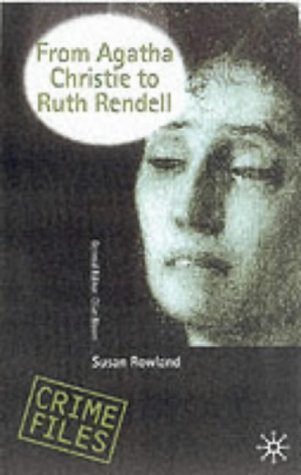
From Agatha Christie to Ruth Rendell by Susan Rowland

This is one of the two books that I've managed to finish last week (at the rate I'm going, I'll have to take a hiatus from the blog/cut down on blogging dramatically because I will eventually run out of reviews :p)

Despite the unfortunate cover (sorry but I think it looks boring), I found this to be a fascinating read! It's an analysis of the works of 6 queens of crime:

Agatha Christie
Dorothy L. Sayers
Margery Allingham
Ngaio Marsh
P. D. James
Ruth Rendell (also writing as Barbara Vine)

The book opens with very short biographies of the six women and then it starts the analysis. Each chapter covers one topic and the topics are:

- Gender and the mystery genre
- Class issues
- England and its colonial legacy
- Psychoanalysis and the genre
- The influence of gothic literature
- "Spiritual detection" (actually I didn't really understand this chapter)
- Feminism and the genre (I really like the title of this chapter 'Feminism is Criminal')

I found the writing style to be a lot more accessible than the Christie book on her film adaptations (though still on the academic side) but you really should have read a majority of these women's works if you want to fully understand the book. I haven't read Ngaio Marsh and Margery Allingham so I couldn't appreciate a lot of the analysis of their works.

That said, this did renew my interest in reading their works because of how interesting the books sound! I feel like reading something from all of them, and the library has at least one of each lady's book in ebook format so I may go on a mystery binge after this!

I would recommend this book to fans of the mystery genre who are looking for a deeper appreciation of some of the mysteries they read! The chapters aren't connected so you can pick up the book and only read what interests you (plus the chapters are broken up into sections by authors + introduction so you don't even have to read the whole thing). If you're a fan of any one of these six authors, you should give the book a go!

Monday, May 8, 2017

Not Just Jane by Shelley DeWees

Hi everyone!! Just wanted to say hi because I haven't posted for most of last week. It was Golden Week in Japan, which means holiday for most of the country and peak season for me (I guess that's what working in the tourism industry does). I've been way busier than normal as a result and haven't had the energy to turn on my computer for most of the week. But, I'm finally back(: Ok, time for the review. 

So I saw this book and just had to borrow it. I love Jane Austen, but I'm also looking out for more authors from that time period.

Not Just Jane is a collection of seven mini-biographies of authoress's who were famous in their day yet almost completely unknown now. They aren't even studied that often in the field of literature! Which is a huge pity because they led interesting lives and wrote some groundbreaking novels at a time when women were supposed to be wives and nothing else.

The authoress's in this book are:

Charlotte Turner Smith
Helen Maria Williams
Mary Robinson
Catherine Crowe
Sara Coleridge
Dinah Mulock Craik
Mary Elizabeth Braddon

They all led different lives and wrote different things, but they all seem to be amazing women and amazing writers. Along with a biography, Shelley DeWees also provides an introduction to the period of that time, making me feel very grateful to be writing now, with much fewer barriers.

I'm not sure if the NLB has any of their books, but there's a good chance that Project Gutenberg does. I've already found Lady Audley's Secret by Mary Elizabeth Braddon. It was the best-seller when it came out and propelled her to stardom (and scandal). I'm really looking forward to reading that when I have the time.

This is a must-read for everyone. The biographies are short (about 20 pages on my iPad) and I managed to devour the book in two days. I'd recommend having a tab open to Project Gutenberg or Manybooks while you read, so that you can check for your next read at the same time.

Wednesday, December 14, 2016

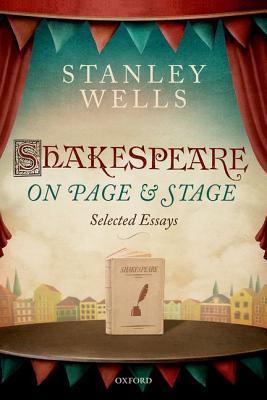
Shakespeare on Page and Stage by Stanley Wells

When I read the introduction, the idea that jumped out at me was "readable academic essays." Which seems like a paradox in itself, but as the introduction promised, this is an enjoyable collection of academic analysis on Shakespeare.

The essays are divided into four sections: Shakespearian Influences, Essays on Particular Works, Shakespeare in the Theatre, and Shakespeare's text. It's going to be impossible to summarise all twenty nine essays, but rest assured that this work will give people who are studying Shakespeare plenty to chew upon.

And though this is a readable work, it is still very dense with ideas and analysis and I found that my reading speed slowed considerably while reading it. Which is a good sign, because if it's an academic work, then I expect to read slowly in order to understand what the author is trying to say.

While this isn't the best book for a reader looking to get into the analysis of Shakespeare, readers with a working knowledge of Shakespearian criticism (in this case, I'm defining it as 'if you've studied Shakespeare in school') will probably be able to understand most of what this book says. And I'm sure the academic audience will be delighted to read it.

Disclaimer: I received a free copy of this book from the publisher via NetGalley in exchange for a free and honest review.

Wednesday, July 20, 2016

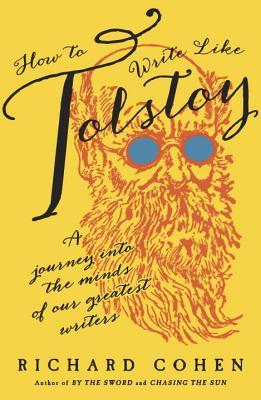
How to Write Like Tolstoy by Richard Cohen

I requested this book mainly because of the word "Tolstoy", not "How to", because me and writing long stories don't really mix (I like reading them, but I can't write them :p). Which is a good thing, because this is less of a how-to book than it is a discussion of the different aspects of a novel.

Richard Cohen takes the reader through the different aspects of the novel, from the beginning to characters to revising and the ending, and even the tricky issue of sex in writing. It's less instructional and more "this is how different writers do things". For sure, he does tell you when he thinks a writer has failed in a particular aspects, but rarely does anything become a rule, probably because you can always find an exception to a rule.

Plus, things are never really clear cut. For example, what is irony? The book has an entire chapter on it, and he talks about a bunch of people's opinions, but it does not end in a conclusion. It ends with his opinion, but it (and a few other chapters) feel a lot like "well, we don't really know, but if it works, does it really matter?" (The answer is no. I think.)

Oh, but if you want to really enjoy this, you should (ideally) be widely read. It's ok if you're unfamiliar with the literary criticism, but if you don't know Lolita, Austen, Madame Bovary, Tolstoy (obviously), then even the quote excerpts won't help much, I think. I appreciated all the different references, but from the few that I didn't get, I imagine it can be quite confusing to others.

Overall, I really enjoyed this book. I like the tons of references to the classics - it felt like I was revisiting a lot of old friends, and I think the book was written in a very understandable way. Definitely recommended to people interested in literature and books.

Disclaimer: I got a copy of this book from the publisher via NetGalley in exchange for a free and honest review.

Friday, June 24, 2016

Romance of the Three Kingdoms by Luo Guanzhong

I'm actually a bit ashamed to say that I've never read The Romance of the Three Kingdoms until now. All I know about the story are the excerpts from Chinese class/Chinese tuition, and stuff from dramas. So clearly this is something that has to be remedied. However, my Chinese isn't the best, so I opted to read a translation.

The story is too complicated to describe. Basically, a bunch of people scheme and fight and betray one another in order to gain power. Of course, there are a few characters who, through either sheer luck or ruthlessness, manage to remain in the story. For me, the two that come to mind are Cao Cao and Liu Bei plus his sworn brothers.

Oh, and for some reason, I've always had this Cao Cao = bad and Liu Bei = good association in my mind.

This is mostly true (Cao Cao does some really horrific things, while Liu Bei... Not so much), but the characters are more nuanced than that. Occasionally, Cao Cao acts like a decent human being. Of course, this normally occurs after his 'enemy' has been put to death and only when it suits him.

Liu Bei reminds me of the Mulan song, where you need to bend like bamboo in the wind. He really does bend here and there. But he's a good guy at heart.

Which is more than most of the other characters. I really think that he and his sworn brothers are the most loyal characters there (and have the most 'righteous' personalities). Everyone else... likes to listen to what suits them. But I guess that's human nature.

Oh, and the most pitiful character is definitely the emperor and his family. They're basically puppets of the prime minister, which reminds me a lot of the emperor and the Shogun in Japan (though this comes first, I think)

I'd totally read on. But before I pick up the second volume, I have quite a few other books on my TBR list. And I guess when I've finished this, I should go on to the Red Chambers (can't remember full title) and other classics.

Monday, February 8, 2016

CNY Liveblogged Review - The Man Who Was Thursday by G.K. Chesterton

Happy Chinese New Year everyone! Since I'm in the midst of exam season and can't go home, I decided to celebrate with a readalong on my Dayre. There were only two participants, including me though... Oh well, there's still tomorrow and maybe someone will join in!

Anyway, we read The Man Who Was Thursday by G.K. Chesterton. Without further ado....

First thoughts: I didn't notice this was subtitled "A nightmare"! Explains quite a bit hahaha

The opening lines remind me of a poem though.

A cloud was on the mind of men, and wailing went the weather, Yea, a sick cloud upon the sound when we were boys together. Science announced nonentity and art admired decay; The world was old and ended: but you and I were gay

Haha, and I just realised this is a sort of prologue?

But I think my readalong report is more quotes than feelings, because I ALREADY FOUND ANOTHER QUOTE.

And it's not even Chapter 1 yet.

This is a tale of those old fears, even if those emptied hells, and none but you shall understand the true thing that it tells

Just finished Chapter one and I was reminded once again about how much I love Chesterton's descriptions. I just want to copy that paragraph about the sunset, but I won't haha. It's too long!

Also, I managed to forget my student card in school, but thank goodness for class Line! My friend managed to retrieve it.

Anyway, quote of choice from Chapter 1, and then I'm gonna study.

He seemed like a walking blasphemy, a blend of the angel and the ape.

I studied two chapters of managerial accounting, then my hands froze a little so I took a break for lunch and read some more

I forgot to say it just now, but in the beginning, there is a line about the beauty of one great act of violence. In wake of all the terror attacks, it really hit home and I wonder, is that how terrorists see things? Do they miss the beauty of life for the terrible greatness of an explosion?

The man who throws a bomb is an artist, because he prefers a great moment to everything. He sees how much more valuable is one burst of blazing light, one peal of perfect thunder, than the mere common bodies of a few shapeless policemen.

Of course, Chesterton follows it by having another character make the argument that it is order, not disorder, that the anarchist should embrace, because disorder is the natural state, while order isn't.

Anyway, there was also a rather true moment, I feel, when it was said that people don't tend to take those at extremes seriously. Sometimes, speaking the truth is the best way to get someone to disbelieve you.

I took his advice, and have never regretted it. I preached blood and murder to those women day and night, and--by God!--they would let me wheel their perambulators.

I am basically rewarding myself with reading. Just finished revising (will go through the practice questions next), so I read a few chapters.

We're well into the narrative now, and Syme (the protagonist) has gained entrance to the council of anarchists. My ebook is also very pink from all the highlighting.

I think I'm starting to remember what the twist was.

Anyway, if I had to pick one quote from all I saved for this section, it would be this:

For even the most dehumanised modern fantasies depend on some older and simpler figure; the adventures may be mad, but the adventurer must be sane. The dragon without St. George would not even be grotesque.

It seemed a symbol of human faith and valour that while the skies were darkening that high place of the earth was still bright. The Devils might have captured heaven, but they had not yet captured the cross.

I'm on the way to go teach, so I managed to read till the end of Chapter 9 in the train. Depending on how long the end matter is, I may be able to finish the book today, in which case I'll have to find something else for tomorrow :p

But now the story is doing the unraveling, where each character is shown for who they are. So far, Syme has unraveled two of the anarchists, and I think he'll unravel the third in Chapter 10

"Because I am afraid of him," said Syme; "and no man should leave in the universe anything of which he is afraid."

So I have followed the story to its end, and like @rideofvalkyries asked, here are my attempts at consolidating my thoughts. (By the way, if anyone is going to attempt the readalong on Day 2, please do so because I think the both of us would love to see more opinions).

To me, the meaning of the entire story is tied to two things.

One is that it is 'a nightmare'. What is a nightmare but a scary dream that one remembers imperfectly?

The other is Sunday. Who is he?

Each of you finds Sunday quite different, yet each man of you can only find one thing to compare him to - the universe itself.

But when I saw him from behind I was certain he was an animal, and when I saw him from the front I knew he was a god

For the matter, who is Gregory, the wannabe anarchist? Who is Syme? Who is Bull? Are they characters in a book or characters in a dream that was written down?

To be honest, I have no idea. I have a suspicion, but I'm no longer a lit student and can't back it up. I think the truth is hinted at in this line:

For these disguises did not disguise, but reveal.

So if this book, too, is a disguise, the question is: what does it reveal?

Is this a nightmare or a dream?

*******
And that's the end of the liveblogged review that I did today!

Wednesday, February 3, 2016

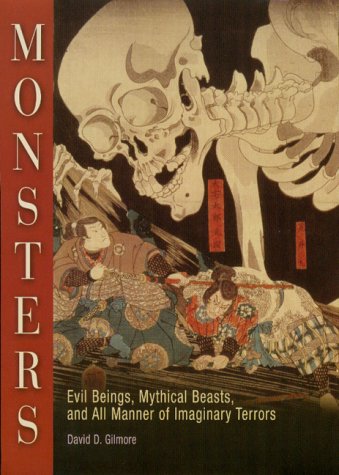
Monsters by David Gilmore

I've been meaning to read this book for a while, but the NLB didn't have it. Luckily I got one more free month of Scribd, so this was the first book I picked up.

Monsters is an overview of the monsters throughout the world. And this time, it really is an overview of monsters throughout the world, rather than monsters in Europe.

For the record, a monster is defined as "supernatural, mythical, or magical products of the imagination [...] monsters are imaginary, not real, embodiments of terror." The book specifically excludes humans turned bad (witches, wizards, zombies), and real things, like mass murderers, even if the label can apply.

While there is slightly more emphasis on monsters in the west - The Windigo gets its own chapter, plus another for American monsters, and two chapters for European monsters, compared to the two chapters for the East - the author does touch on Chinese, Indian, Japanese and Polynesian monsters.

Oh, and by the way, the chapter entitled "Japan and the Pacific Islands" is more about the islands than it is about Japan.

While this book is fairly academic in style, it's still readable. You shouldn't go in expecting a conversational telling of the various myths and legends, because there is none of that. It's an overview of how people react to and live with 'monsters', and what that means about us. In fact, my favourite part of the book was the discussion of what monsters may mean. Despite the various types of monsters, they all have a few things in common, like their size, their type, and such. The concluding paragraph sums up monsters pretty well, in my opinion:

"The power of monsters is their ability to fuse opposites, to merge contraries, to subvert rules, to overthrow cognitive barriers, moral distinction, and ontological categories. Monsters overcome the barrier of time itself. Uniting past and present, demonic and divine, guilt and conscience, predator and prey, parent and child, self and alien, our monsters are our innermost selves." 

If you're interested in a study of monsters, I highly recommend this book.

Wednesday, December 30, 2015

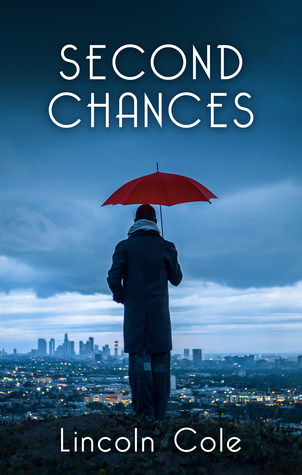
Second Chances by Lincoln Cole

A little while back, I read Ripples Through Time. Now, I managed to read Second Chances, also a literary story.

Now for the huge disclaimer because: a. I got the book for free (Thank you, Lincoln!) and b. I know the author personally, and he has helped me with my own writing. So yes, I am biased, but I believe (hope) I'm biased because he's a good author and I'm now a fan. Can one be a fan and friend at the same time? Moving on...

The opening is inspired by/extremely similar to what happened in the Normandy School district (This American Life did a great episode on it - episode 562), but then it takes a different path.

Basically, there are two main characters: Nicole, who has to take care of her siblings (with help from her older bro) after her mom goes missing, and Richard, the boss of the law firm Nicole is interning at. While Nicole has managed to hide the fact that her life is crumbling, Richard eventually finds out. And he does not react well. Then there's the well-meaning stuff he tries to do that comes across badly.

Ok, I should stop before I end up giving the whole story away.

To me, the book is fantastic because of the characters. I found that the main character for me was Richard, the well-meaning dude who unintentionally lost his soul to the corporate law world, but Nicole was cool. The two leads were sympathetic, even if Nicole did spent half the book (justifiably) angry at Richard.

And I can't believe it took me half the book to realise this, but this world is set in the same one as Second Chances!! And it kind of gave me a different perspective on some of the characters I first heard there. Mostly, it gave them more flaws, and Richard more sympathy.

In short, I loved this, even though I am super biased. I actually read the first few chapters on WriteOn, and was wishing I could get a copy until Lincoln sent me one (he's super helpful and generous to newbie writers like me) as a formatting example.

If you like stories about people, not necessarily big flashy stories, but one that digs into the characters and shows you what they're made of (and gives them a chance to grow), you'll like Second Chances.