I’m very sure that I requested for this book because it was supposed to be a twist on the usual murder mystery. Well, it definitely was different.
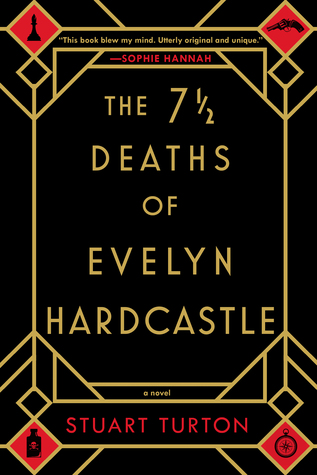
In The 7 1/2 Deaths of Evelyn Hardcastle, Aiden wakes up every day in the body of a different person. He also has to relieve each day, watching Evelyn Hardcastle die at 11:00. And until he can figure out who killed her by his last host, he’s doomed.
I can’t really say too much of the plot here because:
1. It would result in a spoiler
2. I’m still confused.
While this was a very clever book, I found it quite confusing. It’s probably because we’re thrown into the narrative with Aiden, who wakes up with a name on his mind but absolutely no idea what’s going on. The first part of the book was basically him trying to understand the whole situation.
Another reason why it confused me was the sheer number of characters. Aiden has 8 hosts and after finishing the story, I still can’t remember any of them. While the book does show Aiden grappling with the characters of the host, all the hosts had the same voice (probably Aiden’s) to me, which made it hard to distinguish between them (and between them and Aiden)
That said, I did understand the ending of the book and thought it was very exciting. Somehow, I managed to understand one plotline and the final few chapters were tightly written and got me hooked. I think that if the first half of the book was the same, I would have understood it more and have been less confused.
I would like to comment on Aiden but I don’t have an opinion of him. Perhaps it’s because he spent most of the book unaware of himself, but I never really got a good sense of what he was like as a person. It always felt that the mystery was the goal and he was sort of fumbling towards it (until the ending, where he came up with a plan and things got interesting).
To be honest, I’m not sure if I would have finished this book if it wasn’t from NetGalley. While it’s very cleverly executed and the ending was good, the beginning was confusing and I never connected with Aiden or the other characters. I normally need either the world or the characters to keep me reading and I didn’t get ‘hooked’ until later in this book.
Mystery fans may enjoy this, but be sure that you know what you’re getting into. This isn’t going to be a typical light read - you’ll have to be able to keep track of a huge cast of characters while trying to solve a murder. If you think you’re up to it, then the world of the Hardcastles awaits.
Disclaimer: I got a free copy of this book from the publisher via NetGalley in exchange for an honest review.
Showing posts with label mystery. Show all posts
Wednesday, November 7, 2018
Thursday, September 13, 2018
Mrs McGinty's Dead by Agatha Christie
Some time ago, I was browsing a thread on Unresolved Mysteries when this book was mentioned. Someone said that Christie was inspired by Hawley Harvey Crippen’s case for this book and I decided to check it out. Turns out I can’t find any corroborating evidence for the Christie-inspiration claim, but there is definitely a resemblance.
In Mrs. McGinty’s Dead, Inspector Spence comes to Poirot to ask for his help. An apparently guilty man (whose case Inspector Spence helped build) is about to hang but the good Inspector has his doubts. Since Poirot has nothing better to do, he decides to investigate the death of Mrs. McGinty.
If you’re wondering, the Crippen’s case (or a case remarkably like it) is one of the several sensational crimes that serve as a possible motive for the murder. There are differences, but the whole “husband murders wife, leaves behind corpse and flees with governess-mistress” part is the same (although Christie probably didn’t know that the ‘corpse’ found in Crippen’s house has been identified as male).
Despite the grim inspiration, I found this to be a classic Poirot mystery and lots of fun. The writer Ariadne Oliver appears here and between her muses on authorship and Poirot’s suffering stomach, there is a fair amount of wry humour. The plot also moves along at a good pace and I found that I reached the end of the story in no time at all.
Fans of Christie (like me!) or Golden Age mysteries will definitely enjoy this book! While it isn’t set in Poirot’s usual setting, seeing him try to navigate a small village that doesn’t know him added a new layer of humour to this book.
In Mrs. McGinty’s Dead, Inspector Spence comes to Poirot to ask for his help. An apparently guilty man (whose case Inspector Spence helped build) is about to hang but the good Inspector has his doubts. Since Poirot has nothing better to do, he decides to investigate the death of Mrs. McGinty.
If you’re wondering, the Crippen’s case (or a case remarkably like it) is one of the several sensational crimes that serve as a possible motive for the murder. There are differences, but the whole “husband murders wife, leaves behind corpse and flees with governess-mistress” part is the same (although Christie probably didn’t know that the ‘corpse’ found in Crippen’s house has been identified as male).
Despite the grim inspiration, I found this to be a classic Poirot mystery and lots of fun. The writer Ariadne Oliver appears here and between her muses on authorship and Poirot’s suffering stomach, there is a fair amount of wry humour. The plot also moves along at a good pace and I found that I reached the end of the story in no time at all.
Fans of Christie (like me!) or Golden Age mysteries will definitely enjoy this book! While it isn’t set in Poirot’s usual setting, seeing him try to navigate a small village that doesn’t know him added a new layer of humour to this book.
Tuesday, September 4, 2018
Holy Disorders by Edmund Crispin
I heard that Edmund Crispin was one of the Golden Age mystery writers and knew that I had to try at least one of his books. The only one the NLB has (that wasn’t an audiobook) was Holy Disorders. After reading it, I have to say it was fun, but a little confusing.
Holy Disorders starts when Geoffry Vinter (a composer) is summoned by his friend and amateur detective Gervase Fen to bring a butterfly net to Tolnbridge. On the way, he gets attacked three times and rescued by Henry Fielding (not the author) and the two make their way to Tolnbridge. What starts out as a case of bodily injury turns into one murder, then two, and Geoffry finds himself the reluctant assistant to an enthusiast Gervase.
This was definitely a fun book - all the characters are delightfully zany and the plot is over the top in a good way. There’s plenty to chuckle at, with the author even breaking the fourth wall in one joke.
The main two characters (Geoffrey and Gervase) are also endearing and I thought they made a good detective-assistant duo. Gervase is far too eccentric to stand on his own as a character, and Geoffrey provided a good counterbalance to him.
However, the book was also confusing. I suppose the jokes and many characters and plot twists all happened too quickly, and I lost track of what was going on a few times. To be more accurate, I forgot who a few of the minor characters were. This proved to be a problem because a couple of them were suspects in the case. But, I found that going back and rereading helped a lot and I did eventually get the plot.
Overall, I thought this was an entertaining book. Once I got all the characters in order, I really enjoyed the plot with all its twists and turns. Hopefully I can find another book of his to read (or perhaps I should give the audiobook a shot)
Holy Disorders starts when Geoffry Vinter (a composer) is summoned by his friend and amateur detective Gervase Fen to bring a butterfly net to Tolnbridge. On the way, he gets attacked three times and rescued by Henry Fielding (not the author) and the two make their way to Tolnbridge. What starts out as a case of bodily injury turns into one murder, then two, and Geoffry finds himself the reluctant assistant to an enthusiast Gervase.
This was definitely a fun book - all the characters are delightfully zany and the plot is over the top in a good way. There’s plenty to chuckle at, with the author even breaking the fourth wall in one joke.
The main two characters (Geoffrey and Gervase) are also endearing and I thought they made a good detective-assistant duo. Gervase is far too eccentric to stand on his own as a character, and Geoffrey provided a good counterbalance to him.
However, the book was also confusing. I suppose the jokes and many characters and plot twists all happened too quickly, and I lost track of what was going on a few times. To be more accurate, I forgot who a few of the minor characters were. This proved to be a problem because a couple of them were suspects in the case. But, I found that going back and rereading helped a lot and I did eventually get the plot.
Overall, I thought this was an entertaining book. Once I got all the characters in order, I really enjoyed the plot with all its twists and turns. Hopefully I can find another book of his to read (or perhaps I should give the audiobook a shot)
Monday, September 3, 2018
In the Shadow of Agatha Christie edited by Leslie Klinger
I was intrigued by this book the minute I saw the title because I love Agatha Christie. In The Shadow of Agatha Christie is a collection of crime fiction by women writers who came before Christie. I’m not sure why it cuts off at 1917, but it does.
There are sixteen stories in this anthology and it starts with The Advocate’s Wedding Day. As a first story, I wasn’t too fond of it because it was all narration and not much story. In fact, it felt a bit like a story synopsis than a story. But we traveled towards the near past, I started to enjoy them more. Some of my favourites were:
- Mrs. Todhetley’s Earrings: This stars a young man named Johnny as the main character/narrator, although he isn’t so much a detective as a participant in the story. I liked this mainly because of the twist ending.
- The Statement of Jared Johnson: A confession, this one stars a reporter as a detective. The solution is really clever and the story is very enjoyable.
- The Blood Red Cross: I would love to read more from the authors of this story! The story is very Holmesian, with a detective and his archenemy. There’s a mysterious young lady and alchemical solutions, which makes for a fascinating case.
- The Winning Sequence: I don’t think this is a mystery story per se, although I guess it can fall under crime fiction. But it is a very poignant story and can probably serve as an anti-gambling ad.
The last story was Jury of Her Peers, which happens to be the first story of A Moment on the Edge, another anthology of women crime writers. I would highly recommend both books!
There are sixteen stories in this anthology and it starts with The Advocate’s Wedding Day. As a first story, I wasn’t too fond of it because it was all narration and not much story. In fact, it felt a bit like a story synopsis than a story. But we traveled towards the near past, I started to enjoy them more. Some of my favourites were:
- Mrs. Todhetley’s Earrings: This stars a young man named Johnny as the main character/narrator, although he isn’t so much a detective as a participant in the story. I liked this mainly because of the twist ending.
- The Statement of Jared Johnson: A confession, this one stars a reporter as a detective. The solution is really clever and the story is very enjoyable.
- The Blood Red Cross: I would love to read more from the authors of this story! The story is very Holmesian, with a detective and his archenemy. There’s a mysterious young lady and alchemical solutions, which makes for a fascinating case.
- The Winning Sequence: I don’t think this is a mystery story per se, although I guess it can fall under crime fiction. But it is a very poignant story and can probably serve as an anti-gambling ad.
The last story was Jury of Her Peers, which happens to be the first story of A Moment on the Edge, another anthology of women crime writers. I would highly recommend both books!
Labels:
fiction
,
historical
,
mystery
,
short story
,
western
Friday, August 10, 2018
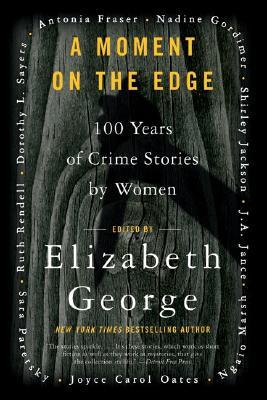
A Moment on the Edge edited by Elizabeth George
I’ve been reading this over the past few days and finally finished it! The nice thing about anthologies is that it’s easy to read it in bits and pieces, which makes it really good for commute reading.
A Moment on the Edge is a collection of crime stories over the past 100 years. This book doesn’t just feature noted crime writers, but stories from a wider range of authors. All stories “share in common a desire to explore mankind in a moment on the edge”.
Each story is introduced with a brief biography of the author, but to be honest, I skipped those. My interest is solely in the stories, which were:
- A Jury of Her Peers by Susan Glaspell: Martha Hale is called to the scene of her crime. While she and the Sheriff’s wife are taken lightly by the men, the two women get to the heart of the matter and must decide - do they tell what they know? A very interesting story and a good start to the anthology.
- The Man Who Knew How by Dorothy L. Sayers: this makes me want to read more Sayers. A clever story with a twist, about a man who claims to have discovered the perfect way to kill.
- I Can Find my Way Out by Ngaio Marsh: A murder mystery set in a theatre, I found this to be a bit confusing. I think it’s because of the number of characters in the story.
- The Summer People by Shirley Jackson: This was a creepy story about whether a location is trying to kill the two main characters or if they’re just paranoid.
- St. Patrick’s Day in the Morning by Charlotte Armstrong: I thought that this was confusing at the start but it had such an excellent twist that I ended up liking it very much.
- The Purple is Everything by Dorothy Salisbury Davis: This wasn’t a murder mystery but about art theft. It’s a pretty good character study type of story.
- Money to Burn by Margery Allingham: I’ve heard of this author but I don’t remember if I’ve read her stuff! I thought this was a very tightly written story, although I had to read the ending twice to understand it. I definitely need to look for books by her!
- Nice Place to Stay by Nedra Tyre: This turned the crime story on its head by looking at things from the perspective of the criminal. I really enjoyed this one!
- Clever and Quick by Christianna Brand: There are murders in this and it’s not till the end that you get to see who comes up on top in this. Would highly recommend this too.
- Country Lovers by Nadine Gordimer: To be honest, I didn’t quite get why this was a crime story. Sounded like love gone wrong.
- The Irony of Hate by Ruth Rendell: This story is the confession of a killer and I have to say, I did not expect it. I should probably pick up another Ruth Rendell novel soon.
- Sweet Baby Jenny by Joyce Harrington: I don’t know if it’s the dialect style of this, but I found this a little hard to read. I managed to understand what was going on, but only towards the end.
- Wild Mustard by Marcia Miller: A tragic story, though like with Country Lovers, I don’t quite understand how this is a crime story.
- Jemima Shore at the Sunny Grave by Antonia Fraser: Set in the Caribbean, this story has its protagonist investigate the death of the women she came to interview. The story started off well but I did not see the denouement coming or enough clues to guess at it.
- The Case of Pietro Andromache by Sara Paterson: I really liked this one! It involves a statue during WWII, duelling doctors, an a private investigator determined to help her friend. I need to go find more from this author too!
- Afraid All the Time by Nancy Pickard: A leading up to, but stopping just before, a tragic event. I feel like although the ending stopped at the climax, it didn’t feel that way because I never did find out what happened.
- The Young Shall See Visions, and the Old Dream Dreams by Kristine Kathryn Rush: This wasn’t my cup of tea, mostly because parts of the story seemed irrelevant to the crime. (Maybe because it’s a short story?)
- A Predatory Woman by Sharyn McCrumb: You have a reporter doing anything to get her story and a murderess who’s served her time. I wonder who the predatory woman in the title is?
- Jack be Quick by Barbara Paul: I really enjoyed this historical mystery, which imagines a solution to the Jack the Ripper serial killings (and why they stopped)
- Ghost Station by Carolyn Wheat: I wasn’t sure if I was going to like this story, but it turns out I did. It looks at women in the police force, alcoholism, and family.
- New Moon and Rattlesnakes by Wendy Hornsby: Lise is both on the run and looking for revenge. I didn’t know what was happening at first, but once I did, the story grabbed me and didn’t let go.
- Death of a Snowbird by J. A. Lance: Didn’t quite get this one, to be honest.
- The River Mouth by Lia Matera: Didn’t get this one either - and it felt like the protagonist navel-gazed a fair bit.
- A Scandal in Winter by Gillian Linscott: This is a tale involving an elderly Sherlock Holmes and it’s great fun! Really enjoyed reading this.
- Murder-Two by Joyce Carol Oates: I’ve heard of Joyce Carol Oates and had high expectations of this, but the stream of consciousness style of narration just confused me.
- English Autumn - American Fall by Minette Walters: The last story in the anthology, it was unfortunately rather weak. I think this is in part because of its lack of length because I didn’t connect to the characters and had absolutely no idea what was going on (and no memory of what it was about less than an hour after I read it).
Overall, this anthology was a good one. While I felt like it faltered a little towards the end, most of the stories were varied and excellent. While I knew of some of the authors, I haven’t heard of others and I got so many author recommendations from this!
A Moment on the Edge is a collection of crime stories over the past 100 years. This book doesn’t just feature noted crime writers, but stories from a wider range of authors. All stories “share in common a desire to explore mankind in a moment on the edge”.
Each story is introduced with a brief biography of the author, but to be honest, I skipped those. My interest is solely in the stories, which were:
- A Jury of Her Peers by Susan Glaspell: Martha Hale is called to the scene of her crime. While she and the Sheriff’s wife are taken lightly by the men, the two women get to the heart of the matter and must decide - do they tell what they know? A very interesting story and a good start to the anthology.
- The Man Who Knew How by Dorothy L. Sayers: this makes me want to read more Sayers. A clever story with a twist, about a man who claims to have discovered the perfect way to kill.
- I Can Find my Way Out by Ngaio Marsh: A murder mystery set in a theatre, I found this to be a bit confusing. I think it’s because of the number of characters in the story.
- The Summer People by Shirley Jackson: This was a creepy story about whether a location is trying to kill the two main characters or if they’re just paranoid.
- St. Patrick’s Day in the Morning by Charlotte Armstrong: I thought that this was confusing at the start but it had such an excellent twist that I ended up liking it very much.
- The Purple is Everything by Dorothy Salisbury Davis: This wasn’t a murder mystery but about art theft. It’s a pretty good character study type of story.
- Money to Burn by Margery Allingham: I’ve heard of this author but I don’t remember if I’ve read her stuff! I thought this was a very tightly written story, although I had to read the ending twice to understand it. I definitely need to look for books by her!
- Nice Place to Stay by Nedra Tyre: This turned the crime story on its head by looking at things from the perspective of the criminal. I really enjoyed this one!
- Clever and Quick by Christianna Brand: There are murders in this and it’s not till the end that you get to see who comes up on top in this. Would highly recommend this too.
- Country Lovers by Nadine Gordimer: To be honest, I didn’t quite get why this was a crime story. Sounded like love gone wrong.
- The Irony of Hate by Ruth Rendell: This story is the confession of a killer and I have to say, I did not expect it. I should probably pick up another Ruth Rendell novel soon.
- Sweet Baby Jenny by Joyce Harrington: I don’t know if it’s the dialect style of this, but I found this a little hard to read. I managed to understand what was going on, but only towards the end.
- Wild Mustard by Marcia Miller: A tragic story, though like with Country Lovers, I don’t quite understand how this is a crime story.
- Jemima Shore at the Sunny Grave by Antonia Fraser: Set in the Caribbean, this story has its protagonist investigate the death of the women she came to interview. The story started off well but I did not see the denouement coming or enough clues to guess at it.
- The Case of Pietro Andromache by Sara Paterson: I really liked this one! It involves a statue during WWII, duelling doctors, an a private investigator determined to help her friend. I need to go find more from this author too!
- Afraid All the Time by Nancy Pickard: A leading up to, but stopping just before, a tragic event. I feel like although the ending stopped at the climax, it didn’t feel that way because I never did find out what happened.
- The Young Shall See Visions, and the Old Dream Dreams by Kristine Kathryn Rush: This wasn’t my cup of tea, mostly because parts of the story seemed irrelevant to the crime. (Maybe because it’s a short story?)
- A Predatory Woman by Sharyn McCrumb: You have a reporter doing anything to get her story and a murderess who’s served her time. I wonder who the predatory woman in the title is?
- Jack be Quick by Barbara Paul: I really enjoyed this historical mystery, which imagines a solution to the Jack the Ripper serial killings (and why they stopped)
- Ghost Station by Carolyn Wheat: I wasn’t sure if I was going to like this story, but it turns out I did. It looks at women in the police force, alcoholism, and family.
- New Moon and Rattlesnakes by Wendy Hornsby: Lise is both on the run and looking for revenge. I didn’t know what was happening at first, but once I did, the story grabbed me and didn’t let go.
- Death of a Snowbird by J. A. Lance: Didn’t quite get this one, to be honest.
- The River Mouth by Lia Matera: Didn’t get this one either - and it felt like the protagonist navel-gazed a fair bit.
- A Scandal in Winter by Gillian Linscott: This is a tale involving an elderly Sherlock Holmes and it’s great fun! Really enjoyed reading this.
- Murder-Two by Joyce Carol Oates: I’ve heard of Joyce Carol Oates and had high expectations of this, but the stream of consciousness style of narration just confused me.
- English Autumn - American Fall by Minette Walters: The last story in the anthology, it was unfortunately rather weak. I think this is in part because of its lack of length because I didn’t connect to the characters and had absolutely no idea what was going on (and no memory of what it was about less than an hour after I read it).
Overall, this anthology was a good one. While I felt like it faltered a little towards the end, most of the stories were varied and excellent. While I knew of some of the authors, I haven’t heard of others and I got so many author recommendations from this!
Labels:
fiction
,
historical
,
mystery
,
western
Monday, July 30, 2018
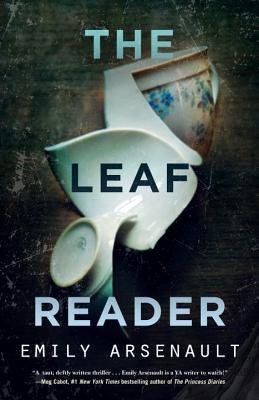
The Leaf Reader by Emily Arsenault
I borrowed this book because tea was mentioned. Unfortunately, despite the fact that tea leaf reading is central to the story, tea didn’t play a huge part.
The Leaf Reader starts with the disappearance of Andrea Quinley. Though Marnie doesn’t know her, the news affects the whole town. That said, Marnie didn’t think it would affect her personally. Not until she started tea leaf reading for Matt and found out that it was about Andrea’s disappearance. Although a bit scared of the fact that the things she sees are sometimes accurate, she is convinced to help investigate Andrea’s disappearance.
I quite liked the set-up for this book and I was curious to know how it ended, but I felt that the middle part dragged. (MILD SPOILERS) Perhaps it’s because that the ‘reveal’ about Marnie having actual powers came so late, but a good part of the book felt like it was just Marnie and Matt guessing their way through the whole thing rather than being guided by what she saw in the teacups. It was only at the end that things came together.
That said, one thing I liked about the somewhat slow middle section were Marnie’s remembrances of Jimmy, the bad boy who may have had a connection to Andrea. It helped to humanise Jimmy, who never appeared directly in the story and who might have remained a bogey figure if not for the memories.
Marnie was also a pretty interesting character. I think part of the story is about her learning to accept herself, but like I mentioned before, because the ‘truth’ about herself came so late, I felt like the issue wasn’t dealt with fully. Instead, I had this wrong impression of her background and the issues she needed to deal with, which felt like a red-herring. Not to say that being in a ‘weird’ family isn’t a proper issue, but I thought the ‘family powers’ part needed more attention.
Overall, this is a pretty interesting story. While the middle felt like it dragged on a bit, I have to admit that I continued reading because I was sufficiently hooked and had to find out the truth about Andrea’s disappearance. So the book did do it’s job in getting me to pick it up and finish it. I just feel like it could have been stronger.
The Leaf Reader starts with the disappearance of Andrea Quinley. Though Marnie doesn’t know her, the news affects the whole town. That said, Marnie didn’t think it would affect her personally. Not until she started tea leaf reading for Matt and found out that it was about Andrea’s disappearance. Although a bit scared of the fact that the things she sees are sometimes accurate, she is convinced to help investigate Andrea’s disappearance.
I quite liked the set-up for this book and I was curious to know how it ended, but I felt that the middle part dragged. (MILD SPOILERS) Perhaps it’s because that the ‘reveal’ about Marnie having actual powers came so late, but a good part of the book felt like it was just Marnie and Matt guessing their way through the whole thing rather than being guided by what she saw in the teacups. It was only at the end that things came together.
That said, one thing I liked about the somewhat slow middle section were Marnie’s remembrances of Jimmy, the bad boy who may have had a connection to Andrea. It helped to humanise Jimmy, who never appeared directly in the story and who might have remained a bogey figure if not for the memories.
Marnie was also a pretty interesting character. I think part of the story is about her learning to accept herself, but like I mentioned before, because the ‘truth’ about herself came so late, I felt like the issue wasn’t dealt with fully. Instead, I had this wrong impression of her background and the issues she needed to deal with, which felt like a red-herring. Not to say that being in a ‘weird’ family isn’t a proper issue, but I thought the ‘family powers’ part needed more attention.
Overall, this is a pretty interesting story. While the middle felt like it dragged on a bit, I have to admit that I continued reading because I was sufficiently hooked and had to find out the truth about Andrea’s disappearance. So the book did do it’s job in getting me to pick it up and finish it. I just feel like it could have been stronger.
Tuesday, July 17, 2018
Smaller and Smaller Circles by F.H. Batacan
I feel like this year has been fairly good for the SEA Reading Challenge so far because I’ve read two fantastic books - Track Faults and other Glitches and Smaller and Smaller Circles. I found this while searching for SEA fiction and borrowed it the minute I saw “Pinoy detective fiction” because I love mysteries.
Smaller and Smaller Circles Stars Father Saenz, a Jesuit priest who is also a forensic anthropologist, and Father Jerome. When the mutilated bodies of young boys are found in Payatas, they decide that they have to be part of this investigation and get to the bottom of the matter. In the subplot, Father Saenz is on a crusade to get a child-molesting priest away from the charity that puts him in contact with young boys.
This is so much more than an amazing detective story. I really felt the weight of bureaucracy and corruption as Father Saenz, Father Jerome, and the Director of the NBI try to marshal their resources to achieve justice for the poor that normally get less than nothing. Add in the weight of the subplot (with a man of the Church pushing for justice) and you get a stunning indictment of corruption in both the civil service and the Church.
And this is not a spoiler, but if you read the book, pay attention to chapter 34. It’s my favourite, and in my opinion, the most powerful chapter because it humanises the people of Payatas and shows us that these boys were loved and did have worth - even if the ‘higher ups’ didn’t think they were worth devoting resources to.
The characters were also expertly written - there are the two Fathers, who want the best but also know the worst of the world, Director Lastimosa, who is merely a stop-gap for the real appointee but still tries his best, and Arcinas, the ambitious attorney. They all sprang to life on the page and I find it sad that this is not the start of a series because I would love to see how all of them and the relationships between them continue to change.
I would highly recommend this to everyone who wants a good read. It’s superbly written, with great characters and a plot that will keep you turning. I know this book came out several years ago but I’m still going to hope that a sequel is in the works.
Smaller and Smaller Circles Stars Father Saenz, a Jesuit priest who is also a forensic anthropologist, and Father Jerome. When the mutilated bodies of young boys are found in Payatas, they decide that they have to be part of this investigation and get to the bottom of the matter. In the subplot, Father Saenz is on a crusade to get a child-molesting priest away from the charity that puts him in contact with young boys.
This is so much more than an amazing detective story. I really felt the weight of bureaucracy and corruption as Father Saenz, Father Jerome, and the Director of the NBI try to marshal their resources to achieve justice for the poor that normally get less than nothing. Add in the weight of the subplot (with a man of the Church pushing for justice) and you get a stunning indictment of corruption in both the civil service and the Church.
And this is not a spoiler, but if you read the book, pay attention to chapter 34. It’s my favourite, and in my opinion, the most powerful chapter because it humanises the people of Payatas and shows us that these boys were loved and did have worth - even if the ‘higher ups’ didn’t think they were worth devoting resources to.
The characters were also expertly written - there are the two Fathers, who want the best but also know the worst of the world, Director Lastimosa, who is merely a stop-gap for the real appointee but still tries his best, and Arcinas, the ambitious attorney. They all sprang to life on the page and I find it sad that this is not the start of a series because I would love to see how all of them and the relationships between them continue to change.
I would highly recommend this to everyone who wants a good read. It’s superbly written, with great characters and a plot that will keep you turning. I know this book came out several years ago but I’m still going to hope that a sequel is in the works.
Labels:
Best Of
,
fiction
,
mystery
,
SEA reading challenge
Tuesday, June 26, 2018
The Beautiful Mystery by Louise Penny
I’ve been searching for this book for quite some time because I want to read the series in order for the long-running subplot.
In The Beautiful Mystery, Gamache and Jean Guy travel to a reclusive monastery to investigate the murder of its prior. Bound by a vow of silence, this monastery would be unnoticeable if not for one thing:
Their Gregorian chants
Although seemingly like other Gregorian chants, these monks have managed to sing “the words of God in the voice of God”, bringing them widespread acclaim. And among such holy men is a killer, one who is still among them.
Because this book is set solely in the monastery (and not in Three Pines), the book is able to go deep into the community within a short period of time. And it’s in this remote community that the subplot involving the leaked video of the botched raid takes some pretty big steps.
I have to say, this book was more intense than I expected. Perhaps it’s because of its setting, but it seemed to be very much imbued with musings on music and faith.
And while most of the characters were new characters, I found myself very invested in them. All the brothers are given distinct personalities and I enjoyed reading about them.
Speaking of characters, I was on an emotional rollercoaster thanks to Gamache and Jean Guy. The tension from the aftermath of the raid that was present in the other books was really ramped up here, partly because they were the only two officers on the case and partly because of the presence of Francoeur, a higher up in the force and Gamache’s enemy. In fact, Francoeur reminded me of the serpent in the garden of Eden, with his smooth words poisoning everything.
I am so glad to have finally found this book. It is intense and I’m glad that I read it in order because the subplot is intense. Hopefully, I can find the next book in the series soon.
In The Beautiful Mystery, Gamache and Jean Guy travel to a reclusive monastery to investigate the murder of its prior. Bound by a vow of silence, this monastery would be unnoticeable if not for one thing:
Their Gregorian chants
Although seemingly like other Gregorian chants, these monks have managed to sing “the words of God in the voice of God”, bringing them widespread acclaim. And among such holy men is a killer, one who is still among them.
Because this book is set solely in the monastery (and not in Three Pines), the book is able to go deep into the community within a short period of time. And it’s in this remote community that the subplot involving the leaked video of the botched raid takes some pretty big steps.
I have to say, this book was more intense than I expected. Perhaps it’s because of its setting, but it seemed to be very much imbued with musings on music and faith.
And while most of the characters were new characters, I found myself very invested in them. All the brothers are given distinct personalities and I enjoyed reading about them.
Speaking of characters, I was on an emotional rollercoaster thanks to Gamache and Jean Guy. The tension from the aftermath of the raid that was present in the other books was really ramped up here, partly because they were the only two officers on the case and partly because of the presence of Francoeur, a higher up in the force and Gamache’s enemy. In fact, Francoeur reminded me of the serpent in the garden of Eden, with his smooth words poisoning everything.
I am so glad to have finally found this book. It is intense and I’m glad that I read it in order because the subplot is intense. Hopefully, I can find the next book in the series soon.
Monday, June 18, 2018
Closed Casket by Sophie Hannah
I had to borrow this as soon as I saw it because it’s supposed to be a new Hercule Poirot and I wanted to know if it could live up to the original (spoiler: not really, but it’s still quite fun).
Closed Casket starts when Lady Playford, a wealthy and famous author, changes her will to disinherit her children and give all to her sick secretary. As invited guests, Poirot and his friend Catchpool see all the drama, and when a murder takes place shortly after, they investigate.
I guess the main question is: is this as good as something Agatha Christie wrote?
The answer for me is: not really. There’s a layer of artifice, of trying a bit too hard, that never really leaves the book. Christie has Poirot and the interesting side characters, but it seems like everyone in this book is A Character. Their foibles are so exaggerated that it’s hard to decide who to focus on.
Even the romance, which I normally don’t understand in Christie’s novels, seem even more unfathomable. It’s almost as though the author saw one of the bickering couples that Christie wrote and decided to take it to extremes.
That said, the book is pretty fun. The plot had a lot of twists and turns and Poirot seemed decent (and a bit more humble than normal). And once the book hit its stride - or I got used to this not being Christie - I found myself enjoying it. I guess the only problem with this book is that Agatha Christie didn’t write it.
Closed Casket starts when Lady Playford, a wealthy and famous author, changes her will to disinherit her children and give all to her sick secretary. As invited guests, Poirot and his friend Catchpool see all the drama, and when a murder takes place shortly after, they investigate.
I guess the main question is: is this as good as something Agatha Christie wrote?
The answer for me is: not really. There’s a layer of artifice, of trying a bit too hard, that never really leaves the book. Christie has Poirot and the interesting side characters, but it seems like everyone in this book is A Character. Their foibles are so exaggerated that it’s hard to decide who to focus on.
Even the romance, which I normally don’t understand in Christie’s novels, seem even more unfathomable. It’s almost as though the author saw one of the bickering couples that Christie wrote and decided to take it to extremes.
That said, the book is pretty fun. The plot had a lot of twists and turns and Poirot seemed decent (and a bit more humble than normal). And once the book hit its stride - or I got used to this not being Christie - I found myself enjoying it. I guess the only problem with this book is that Agatha Christie didn’t write it.
Friday, June 1, 2018
Contested Will by James Shapiro
Contested Will is basically non-fiction literary mystery which looks into the question: who wrote the plays attributed to Shakespeare?
If you haven’t heard, there’s some debate into the authorship of the Shakespeare plays. The first section of the book deals with how this debate even arose. To sum, by the time people grew interested in the life of Shakespeare, the people who knew him were dead. And thanks to a man name Malone, they started thinking that details of Shakespeare’s plays revealed details about Shakespeare’s life. And because people can be snobs, they started thinking that a glover’s son couldn’t possibly have written all these wonderful plays. In fact, his plays must have been written about someone worthy and two of the strongest contenders are Francis Bacon and Edward de Vere, 17th Earl of Oxford.
Parts two and three of the book look at how the theories of Bacon and Oxford as Shakespeare came about by tracing the history of the arguments through the people who advocated for them. For Bacon, he covers Delia Bacon (very sympathetically) and Mark Twain. The Bacon theory is very much connected to ciphers. For the Oxford theory, he talks about Freud and Looney and this theory is very conspiracy-theory and based on supposed similarities in life events. Perhaps it’s because Shapiro is a Shakespearean scholar and hence skeptical of the Bacon and Oxford theory, but I didn’t find the proponents for the alternative candidates very convincing.
In the last section, Shapiro uses early Shakespearean texts and what contemporary writers said to argue (more convincingly, in my opinion) that William Shakespeare did indeed write his own plays.
The Shakespearean authorship question isn’t very well-known, but if you like literature and mysteries, I think you’ll enjoy this book. It’s not only well-written, it’s well-researched (he doesn’t have a bibliography, he has a bibliographic essay!)
If you haven’t heard, there’s some debate into the authorship of the Shakespeare plays. The first section of the book deals with how this debate even arose. To sum, by the time people grew interested in the life of Shakespeare, the people who knew him were dead. And thanks to a man name Malone, they started thinking that details of Shakespeare’s plays revealed details about Shakespeare’s life. And because people can be snobs, they started thinking that a glover’s son couldn’t possibly have written all these wonderful plays. In fact, his plays must have been written about someone worthy and two of the strongest contenders are Francis Bacon and Edward de Vere, 17th Earl of Oxford.
Parts two and three of the book look at how the theories of Bacon and Oxford as Shakespeare came about by tracing the history of the arguments through the people who advocated for them. For Bacon, he covers Delia Bacon (very sympathetically) and Mark Twain. The Bacon theory is very much connected to ciphers. For the Oxford theory, he talks about Freud and Looney and this theory is very conspiracy-theory and based on supposed similarities in life events. Perhaps it’s because Shapiro is a Shakespearean scholar and hence skeptical of the Bacon and Oxford theory, but I didn’t find the proponents for the alternative candidates very convincing.
In the last section, Shapiro uses early Shakespearean texts and what contemporary writers said to argue (more convincingly, in my opinion) that William Shakespeare did indeed write his own plays.
The Shakespearean authorship question isn’t very well-known, but if you like literature and mysteries, I think you’ll enjoy this book. It’s not only well-written, it’s well-researched (he doesn’t have a bibliography, he has a bibliographic essay!)
Labels:
literature
,
mystery
,
non-fiction
,
western
Tuesday, May 22, 2018
Thrice the Binded Cat Hath Mew'd by Alan Bradley
As part of my 'I want to read more during the week' thing, I decided to read another Flavia de Luce mystery since I really enjoy this series. Thrice the Binded Cat Hath Mew’d (a quote from Shakespeare) is the eighth book in the series and has Flavia coming home to England.
After an exciting time in Canada, Flavia’s looking forward to home and expects a somewhat warm welcome. Instead, she finds out that her father is ill and in the hospital. Trying to distract herself, Flavia offers to run an errand and ends up finding a body. Talk about finding the perfect distraction for her - obviously Flavia starts investigating.
I really felt that Flavia returned to form in this book. She was a little twee in the last book, but she was purely endearing in this one. I think it’s because she’s back in familiar surroundings. She’s also struggling to make sense of all the changes and I think it makes her growth a lot more natural. Perhaps Flavia is just so British she can’t go anywhere else.
The mystery itself was decent. There were quite a few twists and turns, but the ending made sense (even though I couldn’t manage to figure out who the killer was). I also thought it balanced pretty nicely with Flavia’s home life, although I feel like a kid (with Flavia) because I have no idea what all the adults are saying.
Got to warn you, though, the ending is pretty heartbreaking. Flavia does get her moment of triumph and I’m happy for her, but the last part is just sad. No spoilers but I really wish that things turned out differently for her and I really want to read the next book now.
After an exciting time in Canada, Flavia’s looking forward to home and expects a somewhat warm welcome. Instead, she finds out that her father is ill and in the hospital. Trying to distract herself, Flavia offers to run an errand and ends up finding a body. Talk about finding the perfect distraction for her - obviously Flavia starts investigating.
I really felt that Flavia returned to form in this book. She was a little twee in the last book, but she was purely endearing in this one. I think it’s because she’s back in familiar surroundings. She’s also struggling to make sense of all the changes and I think it makes her growth a lot more natural. Perhaps Flavia is just so British she can’t go anywhere else.
The mystery itself was decent. There were quite a few twists and turns, but the ending made sense (even though I couldn’t manage to figure out who the killer was). I also thought it balanced pretty nicely with Flavia’s home life, although I feel like a kid (with Flavia) because I have no idea what all the adults are saying.
Got to warn you, though, the ending is pretty heartbreaking. Flavia does get her moment of triumph and I’m happy for her, but the last part is just sad. No spoilers but I really wish that things turned out differently for her and I really want to read the next book now.
Thursday, May 17, 2018
The Dark Angel by Elly Griffiths
I requested this book as soon as I saw it because I’m always up for a good mystery. I didn’t realise that this was part of a series, but I had no problem following along.
The Dark Angel starts in Italy when a corpse is found to have a handphone. And even weirder, Professor Angelo received a text from the corpse when he excavated it. Back in England, forensic archaeologist Ruth is struggling with her personal relationships. So when she gets an invitation from Angelo to come to Italy to consult, she brings her daughter and friend along for a holiday.
I have to admit, the mystery took a backseat to the relationships in The Dark Angel. Perhaps it’s because I’m jumping into the series midway, but I felt that the complicated relationships between the characters (particularly Ruth and Nelson) were more prominent than the mystery of the corpse. I’m not complaining since I enjoyed reading about it, but it was a bit of a surprise.
The mystery itself was pretty interesting and very much tied to the town where the corpse was found. I’ve never been to Italy (sadly) so I don’t know how accurate all the descriptions were, but I really felt the small town and it’s inhabitants very strongly.
There was only one thing that threw me off a little: the book switches between several POV characters, mostly Ruth and Nelson, although some characters get their time in the spotlight too. The switch could be a bit abrupt since it takes place within the chapter (I’m more used to having one chapter per POV) but it wasn’t a problem once I got used to the style.
Overall, I enjoyed this mystery. I enjoyed the setting and the characters in it. And perhaps because of the characters, I am interested in going back to read the first book in this series and finding out how it all started.
Disclaimer: I got a free copy of this book from the publisher via NetGalley in exchange for a free and honest review.
The Dark Angel starts in Italy when a corpse is found to have a handphone. And even weirder, Professor Angelo received a text from the corpse when he excavated it. Back in England, forensic archaeologist Ruth is struggling with her personal relationships. So when she gets an invitation from Angelo to come to Italy to consult, she brings her daughter and friend along for a holiday.
I have to admit, the mystery took a backseat to the relationships in The Dark Angel. Perhaps it’s because I’m jumping into the series midway, but I felt that the complicated relationships between the characters (particularly Ruth and Nelson) were more prominent than the mystery of the corpse. I’m not complaining since I enjoyed reading about it, but it was a bit of a surprise.
The mystery itself was pretty interesting and very much tied to the town where the corpse was found. I’ve never been to Italy (sadly) so I don’t know how accurate all the descriptions were, but I really felt the small town and it’s inhabitants very strongly.
There was only one thing that threw me off a little: the book switches between several POV characters, mostly Ruth and Nelson, although some characters get their time in the spotlight too. The switch could be a bit abrupt since it takes place within the chapter (I’m more used to having one chapter per POV) but it wasn’t a problem once I got used to the style.
Overall, I enjoyed this mystery. I enjoyed the setting and the characters in it. And perhaps because of the characters, I am interested in going back to read the first book in this series and finding out how it all started.
Disclaimer: I got a free copy of this book from the publisher via NetGalley in exchange for a free and honest review.
Friday, May 11, 2018
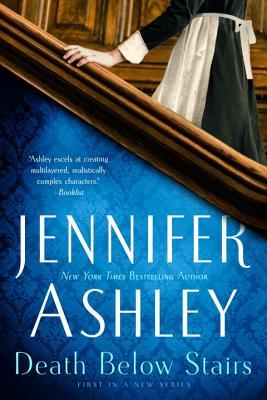
Death below Stairs by Jennifer Ashley
I’ve been looking for this book ever since I saw Wendy at Literary Feline mention it. Finally, the ebook version was available and I immediately borrowed it and I have absolutely no regrets.
When Kat Holloway takes a new job as cook, she doesn’t expect much to happen. But on her second day on the job, her assistant turns up dead in her cellar. Luckily (or perhaps unluckily), Kat has a friend named Daniel McAdam, and what starts as a simple investigation quickly turns into something much more high stakes.
Can I say that I absolutely loved this?
The main reason is because of the characters. Kat is a spirited woman and I enjoy how measured and quick-thinking she is. She’s a sensible person, unlike some heroines who can be as dumb as a doorbell but still solve the mystery and her backstory is fantastic. Plus, I really rooted for her relationship with the mysterious Daniel and that isn’t something I do very often.
Daniel and his son, James, were also very well-written, which contributed to my enjoyment of the book. Their father-son relationship is really adorable and they’re both memorable characters in their own right. The supporting characters were all interesting too.
Plot-wise, the book moved along at a good pace. I didn’t really expect the twists that it took, but they were believable and I couldn’t put the book down. While it stands alone, it feels like the story can continue and I am really looking forward to it!
One more thing that I also appreciated was how the characters were introduced. Maybe it’s because I just read a book where each character was given extensive backstory, but I found the amount of information given out to be just right. I still don’t know how Kat and Daniel met, but I know enough about their backgrounds that their relationship feels natural and I want to read more, and to me, that means the book has succeeded regarding backstory.
If you are a fan of historical mysteries, you’ll definitely have to read this. I’m definitely going to look for the next book, and I hope I find it a lot quicker than I did this.
When Kat Holloway takes a new job as cook, she doesn’t expect much to happen. But on her second day on the job, her assistant turns up dead in her cellar. Luckily (or perhaps unluckily), Kat has a friend named Daniel McAdam, and what starts as a simple investigation quickly turns into something much more high stakes.
Can I say that I absolutely loved this?
The main reason is because of the characters. Kat is a spirited woman and I enjoy how measured and quick-thinking she is. She’s a sensible person, unlike some heroines who can be as dumb as a doorbell but still solve the mystery and her backstory is fantastic. Plus, I really rooted for her relationship with the mysterious Daniel and that isn’t something I do very often.
Daniel and his son, James, were also very well-written, which contributed to my enjoyment of the book. Their father-son relationship is really adorable and they’re both memorable characters in their own right. The supporting characters were all interesting too.
Plot-wise, the book moved along at a good pace. I didn’t really expect the twists that it took, but they were believable and I couldn’t put the book down. While it stands alone, it feels like the story can continue and I am really looking forward to it!
One more thing that I also appreciated was how the characters were introduced. Maybe it’s because I just read a book where each character was given extensive backstory, but I found the amount of information given out to be just right. I still don’t know how Kat and Daniel met, but I know enough about their backgrounds that their relationship feels natural and I want to read more, and to me, that means the book has succeeded regarding backstory.
If you are a fan of historical mysteries, you’ll definitely have to read this. I’m definitely going to look for the next book, and I hope I find it a lot quicker than I did this.
Labels:
historical
,
mystery
,
western
Thursday, May 10, 2018
Death by Darjeeling by Laura Childs
I wanted to read something lighter after the book on Austen and Social Science and a tea-themed cozy Mystery fit the bill!Death by Darjeeling is centered around the Indigo Tea Shop, which in turn is owned by Theodosia. When a hater developer dies at her teashop and her employee’s friend loses her job over it, Theodosia starts digging into the death. But the more she learns, the more suspects she finds. And more worryingly, someone seems to be after her as well.
What I loved about this book was obviously all the tea references! The hanyu pinyin of the Chinese teas isn’t the standard one but that’s okay because there was a lot of tea talk and description of the teas. I would love to try the teas mentioned and if Indigo tea shop existed near me, I would definitely be a frequent patron.
I also liked the core group of characters. Theodosia, Drayton (the tea master), Haley (employee), and Bethany (employee’s friend turned employee) have a very nice group dynamic and I appreciated the way that Theodosia brought them into the mystery. I thought that made their friendship feel real and I really enjoyed their interactions with one another.
On the other hand, there were a few things I’m not too enthusiastic about.
One is the very long introductions of each character. Or perhaps they just felt long because I didn’t feel like I needed backstory at that moment. But since this is book one I can understand why it’s this way.
The other thing I didn’t like (and this is a bigger deal for me), was the sudden shift in one of the characters. This was done through a change in POV, which occurred a few times and always felt abrupt. More importantly, the sudden change in how one of the characters was presented felt too sudden and not very believable. Rather than a natural progression, it felt like a device used to heighten tension.
Would I read the second book? I’m not sure. I really enjoyed the tea references and I think that the long introductions should be gone by book two, but the sudden twist for one character at the end had me wary. I still have quite a number of tea-related books that I want to read (please believe that it’s work-related research) so perhaps I’ll read those first and then see if I’ll continue with the series.
Monday, May 7, 2018
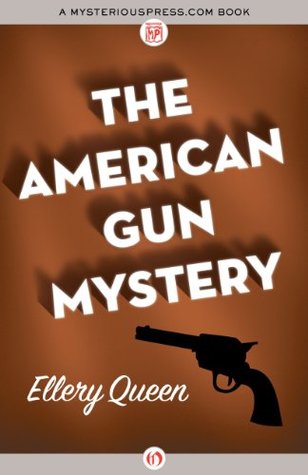
The American Gun Mystery by Ellery Queen
My second Ellery Queen Mystery! I’m afraid I didn’t like this as much as The Greek Coffin Mystery.
The American Mystery takes place at a Rodeo. Ellery Queen and his father take Djuna to see the first show starting Buck Horne. And at that show, with twenty thousand people watching, Buck Horne is shot dead. Ellery and his father leap into action but despite their best efforts, the gun is never found.
I thought that plot-wise, this was a pretty good mystery. Like with The Greek Coffin Mystery, the authors purposely interrupt the narrative to give the reader time to think before they reveal the truth. While I didn’t get the clues and didn’t figure out the mystery, things certainly made sense once they were explained.
The only thing that hampered my enjoyment was... well Ellery himself. I quite liked his character in the first book, and he was likable enough at the start of this (especially when he referenced Father Brown), but along the way, he became slightly irritating. While Poirot’s eccentricities come across as charming to me, Ellery’s quirks feel annoying. I really feel for his father, for having to put up with a know-it-all son who doesn’t reveal anything until the end (Although it is explained that this is because of the events in The Greek Coffin Mystery)
And since Ellery is the protagonist of the series, I’m left undecided if I want to continue reading. I was really interested in reading more of this series at first, but now, I’m not too sure. It’s definitely something to think about, especially since my TBR list is so long.
The American Mystery takes place at a Rodeo. Ellery Queen and his father take Djuna to see the first show starting Buck Horne. And at that show, with twenty thousand people watching, Buck Horne is shot dead. Ellery and his father leap into action but despite their best efforts, the gun is never found.
I thought that plot-wise, this was a pretty good mystery. Like with The Greek Coffin Mystery, the authors purposely interrupt the narrative to give the reader time to think before they reveal the truth. While I didn’t get the clues and didn’t figure out the mystery, things certainly made sense once they were explained.
The only thing that hampered my enjoyment was... well Ellery himself. I quite liked his character in the first book, and he was likable enough at the start of this (especially when he referenced Father Brown), but along the way, he became slightly irritating. While Poirot’s eccentricities come across as charming to me, Ellery’s quirks feel annoying. I really feel for his father, for having to put up with a know-it-all son who doesn’t reveal anything until the end (Although it is explained that this is because of the events in The Greek Coffin Mystery)
And since Ellery is the protagonist of the series, I’m left undecided if I want to continue reading. I was really interested in reading more of this series at first, but now, I’m not too sure. It’s definitely something to think about, especially since my TBR list is so long.
Wednesday, April 4, 2018
The Floating Admiral by the Detection Club
This is my third Detection Club book and I picked it up because Christie, Chesterton, and to a smaller extent Sayers contributed to it (sorry Sayers but I love Christie and Chesterton a lot more).Unlike Ask a Policeman, where the authors played with each other’s characters, and The Anatomy of Murder, The Floating Admiral is a straightforward round-robin novel. The body of Admiral Penistone is found in a floating boat and Inspector Rudge is called upon to investigate. As Rudge investigates, he realises that the case is far from straightforward - what does the vicar and a hasty marriage have to do with the murder? Do they have anything to do with the murder?
I definitely enjoyed this a lot more than Ask a Policeman, although not as much as The Anatomy of Murder. The styles of the various writers meshed together pretty well, except for Chesterton, who wrote a lyrical prologue that only makes sense at the end. The mystery was also interesting, although you can definitely sense that some writers just threw in things to make it more complicated.
I also found the appendix to be interesting. The writers give their solutions for the murders there and it was clear that each writer had their own way of plotting a mystery. Some were very detailed (Sayers) while some were very brief (Jepson). All were pretty convincing to me, although as the story developed some solutions became less plausible than others.
If you’re a fan of golden age mysteries and of the Detection Club, I think you would enjoy this book! It’s a fun mystery and I could tell that the writers had a lot of fun with this.
Tuesday, March 13, 2018
Death of a Dishonorable Gentleman by Tessa Arlen
I first heard of this series from Wendy (link to her review) and it sounded pretty interesting so I decided to give it a go!
Death of a Dishonorable Gentleman is a murder mystery taking place in Edwardian England. After a successful party by Lady Montford, the corpse of her nephew is found. Afraid that the investigation might implicate her son, Lady Montford ropes in her housekeeper, Mrs Jackson and the two begin to investigate.
What I enjoyed about this book was the plot (well, the latter half) and the meticulous attention to detail. While the first fifty pages were rather slow, the book managed to pick up the pace and I couldn’t put it down for the last third of the book. There are some pretty good twists to the mystery and I was satisfied by how it ended.
The historical detail is marvelous too. It’s a time of great social change, as the suffragettes' campaign for votes and class tensions are felt more strongly than ever. Even though the mystery is set in the countryside, in a traditional household, the author still includes these tensions and details in the novel, adding a sense of realism.
I also really enjoyed the two main characters. Lady Montford and Mrs. Jackson make a good detective pair, although I think I prefer the practical Mrs. Jackson for her unflappability and ingenuity.
However, this book was let down by its overly formalised narration. There’s a sense of stiltedness and distance that, coupled with the slow start, made the book hard to get into. This got easier to ignore as the paced picked up, but it didn’t disappear entirely.
The other thing I didn’t really like about this book is that there were too many characters. Very few stood out to me and the rest were pretty much interchangeable. I think that if the author was given more room for the story, this problem would be resolved because then we wouldn’t need the constant backstory.
Overall, I think I will continue with this series. It didn’t make the best first impression, but I’ve grown used to the characters and I would assume that there would be less need to constantly explain things in the second book.
Death of a Dishonorable Gentleman is a murder mystery taking place in Edwardian England. After a successful party by Lady Montford, the corpse of her nephew is found. Afraid that the investigation might implicate her son, Lady Montford ropes in her housekeeper, Mrs Jackson and the two begin to investigate.
What I enjoyed about this book was the plot (well, the latter half) and the meticulous attention to detail. While the first fifty pages were rather slow, the book managed to pick up the pace and I couldn’t put it down for the last third of the book. There are some pretty good twists to the mystery and I was satisfied by how it ended.
The historical detail is marvelous too. It’s a time of great social change, as the suffragettes' campaign for votes and class tensions are felt more strongly than ever. Even though the mystery is set in the countryside, in a traditional household, the author still includes these tensions and details in the novel, adding a sense of realism.
I also really enjoyed the two main characters. Lady Montford and Mrs. Jackson make a good detective pair, although I think I prefer the practical Mrs. Jackson for her unflappability and ingenuity.
However, this book was let down by its overly formalised narration. There’s a sense of stiltedness and distance that, coupled with the slow start, made the book hard to get into. This got easier to ignore as the paced picked up, but it didn’t disappear entirely.
The other thing I didn’t really like about this book is that there were too many characters. Very few stood out to me and the rest were pretty much interchangeable. I think that if the author was given more room for the story, this problem would be resolved because then we wouldn’t need the constant backstory.
Overall, I think I will continue with this series. It didn’t make the best first impression, but I’ve grown used to the characters and I would assume that there would be less need to constantly explain things in the second book.
Monday, February 19, 2018
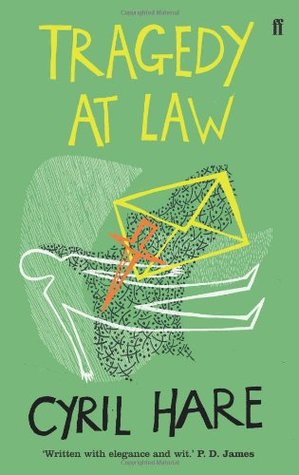
A Tragedy at Law by Cyril Hare
I enjoyed An English Murder so much that I borrowed another one of Cyril Hare’s mysteries! A Tragedy at Law is supposed to be his most famous work so I was really excited to begin it.
Drawing on his legal experience (or so I’m assuming), A Tragedy at Law is a mystery that deals with the finer points of the law. Mr Justice Barber is a self-important judge who’s making his rounds on the ‘circuit’, which basically means he’s moving from town to town judging cases. It should be uneventful, but then he gets a threatening letter. That shouldn’t be a cause of worry, but a box of poisoned chocolates comes. And the threats just keep escalating from there.
Thrown into this mix are Derek Marshall, the Marshal, and Francis Pettigrew, a lawyer who is unsuccessful in profession and love (the love of his life having married Justice Barber). Can they find out what is happening?
The book uses a variety of POVs, but the dominant one is Derek. I suppose that as the ‘newbie’, he’s in a good position to wonder at (and try to understand) what’s going on, plus he’s easily convinced to help by Hilda, Justice Barber’s incredibly smart and charming wife.
Hilda, by the way, is an amazing person. You don’t normally see such strong personalities in fiction. Here’s a woman who was called to the bar and is clearly more intelligent and charming than her husband. She’s also got some fears of her own which she’s hiding and deserves all the page time she has (I would love to read about her earlier years). Sheila, the woman Derek falls in love with and the only other woman with a significant amount of attention devoted to her, seems almost dull in comparison. She seems to be more plot device than character.
That said, there is one other female character with a pretty strong presence, but she never directly appears or speaks. She’s very closely tied to Hilda, so I didn’t consider her a primary/lead character.
What I really liked about this book was its tone. There’s a wry humour that’s present throughout the book, and I enjoyed it very much. Clearly, Cyril Hare isn’t above poking fun at the pompousness his profession is sometimes filled with. The humour also fits in with the cynicism of Pettigrew, which works because Pettigrew’s the ‘detective’ of the novel.
That said, the ending of the book was a little hard to understand. There isn’t a grand denouncement like in the Christie novels, but instead, there’s a not-really-clear explanation by Pettigrew towards the end. I had to read that last chapter a couple of times before I understood it.
Overall, I enjoyed this novel, although I personally prefer An English Murder. I liked the humour present in the book and the use of Derek as the main POV character, although the ending does detract from the story a little.
Drawing on his legal experience (or so I’m assuming), A Tragedy at Law is a mystery that deals with the finer points of the law. Mr Justice Barber is a self-important judge who’s making his rounds on the ‘circuit’, which basically means he’s moving from town to town judging cases. It should be uneventful, but then he gets a threatening letter. That shouldn’t be a cause of worry, but a box of poisoned chocolates comes. And the threats just keep escalating from there.
Thrown into this mix are Derek Marshall, the Marshal, and Francis Pettigrew, a lawyer who is unsuccessful in profession and love (the love of his life having married Justice Barber). Can they find out what is happening?
The book uses a variety of POVs, but the dominant one is Derek. I suppose that as the ‘newbie’, he’s in a good position to wonder at (and try to understand) what’s going on, plus he’s easily convinced to help by Hilda, Justice Barber’s incredibly smart and charming wife.
Hilda, by the way, is an amazing person. You don’t normally see such strong personalities in fiction. Here’s a woman who was called to the bar and is clearly more intelligent and charming than her husband. She’s also got some fears of her own which she’s hiding and deserves all the page time she has (I would love to read about her earlier years). Sheila, the woman Derek falls in love with and the only other woman with a significant amount of attention devoted to her, seems almost dull in comparison. She seems to be more plot device than character.
That said, there is one other female character with a pretty strong presence, but she never directly appears or speaks. She’s very closely tied to Hilda, so I didn’t consider her a primary/lead character.
What I really liked about this book was its tone. There’s a wry humour that’s present throughout the book, and I enjoyed it very much. Clearly, Cyril Hare isn’t above poking fun at the pompousness his profession is sometimes filled with. The humour also fits in with the cynicism of Pettigrew, which works because Pettigrew’s the ‘detective’ of the novel.
That said, the ending of the book was a little hard to understand. There isn’t a grand denouncement like in the Christie novels, but instead, there’s a not-really-clear explanation by Pettigrew towards the end. I had to read that last chapter a couple of times before I understood it.
Overall, I enjoyed this novel, although I personally prefer An English Murder. I liked the humour present in the book and the use of Derek as the main POV character, although the ending does detract from the story a little.
Monday, February 12, 2018
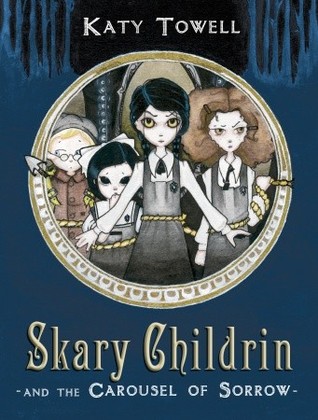
Skary Childrin and the Carousel of Sorrow by Katy Towell
This was an impulse borrow and read and a good example of why I like the library so much. A book catches your eye, you read it, and while it’s enjoyable, it’s a good thing you didn’t actually buy it (because for me, buying books = will reread in future).
Skary Childrin follows three girls (and one boy). There’s Adelaide, who is supposed to look like a werewolf but that isn’t really obvious in the illustrations. She has really keen senses though. And then there’s Maggie, who’s very quiet and spend a lot of the book being grumpy. Then there’s Beatrice, who’s the youngest and can see ghosts. She’s the sweetest character of the lot but the way she’s drawn made me think of a Black Eyed Child (maybe that was the inspiration?)
The three children are students at Madame Gertrude’s School for Girls and pretty much feared and hated by everyone. In a town that was cursed 12 years ago, anyone that’s different automatically gets the side-eye (or worse). But one day, a new librarian named Miss Delia comes to town. The girls and Miss Delia get off to a good start but Miss Delia mysteriously disappears. Desperate to find the one teacher who was kind to them, the girls enlist the help of Steffen and realise that Miss Delia’s disappearance may be connected to a string of disappearances happening around town.
What I liked the book was basically the concept. A town where the weird and strange exists sounded interestingly scary and I thought the three girls sounded like fitting protagonists (they were).
The mystery was also pretty decent - the girls’ narrative was interspersed with scenes of people disappearing after riding a mysterious carousel and that was enough to keep me reading until the end. It turns out that I managed to pinpoint the villain the minute he appeared, but I didn’t figure out the motive until the end.
Interspersed with the story are scenes that look to be pencil drawings. They’re pretty childish in style, so maybe it’s supposed to be one of the girls’ drawings? I thought it was a nice complement to the story.
What I wasn’t so enthusiastic about was the narrative style. It reads like a third person limited but it was hard to figure out who the POV character was (or if it was just skipping around the whole time), which hindered the suspension of disbelief. And like I mentioned before, the villain was pretty easy to identify, mostly because the majority of the book has them trapped at school rather than doing much investigating.
Overall, this is a pretty fun book for readers (the target audience are probably people way younger than me) who like spooky stuff that isn’t horror.
Skary Childrin follows three girls (and one boy). There’s Adelaide, who is supposed to look like a werewolf but that isn’t really obvious in the illustrations. She has really keen senses though. And then there’s Maggie, who’s very quiet and spend a lot of the book being grumpy. Then there’s Beatrice, who’s the youngest and can see ghosts. She’s the sweetest character of the lot but the way she’s drawn made me think of a Black Eyed Child (maybe that was the inspiration?)
The three children are students at Madame Gertrude’s School for Girls and pretty much feared and hated by everyone. In a town that was cursed 12 years ago, anyone that’s different automatically gets the side-eye (or worse). But one day, a new librarian named Miss Delia comes to town. The girls and Miss Delia get off to a good start but Miss Delia mysteriously disappears. Desperate to find the one teacher who was kind to them, the girls enlist the help of Steffen and realise that Miss Delia’s disappearance may be connected to a string of disappearances happening around town.
What I liked the book was basically the concept. A town where the weird and strange exists sounded interestingly scary and I thought the three girls sounded like fitting protagonists (they were).
The mystery was also pretty decent - the girls’ narrative was interspersed with scenes of people disappearing after riding a mysterious carousel and that was enough to keep me reading until the end. It turns out that I managed to pinpoint the villain the minute he appeared, but I didn’t figure out the motive until the end.
Interspersed with the story are scenes that look to be pencil drawings. They’re pretty childish in style, so maybe it’s supposed to be one of the girls’ drawings? I thought it was a nice complement to the story.
What I wasn’t so enthusiastic about was the narrative style. It reads like a third person limited but it was hard to figure out who the POV character was (or if it was just skipping around the whole time), which hindered the suspension of disbelief. And like I mentioned before, the villain was pretty easy to identify, mostly because the majority of the book has them trapped at school rather than doing much investigating.
Overall, this is a pretty fun book for readers (the target audience are probably people way younger than me) who like spooky stuff that isn’t horror.
Friday, February 9, 2018
What Lies Beneath by Sarah Rayne
Another Sarah Rayne reread, because who cares about my TBR list? (Ok, I do but I like rereading books too)
What Life Beneath is the story of Priors Bramley. It was closed off after a chemical experiment was more harmful than expected, which means loads of secrets. In the past & present, Ella is worried that the re-opening of Priors Bramley will reveal the secrets she holds. In the past, the slow fall of the Cadences is shown through journal entries and a regular POV narrative with two main POV characters.
This sounds complicated, but it’s actually one big story that ties up satisfyingly (if rather sadly) by the end. There are at least 5 POV characters, but they’re all pretty distinct and effectively used to increase the tension in the book.
The most intriguing character has to be Ella. Crispian, Jamie (characters from the Cadence subplot), Amy, and Malik (characters from the present day) are all well-done, but Ella stands out because of her mental journey. She starts off as a sympathetic if slightly paranoid person who made a mistake as a child, but as her story continues, I found that there was much more to her than meets the eye. And it’s pretty terrifying.
Oh, and something I noticed in this reread is the narrative style. The POV is mostly third limited, but there are a lot of opinions from other people in the village, which allows you to get a sense of how the community thinks (or how a character interprets the community’s reactions). It’s a kind of nosy, informal style and I really enjoyed it.
According to the note at the end of the book, there are quite a few abandoned villages in England, and a few of them inspired Priors Bramley. That may actually be the most terrifying aspect, since it brings a sense of realism to the book.
I would totally recommend this to anyone who wants something a bit scarier than a normal mystery. There’s no outright horror here* but it’s a complicated, slightly creepy, and intense story.
* Which, come to think of it is weird because after my first round reading Sarah Rayne’s books, I associated her with “dual plotline horror” which shows how little I know of horror.
What Life Beneath is the story of Priors Bramley. It was closed off after a chemical experiment was more harmful than expected, which means loads of secrets. In the past & present, Ella is worried that the re-opening of Priors Bramley will reveal the secrets she holds. In the past, the slow fall of the Cadences is shown through journal entries and a regular POV narrative with two main POV characters.
This sounds complicated, but it’s actually one big story that ties up satisfyingly (if rather sadly) by the end. There are at least 5 POV characters, but they’re all pretty distinct and effectively used to increase the tension in the book.
The most intriguing character has to be Ella. Crispian, Jamie (characters from the Cadence subplot), Amy, and Malik (characters from the present day) are all well-done, but Ella stands out because of her mental journey. She starts off as a sympathetic if slightly paranoid person who made a mistake as a child, but as her story continues, I found that there was much more to her than meets the eye. And it’s pretty terrifying.
Oh, and something I noticed in this reread is the narrative style. The POV is mostly third limited, but there are a lot of opinions from other people in the village, which allows you to get a sense of how the community thinks (or how a character interprets the community’s reactions). It’s a kind of nosy, informal style and I really enjoyed it.
According to the note at the end of the book, there are quite a few abandoned villages in England, and a few of them inspired Priors Bramley. That may actually be the most terrifying aspect, since it brings a sense of realism to the book.
I would totally recommend this to anyone who wants something a bit scarier than a normal mystery. There’s no outright horror here* but it’s a complicated, slightly creepy, and intense story.
* Which, come to think of it is weird because after my first round reading Sarah Rayne’s books, I associated her with “dual plotline horror” which shows how little I know of horror.
Subscribe to:
Posts
(
Atom
)