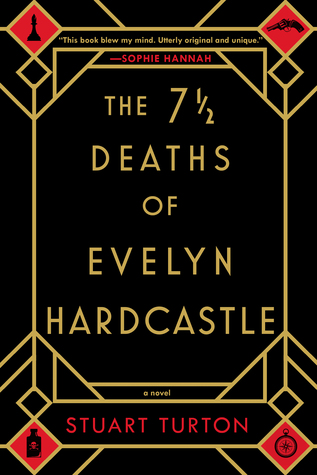
I’m very sure that I requested for this book because it was supposed to be a twist on the usual murder mystery. Well, it definitely was different.
In The 7 1/2 Deaths of Evelyn Hardcastle, Aiden wakes up every day in the body of a different person. He also has to relieve each day, watching Evelyn Hardcastle die at 11:00. And until he can figure out who killed her by his last host, he’s doomed.
I can’t really say too much of the plot here because:
1. It would result in a spoiler
2. I’m still confused.
While this was a very clever book, I found it quite confusing. It’s probably because we’re thrown into the narrative with Aiden, who wakes up with a name on his mind but absolutely no idea what’s going on. The first part of the book was basically him trying to understand the whole situation.
Another reason why it confused me was the sheer number of characters. Aiden has 8 hosts and after finishing the story, I still can’t remember any of them. While the book does show Aiden grappling with the characters of the host, all the hosts had the same voice (probably Aiden’s) to me, which made it hard to distinguish between them (and between them and Aiden)
That said, I did understand the ending of the book and thought it was very exciting. Somehow, I managed to understand one plotline and the final few chapters were tightly written and got me hooked. I think that if the first half of the book was the same, I would have understood it more and have been less confused.
I would like to comment on Aiden but I don’t have an opinion of him. Perhaps it’s because he spent most of the book unaware of himself, but I never really got a good sense of what he was like as a person. It always felt that the mystery was the goal and he was sort of fumbling towards it (until the ending, where he came up with a plan and things got interesting).
To be honest, I’m not sure if I would have finished this book if it wasn’t from NetGalley. While it’s very cleverly executed and the ending was good, the beginning was confusing and I never connected with Aiden or the other characters. I normally need either the world or the characters to keep me reading and I didn’t get ‘hooked’ until later in this book.
Mystery fans may enjoy this, but be sure that you know what you’re getting into. This isn’t going to be a typical light read - you’ll have to be able to keep track of a huge cast of characters while trying to solve a murder. If you think you’re up to it, then the world of the Hardcastles awaits.
Disclaimer: I got a free copy of this book from the publisher via NetGalley in exchange for an honest review.
Showing posts with label NetGalley. Show all posts
Wednesday, November 7, 2018
Tuesday, October 16, 2018
Imagining Shakespeare's Wife by Katherine West Scheil
I've had a slight increase in interest in Shakespeare ever since last year when we visited Stratford-upon-Avon and the Globe in London. So when I saw this book on Anne Hathaway, I decided to request a copy.
As with Shakespeare, we know very few details about Anne Hathaway's life, which makes it very easy for historians to reimagine her the way they want. Imagining Shakespeare's Wife first takes us through the known facts of Anne Hathaway and her legacy, and then goes through the ways that she has been represented in great detail.
The sad fact is that Anne has always been used to illuminate aspects of her husband. As his wife, she would have known (and could have said) a lot about his character. And since she was about seven years older than him, speculation about their marriage has been rife. If people want to portray Shakespeare as a libertine man about town, they tend to view Anne and her marriage to Shakespeare very negatively. If people want to view Shakespeare as a great moral character, they tend to view Anne as someone embodying feminine virtues. And in recent years, Anne has been re-interpreted (sometimes drastically in novels) to fit certain feminist messages.
Obviously, this was a fascinating read. I've always felt a certain sympathy for the way Anne has been portrayed because it has been really unflattering at times. To see how people have interpreted her silence is really astounding. And like James Shapiro said in Contested Will, there is very little we know about Shakespeare's personal life, which means that the temptation to read into his marriage through his works is very great.
If you're interested in Shakespeare, I think you'd enjoy this. It's fairly easy to read and contains a lot of great analysis about the ways Anne Hathaway has been interpreted throughout history. It's probably not related to any of Shakespeare's plays (except for the part where people use his plays to pass judgment on her) but if you want to know more about the Bard and his Wife, this is a book to read.
Disclaimer: I got a free copy of this book from the publisher via NetGalley in exchange for a free and honest review.
As with Shakespeare, we know very few details about Anne Hathaway's life, which makes it very easy for historians to reimagine her the way they want. Imagining Shakespeare's Wife first takes us through the known facts of Anne Hathaway and her legacy, and then goes through the ways that she has been represented in great detail.
The sad fact is that Anne has always been used to illuminate aspects of her husband. As his wife, she would have known (and could have said) a lot about his character. And since she was about seven years older than him, speculation about their marriage has been rife. If people want to portray Shakespeare as a libertine man about town, they tend to view Anne and her marriage to Shakespeare very negatively. If people want to view Shakespeare as a great moral character, they tend to view Anne as someone embodying feminine virtues. And in recent years, Anne has been re-interpreted (sometimes drastically in novels) to fit certain feminist messages.
Obviously, this was a fascinating read. I've always felt a certain sympathy for the way Anne has been portrayed because it has been really unflattering at times. To see how people have interpreted her silence is really astounding. And like James Shapiro said in Contested Will, there is very little we know about Shakespeare's personal life, which means that the temptation to read into his marriage through his works is very great.
If you're interested in Shakespeare, I think you'd enjoy this. It's fairly easy to read and contains a lot of great analysis about the ways Anne Hathaway has been interpreted throughout history. It's probably not related to any of Shakespeare's plays (except for the part where people use his plays to pass judgment on her) but if you want to know more about the Bard and his Wife, this is a book to read.
Disclaimer: I got a free copy of this book from the publisher via NetGalley in exchange for a free and honest review.
Labels:
historical
,
NetGalley
,
non-fiction
Thursday, October 11, 2018
The Library Book by Susan Orlean
One of my favourite memories from when I was younger would be the smell of the library. While we never haunted it as frequently as the author of this book, going there was always a treat and now, I make it a point to visit the library regularly (although this is more for sanity and cost-saving reasons). And so, with a title like this, how could I resist requesting it from NetGalley? I barely needed to read that it was about the 1986 fire at the Los Angeles Public Library before I was hooked.
The Library Book has two stories: the first is the history of the Los Angeles Public Library - how it started and how it grew, and the second is, as mentioned before, on the 1986 fire at the Los Angeles Public Library.
Obviously, I found this fascinating. Of the two stories, I thought the story of the Los Angeles library to be more interesting. While I've never been to that particular library, I can definitely see the beauty of it and I love how all the people working there are so passionate about the library. The book definitely brings the library to life.
On the other hand, I thought the story about the 1986 fire was a bit of a let down. Perhaps its because I thought this was a solved mystery (the way the book opens definitely implies that Harry Peak is the culpirt) and so the sudden open end was a bit of a shock. Or maybe it's because the book alternates between the history and workings of the library and the 1986 fire, which means that the case never really has time to build up steam. In any case, I found that I would have much preferred to read about about the library with this case being just a small component of it, rather than half the book.
Overall, I thought that this was a beautiful tribute to libraries, and to the Los Angeles Public Library in particular. While I'm not sure if the libraries in Singapore work the same way, I found it very eye-opening to read about how libraries in America work, how they used to work, and how they are changing for the future.
Disclaimer: I got a free copy of this book from the publisher via NetGalley in exchange for a free and honest review.
The Library Book has two stories: the first is the history of the Los Angeles Public Library - how it started and how it grew, and the second is, as mentioned before, on the 1986 fire at the Los Angeles Public Library.
Obviously, I found this fascinating. Of the two stories, I thought the story of the Los Angeles library to be more interesting. While I've never been to that particular library, I can definitely see the beauty of it and I love how all the people working there are so passionate about the library. The book definitely brings the library to life.
On the other hand, I thought the story about the 1986 fire was a bit of a let down. Perhaps its because I thought this was a solved mystery (the way the book opens definitely implies that Harry Peak is the culpirt) and so the sudden open end was a bit of a shock. Or maybe it's because the book alternates between the history and workings of the library and the 1986 fire, which means that the case never really has time to build up steam. In any case, I found that I would have much preferred to read about about the library with this case being just a small component of it, rather than half the book.
Overall, I thought that this was a beautiful tribute to libraries, and to the Los Angeles Public Library in particular. While I'm not sure if the libraries in Singapore work the same way, I found it very eye-opening to read about how libraries in America work, how they used to work, and how they are changing for the future.
Disclaimer: I got a free copy of this book from the publisher via NetGalley in exchange for a free and honest review.
Labels:
ARC
,
historical
,
NetGalley
,
non-fiction
Monday, September 17, 2018
My Real Name is Hanna by Tara Lynn Mash
This was such an emotionally intense read, although thankfully, I knew what I was getting into when I started the book.My Real Name is Hanna is the story of Hanna Slivka, a fourteen-year old Jewish girl living in Ukraine. Her childhood is happy, until Hitler comes. And with the Gestapo comes persecution, as their food runs low and once-friendly neighbours turn their backs. And then one day, Hanna and her family hear that Hitler plans to make their town Judenfrei - “free of Jews” - and know that they must leave their home in order to survive.
This book isn’t an adventure story. It is the story of one girl and her family trying to survive with dignity. As Hanna’s father says, “This is what those Nazis make us do, huh? Live like barbarians. But the best revenge, my Eva, is just that - to live...”
And live they do. It is not an easy experience, especially for a girl on the cusp of womanhood, but Hanna and her family do their best to hold on to their faith and culture even in the worst of times. While they are sometimes forced to break certain rules, such as eating non-kosher meat, they try their best to live in a way that gives them dignity, and that means honouring their religion and culture.
I really appreciated how this book brought out the strength of the human spirit and of friendships. Next to Hanna lives Alla, a non-Jewish person who sells pysanka, eggs decorated with traditional folk designs. These eggs hold deep meaning and even though they are not Hanna’s culture, they represent the friendship she has with Alla and the strength that Hanna gets from it.
If you want to read about a World War II story set in a less traditional location, you’ll want to pick this up. It’s got heart and it’s got character, and though it is dark, it is also uplifting.
Disclaimer: I received a copy of this book from the publisher via NetGalley in exchange for an honest review.
Monday, August 27, 2018
The Way Home by Julian Barr
I'm not familiar with the Aeneid, although I have heard of Odysseus and the Trojan war. So when I read the synopsis of The Way Home, a retelling of the Aeneid, I was intrigued and thought it would be a good way to introduce myself to this aspect of the myth.
The Way Home follows the journey of Aeneas, a Trojan prince. It starts when the Greeks are ransacking the city, having been smuggled in by the giant horse (although I don't think Aeneas ever realised this is how they got in). Unfortunately, he didn't manage to save the royal family or his wife and ends up leading a band of refugees. And thus, their journey to find their new home begins.
At the same time, we see that this is part of a fight between Hera and Zeus. Hera wants to make her preferred city dominant, while Zeus has other plans (which involve Aeneas). The other gods are pulled in as they side with one or the other, or even switch allegiances.
I absolutely enjoyed this story. Although I didn't really know of Aeneas before, I have a translation of The Odessy before so I knew the other side of the myth. It was very interesting to see how Virgil retold the story from a relatively 'minor' character's viewpoint, and how that was, in turn, retold as The Way Home. I actually paused the story quite a lot to google certain characters or events and read more about it.
By the way, is anyone else shocked at how young Aeneas was when the story began? The book introduces his son, Julos, first and I thought he was in his twenties or something but then a few paragraphs later, I find that he's only nineteen! I know that was a product of the times but wow, the kid is extremely mature for his age. And I guess the book making his age clear at the beginning was a good move because I found myself giving him a lot of latitude after that.
Since this is a YA retelling, the language is simple and direct, which makes it a good introduction to the myth. I found it easy to empathise with Aeneas and his people, even though they lived thousands of years ago and thousands of kilometers away.
However, since this is the first in a trilogy, the book ends on a sort-of cliffhanger. It's not a very big one, but it did make me impatient for the second book. Perhaps I'll find one of the accessible translations of The Aeneid and read that while waiting.
Disclaimer: I got a free copy of this book from the publisher via NetGalley in exchange for a free and honest review.
The Way Home follows the journey of Aeneas, a Trojan prince. It starts when the Greeks are ransacking the city, having been smuggled in by the giant horse (although I don't think Aeneas ever realised this is how they got in). Unfortunately, he didn't manage to save the royal family or his wife and ends up leading a band of refugees. And thus, their journey to find their new home begins.
At the same time, we see that this is part of a fight between Hera and Zeus. Hera wants to make her preferred city dominant, while Zeus has other plans (which involve Aeneas). The other gods are pulled in as they side with one or the other, or even switch allegiances.
I absolutely enjoyed this story. Although I didn't really know of Aeneas before, I have a translation of The Odessy before so I knew the other side of the myth. It was very interesting to see how Virgil retold the story from a relatively 'minor' character's viewpoint, and how that was, in turn, retold as The Way Home. I actually paused the story quite a lot to google certain characters or events and read more about it.
By the way, is anyone else shocked at how young Aeneas was when the story began? The book introduces his son, Julos, first and I thought he was in his twenties or something but then a few paragraphs later, I find that he's only nineteen! I know that was a product of the times but wow, the kid is extremely mature for his age. And I guess the book making his age clear at the beginning was a good move because I found myself giving him a lot of latitude after that.
Since this is a YA retelling, the language is simple and direct, which makes it a good introduction to the myth. I found it easy to empathise with Aeneas and his people, even though they lived thousands of years ago and thousands of kilometers away.
However, since this is the first in a trilogy, the book ends on a sort-of cliffhanger. It's not a very big one, but it did make me impatient for the second book. Perhaps I'll find one of the accessible translations of The Aeneid and read that while waiting.
Disclaimer: I got a free copy of this book from the publisher via NetGalley in exchange for a free and honest review.
Labels:
fiction
,
historical
,
mythological
,
NetGalley
,
western
Monday, August 6, 2018
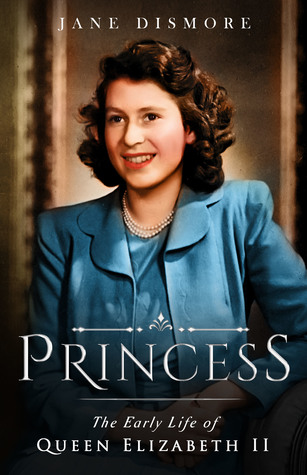
Princess by Jane Dismore
I was intrigued as soon as I saw this book on NetGalley because I don't know anything about Queen Elizabeth before she became queen (I didn't even know how she looked like when she was young!). So when I heard that this book also contained unpublished material from letters and interviews, I decided to request for it.
Princess is a sensitively written account of Queen Elizabeth's early life. It starts off with the moment she became queen (very sadly, she was one of the last people to know) and then backtracks to when she was born before going forward from there. It covers her childhood, marriage, and life as a newlywed.
I was actually pretty surprised at how normally her parents raised her. You always hear of extravagant lifestyles but it seems like Queen Elizabeth and her sister were raised to be as down to earth as possible. Part of it may have been the times where they grew up, but it seems like a part of it is also due to her parents and their personality. I felt that they had a very genuine and loving relationship, which was very touching.
Also touching was her relationship with Prince Phillip. Because she eventually marries him, the book does touch on key moments of his life before they met. There isn't anything scandalous in their love story, but it's a very sweet account.
The one thing that surprised me while reading was the Duke and Duchess of Windsor. I didn't really have any views about them because I knew nothing about them except that the King abdicated to marry Wallis Simpson, so it was a shock to find out that both of them had pro-Nazi views. I’m definitely going to side-eye anyone who praises Wallis Simpson now.
Overall, this was an interesting and informative account of Queen Elizabeth’s early life. The only thing I wish it added were photos of key moments - while they are probably just one google search away, it would be nice to be able to flip to them in the book. Hopefully it’s just my advance copy that doesn’t have pictures because I think it would add a lot to have them.
Disclaimer: I got a free copy of this book from the publisher via NetGalley in exchange for a free and honest review.
Princess is a sensitively written account of Queen Elizabeth's early life. It starts off with the moment she became queen (very sadly, she was one of the last people to know) and then backtracks to when she was born before going forward from there. It covers her childhood, marriage, and life as a newlywed.
I was actually pretty surprised at how normally her parents raised her. You always hear of extravagant lifestyles but it seems like Queen Elizabeth and her sister were raised to be as down to earth as possible. Part of it may have been the times where they grew up, but it seems like a part of it is also due to her parents and their personality. I felt that they had a very genuine and loving relationship, which was very touching.
Also touching was her relationship with Prince Phillip. Because she eventually marries him, the book does touch on key moments of his life before they met. There isn't anything scandalous in their love story, but it's a very sweet account.
The one thing that surprised me while reading was the Duke and Duchess of Windsor. I didn't really have any views about them because I knew nothing about them except that the King abdicated to marry Wallis Simpson, so it was a shock to find out that both of them had pro-Nazi views. I’m definitely going to side-eye anyone who praises Wallis Simpson now.
Overall, this was an interesting and informative account of Queen Elizabeth’s early life. The only thing I wish it added were photos of key moments - while they are probably just one google search away, it would be nice to be able to flip to them in the book. Hopefully it’s just my advance copy that doesn’t have pictures because I think it would add a lot to have them.
Disclaimer: I got a free copy of this book from the publisher via NetGalley in exchange for a free and honest review.
Labels:
autobiography/biography
,
NetGalley
,
non-fiction
Wednesday, August 1, 2018
A Tale of Two Murders by Heather Redmond
I requested this from NetGalley because the cover was pretty and it’s a Dicken’s inspired novel! I like (and know enough) about his work that fanfic like this is interesting and something that I would like to try reading.
In A Tale of Two Murders, Charles Dickens is drawn into the role of a detective when the girl living next to his editor is murdered. Because another girl in the neighbourhood died the same way a year ago, and stricken by the lovely Kate Hogarth, his editor’s daughter, Dickens decides to find the truth of what happened.
Though he isn’t part of the upper class, the mother of the dead girl, Lady Lugoson, also suspects murder and she helps to open doors. However, Dickens soon comes across family secrets and he must decide which of the many suspects is the actual culprit.
To be honest, this book started off a little slowly for me. For some reason, I found the language a little clunky, which made immersing myself in the story and the time period harder. It was only after a few chapters that I managed to get into the rhythm of the story and start to wonder about who killed poor Miss Lugoson.
Apart from the language, one thing that made it harder for me to get into the story was that the murder plot wasn’t the most dominant. I felt that the start of the book was preoccupied with Dicken’s budding relationship with Kate Hogarth and that influenced his actions more than getting to the truth. While their romance is very sweet and I admire Kate for knowing what she wants and sticking to it, it felt like half or more the story was a romance, which wasn’t what I wanted to read.
Speaking of Kate, I really liked her character! She’s a sensible young lady, and it was refreshing to see the female lead portrayed as equally capable as the male lead. Although she couldn’t be there when Dickens made some important discoveries because they weren’t married, I like how she spoke her mind and wasn’t afraid to contradict Dickens.
I’m not too sure about how accurate the portrayal of Dickens was, though. He seems like a idealist romantic here, but I have read that his marriage didn’t go very smoothly, so I do wonder how accurately the book portrayed him.
Overall, this was a pretty enjoyable book. It took some time for me to get into the story, but I enjoyed it once I was caught up. If you’re a fan of Charles Dickens, you’ll probably want to give it a try.
Disclaimer: I received a free copy of this book from the publisher via NetGalley in exchange for an honest review.
In A Tale of Two Murders, Charles Dickens is drawn into the role of a detective when the girl living next to his editor is murdered. Because another girl in the neighbourhood died the same way a year ago, and stricken by the lovely Kate Hogarth, his editor’s daughter, Dickens decides to find the truth of what happened.
Though he isn’t part of the upper class, the mother of the dead girl, Lady Lugoson, also suspects murder and she helps to open doors. However, Dickens soon comes across family secrets and he must decide which of the many suspects is the actual culprit.
To be honest, this book started off a little slowly for me. For some reason, I found the language a little clunky, which made immersing myself in the story and the time period harder. It was only after a few chapters that I managed to get into the rhythm of the story and start to wonder about who killed poor Miss Lugoson.
Apart from the language, one thing that made it harder for me to get into the story was that the murder plot wasn’t the most dominant. I felt that the start of the book was preoccupied with Dicken’s budding relationship with Kate Hogarth and that influenced his actions more than getting to the truth. While their romance is very sweet and I admire Kate for knowing what she wants and sticking to it, it felt like half or more the story was a romance, which wasn’t what I wanted to read.
Speaking of Kate, I really liked her character! She’s a sensible young lady, and it was refreshing to see the female lead portrayed as equally capable as the male lead. Although she couldn’t be there when Dickens made some important discoveries because they weren’t married, I like how she spoke her mind and wasn’t afraid to contradict Dickens.
I’m not too sure about how accurate the portrayal of Dickens was, though. He seems like a idealist romantic here, but I have read that his marriage didn’t go very smoothly, so I do wonder how accurately the book portrayed him.
Overall, this was a pretty enjoyable book. It took some time for me to get into the story, but I enjoyed it once I was caught up. If you’re a fan of Charles Dickens, you’ll probably want to give it a try.
Disclaimer: I received a free copy of this book from the publisher via NetGalley in exchange for an honest review.
Labels:
fiction
,
historical
,
NetGalley
,
western
Monday, July 16, 2018
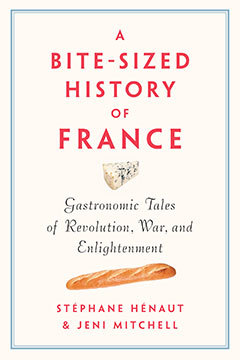
A Bite Sized History of France by Stephane Henaut and Jeni Mitchell
I requested this book from Netgalley purely because it’s about food (even though I don’t really know or eat a lot of French Food).A Bite Sized History of France tackles French history through its food, from the Gauls (before the Roman Empire) to modern day France. Each chapter is relatively short and focuses on one food, such as honey, wine, many types of cheeses, the croissant (a relatively new invention, it seems), salt, how the potato become popular, and much more.
Along the way, the book dispels some common legends about food and tries to put them in the proper light.
While the book is organised roughly in chronological order, the topical nature of the book means that this isn’t the right place to get an overview of French history. Certain people (like Napoleon and some of the Kings) pop up in a couple of pictures but things aren’t placed into the bigger picture.
But, this book is an enjoyable way to dip in and out of French history. I will freely admit to being an ignoramus about the subject and it was fun to learn about things like how mushrooms became popular (and how seriously they take mushroom hunting). There are also some really great chapters that explore the darker side of French history, namely French’s colonial ambitions that brought peanut oil to the nation.
Overall, this was a fun book that foodies will definitely enjoy. It not only introduced me to French history and culture (and lots of food), it also showed me the global nature of food through the development of French cuisine.
Disclaimer: I received a free copy of this book from the publisher via NetGalley in exchange for an honest review.
Labels:
historical
,
NetGalley
,
non-fiction
,
western
Thursday, June 21, 2018
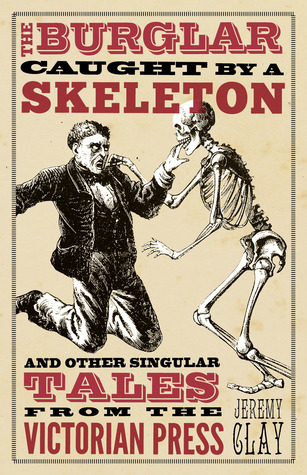
The Burglar Caught by a Skeleton by Jeremy Clay
I have to admit, I requested this book based on the title - you don't really hear about weird Victorian news these days (or I suppose any day since most people don't read the Victorian newspapers).
The Burglar Caught by a Skeleton is basically a collection of weird Victorian news stories that may be exaggerated or made up (or perhaps reality really is that strange). The topics covered range from animals (lots of wild animals in Britain, apparently), to health and medicine, and even wagers. Some of the weirder stories include monkeys committing suicide a large, headless turkey ghost. The latter half of the book is quite sad, though, since it covers tragic incidents rather than the ludicrous. The last section is a brief follow up on some of the stories.
While the stories are definitely strange and unbelievable, they aren't told in a very interesting way. It seems like the newspapers like to report things rather drily, so this isn't really a book that I wanted to binge. It was, however, pleasant to read it over several sittings, to take in the strangeness that managed to pass as news back then.
By the way, the titular burglar caught by a skeleton is really what it says. A burglar was in the house of a doctor, got his hand caught by a skeleton while fumbling in the dark, and then promptly fainted and was found by the doctor whose house he was in.
Looks like skeletons may be better than guard dogs.
Overall, this was an interesting collection of stories that will appeal to people who like weird and obscure history.
Disclaimer: I got a free copy of this book from the publisher via NetGalley in exchange for a free and honest review.
The Burglar Caught by a Skeleton is basically a collection of weird Victorian news stories that may be exaggerated or made up (or perhaps reality really is that strange). The topics covered range from animals (lots of wild animals in Britain, apparently), to health and medicine, and even wagers. Some of the weirder stories include monkeys committing suicide a large, headless turkey ghost. The latter half of the book is quite sad, though, since it covers tragic incidents rather than the ludicrous. The last section is a brief follow up on some of the stories.
While the stories are definitely strange and unbelievable, they aren't told in a very interesting way. It seems like the newspapers like to report things rather drily, so this isn't really a book that I wanted to binge. It was, however, pleasant to read it over several sittings, to take in the strangeness that managed to pass as news back then.
By the way, the titular burglar caught by a skeleton is really what it says. A burglar was in the house of a doctor, got his hand caught by a skeleton while fumbling in the dark, and then promptly fainted and was found by the doctor whose house he was in.
Looks like skeletons may be better than guard dogs.
Overall, this was an interesting collection of stories that will appeal to people who like weird and obscure history.
Disclaimer: I got a free copy of this book from the publisher via NetGalley in exchange for a free and honest review.
Labels:
historical
,
NetGalley
,
non-fiction
,
western
Tuesday, June 5, 2018
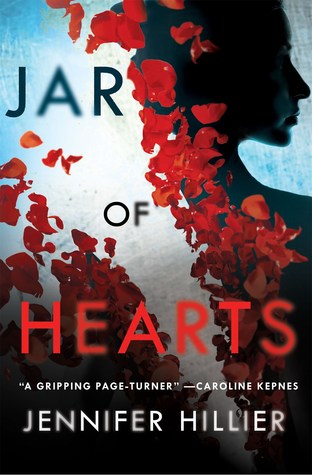
Jar of Hearts by Jennifer Hillier
I requested this book because murders + hidden childhood secrets always interest me and luckily for me, I was not disappointed.
Jar of Hearts opens with Geo being sentenced to five years of jail for the involvement in the murder of her best friend, Angela. And to be honest, I almost gave up during the section on her years in jail because there was a lot of violence - both sexual and non-sexual.
But if you can get through the prison section to when she gets out, things start to get interesting. Because just before Geo gets out, two bodies turn up near Geo’s home - a mother and child murdered the way Angela was. Kaiser, Angela and Geo’s childhood best friend, is investigating and he quickly confirms that this case is connected to their shared past. I shan’t say anything more about the plot because I might give too much away. But it was really well-paced and I liked how the past informed the present.
Geo was a good protagonist. Even though she did a horrible horrible thing (and didn’t ‘fess up for 14 years), she clearly regrets it. And the more I read about her and Angela’s relationship, the more I saw how complicated it was and even though it doesn’t excuse what she did at all, it did help me to understand her.
On the other hand, I was a bit meh about Kaiser. I thought he had a pretty strong start, but he soon faded away and it felt like his purpose was more for plot than for character. I know him not really changing is his schtick in the book, but he felt a little two-dimensional at times, which is a pity because I thought he was an interesting foil to Geo at first (and would be the childhood friend who’d keep her accountable).
The ending was pretty good. Not something that could be deduced from hints in the book (except for the few chapters before) but everything flowed nicely and it was pretty satisfying. Overall, if you like darker thrillers, you should check this book out. Despite the slightly rough start, I got hooked and flew through the second half because I wanted to find out what happened.
Disclaimer: I got a free copy of this book from the publisher via NetGalley in exchange for a free and honest review
Jar of Hearts opens with Geo being sentenced to five years of jail for the involvement in the murder of her best friend, Angela. And to be honest, I almost gave up during the section on her years in jail because there was a lot of violence - both sexual and non-sexual.
But if you can get through the prison section to when she gets out, things start to get interesting. Because just before Geo gets out, two bodies turn up near Geo’s home - a mother and child murdered the way Angela was. Kaiser, Angela and Geo’s childhood best friend, is investigating and he quickly confirms that this case is connected to their shared past. I shan’t say anything more about the plot because I might give too much away. But it was really well-paced and I liked how the past informed the present.
Geo was a good protagonist. Even though she did a horrible horrible thing (and didn’t ‘fess up for 14 years), she clearly regrets it. And the more I read about her and Angela’s relationship, the more I saw how complicated it was and even though it doesn’t excuse what she did at all, it did help me to understand her.
On the other hand, I was a bit meh about Kaiser. I thought he had a pretty strong start, but he soon faded away and it felt like his purpose was more for plot than for character. I know him not really changing is his schtick in the book, but he felt a little two-dimensional at times, which is a pity because I thought he was an interesting foil to Geo at first (and would be the childhood friend who’d keep her accountable).
The ending was pretty good. Not something that could be deduced from hints in the book (except for the few chapters before) but everything flowed nicely and it was pretty satisfying. Overall, if you like darker thrillers, you should check this book out. Despite the slightly rough start, I got hooked and flew through the second half because I wanted to find out what happened.
Disclaimer: I got a free copy of this book from the publisher via NetGalley in exchange for a free and honest review
Thursday, May 17, 2018
The Dark Angel by Elly Griffiths
I requested this book as soon as I saw it because I’m always up for a good mystery. I didn’t realise that this was part of a series, but I had no problem following along.
The Dark Angel starts in Italy when a corpse is found to have a handphone. And even weirder, Professor Angelo received a text from the corpse when he excavated it. Back in England, forensic archaeologist Ruth is struggling with her personal relationships. So when she gets an invitation from Angelo to come to Italy to consult, she brings her daughter and friend along for a holiday.
I have to admit, the mystery took a backseat to the relationships in The Dark Angel. Perhaps it’s because I’m jumping into the series midway, but I felt that the complicated relationships between the characters (particularly Ruth and Nelson) were more prominent than the mystery of the corpse. I’m not complaining since I enjoyed reading about it, but it was a bit of a surprise.
The mystery itself was pretty interesting and very much tied to the town where the corpse was found. I’ve never been to Italy (sadly) so I don’t know how accurate all the descriptions were, but I really felt the small town and it’s inhabitants very strongly.
There was only one thing that threw me off a little: the book switches between several POV characters, mostly Ruth and Nelson, although some characters get their time in the spotlight too. The switch could be a bit abrupt since it takes place within the chapter (I’m more used to having one chapter per POV) but it wasn’t a problem once I got used to the style.
Overall, I enjoyed this mystery. I enjoyed the setting and the characters in it. And perhaps because of the characters, I am interested in going back to read the first book in this series and finding out how it all started.
Disclaimer: I got a free copy of this book from the publisher via NetGalley in exchange for a free and honest review.
The Dark Angel starts in Italy when a corpse is found to have a handphone. And even weirder, Professor Angelo received a text from the corpse when he excavated it. Back in England, forensic archaeologist Ruth is struggling with her personal relationships. So when she gets an invitation from Angelo to come to Italy to consult, she brings her daughter and friend along for a holiday.
I have to admit, the mystery took a backseat to the relationships in The Dark Angel. Perhaps it’s because I’m jumping into the series midway, but I felt that the complicated relationships between the characters (particularly Ruth and Nelson) were more prominent than the mystery of the corpse. I’m not complaining since I enjoyed reading about it, but it was a bit of a surprise.
The mystery itself was pretty interesting and very much tied to the town where the corpse was found. I’ve never been to Italy (sadly) so I don’t know how accurate all the descriptions were, but I really felt the small town and it’s inhabitants very strongly.
There was only one thing that threw me off a little: the book switches between several POV characters, mostly Ruth and Nelson, although some characters get their time in the spotlight too. The switch could be a bit abrupt since it takes place within the chapter (I’m more used to having one chapter per POV) but it wasn’t a problem once I got used to the style.
Overall, I enjoyed this mystery. I enjoyed the setting and the characters in it. And perhaps because of the characters, I am interested in going back to read the first book in this series and finding out how it all started.
Disclaimer: I got a free copy of this book from the publisher via NetGalley in exchange for a free and honest review.
Wednesday, March 7, 2018
The Queens of Innis Lear by Tessa Gratton
I requested this book as soon as I saw it because:
1. The blurb makes it sound similar to Three Dark Crowns which was something I really loved
2. I studied King Lear in IB and heard that this was a retelling.
Anyway, this retelling of King Lear is infused with magic of both the stars and sky. King Lear is obsessed by what the stars say to him, leading him to require his daughters to publicly declare their love for him (among other things). His two older daughters, Gaelan and Reagan are one in mind, but his favourite, Elia surprises him with his answer. If you've watched or studied King Lear, you know how it goes.
Because this is a series, we don't get as far as say, the Storm Scene. Well, this book is really a set-up for the world, so it ends a little after the public declaration contest, which you may recognise as the start of the play. But I can see why this world and the new characters require so much word-space, so I don't mind waiting to see my favourite parts of this play retold.
As for characters, the three daughters of Lear definitely steal the show. Elia is my favourite because she's the kindest, but both Gaela and Reagan were very well-written and true to their inspiration. The book also introduces new characters, such as Ban the Fox and the Fool's daughter (who's also Elia's lady-in-waiting).
The only thing I wasn't too crazy about was the language. It's very deliberately lyrical, sometimes to its detriment because it distracted me from the story. Then again, if you know me, you know I put story first and feel that language should be used to enhance the story rather than placed in the limelight for its own sake.
Overall, though, this is definitely a book for fans of King Lear and those that like darker retellings. Even though I know the ending (or at least, I hope I know the ending), I cannot wait to see how the later books will interpret the rest of the play.
Disclaimer: I got a free copy of this book from the publisher via NetGalley in exchange for a free and honest review.
1. The blurb makes it sound similar to Three Dark Crowns which was something I really loved
2. I studied King Lear in IB and heard that this was a retelling.
Anyway, this retelling of King Lear is infused with magic of both the stars and sky. King Lear is obsessed by what the stars say to him, leading him to require his daughters to publicly declare their love for him (among other things). His two older daughters, Gaelan and Reagan are one in mind, but his favourite, Elia surprises him with his answer. If you've watched or studied King Lear, you know how it goes.
Because this is a series, we don't get as far as say, the Storm Scene. Well, this book is really a set-up for the world, so it ends a little after the public declaration contest, which you may recognise as the start of the play. But I can see why this world and the new characters require so much word-space, so I don't mind waiting to see my favourite parts of this play retold.
As for characters, the three daughters of Lear definitely steal the show. Elia is my favourite because she's the kindest, but both Gaela and Reagan were very well-written and true to their inspiration. The book also introduces new characters, such as Ban the Fox and the Fool's daughter (who's also Elia's lady-in-waiting).
The only thing I wasn't too crazy about was the language. It's very deliberately lyrical, sometimes to its detriment because it distracted me from the story. Then again, if you know me, you know I put story first and feel that language should be used to enhance the story rather than placed in the limelight for its own sake.
Overall, though, this is definitely a book for fans of King Lear and those that like darker retellings. Even though I know the ending (or at least, I hope I know the ending), I cannot wait to see how the later books will interpret the rest of the play.
Disclaimer: I got a free copy of this book from the publisher via NetGalley in exchange for a free and honest review.
Tuesday, January 23, 2018
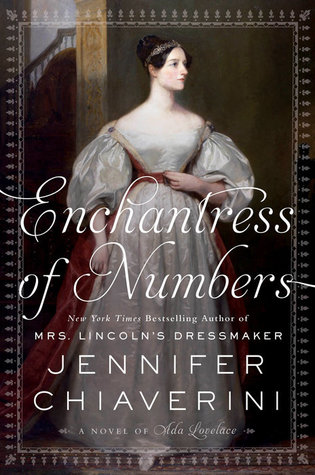
Enchantress of Numbers by Jennifer Chiaverini
I don't know much about Ada Lovelace, the woman who is sometimes credited as the first computer programmer, which is why I jumped at this chance to read this "work of fiction inspired by history." To put it another way, this is a biography of Ada Lovelace written in the first person, which means that parts of it must be fictionalised.
Ada Lovelace was the daughter of Lord Byron, the poet, and Anne Isabella Noel Byron, 11th Baroness Wentworth and Baroness Byron. She was doubly unlucky in her parents, because her father was abusive and openly cheated on his wife and her mother managed to be both emotionally distant and manipulative at the same time. To avoid Ada from becoming 'insane' like her mother believed her father was, she was taught mathematics from an early age.
The book starts with the meeting and marriage of Lord Byron and Lady Byron (the only chapter to be written in the third person) and ends soon after Ada publishes her work on Charle's Babbage's Analytical Engine. Her work was supposed to be a translation of a French paper, but she added notes to it that soon eclipsed the original.
I found this book to be absorbing and hard to put down, although it's hard to know what was true and what is not - for example, Ada's gambling addiction is only very briefly mentioned. Since it was written in the first person, I very strongly felt for Ada and her different trials. Despite her privileged rank and her intellect, she was continually made to oppress her 'Byron side' and made to feel guilty for simply having feelings.
The chapter titles are all inspired by verses from Lord Byron's poems, which I thought was interesting.
If you want a purely factual biography, this is probably not a good idea. The author admits that liberties have been taken, although she tried to adhere as closely to the historical record as possible, so it's up to you to decide if you're comfortable with that.
Disclaimer: I received a free copy of this book from the publisher via Netgalley in exchange for a free and honest review.
Ada Lovelace was the daughter of Lord Byron, the poet, and Anne Isabella Noel Byron, 11th Baroness Wentworth and Baroness Byron. She was doubly unlucky in her parents, because her father was abusive and openly cheated on his wife and her mother managed to be both emotionally distant and manipulative at the same time. To avoid Ada from becoming 'insane' like her mother believed her father was, she was taught mathematics from an early age.
The book starts with the meeting and marriage of Lord Byron and Lady Byron (the only chapter to be written in the third person) and ends soon after Ada publishes her work on Charle's Babbage's Analytical Engine. Her work was supposed to be a translation of a French paper, but she added notes to it that soon eclipsed the original.
I found this book to be absorbing and hard to put down, although it's hard to know what was true and what is not - for example, Ada's gambling addiction is only very briefly mentioned. Since it was written in the first person, I very strongly felt for Ada and her different trials. Despite her privileged rank and her intellect, she was continually made to oppress her 'Byron side' and made to feel guilty for simply having feelings.
The chapter titles are all inspired by verses from Lord Byron's poems, which I thought was interesting.
If you want a purely factual biography, this is probably not a good idea. The author admits that liberties have been taken, although she tried to adhere as closely to the historical record as possible, so it's up to you to decide if you're comfortable with that.
Disclaimer: I received a free copy of this book from the publisher via Netgalley in exchange for a free and honest review.
Labels:
autobiography/biography
,
NetGalley
,
western
Tuesday, January 16, 2018
Chord of Evil by Sarah Rayne
I requested this book because Sarah Rayne is one of the few horror writers that I enjoy (because I'm too much of a scaredy-cat to explore the horror genre). While I haven't read her works in a while - something that I should remedy soon - Chords of Evil has the same suspense and crescendoing dread that the other works have.
Chords of Evil is a story told in two time periods and through four points of view. It starts in the modern day, with Phineas Fox. His neighbour, Toby, asks for his help in finding his missing cousin Arabella. To be honest, the normalcy of the beginning threw me off, but the book after they find a mysterious painting, the book quickly shifts to Margot, who's a bit obsessed with her brother, and then back into the past to Giselle in Nazi-era Germany and then to one last character (not going to name her to avoid spoilers). As the different threads start to weave themselves together, the world of the story got darker and darker and I felt that familiar sense of dread creeping over me.
Sarah Rayne tends to be a master of the dual plot structure, but I'll admit that I was a bit confused initially. I'm not sure if it's just the ARC copy I received, but there was nothing to indicate a POV change, which meant that I ended up going back and rereading a couple of chapters because I got lost. To be fair, I did put the book down and I suppose that if I read the first few chapters in one sitting, this wouldn't have happened. But as the story progressed and I got a hang of who's who, the shifts in POV and time felt a lot smoother and instead of being confused, the tension increased with every change.
As for characters, I thought that Giselle and the other character in the past felt very well-rounded, while Phineas was a little more forgettable and Margot was just creepy. I also thought that Arabella verged on being just a bit too manic pixie dream girl-ish, but since she didn't really appear until the ending of the book, she ending up being more charming than anything.
To be honest, I don't think Chord of Evil is as good as some of her other books, like A Dark Dividing, Roots of Evil, Spider Light, or Ghost Song, which were the first few books of hers that I read - before this blog, or perhaps in its earliest days - and which I would dearly love to re-read again. But on the whole, it is a solid thriller and did a good job of creeping me out, even if the beginning was a bit rough.
Disclaimer: I got a free copy of this book from the publisher via NetGalley in exchange for a free and honest review.
Chords of Evil is a story told in two time periods and through four points of view. It starts in the modern day, with Phineas Fox. His neighbour, Toby, asks for his help in finding his missing cousin Arabella. To be honest, the normalcy of the beginning threw me off, but the book after they find a mysterious painting, the book quickly shifts to Margot, who's a bit obsessed with her brother, and then back into the past to Giselle in Nazi-era Germany and then to one last character (not going to name her to avoid spoilers). As the different threads start to weave themselves together, the world of the story got darker and darker and I felt that familiar sense of dread creeping over me.
Sarah Rayne tends to be a master of the dual plot structure, but I'll admit that I was a bit confused initially. I'm not sure if it's just the ARC copy I received, but there was nothing to indicate a POV change, which meant that I ended up going back and rereading a couple of chapters because I got lost. To be fair, I did put the book down and I suppose that if I read the first few chapters in one sitting, this wouldn't have happened. But as the story progressed and I got a hang of who's who, the shifts in POV and time felt a lot smoother and instead of being confused, the tension increased with every change.
As for characters, I thought that Giselle and the other character in the past felt very well-rounded, while Phineas was a little more forgettable and Margot was just creepy. I also thought that Arabella verged on being just a bit too manic pixie dream girl-ish, but since she didn't really appear until the ending of the book, she ending up being more charming than anything.
To be honest, I don't think Chord of Evil is as good as some of her other books, like A Dark Dividing, Roots of Evil, Spider Light, or Ghost Song, which were the first few books of hers that I read - before this blog, or perhaps in its earliest days - and which I would dearly love to re-read again. But on the whole, it is a solid thriller and did a good job of creeping me out, even if the beginning was a bit rough.
Disclaimer: I got a free copy of this book from the publisher via NetGalley in exchange for a free and honest review.
Tuesday, January 9, 2018
The Mansions of Murder by Paul Doherty
I requested this from NetGalley because I really like the Shardlake series and the blurb for this historical mystery reminded me of it.
The Mansions of Murder follows Brother Athelstan as he investigates a most perplexing mystery. First, there's a locked room (locked Church) murder of two strong men. And then two preserved bodies are found in the house of a recently deceased, upstanding member of his parish. The mysteries seem unconnected at first, but as Brother Athelstan and coroner, Sir John Cranston investigate, the signs point towards a gang leader nicknamed 'the Flesher', who also happens to be someone Cranston hates due to their history.
What I liked about this book was its descriptive language. I could picture the grimness of medieval England through the prose and it is definitely not a place that I would like to visit.
However, the language can sometimes work against the story. It was so descriptive that it took me a very long time to be able to form an impression of Brother Athelstan and Sir John Cranston characters. I even got lost in the text a few times. Plus, there was a very long conversation (almost a monologue) to reveal the backstory which I thought was a bit heavy-handed.
I admit that while I understood the ending, I still don't understand how they got to the ending. Perhaps it's because I got overwhelmed by the language, and while I have a very good sense of how England was in the 14th century, I don't have a good sense of how the story flowed. This is probably suited for fans of historical fiction who value setting. And I suppose I should have started from the first book, rather than the jumping in midway.
Disclaimer: I received a free copy of this book from the publisher via NetGalley in exchange for a free and honest review.
The Mansions of Murder follows Brother Athelstan as he investigates a most perplexing mystery. First, there's a locked room (locked Church) murder of two strong men. And then two preserved bodies are found in the house of a recently deceased, upstanding member of his parish. The mysteries seem unconnected at first, but as Brother Athelstan and coroner, Sir John Cranston investigate, the signs point towards a gang leader nicknamed 'the Flesher', who also happens to be someone Cranston hates due to their history.
What I liked about this book was its descriptive language. I could picture the grimness of medieval England through the prose and it is definitely not a place that I would like to visit.
However, the language can sometimes work against the story. It was so descriptive that it took me a very long time to be able to form an impression of Brother Athelstan and Sir John Cranston characters. I even got lost in the text a few times. Plus, there was a very long conversation (almost a monologue) to reveal the backstory which I thought was a bit heavy-handed.
I admit that while I understood the ending, I still don't understand how they got to the ending. Perhaps it's because I got overwhelmed by the language, and while I have a very good sense of how England was in the 14th century, I don't have a good sense of how the story flowed. This is probably suited for fans of historical fiction who value setting. And I suppose I should have started from the first book, rather than the jumping in midway.
Disclaimer: I received a free copy of this book from the publisher via NetGalley in exchange for a free and honest review.
Labels:
fiction
,
historical
,
mystery
,
NetGalley
,
western
Tuesday, January 2, 2018
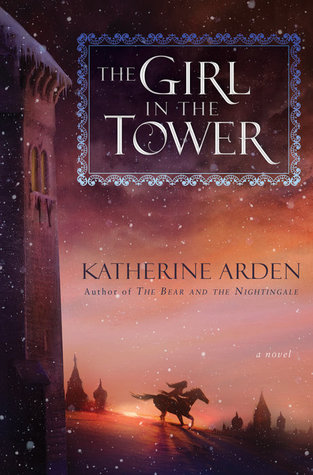
The Girl in the Tower by Katherine Arden
The Bear and the Nightingale is one of my top reads for 2017 and I was super excited when I was invited to review the sequel! And then my heart broke when the NetGalley page said that my email wasn't included. But luckily, I managed to contact the person who invited me to review and get the ecopy!
The Girl in the Tower picks up where The Bear and the Nightingale leaves off. Vasya has managed to subdue the Bear, but the villagers still think that she's a witch. Desperate not to be sent to a convent or married off, Vasya runs away with her horse, Solovey. Disguising herself as a boy, she runs into her beloved brother Sasha and ends up in the middle of fight between the Grand Prince of Moscow and the bandits burning down the city.
A lot of sequels fail to live up to the first book but The Girl in the Tower is just as fascinating and absorbing. Most of the key characters from the first book - Vasya, Solovey who is the best horse ever, and Morozko the frost demon - are here and minor characters like Sasha get their day in the sun. I love the fact that I recognised Sasha and the other characters because they were in the first book, so their appearance and expanded role felt natural.
Oh and by the way, Konstantin (the priest) appears too. He doesn't have as big a role as he did in The Bear and the Nightingale, but he is still as misguidedly evil and irredeemable as ever.
Another thing: I'm not a big fan of romance so I liked that there were no forced romances or love triangles in this. Vasya makes the choice to leave to avoid getting married and I'm glad the book doesn't sabotage that decision by having her fall in love. There is something between her and Morozko, but it's a doomed romance and I like that they didn't force it. Plus it sort of carried over from the previous book (though it wasn't as obvious so I didn't talk about it in my review) so I didn't find it weird.
If you loved (or even just liked - although I don't believe that's possible) The Bear and the Nightingale, you need to pick up The Girl in the Tower. The series continues to enchant and although you can read both as standalone novels, many elements of the first book were so naturally carried over and developed in the second in a way that made The Girl in the Tower even more of a delight to read.
Disclaimer: I got a free copy of this book from the publisher via NetGalley in exchange for a free and honest review. The gushing was voluntary.
The Girl in the Tower picks up where The Bear and the Nightingale leaves off. Vasya has managed to subdue the Bear, but the villagers still think that she's a witch. Desperate not to be sent to a convent or married off, Vasya runs away with her horse, Solovey. Disguising herself as a boy, she runs into her beloved brother Sasha and ends up in the middle of fight between the Grand Prince of Moscow and the bandits burning down the city.
A lot of sequels fail to live up to the first book but The Girl in the Tower is just as fascinating and absorbing. Most of the key characters from the first book - Vasya, Solovey who is the best horse ever, and Morozko the frost demon - are here and minor characters like Sasha get their day in the sun. I love the fact that I recognised Sasha and the other characters because they were in the first book, so their appearance and expanded role felt natural.
Oh and by the way, Konstantin (the priest) appears too. He doesn't have as big a role as he did in The Bear and the Nightingale, but he is still as misguidedly evil and irredeemable as ever.
Another thing: I'm not a big fan of romance so I liked that there were no forced romances or love triangles in this. Vasya makes the choice to leave to avoid getting married and I'm glad the book doesn't sabotage that decision by having her fall in love. There is something between her and Morozko, but it's a doomed romance and I like that they didn't force it. Plus it sort of carried over from the previous book (though it wasn't as obvious so I didn't talk about it in my review) so I didn't find it weird.
If you loved (or even just liked - although I don't believe that's possible) The Bear and the Nightingale, you need to pick up The Girl in the Tower. The series continues to enchant and although you can read both as standalone novels, many elements of the first book were so naturally carried over and developed in the second in a way that made The Girl in the Tower even more of a delight to read.
Disclaimer: I got a free copy of this book from the publisher via NetGalley in exchange for a free and honest review. The gushing was voluntary.
Labels:
fairy-tales
,
fantasy
,
fiction
,
NetGalley
,
western
Thursday, December 28, 2017
The House on Foster Hill by Jamie Jo Wright
I'm basically a mystery-person, which is why I requested The House on Foster Hill. Houses with a dark history? Definitely gonna read that. It turns out that this is a Christian mystery, so it's not as scary as I assumed it would be, but it was still pretty interesting.
After the suspicious death of her husband, Kaine decided to renovate a house because that was his dream that she never got to do. The house she chose is related to her great-grandmother. But when she moves in, she finds that her stalking issue has increased.
For the second plot, which takes place in the past, Ivy becomes obsessed with solving the murderer of Gabriella. Who was she and what happened to her baby? And can she work with Joel, the man she thought she loved (until the Tragic Event). The dual plot lines of Kaine and Ivy mirror each other as the danger and tension increases. Along the way, both women have to confront their loss of faith.
Personally, Kaine and I got off to a rocky start when she said that “she never liked Dickens. He took four pages to explain one setting when he only needed a paragraph.” Well, I actually hold the works of Dickens in higher esteem so...
And there was one odd head-hop moment just past the 25% mark.
But the characters grew on me after these hiccups and the pacing increased in a way that I was rushing through the last quarter of the book to find out who the culprits were.
I thought the Christianity in the book was rather heavy-handed (or at least, I noticed it, and I don’t normally do unless it’s Christian-Christian fiction). I’m completely okay with that since this is my faith, but if you don’t like that sort of thing, you may want to avoid the book.
Overall, I thought this was a decent mystery. The dual plotlines came together nicely and I was invested in the characters by the end of the book.
Disclaimer: I received a free copy of this book from the publisher via NetGalley in exchange for a free and honest review.
After the suspicious death of her husband, Kaine decided to renovate a house because that was his dream that she never got to do. The house she chose is related to her great-grandmother. But when she moves in, she finds that her stalking issue has increased.
For the second plot, which takes place in the past, Ivy becomes obsessed with solving the murderer of Gabriella. Who was she and what happened to her baby? And can she work with Joel, the man she thought she loved (until the Tragic Event). The dual plot lines of Kaine and Ivy mirror each other as the danger and tension increases. Along the way, both women have to confront their loss of faith.
Personally, Kaine and I got off to a rocky start when she said that “she never liked Dickens. He took four pages to explain one setting when he only needed a paragraph.” Well, I actually hold the works of Dickens in higher esteem so...
And there was one odd head-hop moment just past the 25% mark.
But the characters grew on me after these hiccups and the pacing increased in a way that I was rushing through the last quarter of the book to find out who the culprits were.
I thought the Christianity in the book was rather heavy-handed (or at least, I noticed it, and I don’t normally do unless it’s Christian-Christian fiction). I’m completely okay with that since this is my faith, but if you don’t like that sort of thing, you may want to avoid the book.
Overall, I thought this was a decent mystery. The dual plotlines came together nicely and I was invested in the characters by the end of the book.
Disclaimer: I received a free copy of this book from the publisher via NetGalley in exchange for a free and honest review.
Labels:
Christianity
,
mystery
,
NetGalley
Monday, November 27, 2017
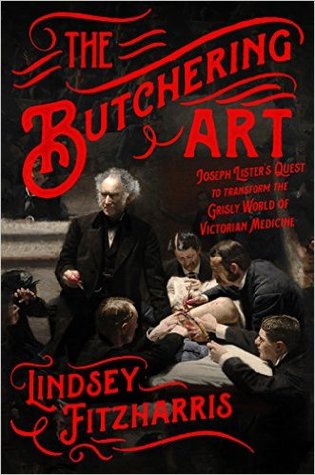
The Butchering Art by Lindsey Fitzharris
After reading this book, I shall forever look closely at novels set in the 19th century to see how they treat the subject of hospitals and medicine. If it's set in the early 19th century and there is anything approaching hygiene, then it's probably not very accurate. If it's in the 1860s to 1870s, then I'd expect to see a debate about how diseases are spread and how surgeries are carried out.
The Butchering Art is the story of how medicine changed for the better, thanks to the efforts of Joseph Lister. At a time where the field of medicine had the wrong ideas of how diseases spread and the risk of surgery could be higher than the risk of not being operated on (there is one surgery which had a 300% fatality rate - patient, assistant, and bystander), Joseph Lister's discoveries and his creation of an antiseptic system/procedure made things much safer for everyone.
While Joseph Lister is the principal focus of the book, the author also includes enough explanation of the field of medicine at the time and the people who influenced him, which made me appreciate how ideas are not born in a vacuum. It also helped me to see how timely and important these discoveries were, and contextualised them.
This memoir is very well-written, flowing through time and introducing many different people without being confusing. It's also very easy to read (aka not overwhelming the way some non-fiction books are). Even though I had less than a cursory knowledge of this period of time, I found myself being able to follow the events of what was going on and ended up reading this in one go.
If you're interested in the history of medicine, you'll want to pick up this book. The discovery of germs and how to prevent infections marked a turning point in turning hospitals from being houses of death to places of healing.
Disclaimer: I got a free copy of this book from the publisher via NetGalley in exchange for a free and honest review.
The Butchering Art is the story of how medicine changed for the better, thanks to the efforts of Joseph Lister. At a time where the field of medicine had the wrong ideas of how diseases spread and the risk of surgery could be higher than the risk of not being operated on (there is one surgery which had a 300% fatality rate - patient, assistant, and bystander), Joseph Lister's discoveries and his creation of an antiseptic system/procedure made things much safer for everyone.
While Joseph Lister is the principal focus of the book, the author also includes enough explanation of the field of medicine at the time and the people who influenced him, which made me appreciate how ideas are not born in a vacuum. It also helped me to see how timely and important these discoveries were, and contextualised them.
This memoir is very well-written, flowing through time and introducing many different people without being confusing. It's also very easy to read (aka not overwhelming the way some non-fiction books are). Even though I had less than a cursory knowledge of this period of time, I found myself being able to follow the events of what was going on and ended up reading this in one go.
If you're interested in the history of medicine, you'll want to pick up this book. The discovery of germs and how to prevent infections marked a turning point in turning hospitals from being houses of death to places of healing.
Disclaimer: I got a free copy of this book from the publisher via NetGalley in exchange for a free and honest review.
Labels:
historical
,
NetGalley
,
non-fiction
Tuesday, November 21, 2017
Ghosts of the Tsunami by Richard Llyod Parry
This is another NetGalley book, one that I wished for and was granted to me. I'm thankful that I got to read this because it's a heartbreaking account of the effect of the March 11th tsunami. Instead of trying to show all the destruction, Ghosts of the Tsunami focuses on Okawa Elementary School, where a series of heartbreakingly wrong decisions led to the deaths of 74 out 78 students and 10 out of 11 teachers.
Desperate for some answers and frustrated by the actions of the school and the principal, a group of parents took the brave step of bringing things to court. But this is not a legal drama. The book takes an intimate look at the lives of all those involved by talking to survivors and relatives of victims to build an account of what happened and what happened after, including the court case.
There are many heartbreaking moments in this book, such as a grandfather unable to recognise the body of his granddaughter, whom he lifted out of the mid, because of the state she was in.
Or the words of this mother:
There was only one moment in the book that made me double take. Someone was talking about the size of the tsunami and the words "twenty feet" was quoted. I suppose that this is to make things easier for Americans to understand, despite the fact that all but three countries in the world use the metric system, but I didn't like it. If you're quoting someone, I would prefer that the translation be as accurate as possible, and yes, meters to feet is a small change but if I doubt the small things, then I might end up doubting the important things too.
Overall, though, this was a fantastic book and one of the most powerful things that I've read this year. If you're going to read one book on the 3/11 Tsunami, this is it. By the way, if you want a sneak pic, the Guardian has a good excerpt that you should read.
Disclaimer: I got a free copy of this book from the publisher via NetGalley in exchange for a free and honest review.
Desperate for some answers and frustrated by the actions of the school and the principal, a group of parents took the brave step of bringing things to court. But this is not a legal drama. The book takes an intimate look at the lives of all those involved by talking to survivors and relatives of victims to build an account of what happened and what happened after, including the court case.
There are many heartbreaking moments in this book, such as a grandfather unable to recognise the body of his granddaughter, whom he lifted out of the mid, because of the state she was in.
Or the words of this mother:
"We used to think that we were bringing up our children," said Sayomi Shinto. "But then we discovered that it was we, the parents, who were brought up by them. We thought that the children were the weakest among us, and that we protected them. But they were the keystone. All the other pieces depended on them. When they were taken away, we realised this for the first time. We thought that we were looking after them. But it was the children who supported us."And by making sure the book isn't too narrowly focused on the court case, instead following the lives of the parents and one of the surviving children, Richard Lloyd Parry managed to convey how the community of Tohoku reacted. For example, the way the community divided into two regarding what to do with the school - preserve it or not - reflected how they chose to deal with grief; whether they wanted to face it and talk about it or to hide it away.
There was only one moment in the book that made me double take. Someone was talking about the size of the tsunami and the words "twenty feet" was quoted. I suppose that this is to make things easier for Americans to understand, despite the fact that all but three countries in the world use the metric system, but I didn't like it. If you're quoting someone, I would prefer that the translation be as accurate as possible, and yes, meters to feet is a small change but if I doubt the small things, then I might end up doubting the important things too.
Overall, though, this was a fantastic book and one of the most powerful things that I've read this year. If you're going to read one book on the 3/11 Tsunami, this is it. By the way, if you want a sneak pic, the Guardian has a good excerpt that you should read.
Disclaimer: I got a free copy of this book from the publisher via NetGalley in exchange for a free and honest review.
Labels:
Best Of
,
japan
,
NetGalley
,
non-fiction
Wednesday, November 15, 2017
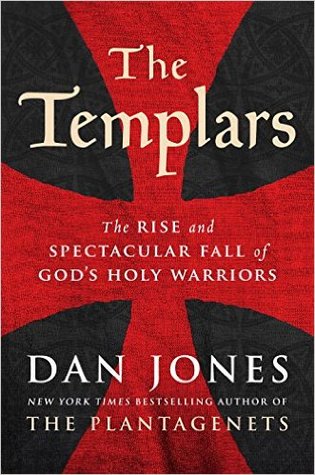
The Templars by Dan Jones
I requested this from NetGalley because it sounded interesting and I don't know anything about the Templars. If you don't know about them either, they're this Christian order that was formed to protect pilgrims to Jerusalem and ended up playing a big role in the crusades. Also, most modern portrayals of them (especially the 'Templars are still alive' thing) are inaccurate.
As a history of the organisation, this book takes a broad view, focusing not on the everyday life of a Templar but on the key events and people that made up the Templars or fought against the Templars. Since there are several countries involved this could have become very confusing but the author manages to make it one coherent narrative.
I found it pretty interesting to read about them and how they fought against the equally strong (and at times even stronger) Muslim countries. Thankfully, the author stays away from a discussion of both Islamic and Christian theology and/or which was right, instead focusing on who does what (and why), which I think helped make it an objective narrative.
Another thing I also liked that even though this is a book about a Christian organisation, Muslim sources are quoted as frequently as Christian ones (ok I didn't do a formal count but it definitely felt that way to me). Quoting both sides helped me get a fuller picture and to understand how the Templars saw themselves and how others saw them.
One thing I thought fascinating about the Templars was that their portrayal depended largely on the motives of the writer, something that holds true today. Usama ibn Minqidh portrays them as open-minded and specifically mentions that they let him use one of their Churches for his daily prayers. But another man, Imad al-Din, calls them "the worst of the infidels." The difference occurs because the former wants to talk about honour and chivalry while the later wants to praise Saladin.
I think anyone interested in history would enjoy this book. It's definitely a heavy read, but it is fascinating and after reading it, I wonder why anyone would bother making up stories about the Templars. The actual history has so much to draw on.
Disclaimer: I received a free copy of this book from the publisher via NetGalley in exchange for a free and honest review.
As a history of the organisation, this book takes a broad view, focusing not on the everyday life of a Templar but on the key events and people that made up the Templars or fought against the Templars. Since there are several countries involved this could have become very confusing but the author manages to make it one coherent narrative.
I found it pretty interesting to read about them and how they fought against the equally strong (and at times even stronger) Muslim countries. Thankfully, the author stays away from a discussion of both Islamic and Christian theology and/or which was right, instead focusing on who does what (and why), which I think helped make it an objective narrative.
Another thing I also liked that even though this is a book about a Christian organisation, Muslim sources are quoted as frequently as Christian ones (ok I didn't do a formal count but it definitely felt that way to me). Quoting both sides helped me get a fuller picture and to understand how the Templars saw themselves and how others saw them.
One thing I thought fascinating about the Templars was that their portrayal depended largely on the motives of the writer, something that holds true today. Usama ibn Minqidh portrays them as open-minded and specifically mentions that they let him use one of their Churches for his daily prayers. But another man, Imad al-Din, calls them "the worst of the infidels." The difference occurs because the former wants to talk about honour and chivalry while the later wants to praise Saladin.
I think anyone interested in history would enjoy this book. It's definitely a heavy read, but it is fascinating and after reading it, I wonder why anyone would bother making up stories about the Templars. The actual history has so much to draw on.
Disclaimer: I received a free copy of this book from the publisher via NetGalley in exchange for a free and honest review.
Labels:
Christianity
,
historical
,
NetGalley
,
non-fiction
,
western
Subscribe to:
Posts
(
Atom
)