I’m very sure that I requested for this book because it was supposed to be a twist on the usual murder mystery. Well, it definitely was different.
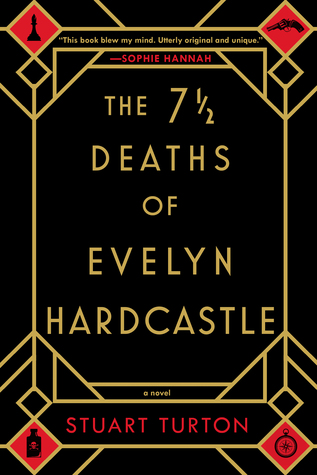
In The 7 1/2 Deaths of Evelyn Hardcastle, Aiden wakes up every day in the body of a different person. He also has to relieve each day, watching Evelyn Hardcastle die at 11:00. And until he can figure out who killed her by his last host, he’s doomed.
I can’t really say too much of the plot here because:
1. It would result in a spoiler
2. I’m still confused.
While this was a very clever book, I found it quite confusing. It’s probably because we’re thrown into the narrative with Aiden, who wakes up with a name on his mind but absolutely no idea what’s going on. The first part of the book was basically him trying to understand the whole situation.
Another reason why it confused me was the sheer number of characters. Aiden has 8 hosts and after finishing the story, I still can’t remember any of them. While the book does show Aiden grappling with the characters of the host, all the hosts had the same voice (probably Aiden’s) to me, which made it hard to distinguish between them (and between them and Aiden)
That said, I did understand the ending of the book and thought it was very exciting. Somehow, I managed to understand one plotline and the final few chapters were tightly written and got me hooked. I think that if the first half of the book was the same, I would have understood it more and have been less confused.
I would like to comment on Aiden but I don’t have an opinion of him. Perhaps it’s because he spent most of the book unaware of himself, but I never really got a good sense of what he was like as a person. It always felt that the mystery was the goal and he was sort of fumbling towards it (until the ending, where he came up with a plan and things got interesting).
To be honest, I’m not sure if I would have finished this book if it wasn’t from NetGalley. While it’s very cleverly executed and the ending was good, the beginning was confusing and I never connected with Aiden or the other characters. I normally need either the world or the characters to keep me reading and I didn’t get ‘hooked’ until later in this book.
Mystery fans may enjoy this, but be sure that you know what you’re getting into. This isn’t going to be a typical light read - you’ll have to be able to keep track of a huge cast of characters while trying to solve a murder. If you think you’re up to it, then the world of the Hardcastles awaits.
Disclaimer: I got a free copy of this book from the publisher via NetGalley in exchange for an honest review.
Showing posts with label fiction. Show all posts
Wednesday, November 7, 2018
Thursday, October 18, 2018
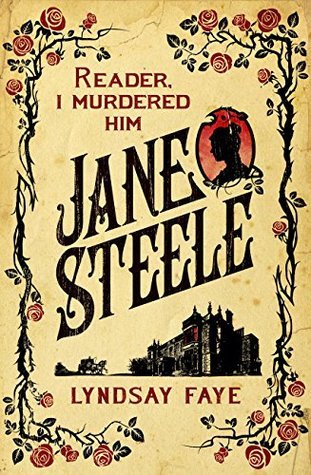
Jane Steele by Lyndsay Faye
This book was a large reason why I finally read Jane Eyre - a serial killer satire of Jane Eyre sounded amazing. The peek that Wendy at Literary Feline gave into the book intrigued me and I decided that I had to read it.
Jane Steele is a big fan of Jane Eyre. However, she and Jane Eyre are vastly different - starting with the fact that she’s a serial murderess. But inspired by the book, Jane Steele decides to pen her memoirs.
This book is basically what happens when you take Jane Eyre and ask “what if I made her a feisty girl?” When faced with danger, this Jane repeatedly chooses the “fight” response, rather than flight or to bear the whole thing.
I found that many of my objections to Jane Eyre were addressed in this book. For example, this Jane is openly affectionate to her ward, Sahjara, who is an enchanting character in her own right. In general, I thought the non-Jane female characters here were a lot more sympathetically written and showed Jane’s generosity of spirit (no matter how evil she thinks herself).
I also found Charles Thornfield, the Mr. Rochester of the book, to be a decent human being. He has his demons, same as Rochester, but he managed to hold on to his sense of decency and never locked anyone (first wife or not) in an attic.
Speaking of the characters in this book, I absolutely loved how they came to life and participated in the story. Jane Eyre was very much about Jane and her experiences and feelings. Jane Steele has Jane become involved in the lives of the people around her, which lead to both mystery and adventure. Needless to say, I found the plot (and characters) of this book to be much more entertaining.
It’s pretty rare that I say this, but I like this satirical look at Jane Eyre much more than the original story. If all the Jane Eyre adaptions are this good, then I definitely will not regret reading the original anymore.
Jane Steele is a big fan of Jane Eyre. However, she and Jane Eyre are vastly different - starting with the fact that she’s a serial murderess. But inspired by the book, Jane Steele decides to pen her memoirs.
This book is basically what happens when you take Jane Eyre and ask “what if I made her a feisty girl?” When faced with danger, this Jane repeatedly chooses the “fight” response, rather than flight or to bear the whole thing.
I found that many of my objections to Jane Eyre were addressed in this book. For example, this Jane is openly affectionate to her ward, Sahjara, who is an enchanting character in her own right. In general, I thought the non-Jane female characters here were a lot more sympathetically written and showed Jane’s generosity of spirit (no matter how evil she thinks herself).
I also found Charles Thornfield, the Mr. Rochester of the book, to be a decent human being. He has his demons, same as Rochester, but he managed to hold on to his sense of decency and never locked anyone (first wife or not) in an attic.
Speaking of the characters in this book, I absolutely loved how they came to life and participated in the story. Jane Eyre was very much about Jane and her experiences and feelings. Jane Steele has Jane become involved in the lives of the people around her, which lead to both mystery and adventure. Needless to say, I found the plot (and characters) of this book to be much more entertaining.
It’s pretty rare that I say this, but I like this satirical look at Jane Eyre much more than the original story. If all the Jane Eyre adaptions are this good, then I definitely will not regret reading the original anymore.
Labels:
fiction
,
literature
,
retelling
Friday, October 12, 2018
Black Eyed Susans by Julia Heaberlin
I don’t know why this is a classy thriller (or what a classy thriller even is) but this was good!
Black Eyed Susan follows Tessa, the only survivor of a serial killer. Dubbed ‘black eyed susan’ because she was found in a field of those flowers, Tessa does her best to give her and her daughter a normal life. But, she suspects that the man she helped put in prison is actually innocent, and as she helps his defence team, things happen. Things that suggest that maybe, just maybe, the killer is still out there.
The book follows Tessa in the present day and Tessa in 1995, just before the trial. Since it’s the same person, it was pretty easy to follow the narrative.
So Tessa is actually working through a lot of trauma, both then and now, and she’s trying to recover her lost memories. I thought having the chapters alternate between her past and present self was a good way to show how similar but different she has become.
While most of the book got me riveted, I’ve got to admit that the first chapter was confusing. I actually thought that present day Tessa was still very young, despite what it said on the blurb because she referred to herself as a ‘waif’ and that’s normally used for young women.
And while I like most of the story, I wasn’t really a fan of Tessa’s romance. It didn’t feel very necessary but I am not really a fan of most romance subplots so there’s that.
Overall, I really enjoyed this. The black eyed Susans were present throughout the story and made it slightly creepy. And while the ending wasn’t as explosive as I thought, it was still satisfying.
Black Eyed Susan follows Tessa, the only survivor of a serial killer. Dubbed ‘black eyed susan’ because she was found in a field of those flowers, Tessa does her best to give her and her daughter a normal life. But, she suspects that the man she helped put in prison is actually innocent, and as she helps his defence team, things happen. Things that suggest that maybe, just maybe, the killer is still out there.
The book follows Tessa in the present day and Tessa in 1995, just before the trial. Since it’s the same person, it was pretty easy to follow the narrative.
So Tessa is actually working through a lot of trauma, both then and now, and she’s trying to recover her lost memories. I thought having the chapters alternate between her past and present self was a good way to show how similar but different she has become.
While most of the book got me riveted, I’ve got to admit that the first chapter was confusing. I actually thought that present day Tessa was still very young, despite what it said on the blurb because she referred to herself as a ‘waif’ and that’s normally used for young women.
And while I like most of the story, I wasn’t really a fan of Tessa’s romance. It didn’t feel very necessary but I am not really a fan of most romance subplots so there’s that.
Overall, I really enjoyed this. The black eyed Susans were present throughout the story and made it slightly creepy. And while the ending wasn’t as explosive as I thought, it was still satisfying.
Tuesday, October 9, 2018
The Chopping Block by John Passarella
Since I quite enjoyed the first Grimm novel, despite some complaints, I decided to read the second book in the series - The Chopping Block. Set between "The Waking Dead" and "Goodnight Sweet Grimm", this book features a secret Wesen society.
It all starts when bones are found. Portland may be weird, but cooked bones are disturbing, even to Nick and Hank. As more cooked bones are found, Nick, Hank, and Monroe find themselves on the trail of a secret, cannibalistic Wesen society.
The subplot has Juliette trying to find out the cause of a dog's sickness. I don't like Juliette and it's got nothing to do with the main plot, but it was pretty cute. She didn't really intefere with the main plot too, which is a bonus.
I found that I enjoyed this more than the first book. This is mostly because Hank was much less annoying. In The Icy Touch, Hank was all about revealing the Wesen world to outsiders, which is obviously something that Should Not Be Done. Here, Hank didn't do anything like that; I suspect it's more to do with his injuries than anything else, but it was refreshing.
Like with The Icy Touch, I really enjoyed how Monroe is such a big part of the book. We get to see a bit more about Monroe's journey to becoming a Wieder Blutbad and how hard it is. It was a pretty good way to know more about the Wesen world, and it worked very well as part of the main plot.
If you liked The Icy Touch, or even if you didn't really like it but still like Grimm, you might want to check this out. I think this is a bit truer to the series than the first book and it was fun to read.
It all starts when bones are found. Portland may be weird, but cooked bones are disturbing, even to Nick and Hank. As more cooked bones are found, Nick, Hank, and Monroe find themselves on the trail of a secret, cannibalistic Wesen society.
The subplot has Juliette trying to find out the cause of a dog's sickness. I don't like Juliette and it's got nothing to do with the main plot, but it was pretty cute. She didn't really intefere with the main plot too, which is a bonus.
I found that I enjoyed this more than the first book. This is mostly because Hank was much less annoying. In The Icy Touch, Hank was all about revealing the Wesen world to outsiders, which is obviously something that Should Not Be Done. Here, Hank didn't do anything like that; I suspect it's more to do with his injuries than anything else, but it was refreshing.
Like with The Icy Touch, I really enjoyed how Monroe is such a big part of the book. We get to see a bit more about Monroe's journey to becoming a Wieder Blutbad and how hard it is. It was a pretty good way to know more about the Wesen world, and it worked very well as part of the main plot.
If you liked The Icy Touch, or even if you didn't really like it but still like Grimm, you might want to check this out. I think this is a bit truer to the series than the first book and it was fun to read.
Wednesday, October 3, 2018
Village Diary by Miss Read
After the extremely enjoyable Village School, I made sure to pick up the second book in the series - Village Diaries - the next time I went to the library. Much like the first book, Village Diaries is another year-round account of Miss Read's life as the headmistress of the school at Fairacre. While much of the year is the same, a reunion with an old friend and a newcomer to the village provide plenty of drama.
Many familiar characters appear in this book, such as Joseph Coggs, Mr Willet, and Mrs Pringle, with a few new characters appearing. Most of the book is told from Miss Read's point of view, as she is the one chronicling everything in her new journal. Luckily for us, someone told her about Jim Waites' trap for Arthur Coggs (Joseph's father) because that account of an unsuccessful theft was hilarious. I did miss hearing from Mrs Coggs, Joseph, and the other characters, though. I thought they added a nice amount of variety, since Miss Read can't possibly be everywhere.
I mentioned in my previous review that the book doesn't shy away from mentions about difficult situations. While this book still remains light, there is considerably more discussion about less happy topics, such as funding issues for rural schools, sexism, and even domestic abuse. In the first few pages, there's even talk about how "civility... was a vital necessity to a wage-earner". Sadly, these things seem to be taken as normal by most people.
Overall, Village Diaries manages to keep the same charming and cozy tone as the first book, while managing to introduce a bit more about the hardships of life in that particular period of time. I am definitely looking forward to reading more from this series.
Many familiar characters appear in this book, such as Joseph Coggs, Mr Willet, and Mrs Pringle, with a few new characters appearing. Most of the book is told from Miss Read's point of view, as she is the one chronicling everything in her new journal. Luckily for us, someone told her about Jim Waites' trap for Arthur Coggs (Joseph's father) because that account of an unsuccessful theft was hilarious. I did miss hearing from Mrs Coggs, Joseph, and the other characters, though. I thought they added a nice amount of variety, since Miss Read can't possibly be everywhere.
I mentioned in my previous review that the book doesn't shy away from mentions about difficult situations. While this book still remains light, there is considerably more discussion about less happy topics, such as funding issues for rural schools, sexism, and even domestic abuse. In the first few pages, there's even talk about how "civility... was a vital necessity to a wage-earner". Sadly, these things seem to be taken as normal by most people.
Overall, Village Diaries manages to keep the same charming and cozy tone as the first book, while managing to introduce a bit more about the hardships of life in that particular period of time. I am definitely looking forward to reading more from this series.
Monday, October 1, 2018
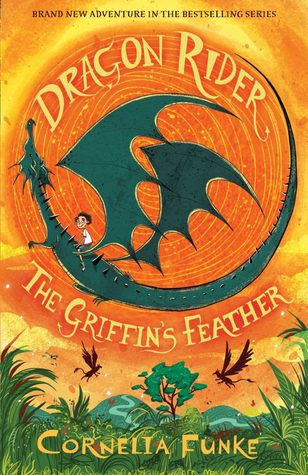
The Griffin's Feather by Cornelia Funke
After finishing Dragon Rider, I quite eagerly continued on to The Griffin’s Feather, which takes place a few years later.
In The Griffin’s Feather, Ben is now a happy part of the Greenblooms, living in a sanctuary for marvelous creatures and helping to save those in danger. One day, word arrives that the mare of one of the last pegasi has passed away. Without her, her eggs can’t hatch and the Pegasus fowls will die. Their only chance of survival is with a sun-feather from a Griffin, the mortal enemy of dragons...
Like The Dragon Rider, this was a fun read. We alternate between Ben’s chapters, where he and Barnabas Greenbloom search for a Griffin with Guinevere’s chapters, which emphasises the short deadline that Barnabas has. I enjoyed seeing both Greenbloom children, especially since Guinevere didn’t have as much page-time in The Dragon Rider. It was touching to see how much care they had for others.
And poor Ben, struggling with his feelings! He loves his new family, but he so clearly misses Firedrake. And with Firedrake’s children about to hatch, which means fewer visits from the dragon, Ben has to make a choice about where he wants to live.
Firedrake was great, as usual. A bit wiser than the first book, which is to be expected. Sorrel, on the other hand, seemed a bit meaner (rather than just grumpy) compared to the first book, especially at the start. But that might be due to the narration rather than a change in character.
Speaking of the narrator, it isn’t Brendan Fraser this time. It’s a bit of a pity, because I really enjoyed his narration and the voices he used in The Dragon Rider. But once I got used to everyone’s new voice, I found that I quite enjoyed this version. Plus the background music and effects were very well-done.
Overall, The Griffin’s Feather is a great sequel to The Dragon Rider. There is a much greater sense of “you must care for the earth” in this book, and luckily that message never becomes preachy. I think younger fantasy fans will really enjoy this.
Disclaimer: I received a free audiobook from the publisher in exchange for an honest review.
In The Griffin’s Feather, Ben is now a happy part of the Greenblooms, living in a sanctuary for marvelous creatures and helping to save those in danger. One day, word arrives that the mare of one of the last pegasi has passed away. Without her, her eggs can’t hatch and the Pegasus fowls will die. Their only chance of survival is with a sun-feather from a Griffin, the mortal enemy of dragons...
Like The Dragon Rider, this was a fun read. We alternate between Ben’s chapters, where he and Barnabas Greenbloom search for a Griffin with Guinevere’s chapters, which emphasises the short deadline that Barnabas has. I enjoyed seeing both Greenbloom children, especially since Guinevere didn’t have as much page-time in The Dragon Rider. It was touching to see how much care they had for others.
And poor Ben, struggling with his feelings! He loves his new family, but he so clearly misses Firedrake. And with Firedrake’s children about to hatch, which means fewer visits from the dragon, Ben has to make a choice about where he wants to live.
Firedrake was great, as usual. A bit wiser than the first book, which is to be expected. Sorrel, on the other hand, seemed a bit meaner (rather than just grumpy) compared to the first book, especially at the start. But that might be due to the narration rather than a change in character.
Speaking of the narrator, it isn’t Brendan Fraser this time. It’s a bit of a pity, because I really enjoyed his narration and the voices he used in The Dragon Rider. But once I got used to everyone’s new voice, I found that I quite enjoyed this version. Plus the background music and effects were very well-done.
Overall, The Griffin’s Feather is a great sequel to The Dragon Rider. There is a much greater sense of “you must care for the earth” in this book, and luckily that message never becomes preachy. I think younger fantasy fans will really enjoy this.
Disclaimer: I received a free audiobook from the publisher in exchange for an honest review.
Wednesday, September 26, 2018
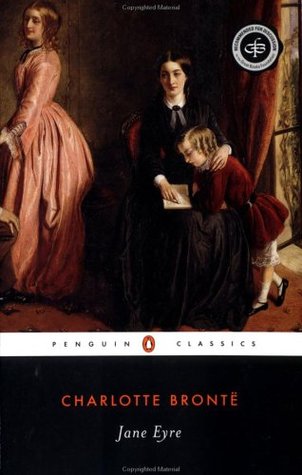
Jane Eyre by Charlotte Bronte
I’ve finally finished Jane Eyre! I am, as usual, embarrassingly behind the times.
So a little history about my experience with this book. By the time my two youngest siblings were born, my parents had twigged onto the fact that I liked books and got me one new book for each new sibling (to help the transition, I think?). The books I received were Jane Eyre and Wuthering Heights and unfortunately, I did not like them. I couldn’t even finish them. For some strange reason, the language made my head hurt. So I put them aside.
When I grew up, I had even less reason to read Jane Eyre. I heard that Bronte spoke disparaging of my favourite Jane Austen (and I reread her books all the time) and was like ‘clearly she doesn’t have good judgement'.
Then, I found out about Jane Steele, the rewriting of Jane Eyre where Jane becomes a murderess. That sounded fun, and since I’m the type that would like to read the original before reading the rewrite, I decided that if I could read Dickens and Braddon, I could probably handle Bronte.
Well, I just finished the book and while I liked it well-enough, I didn’t love it.
If you haven’t heard of the plot of Jane Eyre, basically Jane Eyre is this despised child who becomes a governess who falls in love with a pompous guy who has his mad wife locked in an attic.
My biggest impediment to enjoying the book wasn’t the language (surprisingly), but Jane herself. There were parts where I was like “you go girl” (mostly the parts where she stands up for herself) but she came off as someone who thought herself superior which made it hard to like her.
In fact, while Jane acts like she has low self-esteem, the way the book is written makes it sound like she delights in how she thinks lowly about herself. And more than that, the way she thinks of girls and women who are not like her is off-putting. There are two bright, vivacious girls in the novel - Adele, the girl she teaches, and Miss Oliver.
Adele is somewhat spoilt but charming child and while Jane professes to have an affection for her, you never really see or feel it. And despite her horrible childhood, she’s happy when Adele becomes a “pleasing and obliging companion: docile, good-tempered, and well-principled.” Her Aunt Reed was definitely horrible, but didn’t she want Jane to basically be what Adele became (okay she had some family issues but her charges against Jane were her attitude and behaviour)
Not to mention that she doesn’t seem to mind the fact that Adele’s dad is determined not to acknowledge her. Even though Jane grew up an orphan and probably knows what Adele feels.
As for Miss Oliver, she’s this slightly flighty but essentially good-natured heiress who makes friends with Jane. After acknowledging her charms, Jane just has to add “she was not profoundly interesting or thoroughly impressive.”
All this, plus the fact that Jane the narrator doesn’t give Adele and Miss Oliver the space to develop into well-rounded characters made Jane come off as the self-superior kind which I found to be fairly irritating.
And let’s not get me started on Mr Rochester; who is only superficially similar to another pompous character: Darcy from P&P. Darcy was pompous and socially awkward but he had a good heart. Mr Rochester basically promised himself to someone (think of what happened in Sense and Sensibility) and got her to break it off. Not to mention locking his wife in the attic and trying to force Jane into bigamy.
Overall, I’m glad I’ve finally read Jane Eyre because she’s an important part of Western literature. The language is a little heavy but there were points in the novel where I was genuinely rooting for, and admiring, Jane and her principles. That said, I don’t see this book as something that I will return to over and over again.
So a little history about my experience with this book. By the time my two youngest siblings were born, my parents had twigged onto the fact that I liked books and got me one new book for each new sibling (to help the transition, I think?). The books I received were Jane Eyre and Wuthering Heights and unfortunately, I did not like them. I couldn’t even finish them. For some strange reason, the language made my head hurt. So I put them aside.
When I grew up, I had even less reason to read Jane Eyre. I heard that Bronte spoke disparaging of my favourite Jane Austen (and I reread her books all the time) and was like ‘clearly she doesn’t have good judgement'.
Then, I found out about Jane Steele, the rewriting of Jane Eyre where Jane becomes a murderess. That sounded fun, and since I’m the type that would like to read the original before reading the rewrite, I decided that if I could read Dickens and Braddon, I could probably handle Bronte.
Well, I just finished the book and while I liked it well-enough, I didn’t love it.
If you haven’t heard of the plot of Jane Eyre, basically Jane Eyre is this despised child who becomes a governess who falls in love with a pompous guy who has his mad wife locked in an attic.
My biggest impediment to enjoying the book wasn’t the language (surprisingly), but Jane herself. There were parts where I was like “you go girl” (mostly the parts where she stands up for herself) but she came off as someone who thought herself superior which made it hard to like her.
In fact, while Jane acts like she has low self-esteem, the way the book is written makes it sound like she delights in how she thinks lowly about herself. And more than that, the way she thinks of girls and women who are not like her is off-putting. There are two bright, vivacious girls in the novel - Adele, the girl she teaches, and Miss Oliver.
Adele is somewhat spoilt but charming child and while Jane professes to have an affection for her, you never really see or feel it. And despite her horrible childhood, she’s happy when Adele becomes a “pleasing and obliging companion: docile, good-tempered, and well-principled.” Her Aunt Reed was definitely horrible, but didn’t she want Jane to basically be what Adele became (okay she had some family issues but her charges against Jane were her attitude and behaviour)
Not to mention that she doesn’t seem to mind the fact that Adele’s dad is determined not to acknowledge her. Even though Jane grew up an orphan and probably knows what Adele feels.
As for Miss Oliver, she’s this slightly flighty but essentially good-natured heiress who makes friends with Jane. After acknowledging her charms, Jane just has to add “she was not profoundly interesting or thoroughly impressive.”
All this, plus the fact that Jane the narrator doesn’t give Adele and Miss Oliver the space to develop into well-rounded characters made Jane come off as the self-superior kind which I found to be fairly irritating.
And let’s not get me started on Mr Rochester; who is only superficially similar to another pompous character: Darcy from P&P. Darcy was pompous and socially awkward but he had a good heart. Mr Rochester basically promised himself to someone (think of what happened in Sense and Sensibility) and got her to break it off. Not to mention locking his wife in the attic and trying to force Jane into bigamy.
Overall, I’m glad I’ve finally read Jane Eyre because she’s an important part of Western literature. The language is a little heavy but there were points in the novel where I was genuinely rooting for, and admiring, Jane and her principles. That said, I don’t see this book as something that I will return to over and over again.
Labels:
fiction
,
literature
,
western
Tuesday, September 25, 2018
Dragon Rider by Cornelia Funke
When I was younger, I absolutely loved Inkheart and The Thief Lord by Cornelia Funke. So when I received an invitation to review The Griffin's Feather, the second book in the Dragon Rider series, I decided that I had to start with book one.
Dragon Rider follows the adventures of Firedrake, a dragon searching for the mythical place called the Rim of Heaven, where dragons can live in safety. It's not that he wants to leave his home, but the humans are coming and the dragons in his valley must either leave or die.
Yes, humans are coming. I went into The Dragon Rider not knowing what to expect and was surprised to find out that this was set in the present day. And Ben, the lonely boy that Firedrake meets and who accompanies him on his journey is equally surprised by the existence of dragons. But Ben quickly adapts and along with Sorrel, the bad-tempered brownie, and Twigleg, the homunculus, the four begin their quest. Unfortunately, their quest attracts the vicious Nettlebrand, hunter of dragons.
To be honest, I was a bit confused at the beginning, but that is definitely because I am not used to audiobooks but borrowed the audiobook of this. Once I got the hang of it (and skimmed the Wikipedia page for a summary of what was going on), I really enjoyed this story. It's broken into several segments, as the team visits different places in an attempt to figure out exactly where the rim of heaven is.
Even though this is called The Dragon Rider, I feel like the book really is about Firedrake and his quest. True, Ben gets a bit more airtime in the latter half of the book, but the beginning of the book almost always sets the tone for me and the tone was: this is Firedrake's story. Ben was a nice character, although a bit too oblivious at times, but my favourite character was definitely Firedrake, the kind dragon.
The supporting characters, Sorrel and Twigleg, were interesting too. Sorrel basically played the role of the grumpy character with the heart of gold. Twigleg was a bit more interesting and probably had the most character development in the book - he starts of serving Nettlebrand but traveling with Ben and the others help him to change.
The audiobook I read was narrated by Brendan Fraser, who was brilliant. He did a whole range of voices for the characters, which helped me to distinguish them from each other and made them more endearing to me. I wish I found out about this book earlier because I can imagine younger me enjoying this even more than present me.
Dragon Rider follows the adventures of Firedrake, a dragon searching for the mythical place called the Rim of Heaven, where dragons can live in safety. It's not that he wants to leave his home, but the humans are coming and the dragons in his valley must either leave or die.
Yes, humans are coming. I went into The Dragon Rider not knowing what to expect and was surprised to find out that this was set in the present day. And Ben, the lonely boy that Firedrake meets and who accompanies him on his journey is equally surprised by the existence of dragons. But Ben quickly adapts and along with Sorrel, the bad-tempered brownie, and Twigleg, the homunculus, the four begin their quest. Unfortunately, their quest attracts the vicious Nettlebrand, hunter of dragons.
To be honest, I was a bit confused at the beginning, but that is definitely because I am not used to audiobooks but borrowed the audiobook of this. Once I got the hang of it (and skimmed the Wikipedia page for a summary of what was going on), I really enjoyed this story. It's broken into several segments, as the team visits different places in an attempt to figure out exactly where the rim of heaven is.
Even though this is called The Dragon Rider, I feel like the book really is about Firedrake and his quest. True, Ben gets a bit more airtime in the latter half of the book, but the beginning of the book almost always sets the tone for me and the tone was: this is Firedrake's story. Ben was a nice character, although a bit too oblivious at times, but my favourite character was definitely Firedrake, the kind dragon.
The supporting characters, Sorrel and Twigleg, were interesting too. Sorrel basically played the role of the grumpy character with the heart of gold. Twigleg was a bit more interesting and probably had the most character development in the book - he starts of serving Nettlebrand but traveling with Ben and the others help him to change.
The audiobook I read was narrated by Brendan Fraser, who was brilliant. He did a whole range of voices for the characters, which helped me to distinguish them from each other and made them more endearing to me. I wish I found out about this book earlier because I can imagine younger me enjoying this even more than present me.
Tuesday, September 18, 2018
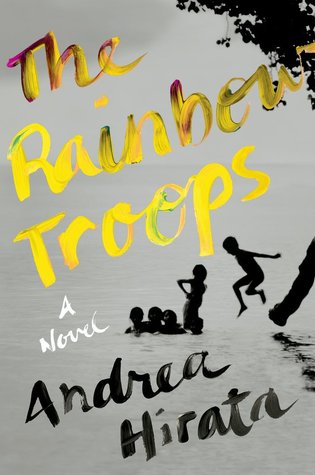
The Rainbow Troops by Andrea Hirata
The Rainbow Troops is not only a fantastically written book, it also showed me that I can handle non-traditional narrative styles as long as they’re well written (for a time, I thought I could only read the ‘traditional’ style).
The Rainbow Troops follows the students at Muhammadiyah elementary school on Belitung, Indonesia. The school is at risk of closing down and the students and their two teachers must do their best to keep the school open.
That’s the main goal of the book, but the book is actually broken into three main arcs: the two trophies the students win (one for creativity and one for academics) and the fight to save the school. That said, the front few chapters are spent introducing the characters and the island they live in, as well as a few of their escapades, before they start on their quest for the first trophy.
The book is an autobiographical novel, which I’m pretty sure means “based on true events”. It’s also written a lot like a memoir, from the perspective of someone looking back on the past and telling you what happened. Ordinarily, that would be quite hard for me to read, since it’s full of opinions of the older narrator, but I found myself so entranced by the world created and the people in it that I didn’t even mind the narrative style. Just goes to show that good writing is what counts.
I do want to talk about the ending so BEWARE SPOILERS AHEAD. The book could have ended on an easy high, with them saving the school. Instead, it took a different route and showed how most of them didn’t succeed. Only Ikal, the narrator, and Kucai, their self-serving class president ever ‘made it good’.
The two geniuses in their group ended up living in poverty, their minds wasted. Another one of their friends, the decent but otherwise unimpressive Trapani, ended up in a mental hospital. Seeing how their country failed them despite the best efforts of them and their teachers was heartbreaking. While the book does go on from that crushing reveal to end on a slightly more hopeful note, I was still crushed by the ending.
END OF SPOILERS
Overall, this was a really good read. It’s not your typical feel-good story, but it’s not total pessimism either. Rather, it’s a story about how far determination and effort can go (and how far it cannot). Would totally recommend.
The Rainbow Troops follows the students at Muhammadiyah elementary school on Belitung, Indonesia. The school is at risk of closing down and the students and their two teachers must do their best to keep the school open.
That’s the main goal of the book, but the book is actually broken into three main arcs: the two trophies the students win (one for creativity and one for academics) and the fight to save the school. That said, the front few chapters are spent introducing the characters and the island they live in, as well as a few of their escapades, before they start on their quest for the first trophy.
The book is an autobiographical novel, which I’m pretty sure means “based on true events”. It’s also written a lot like a memoir, from the perspective of someone looking back on the past and telling you what happened. Ordinarily, that would be quite hard for me to read, since it’s full of opinions of the older narrator, but I found myself so entranced by the world created and the people in it that I didn’t even mind the narrative style. Just goes to show that good writing is what counts.
I do want to talk about the ending so BEWARE SPOILERS AHEAD. The book could have ended on an easy high, with them saving the school. Instead, it took a different route and showed how most of them didn’t succeed. Only Ikal, the narrator, and Kucai, their self-serving class president ever ‘made it good’.
The two geniuses in their group ended up living in poverty, their minds wasted. Another one of their friends, the decent but otherwise unimpressive Trapani, ended up in a mental hospital. Seeing how their country failed them despite the best efforts of them and their teachers was heartbreaking. While the book does go on from that crushing reveal to end on a slightly more hopeful note, I was still crushed by the ending.
END OF SPOILERS
Overall, this was a really good read. It’s not your typical feel-good story, but it’s not total pessimism either. Rather, it’s a story about how far determination and effort can go (and how far it cannot). Would totally recommend.
Labels:
fiction
,
SEA reading challenge
Monday, September 17, 2018
My Real Name is Hanna by Tara Lynn Mash
This was such an emotionally intense read, although thankfully, I knew what I was getting into when I started the book.My Real Name is Hanna is the story of Hanna Slivka, a fourteen-year old Jewish girl living in Ukraine. Her childhood is happy, until Hitler comes. And with the Gestapo comes persecution, as their food runs low and once-friendly neighbours turn their backs. And then one day, Hanna and her family hear that Hitler plans to make their town Judenfrei - “free of Jews” - and know that they must leave their home in order to survive.
This book isn’t an adventure story. It is the story of one girl and her family trying to survive with dignity. As Hanna’s father says, “This is what those Nazis make us do, huh? Live like barbarians. But the best revenge, my Eva, is just that - to live...”
And live they do. It is not an easy experience, especially for a girl on the cusp of womanhood, but Hanna and her family do their best to hold on to their faith and culture even in the worst of times. While they are sometimes forced to break certain rules, such as eating non-kosher meat, they try their best to live in a way that gives them dignity, and that means honouring their religion and culture.
I really appreciated how this book brought out the strength of the human spirit and of friendships. Next to Hanna lives Alla, a non-Jewish person who sells pysanka, eggs decorated with traditional folk designs. These eggs hold deep meaning and even though they are not Hanna’s culture, they represent the friendship she has with Alla and the strength that Hanna gets from it.
If you want to read about a World War II story set in a less traditional location, you’ll want to pick this up. It’s got heart and it’s got character, and though it is dark, it is also uplifting.
Disclaimer: I received a copy of this book from the publisher via NetGalley in exchange for an honest review.
Thursday, September 13, 2018
Mrs McGinty's Dead by Agatha Christie
Some time ago, I was browsing a thread on Unresolved Mysteries when this book was mentioned. Someone said that Christie was inspired by Hawley Harvey Crippen’s case for this book and I decided to check it out. Turns out I can’t find any corroborating evidence for the Christie-inspiration claim, but there is definitely a resemblance.
In Mrs. McGinty’s Dead, Inspector Spence comes to Poirot to ask for his help. An apparently guilty man (whose case Inspector Spence helped build) is about to hang but the good Inspector has his doubts. Since Poirot has nothing better to do, he decides to investigate the death of Mrs. McGinty.
If you’re wondering, the Crippen’s case (or a case remarkably like it) is one of the several sensational crimes that serve as a possible motive for the murder. There are differences, but the whole “husband murders wife, leaves behind corpse and flees with governess-mistress” part is the same (although Christie probably didn’t know that the ‘corpse’ found in Crippen’s house has been identified as male).
Despite the grim inspiration, I found this to be a classic Poirot mystery and lots of fun. The writer Ariadne Oliver appears here and between her muses on authorship and Poirot’s suffering stomach, there is a fair amount of wry humour. The plot also moves along at a good pace and I found that I reached the end of the story in no time at all.
Fans of Christie (like me!) or Golden Age mysteries will definitely enjoy this book! While it isn’t set in Poirot’s usual setting, seeing him try to navigate a small village that doesn’t know him added a new layer of humour to this book.
In Mrs. McGinty’s Dead, Inspector Spence comes to Poirot to ask for his help. An apparently guilty man (whose case Inspector Spence helped build) is about to hang but the good Inspector has his doubts. Since Poirot has nothing better to do, he decides to investigate the death of Mrs. McGinty.
If you’re wondering, the Crippen’s case (or a case remarkably like it) is one of the several sensational crimes that serve as a possible motive for the murder. There are differences, but the whole “husband murders wife, leaves behind corpse and flees with governess-mistress” part is the same (although Christie probably didn’t know that the ‘corpse’ found in Crippen’s house has been identified as male).
Despite the grim inspiration, I found this to be a classic Poirot mystery and lots of fun. The writer Ariadne Oliver appears here and between her muses on authorship and Poirot’s suffering stomach, there is a fair amount of wry humour. The plot also moves along at a good pace and I found that I reached the end of the story in no time at all.
Fans of Christie (like me!) or Golden Age mysteries will definitely enjoy this book! While it isn’t set in Poirot’s usual setting, seeing him try to navigate a small village that doesn’t know him added a new layer of humour to this book.
Tuesday, September 11, 2018
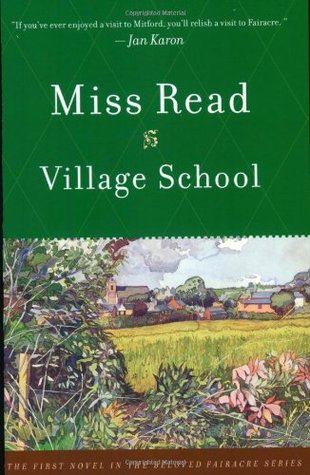
Village School by Miss Read
It's been a bit stressful at work lately, since we're working towards our launch. And when I'm stressed, I tend to want comfort reads. And while I'm not sure how I heard of Village School, but this is definitely a comfort read!
Village School follows the only school of the village of Fairacre as it goes about the school year. While this is supposed to be a novel, it reads very much like a biography of the school and its headmistress. New students enter, a teacher leaves, they go through various village events, and so on. Life is placid (although there is some small drama) and on the whole, very cozy.
While there isn't any actual plot, I love this book. The entire village came to life, not just Miss Read and her students. While not everyone is pleasant (I would not like to meet the Mrs Pringle) and some are have disconcertingly dark problems (Joseph's alcoholic father for example), the book does manage to remain rather light. Although Miss Read talks about the challenges of teaching in a rural village, with its lack of resources and primitive plumbing, she also talks about the children growing up among nature, of games played in a field with a cow, and how trips to the beach is an adventure for everyone.
I don't think a village like this exists anymore. For better or for worse, there is the internet, television, and modern plumbing (the last thing is definitely for the best). But I really enjoyed this book and I am so glad that this is a series because I will definitely be reading more.
Village School follows the only school of the village of Fairacre as it goes about the school year. While this is supposed to be a novel, it reads very much like a biography of the school and its headmistress. New students enter, a teacher leaves, they go through various village events, and so on. Life is placid (although there is some small drama) and on the whole, very cozy.
While there isn't any actual plot, I love this book. The entire village came to life, not just Miss Read and her students. While not everyone is pleasant (I would not like to meet the Mrs Pringle) and some are have disconcertingly dark problems (Joseph's alcoholic father for example), the book does manage to remain rather light. Although Miss Read talks about the challenges of teaching in a rural village, with its lack of resources and primitive plumbing, she also talks about the children growing up among nature, of games played in a field with a cow, and how trips to the beach is an adventure for everyone.
I don't think a village like this exists anymore. For better or for worse, there is the internet, television, and modern plumbing (the last thing is definitely for the best). But I really enjoyed this book and I am so glad that this is a series because I will definitely be reading more.
Labels:
fiction
,
historical
,
series
,
western
Thursday, September 6, 2018
The Lost Daughter by Elena Ferrante
I’ve heard so many good things about Elena Ferrante (and followed the ‘uproar’ when her true identity was revealed) so I knew I had to try at least one of her books. I don’t quite remember why I chose this, but it was in my TBR list.
On one level, The Lost Daughter is a very simple story. Leda, a middle-aged woman takes a holiday at a beach after her daughter’s leave the country. She sort of makes friends with a large family there and ends up stealing the little girl’s doll and agonises over whether to return it.
On another level, The Lost Daughter is supposed to be about what can be an ambivalent relationship between mother and daughter. I have to say ‘what can be’ because although the book tries to make it sound universal, you never know when it comes to these sorts of things. The small events in plot provide an opportunity for the protagonist to reflect upon her past as a mother.
I am really of two minds about this book. On one hand, I see and appreciate the way that Ferrante brings out a deeper message in the story. Considering that I’ve been having a hard time getting past the first chapter of ebooks recently (I think I gave up on three books before this and one after), the fact that I finished what can be considered ‘literary fiction’ says a lot.
On the other hand, the story requires a lot of navel-gazing and that made Leda pretty unbearable because she just seemed so self-centered. I don’t expect her to be a martyr, but there were times where I just rolled my eyes at her.
Overall, I think I like this book. It’s not normally the type of book I read, especially in my “I read for fun and maybe education” days, but I appreciate what this story tries to do and I would be interested in reading more of Ferrante’s books. I guess the question is: what next?
On one level, The Lost Daughter is a very simple story. Leda, a middle-aged woman takes a holiday at a beach after her daughter’s leave the country. She sort of makes friends with a large family there and ends up stealing the little girl’s doll and agonises over whether to return it.
On another level, The Lost Daughter is supposed to be about what can be an ambivalent relationship between mother and daughter. I have to say ‘what can be’ because although the book tries to make it sound universal, you never know when it comes to these sorts of things. The small events in plot provide an opportunity for the protagonist to reflect upon her past as a mother.
I am really of two minds about this book. On one hand, I see and appreciate the way that Ferrante brings out a deeper message in the story. Considering that I’ve been having a hard time getting past the first chapter of ebooks recently (I think I gave up on three books before this and one after), the fact that I finished what can be considered ‘literary fiction’ says a lot.
On the other hand, the story requires a lot of navel-gazing and that made Leda pretty unbearable because she just seemed so self-centered. I don’t expect her to be a martyr, but there were times where I just rolled my eyes at her.
Overall, I think I like this book. It’s not normally the type of book I read, especially in my “I read for fun and maybe education” days, but I appreciate what this story tries to do and I would be interested in reading more of Ferrante’s books. I guess the question is: what next?
Tuesday, September 4, 2018
Holy Disorders by Edmund Crispin
I heard that Edmund Crispin was one of the Golden Age mystery writers and knew that I had to try at least one of his books. The only one the NLB has (that wasn’t an audiobook) was Holy Disorders. After reading it, I have to say it was fun, but a little confusing.
Holy Disorders starts when Geoffry Vinter (a composer) is summoned by his friend and amateur detective Gervase Fen to bring a butterfly net to Tolnbridge. On the way, he gets attacked three times and rescued by Henry Fielding (not the author) and the two make their way to Tolnbridge. What starts out as a case of bodily injury turns into one murder, then two, and Geoffry finds himself the reluctant assistant to an enthusiast Gervase.
This was definitely a fun book - all the characters are delightfully zany and the plot is over the top in a good way. There’s plenty to chuckle at, with the author even breaking the fourth wall in one joke.
The main two characters (Geoffrey and Gervase) are also endearing and I thought they made a good detective-assistant duo. Gervase is far too eccentric to stand on his own as a character, and Geoffrey provided a good counterbalance to him.
However, the book was also confusing. I suppose the jokes and many characters and plot twists all happened too quickly, and I lost track of what was going on a few times. To be more accurate, I forgot who a few of the minor characters were. This proved to be a problem because a couple of them were suspects in the case. But, I found that going back and rereading helped a lot and I did eventually get the plot.
Overall, I thought this was an entertaining book. Once I got all the characters in order, I really enjoyed the plot with all its twists and turns. Hopefully I can find another book of his to read (or perhaps I should give the audiobook a shot)
Holy Disorders starts when Geoffry Vinter (a composer) is summoned by his friend and amateur detective Gervase Fen to bring a butterfly net to Tolnbridge. On the way, he gets attacked three times and rescued by Henry Fielding (not the author) and the two make their way to Tolnbridge. What starts out as a case of bodily injury turns into one murder, then two, and Geoffry finds himself the reluctant assistant to an enthusiast Gervase.
This was definitely a fun book - all the characters are delightfully zany and the plot is over the top in a good way. There’s plenty to chuckle at, with the author even breaking the fourth wall in one joke.
The main two characters (Geoffrey and Gervase) are also endearing and I thought they made a good detective-assistant duo. Gervase is far too eccentric to stand on his own as a character, and Geoffrey provided a good counterbalance to him.
However, the book was also confusing. I suppose the jokes and many characters and plot twists all happened too quickly, and I lost track of what was going on a few times. To be more accurate, I forgot who a few of the minor characters were. This proved to be a problem because a couple of them were suspects in the case. But, I found that going back and rereading helped a lot and I did eventually get the plot.
Overall, I thought this was an entertaining book. Once I got all the characters in order, I really enjoyed the plot with all its twists and turns. Hopefully I can find another book of his to read (or perhaps I should give the audiobook a shot)
Monday, September 3, 2018
In the Shadow of Agatha Christie edited by Leslie Klinger
I was intrigued by this book the minute I saw the title because I love Agatha Christie. In The Shadow of Agatha Christie is a collection of crime fiction by women writers who came before Christie. I’m not sure why it cuts off at 1917, but it does.
There are sixteen stories in this anthology and it starts with The Advocate’s Wedding Day. As a first story, I wasn’t too fond of it because it was all narration and not much story. In fact, it felt a bit like a story synopsis than a story. But we traveled towards the near past, I started to enjoy them more. Some of my favourites were:
- Mrs. Todhetley’s Earrings: This stars a young man named Johnny as the main character/narrator, although he isn’t so much a detective as a participant in the story. I liked this mainly because of the twist ending.
- The Statement of Jared Johnson: A confession, this one stars a reporter as a detective. The solution is really clever and the story is very enjoyable.
- The Blood Red Cross: I would love to read more from the authors of this story! The story is very Holmesian, with a detective and his archenemy. There’s a mysterious young lady and alchemical solutions, which makes for a fascinating case.
- The Winning Sequence: I don’t think this is a mystery story per se, although I guess it can fall under crime fiction. But it is a very poignant story and can probably serve as an anti-gambling ad.
The last story was Jury of Her Peers, which happens to be the first story of A Moment on the Edge, another anthology of women crime writers. I would highly recommend both books!
There are sixteen stories in this anthology and it starts with The Advocate’s Wedding Day. As a first story, I wasn’t too fond of it because it was all narration and not much story. In fact, it felt a bit like a story synopsis than a story. But we traveled towards the near past, I started to enjoy them more. Some of my favourites were:
- Mrs. Todhetley’s Earrings: This stars a young man named Johnny as the main character/narrator, although he isn’t so much a detective as a participant in the story. I liked this mainly because of the twist ending.
- The Statement of Jared Johnson: A confession, this one stars a reporter as a detective. The solution is really clever and the story is very enjoyable.
- The Blood Red Cross: I would love to read more from the authors of this story! The story is very Holmesian, with a detective and his archenemy. There’s a mysterious young lady and alchemical solutions, which makes for a fascinating case.
- The Winning Sequence: I don’t think this is a mystery story per se, although I guess it can fall under crime fiction. But it is a very poignant story and can probably serve as an anti-gambling ad.
The last story was Jury of Her Peers, which happens to be the first story of A Moment on the Edge, another anthology of women crime writers. I would highly recommend both books!
Labels:
fiction
,
historical
,
mystery
,
short story
,
western
Friday, August 31, 2018
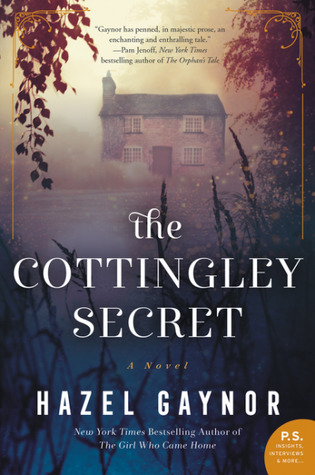
The Cottingley Secret by Hazel Gaynor
Fairies are always interesting. The fairies at Cottingley especially so, since the photos were taken in this world, and not a fictional one. And while most of the photos have been admitted to be a hoax, The Cottingley Secret asks the question 'what if fairies were real?'
When the book starts, Frances has arrived from South Africa to England. The weather is dreary and she misses her father, but when she finds a kindred spirit in her older cousin Elsie and the beck near their house, things start to look up. Many years in the future, in our present time, a grieving Olivia finds a memoir written by Frances. Intrigued (and definitely dreading her future marriage), Olivia decides to stay in the country, read Frances' story, and try to save her late grandfather's bookshop.
I found this book to be enchanting. Although I was initially worried that Olivia's story was nothing more than a framing device, the two narratives came together rather touchingly at the end. I even found myself invested in how Olivia's life turned out, something I didn't think would happen in the beginning, given that Frances' story had the stronger start.
Another thing that made this book magical was the slight inclusion of magic. While the four of the photos were admittedly faked, the author leaves just enough magic and wiggle room in the story to keep the question "do fairies actually exist?" alive.
And while I normally skip over these sections, I would highly recommend you read the author's notes and the bonus materials at the back. It turns out that the author consulted with Frances' daughter, Christine, and the book reflects what Christine and Frances believed. Given that this is a novelisation of the story of two real people, I thought that this was a very thoughtful and respectful move.
If you're interested in fairies and the Cottingley photographs, you should definitely pick up this book.
When the book starts, Frances has arrived from South Africa to England. The weather is dreary and she misses her father, but when she finds a kindred spirit in her older cousin Elsie and the beck near their house, things start to look up. Many years in the future, in our present time, a grieving Olivia finds a memoir written by Frances. Intrigued (and definitely dreading her future marriage), Olivia decides to stay in the country, read Frances' story, and try to save her late grandfather's bookshop.
I found this book to be enchanting. Although I was initially worried that Olivia's story was nothing more than a framing device, the two narratives came together rather touchingly at the end. I even found myself invested in how Olivia's life turned out, something I didn't think would happen in the beginning, given that Frances' story had the stronger start.
Another thing that made this book magical was the slight inclusion of magic. While the four of the photos were admittedly faked, the author leaves just enough magic and wiggle room in the story to keep the question "do fairies actually exist?" alive.
And while I normally skip over these sections, I would highly recommend you read the author's notes and the bonus materials at the back. It turns out that the author consulted with Frances' daughter, Christine, and the book reflects what Christine and Frances believed. Given that this is a novelisation of the story of two real people, I thought that this was a very thoughtful and respectful move.
If you're interested in fairies and the Cottingley photographs, you should definitely pick up this book.
Labels:
fiction
,
historical
,
western
Thursday, August 30, 2018
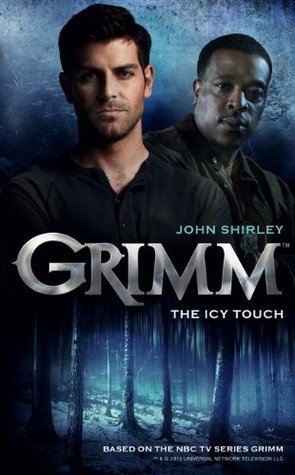
The Icy Touch by John Shirley
I don't think I've really mentioned it here, since this blog is for books and not shows, but I really love Grimm. Enough that I've watched it twice and I introduced my brother to it. So when I (very belatedly) realised that there were novels to accompany the TV series, I decided to pick it up.
The Icy Touch is set sometime after season two of Grimm - after the Coins, after Juliette has recovered her memories and Hank is aware of the Wesen world. Captain Renard notices that the victim of the latest 'weird' murder is a Drang Zorn and gets Nick and Hank to investigate. But obviously, this is no ordinary Wesen murder and Nick and Hank quickly get pulled into a centuries-old feud and a Wesen criminal ring.
Now, I read this after finishing the whole series so I'm probably a bit biased, but this is what I liked:
First, being able to find out more about Monroe. Monroe is one of my favourite characters and I appreciated the chance to learn more of his backstory and why he's a reformed Blutbad.
Second, knowing more about the history of the Grimms. There are short interludes which take place in the past and it was cool seeing the Grimms of history.
Third, the relative absence of Juliette. Sorry, but I'm not a Juliette fan.
That said, some things were weird. Hank was actually quite irritating in the book, with his inability to understand how the Wesen world works. I mean, Renard was actually more helpful and reasonable compared to him and that's saying a lot. He's still got Nick's back, though, and I guess that's what's important.
Overall, I quite enjoyed this book. It was a short and easy read, and there was enough of a cliffhanger (or perhaps it was a reference to Diana? But that would be quite off the mark) that I'm interested in reading Book 2 of the series.
The Icy Touch is set sometime after season two of Grimm - after the Coins, after Juliette has recovered her memories and Hank is aware of the Wesen world. Captain Renard notices that the victim of the latest 'weird' murder is a Drang Zorn and gets Nick and Hank to investigate. But obviously, this is no ordinary Wesen murder and Nick and Hank quickly get pulled into a centuries-old feud and a Wesen criminal ring.
Now, I read this after finishing the whole series so I'm probably a bit biased, but this is what I liked:
First, being able to find out more about Monroe. Monroe is one of my favourite characters and I appreciated the chance to learn more of his backstory and why he's a reformed Blutbad.
Second, knowing more about the history of the Grimms. There are short interludes which take place in the past and it was cool seeing the Grimms of history.
Third, the relative absence of Juliette. Sorry, but I'm not a Juliette fan.
That said, some things were weird. Hank was actually quite irritating in the book, with his inability to understand how the Wesen world works. I mean, Renard was actually more helpful and reasonable compared to him and that's saying a lot. He's still got Nick's back, though, and I guess that's what's important.
Overall, I quite enjoyed this book. It was a short and easy read, and there was enough of a cliffhanger (or perhaps it was a reference to Diana? But that would be quite off the mark) that I'm interested in reading Book 2 of the series.
Monday, August 27, 2018
The Way Home by Julian Barr
I'm not familiar with the Aeneid, although I have heard of Odysseus and the Trojan war. So when I read the synopsis of The Way Home, a retelling of the Aeneid, I was intrigued and thought it would be a good way to introduce myself to this aspect of the myth.
The Way Home follows the journey of Aeneas, a Trojan prince. It starts when the Greeks are ransacking the city, having been smuggled in by the giant horse (although I don't think Aeneas ever realised this is how they got in). Unfortunately, he didn't manage to save the royal family or his wife and ends up leading a band of refugees. And thus, their journey to find their new home begins.
At the same time, we see that this is part of a fight between Hera and Zeus. Hera wants to make her preferred city dominant, while Zeus has other plans (which involve Aeneas). The other gods are pulled in as they side with one or the other, or even switch allegiances.
I absolutely enjoyed this story. Although I didn't really know of Aeneas before, I have a translation of The Odessy before so I knew the other side of the myth. It was very interesting to see how Virgil retold the story from a relatively 'minor' character's viewpoint, and how that was, in turn, retold as The Way Home. I actually paused the story quite a lot to google certain characters or events and read more about it.
By the way, is anyone else shocked at how young Aeneas was when the story began? The book introduces his son, Julos, first and I thought he was in his twenties or something but then a few paragraphs later, I find that he's only nineteen! I know that was a product of the times but wow, the kid is extremely mature for his age. And I guess the book making his age clear at the beginning was a good move because I found myself giving him a lot of latitude after that.
Since this is a YA retelling, the language is simple and direct, which makes it a good introduction to the myth. I found it easy to empathise with Aeneas and his people, even though they lived thousands of years ago and thousands of kilometers away.
However, since this is the first in a trilogy, the book ends on a sort-of cliffhanger. It's not a very big one, but it did make me impatient for the second book. Perhaps I'll find one of the accessible translations of The Aeneid and read that while waiting.
Disclaimer: I got a free copy of this book from the publisher via NetGalley in exchange for a free and honest review.
The Way Home follows the journey of Aeneas, a Trojan prince. It starts when the Greeks are ransacking the city, having been smuggled in by the giant horse (although I don't think Aeneas ever realised this is how they got in). Unfortunately, he didn't manage to save the royal family or his wife and ends up leading a band of refugees. And thus, their journey to find their new home begins.
At the same time, we see that this is part of a fight between Hera and Zeus. Hera wants to make her preferred city dominant, while Zeus has other plans (which involve Aeneas). The other gods are pulled in as they side with one or the other, or even switch allegiances.
I absolutely enjoyed this story. Although I didn't really know of Aeneas before, I have a translation of The Odessy before so I knew the other side of the myth. It was very interesting to see how Virgil retold the story from a relatively 'minor' character's viewpoint, and how that was, in turn, retold as The Way Home. I actually paused the story quite a lot to google certain characters or events and read more about it.
By the way, is anyone else shocked at how young Aeneas was when the story began? The book introduces his son, Julos, first and I thought he was in his twenties or something but then a few paragraphs later, I find that he's only nineteen! I know that was a product of the times but wow, the kid is extremely mature for his age. And I guess the book making his age clear at the beginning was a good move because I found myself giving him a lot of latitude after that.
Since this is a YA retelling, the language is simple and direct, which makes it a good introduction to the myth. I found it easy to empathise with Aeneas and his people, even though they lived thousands of years ago and thousands of kilometers away.
However, since this is the first in a trilogy, the book ends on a sort-of cliffhanger. It's not a very big one, but it did make me impatient for the second book. Perhaps I'll find one of the accessible translations of The Aeneid and read that while waiting.
Disclaimer: I got a free copy of this book from the publisher via NetGalley in exchange for a free and honest review.
Labels:
fiction
,
historical
,
mythological
,
NetGalley
,
western
Wednesday, August 22, 2018
The Child Finder by Rene Denfeld
When Lectus reviewed The Enchanted, I was intrigued. But, my library only had The Child Finder, which she also highly recommended, so I decided to borrow that.
The Child Finder is a unique take on the story of a missing child. It's told from two perspectives - the Child Finder, Naomi, and the Snow Girl, the missing child. Despite her intuitive style of investigating (she basically takes cues from the environment and the people and goes on hunches), Naomi has a very high success rate of finding missing children, something that makes sense given that she was one herself. Tasked to find Naomi, she starts investigating and finds herself drawn back into her past.
At the same time, the Snow Girl awakens in a cabin with no memory of herself. She lives with Mr. B, who can't read, can't write, and can't speak. Her side of the story is her journey through time and was pretty haunting.
That said, I found Snow Girl unconvincing at times, despite the cold and harsh nature of her story. I get that trauma can affect people differently, but Snow Girl is oddly mature in some aspects and lyrical that she didn't seem like a five year old (or eight year old) at all. If she was a little older (say ten or so), her thinking would have sounded more natural but her being five felt like it was pushing the bounds of believability.
Naomi's half of the story was interesting, although it wandered at times. I was expecting a deeper connection between Madison's disappearance and Naomi's past, which meant that I was somewhat disappointed when that wasn't the case. Yes, Naomi remembers something, but the two cases aren't linked and they don't really feel that similar. But, I did enjoy reading about Naomi and how she investigated so this isn't a huge gripe.
Overall, I thought this was a pretty interesting story. The two halves of the story came together very well and despite some minor issues, I found myself enjoying it very much.
The Child Finder is a unique take on the story of a missing child. It's told from two perspectives - the Child Finder, Naomi, and the Snow Girl, the missing child. Despite her intuitive style of investigating (she basically takes cues from the environment and the people and goes on hunches), Naomi has a very high success rate of finding missing children, something that makes sense given that she was one herself. Tasked to find Naomi, she starts investigating and finds herself drawn back into her past.
At the same time, the Snow Girl awakens in a cabin with no memory of herself. She lives with Mr. B, who can't read, can't write, and can't speak. Her side of the story is her journey through time and was pretty haunting.
That said, I found Snow Girl unconvincing at times, despite the cold and harsh nature of her story. I get that trauma can affect people differently, but Snow Girl is oddly mature in some aspects and lyrical that she didn't seem like a five year old (or eight year old) at all. If she was a little older (say ten or so), her thinking would have sounded more natural but her being five felt like it was pushing the bounds of believability.
Naomi's half of the story was interesting, although it wandered at times. I was expecting a deeper connection between Madison's disappearance and Naomi's past, which meant that I was somewhat disappointed when that wasn't the case. Yes, Naomi remembers something, but the two cases aren't linked and they don't really feel that similar. But, I did enjoy reading about Naomi and how she investigated so this isn't a huge gripe.
Overall, I thought this was a pretty interesting story. The two halves of the story came together very well and despite some minor issues, I found myself enjoying it very much.
Monday, August 20, 2018
Anne of the Island by L. M. Montgomery
I had to read something light after The Zenith so I decided to read Anne of the Island! This is the third book in the series and follow’s Anne as she moved away from her home to go to university.
I’m going to be very upfront and say that a big part of why I read this was to find out how Anne and Gilbert’s relationship would develop. And if you’re like me, well, the first half of the book doesn’t really touch on that but the second half does.
(My heart broke a bit before I read the end though)
Something I thought interesting about the book was it’s description of university life! Well, there weren’t much details but it seems somewhat similar (if less rowdy) than university today. I almost forgot that Anne was living about a hundred years ago when I read about her house hunting, living with housemates, etc.
There are also quite a few new interesting characters. The most memorable one was Phil - this seemingly scatter-brain and indecisive girl. I actually thought she was going to be annoying when I first met her in the book, but like Anne, I realised that she has her charms and all you need to do is treat her normally.
That said, I felt the lack of Diana, Marilla, Davy, and even Mrs Lynde quite a bit. While Anne does go home for the holidays and Diana even gets married (how time flies in the books), the bulk of the action still takes place away from Avonlea. Oh, and I must say that Dora, Davy’s twin became more entertaining in this book. In the previous book, she was basically a doll but here she gets a bit more space to be herself.
To be honest, given this book’s happy ending, I’m really scared of picking up the next one. The characters are simply growing up to fast and there are so many new ones in each book! What if some of the older characters get replaced or worse, die? Two characters in book one have already passed away and I’m not sure if I want to read more. But, I have been assured that it's worth it so I'll return to this series soon.
I’m going to be very upfront and say that a big part of why I read this was to find out how Anne and Gilbert’s relationship would develop. And if you’re like me, well, the first half of the book doesn’t really touch on that but the second half does.
(My heart broke a bit before I read the end though)
Something I thought interesting about the book was it’s description of university life! Well, there weren’t much details but it seems somewhat similar (if less rowdy) than university today. I almost forgot that Anne was living about a hundred years ago when I read about her house hunting, living with housemates, etc.
There are also quite a few new interesting characters. The most memorable one was Phil - this seemingly scatter-brain and indecisive girl. I actually thought she was going to be annoying when I first met her in the book, but like Anne, I realised that she has her charms and all you need to do is treat her normally.
That said, I felt the lack of Diana, Marilla, Davy, and even Mrs Lynde quite a bit. While Anne does go home for the holidays and Diana even gets married (how time flies in the books), the bulk of the action still takes place away from Avonlea. Oh, and I must say that Dora, Davy’s twin became more entertaining in this book. In the previous book, she was basically a doll but here she gets a bit more space to be herself.
To be honest, given this book’s happy ending, I’m really scared of picking up the next one. The characters are simply growing up to fast and there are so many new ones in each book! What if some of the older characters get replaced or worse, die? Two characters in book one have already passed away and I’m not sure if I want to read more. But, I have been assured that it's worth it so I'll return to this series soon.
Labels:
Children
,
fiction
,
historical
,
western
Subscribe to:
Posts
(
Atom
)