I’ve heard so many good things about Elena Ferrante (and followed the ‘uproar’ when her true identity was revealed) so I knew I had to try at least one of her books. I don’t quite remember why I chose this, but it was in my TBR list.
On one level, The Lost Daughter is a very simple story. Leda, a middle-aged woman takes a holiday at a beach after her daughter’s leave the country. She sort of makes friends with a large family there and ends up stealing the little girl’s doll and agonises over whether to return it.
On another level, The Lost Daughter is supposed to be about what can be an ambivalent relationship between mother and daughter. I have to say ‘what can be’ because although the book tries to make it sound universal, you never know when it comes to these sorts of things. The small events in plot provide an opportunity for the protagonist to reflect upon her past as a mother.
I am really of two minds about this book. On one hand, I see and appreciate the way that Ferrante brings out a deeper message in the story. Considering that I’ve been having a hard time getting past the first chapter of ebooks recently (I think I gave up on three books before this and one after), the fact that I finished what can be considered ‘literary fiction’ says a lot.
On the other hand, the story requires a lot of navel-gazing and that made Leda pretty unbearable because she just seemed so self-centered. I don’t expect her to be a martyr, but there were times where I just rolled my eyes at her.
Overall, I think I like this book. It’s not normally the type of book I read, especially in my “I read for fun and maybe education” days, but I appreciate what this story tries to do and I would be interested in reading more of Ferrante’s books. I guess the question is: what next?
Showing posts with label women. Show all posts
Thursday, September 6, 2018
Monday, March 12, 2018
The Romanov Sisters by Helen Rappaport
There is something intriguing about the Romanovs. In previous history books that I read that featured them, I’ve always thought that Tsar Nicholas II, the last Tsar, was a man unsuited to ruling. But I’ve never read much about his family, which has since been remedied through this book.
Although The Romanov Sisters starts with their mother, the bulk of this book focused on the lives of the four Grand Duchesses - Olga, Tatiana, Maria, and Anastasia. While they gave themselves a collective nickname, the accounts from third parties and their letters and diaries show that they each had their own distinct personality.
Through this account of their lives, I could feel the warmth of their family very strongly. While they were very sheltered and naive children, they were also remarkably unspoilt (especially compared to accounts of previous Romanov rulers!). It’s clear that though their parents weren’t suited to the positions of Tsar and Tsarina, they were extremely loving parents who were active in bringing up their five children.
Even the fact that after the revolution, quite a few of the servants and guards that knew them best stayed loyal shows that this family had a certain goodness of character that inspires loyalty. After all, if your master is a tyrant, your only thought would be to escape as far as possible.
And out of all the people in this book, I think my opinion of Tsarina Alexandra changed the most. She definitely made a huge mistake by trusting Rasputin to the extent that she did, but she clearly did everything out of her love for her son. In fact, her efforts in the war (and her daughters’ work as nurses) show that she did the best she could. It’s a pity that she was so unsuited to the Russian court.
If you’re interested in the last Romanov family, I think this would be a good book to read. But if you’re looking for a book that talks about the various people claiming to be Grand Duchess Anastasia, you’ll have to look someplace else because this book ends with the death of the family.
Although The Romanov Sisters starts with their mother, the bulk of this book focused on the lives of the four Grand Duchesses - Olga, Tatiana, Maria, and Anastasia. While they gave themselves a collective nickname, the accounts from third parties and their letters and diaries show that they each had their own distinct personality.
Through this account of their lives, I could feel the warmth of their family very strongly. While they were very sheltered and naive children, they were also remarkably unspoilt (especially compared to accounts of previous Romanov rulers!). It’s clear that though their parents weren’t suited to the positions of Tsar and Tsarina, they were extremely loving parents who were active in bringing up their five children.
Even the fact that after the revolution, quite a few of the servants and guards that knew them best stayed loyal shows that this family had a certain goodness of character that inspires loyalty. After all, if your master is a tyrant, your only thought would be to escape as far as possible.
And out of all the people in this book, I think my opinion of Tsarina Alexandra changed the most. She definitely made a huge mistake by trusting Rasputin to the extent that she did, but she clearly did everything out of her love for her son. In fact, her efforts in the war (and her daughters’ work as nurses) show that she did the best she could. It’s a pity that she was so unsuited to the Russian court.
If you’re interested in the last Romanov family, I think this would be a good book to read. But if you’re looking for a book that talks about the various people claiming to be Grand Duchess Anastasia, you’ll have to look someplace else because this book ends with the death of the family.
Labels:
historical
,
non-fiction
,
women
Friday, March 2, 2018
Behind Closed Doors by B.A. Paris
When I started this book (recommended by Wendy from Literary Feline), I only intended to read one chapter. Instead, I ended up devouring the whole thing, finishing just before a meeting with an old friend.
Behind Closed Doors is unusual in its choice of protagonist. The blurb makes it quite clear what kind of relationship and situation Grace is in, but instead of telling the story from the perspective of a third party, the narrator is Grace herself. Grace tells us her pain directly (through a past/present dual narrative), giving extra urgency to the already tense story. Plus, Grace’s devotion to her sister Millie was admirable and I loved the relationship between them.
Although I felt like I knew how this was going (abusive husband, sister desperate to protect her sister), I was still caught by the ending. I did not expect that, although the book did a good job of making it believable.
What I liked, apart from the excellent characterisation in the book, was it’s ending. In a situation like this, the only ending I will accept is one where Grace gets away and (spoiler only for Goodreads) I’m glad that she manages to kill her husband.
And about that past/present narrative - I thought it was good choice because it not only showed us how Grace got into her current situation but also did a good job of showing me why Grace had to act when she did. I did get a bit muddled about which section was the past and present towards the end as the timelines merged, but by then it didn’t really matter.
If you’re looking for a tense and satisfying read, look no further. I was hooked by the story from the start and enjoyed it very much.
Behind Closed Doors is unusual in its choice of protagonist. The blurb makes it quite clear what kind of relationship and situation Grace is in, but instead of telling the story from the perspective of a third party, the narrator is Grace herself. Grace tells us her pain directly (through a past/present dual narrative), giving extra urgency to the already tense story. Plus, Grace’s devotion to her sister Millie was admirable and I loved the relationship between them.
Although I felt like I knew how this was going (abusive husband, sister desperate to protect her sister), I was still caught by the ending. I did not expect that, although the book did a good job of making it believable.
What I liked, apart from the excellent characterisation in the book, was it’s ending. In a situation like this, the only ending I will accept is one where Grace gets away and (spoiler only for Goodreads) I’m glad that she manages to kill her husband.
And about that past/present narrative - I thought it was good choice because it not only showed us how Grace got into her current situation but also did a good job of showing me why Grace had to act when she did. I did get a bit muddled about which section was the past and present towards the end as the timelines merged, but by then it didn’t really matter.
If you’re looking for a tense and satisfying read, look no further. I was hooked by the story from the start and enjoyed it very much.
Friday, January 26, 2018
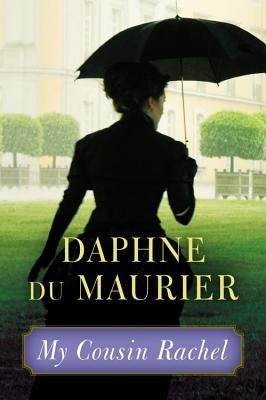
My Cousin Rachel by Daphne Du Maurier
I saw the movie version of this on the plane, watched it halfway and was like “eh, I’ll just reread the book.” While I’m now uncertain if I’ve read the book before (or if Rebecca is the only Daphne du Maurier book I’ve read), I’ve got to say that this was a really good read.
My Cousin Rachel centres around the titular Rachel, and the “My” is Phillip. The book opens with Phillip reminiscing about a hanging. With him was his cousin Ambrose, who raised him and who Phillip very clearly adored. On his doctor’s orders, Ambrose heads to Italy, where he meets a distant relative Rachel, marries her, and then dies. Phillip received a suspicious letter, but is that Cousin Ambrose trying to get help, or the ramblings of a very ill man?
Things only get murkier when cousin Rachel comes to stay, and Phillip very quickly becomes obsessed with her (though he can’t identify what he’s feeling). The novel centres around this one question:
Is Rachel a scheming murderess, or is she simply the victim of extremely bad luck?
The thing with the novel is that there is absolutely no way to know. For every piece of evidence against her, there’s a counter-piece (or lack of it). Rachel does speak, but can we take her words at face value? It certainly doesn’t seem wise to believe Phillip wholeheartedly, because he is a man obsessed, but are his suspicions verified?
This is a question for each reader to decide.
Oh, and the language in this book is amazing. I’ve read about obsessed characters before, but this is the first time I’ve felt the obsession in the language. Phillip is an unreliable narrator and Du Maurier makes us feel this with every word.
If you’re into quiet but tense books with unreliable narrators and unanswered questions, you definitely have to read this.
My Cousin Rachel centres around the titular Rachel, and the “My” is Phillip. The book opens with Phillip reminiscing about a hanging. With him was his cousin Ambrose, who raised him and who Phillip very clearly adored. On his doctor’s orders, Ambrose heads to Italy, where he meets a distant relative Rachel, marries her, and then dies. Phillip received a suspicious letter, but is that Cousin Ambrose trying to get help, or the ramblings of a very ill man?
Things only get murkier when cousin Rachel comes to stay, and Phillip very quickly becomes obsessed with her (though he can’t identify what he’s feeling). The novel centres around this one question:
Is Rachel a scheming murderess, or is she simply the victim of extremely bad luck?
The thing with the novel is that there is absolutely no way to know. For every piece of evidence against her, there’s a counter-piece (or lack of it). Rachel does speak, but can we take her words at face value? It certainly doesn’t seem wise to believe Phillip wholeheartedly, because he is a man obsessed, but are his suspicions verified?
This is a question for each reader to decide.
Oh, and the language in this book is amazing. I’ve read about obsessed characters before, but this is the first time I’ve felt the obsession in the language. Phillip is an unreliable narrator and Du Maurier makes us feel this with every word.
If you’re into quiet but tense books with unreliable narrators and unanswered questions, you definitely have to read this.
Monday, November 6, 2017
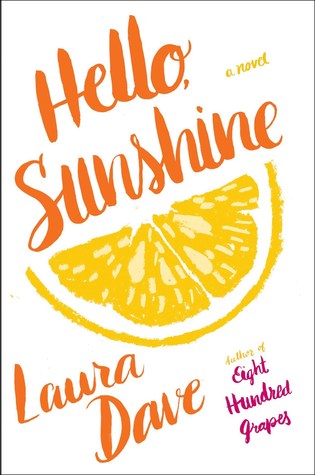
Hello, Sunshine by Laura Dave
I borrowed the book because the premise of "social media star falls from grace" to be really interesting. But be warned, this will be a spoiler-full review.
The 'Sunshine' in Hello, Sunshine is a social media star. Her cooking videos have earned her millions of fans, a book deal, and even a TV show. But one day (mild spoilers), someone hacks her and her whole life is revealed to be a lie: her recipes are by someone else, her entire origin story is fake, and she slept with someone who isn't her husband. As a result, her fans desert her, her husband leaves, and she loses the book and TV deal. Humiliated and friendless, Sunshine goes back to her hometown in the Hamptons, to the sister that hates her and the niece she never knew.
The story is written in the first person, from Sunshine's perspective, so if you like her voice, you'll probably like the book. I did like Sunshine, and I was rooting for her to finally acknowledge her part in what happened and to let go of the social media stuff (it took a while because Sunshine plotted to get back to Internet stardom)
Most of the book is what you expect, with Sunshine being 'forced' to face her past and attempt to reconcile with her sister, as well as decide what she really wants from life. For the most part, it's an easy and predictable read (which is good when you're stressed about packing and all you want is something light) and the only time I was blindsided was when the twist came.
And the twist really angered me so SPOILERS AHEAD.
It turns out that the person who hacked Sunshine and outed her was her husband (the one who left her when he 'found out' about her affair) and he did it because he 'loved' her.
And at the end of the book, she goes back to him.
Without him apologising (or if he did it was such a weak apology that I did not recognise it).
Can we talk about how messed up this is?
Yes, Sunshine was wrapped up in her lies at the start of the book and desperately needed to change, but the way to change someone is not to maliciously, deliberately, and publicly humiliate and destroy them. The book makes it clear the hacking isn't an amateur job - Sunshine's team changes the passwords and her husband has to get around that + build a website + schedule tweets to seem innocent to make this work. And he's supposedly the architect who's not into technology.
Which means that it was a well-thought-out plan. In all that time, he couldn't think of a better way to help Sunshine, such as getting her to therapy or TALKING TO HER ABOUT IT? (The book is clear that he was nothing but supportive outwardly while planning her downfall).
This is like if I tell you my house has cockroaches and instead of starting with cockroach traps, you take a match and burn down the house (without telling me)
What makes me angry about this is that it is presented as 'love'. No, this is not love. This is not a drastic intervention. Her husband basically destroyed her life and left her alone (apparently he called her sister a few times but to Sunshine, he was completely absent) and she still went back to him because she was pregnant and loves him.
No, Sunshine. YOU SHOULD RUN AWAY NOW.
This is not love but it's being presented as such and I worry that others will read the book and internalise the wrong message. No one should be allowed to hurt someone else in the name of love. To be clear, this is different from telling someone the painful truth or staging an intervention - that may be painful but it is like antiseptic on a wound, not burning a house down because cockroaches were found. One is necessary and the other isn't.
To be honest, I was really enjoying the book until the ending. It was a solid 4 stars and probably would have stayed that way if the ending was different, but this portrayal of 'love' has dropped it to a 1 star rating.
The 'Sunshine' in Hello, Sunshine is a social media star. Her cooking videos have earned her millions of fans, a book deal, and even a TV show. But one day (mild spoilers), someone hacks her and her whole life is revealed to be a lie: her recipes are by someone else, her entire origin story is fake, and she slept with someone who isn't her husband. As a result, her fans desert her, her husband leaves, and she loses the book and TV deal. Humiliated and friendless, Sunshine goes back to her hometown in the Hamptons, to the sister that hates her and the niece she never knew.
The story is written in the first person, from Sunshine's perspective, so if you like her voice, you'll probably like the book. I did like Sunshine, and I was rooting for her to finally acknowledge her part in what happened and to let go of the social media stuff (it took a while because Sunshine plotted to get back to Internet stardom)
Most of the book is what you expect, with Sunshine being 'forced' to face her past and attempt to reconcile with her sister, as well as decide what she really wants from life. For the most part, it's an easy and predictable read (which is good when you're stressed about packing and all you want is something light) and the only time I was blindsided was when the twist came.
And the twist really angered me so SPOILERS AHEAD.
It turns out that the person who hacked Sunshine and outed her was her husband (the one who left her when he 'found out' about her affair) and he did it because he 'loved' her.
And at the end of the book, she goes back to him.
Without him apologising (or if he did it was such a weak apology that I did not recognise it).
Can we talk about how messed up this is?
Yes, Sunshine was wrapped up in her lies at the start of the book and desperately needed to change, but the way to change someone is not to maliciously, deliberately, and publicly humiliate and destroy them. The book makes it clear the hacking isn't an amateur job - Sunshine's team changes the passwords and her husband has to get around that + build a website + schedule tweets to seem innocent to make this work. And he's supposedly the architect who's not into technology.
Which means that it was a well-thought-out plan. In all that time, he couldn't think of a better way to help Sunshine, such as getting her to therapy or TALKING TO HER ABOUT IT? (The book is clear that he was nothing but supportive outwardly while planning her downfall).
This is like if I tell you my house has cockroaches and instead of starting with cockroach traps, you take a match and burn down the house (without telling me)
What makes me angry about this is that it is presented as 'love'. No, this is not love. This is not a drastic intervention. Her husband basically destroyed her life and left her alone (apparently he called her sister a few times but to Sunshine, he was completely absent) and she still went back to him because she was pregnant and loves him.
No, Sunshine. YOU SHOULD RUN AWAY NOW.
This is not love but it's being presented as such and I worry that others will read the book and internalise the wrong message. No one should be allowed to hurt someone else in the name of love. To be clear, this is different from telling someone the painful truth or staging an intervention - that may be painful but it is like antiseptic on a wound, not burning a house down because cockroaches were found. One is necessary and the other isn't.
To be honest, I was really enjoying the book until the ending. It was a solid 4 stars and probably would have stayed that way if the ending was different, but this portrayal of 'love' has dropped it to a 1 star rating.
Friday, August 18, 2017
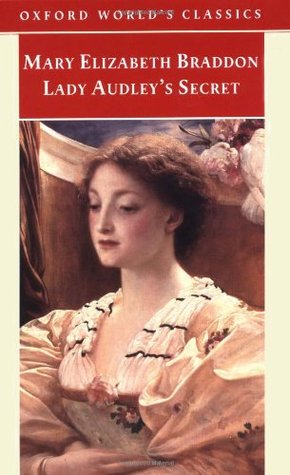
Lady Audley's Secret by Mary Elizabeth Brandon
This was one of the books mentioned in Not Just Jane, and I was curious as to why it was the book of its time. So I decided to try and do a readalong on my dayre. Long story short, despite the fact that I thought this would take a few days to finish, I read the whole thing in one day. And because I was jotting down my thoughts as I go along, this review is going to be different from my normal style.
First impressions:
The start is a bit slow because there's so much description going on (a trait of that period, I guess), but I like that the fact there is a secret is introduced by the end of the first chapter. I also thought it was pretty interesting that Lady Audley was presented as a Mary Sue and almost immediately had that negated. Now, I might see all Mary Sues as Lady Audley — hiding some kind of secret. If it gets me to tolerate them, then I'll have a lot more books to read, which may not be a good thing, given my huge TBR list.
Also, the language is manageable for now. It actually reads really well, and I didn't feel any resistance like when I tried to read the mysteries of Uldopho (I don't think I finished the first chapter of that, although I might try again someday.)
Midway thoughts:
I don't know if it's because I've read about the book and the author but I'm pretty sure that I know what's going to happen. Still, it's quite fun to see how it happens. By the way, I found it pretty interesting that the blonds vs brunettes thing is brought up here! Looks like the rivalry is much older than just Betty and Veronica. Also, I'm feeling a lot more sympathetic to Lady Audley than I expected because she really is an interesting character. So definitely not a Mary Sue. Alicia, her stepdaughter is pretty interesting too! I'm looking forward to the big showdown I guess is going to happen!
Oh and there's this male character called Robert who reminds me of one of those young man in an Agatha Christie novel, only sexist! Mostly because of his rant.
The dialogue can be a bit stiff at times (or maybe that was what people used to sound like?) but it's still manageable. There are also some monologues that I think could definitely be cut out, but it's not too bad.
Final thoughts:
The second half was actually really absorbing and despite my plans to finish the rest of the book the next day, I ended up finishing it in one night. That's not to say it isn't without its flaws. It could definitely have been shorter (admittedly this is more of a personal preference) and I found Robert quite irritating towards the end.
Like I mentioned before, I'm a lot more sympathetic to Lady Audley than I expected so that may have played a part. And perhaps more importantly, despite the fact that this whole story is about Lady Audley, it is told almost entirely through Robert's POV. Lady Audley does have her monologue but it's basically sandwiched between Robert's opinions of her and it's not very complimentary.
And that is a shame because Lady Audley is a very unique protagonist (for her time, and maybe even now because female anti-heroes aren't that common) and it ends up being told through the eyes of a male and described in overly simplistic terms. I can't help but feel that if the story was told through Lady Audley's POV it would have been a lot more exciting (unreliable narrator woohoo) and maybe a different ending because she has quite a personality.
Lady Audley's Secret does feel a little dated in places and I'm not too thrilled with the ending, but overall it is a gripping read and I was surprised by how much I enjoyed it. It definitely doesn't feel like a 500 page book (on my ereader) to me. It's illogical to do so because I have some complaints, but this is a 5/5 read for me.
First impressions:
The start is a bit slow because there's so much description going on (a trait of that period, I guess), but I like that the fact there is a secret is introduced by the end of the first chapter. I also thought it was pretty interesting that Lady Audley was presented as a Mary Sue and almost immediately had that negated. Now, I might see all Mary Sues as Lady Audley — hiding some kind of secret. If it gets me to tolerate them, then I'll have a lot more books to read, which may not be a good thing, given my huge TBR list.
Also, the language is manageable for now. It actually reads really well, and I didn't feel any resistance like when I tried to read the mysteries of Uldopho (I don't think I finished the first chapter of that, although I might try again someday.)
Midway thoughts:
I don't know if it's because I've read about the book and the author but I'm pretty sure that I know what's going to happen. Still, it's quite fun to see how it happens. By the way, I found it pretty interesting that the blonds vs brunettes thing is brought up here! Looks like the rivalry is much older than just Betty and Veronica. Also, I'm feeling a lot more sympathetic to Lady Audley than I expected because she really is an interesting character. So definitely not a Mary Sue. Alicia, her stepdaughter is pretty interesting too! I'm looking forward to the big showdown I guess is going to happen!
Oh and there's this male character called Robert who reminds me of one of those young man in an Agatha Christie novel, only sexist! Mostly because of his rant.
The dialogue can be a bit stiff at times (or maybe that was what people used to sound like?) but it's still manageable. There are also some monologues that I think could definitely be cut out, but it's not too bad.
Final thoughts:
The second half was actually really absorbing and despite my plans to finish the rest of the book the next day, I ended up finishing it in one night. That's not to say it isn't without its flaws. It could definitely have been shorter (admittedly this is more of a personal preference) and I found Robert quite irritating towards the end.
Like I mentioned before, I'm a lot more sympathetic to Lady Audley than I expected so that may have played a part. And perhaps more importantly, despite the fact that this whole story is about Lady Audley, it is told almost entirely through Robert's POV. Lady Audley does have her monologue but it's basically sandwiched between Robert's opinions of her and it's not very complimentary.
And that is a shame because Lady Audley is a very unique protagonist (for her time, and maybe even now because female anti-heroes aren't that common) and it ends up being told through the eyes of a male and described in overly simplistic terms. I can't help but feel that if the story was told through Lady Audley's POV it would have been a lot more exciting (unreliable narrator woohoo) and maybe a different ending because she has quite a personality.
Lady Audley's Secret does feel a little dated in places and I'm not too thrilled with the ending, but overall it is a gripping read and I was surprised by how much I enjoyed it. It definitely doesn't feel like a 500 page book (on my ereader) to me. It's illogical to do so because I have some complaints, but this is a 5/5 read for me.
Wednesday, May 17, 2017
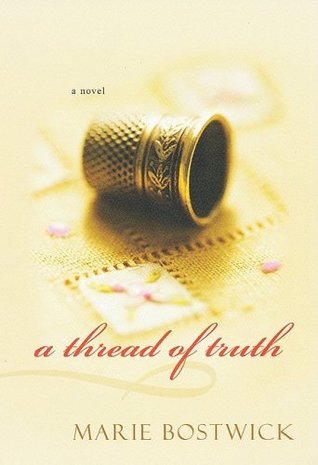
A Thread of Truth by Marie Bostwick
A Thread of Truth is about a quilting shop! I normally read knitting novels, if it's a craft novel (Debbie Macomber, anyone?) but I'm cool with anything craft-related. I first heard about it from Sandra Nachlinger and her teaser convinced me to go look for the book!
The main plot of this book centers on Ivy, who is running from her abusive husband. She finds refuge in New Bern and work in Cobbled Court (a quilt shop). However, she accidentally appears in a segment about the shop and that means that if she wants to keep this life that she's built, she'll have to learn to trust her new friends with her past and secrets.
The subplot is basically about the romance lives of the other four main characters and how Evelyn (the owner) deals with having her shop featured on television. I guess it could have been confusing since this is book two, but there was one chapter that basically summarised book one, so I don't think I missed much.
While the book can be a little heavy-handed in describing feelings or making a point about something, it is on the whole an enjoyable read. The story is engaging and I found myself rooting for Ivy from page one.
Will I want to read book one and the later books? I'm not too sure. I enjoyed it, but the mini-summary of book one means that I don't feel the need to read it, and I guess everything else depends on what the later books are about (I only picked this up because another blogger mentioned it and I thought the combination of topics was interesting).
If you're a fan of quilting, you will want to pick this up.
The main plot of this book centers on Ivy, who is running from her abusive husband. She finds refuge in New Bern and work in Cobbled Court (a quilt shop). However, she accidentally appears in a segment about the shop and that means that if she wants to keep this life that she's built, she'll have to learn to trust her new friends with her past and secrets.
The subplot is basically about the romance lives of the other four main characters and how Evelyn (the owner) deals with having her shop featured on television. I guess it could have been confusing since this is book two, but there was one chapter that basically summarised book one, so I don't think I missed much.
While the book can be a little heavy-handed in describing feelings or making a point about something, it is on the whole an enjoyable read. The story is engaging and I found myself rooting for Ivy from page one.
Will I want to read book one and the later books? I'm not too sure. I enjoyed it, but the mini-summary of book one means that I don't feel the need to read it, and I guess everything else depends on what the later books are about (I only picked this up because another blogger mentioned it and I thought the combination of topics was interesting).
If you're a fan of quilting, you will want to pick this up.
Wednesday, February 1, 2017
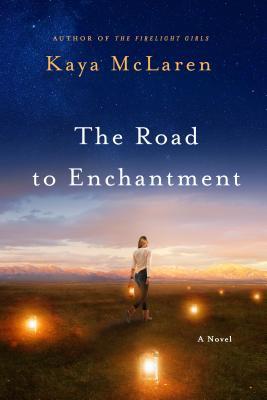
The Road to Enchantment by Kaya McLaren
I can't quite remember why I requested this book (perhaps it's because of the cover), but I found myself enjoying it despite the fact that nothing happens.
The Road to Enchantment starts when Willow receives word that her mother has died, breaks up with her boyfriend, and then finds out she's pregnant (in said order). Having moved back to the home she and her mother lived in, Willow must find a way to pay off her mother's debts and decide what to do with the baby.
The solutions to these problems are actually very simple. Willow sells the wine her mom has been making, and the animals on the farm, and solves the debt problem (more-or-less). The community rallies around her and manages to dissolve her already hesitant decision to abort the baby. The biggest question is whether she will go back to where she was, or stay in New Mexico (and it's pretty obvious to the reader which it is, even if it's not to Willow).
To me, the beauty in this book are the characters and the gradually merging of past and present. First, the characters. The place in New Mexico where Willow grew up borders an Apache reservation and the community is almost all Apache. I really loved how that became part of the story - how the customs and language and people became a part of her life, even if she didn't initially feel like she belonged.
And speaking of characters, both Willow's mom and dad were flawed people. I probably sympathised more with her dad than mom, despite the fact that it would normally be the other way round because I so acutely felt the embarrassment that Willow's mom caused her. Her dad, on the other hand, was largely absent (because her mom moved her to New Mexico) so my impression of him wasn't so bad.
The second: Willow's acceptance of her past. The book alternates between the present day and Willow's memories, and it quickly begins to be clear that how Willow saw and experienced the world back then still affects her. So when she can finally accept her past, her present can start moving into the future.
The only thing that I didn't like about the ending (mild spoilers ahead! Although to be honest there isn't much plot to spoil) is that Willow still ends up with a man in her life. A better man, to be granted, but for a good portion of the book, I thought this would be about the non-romantic type of love and how it can support people. To end with Willow in a relationship seemed to say that in the end, women need a man to be happy.
Apart from that one (fairly large to me) point, I enjoyed this book. Willow's journey isn't dramatic, but she does make a journey and I dare say that she's happier at the end of it.
Disclaimer: I got a free copy of this book from the publisher via NetGalley in exchange for a free and honest review.
The Road to Enchantment starts when Willow receives word that her mother has died, breaks up with her boyfriend, and then finds out she's pregnant (in said order). Having moved back to the home she and her mother lived in, Willow must find a way to pay off her mother's debts and decide what to do with the baby.
The solutions to these problems are actually very simple. Willow sells the wine her mom has been making, and the animals on the farm, and solves the debt problem (more-or-less). The community rallies around her and manages to dissolve her already hesitant decision to abort the baby. The biggest question is whether she will go back to where she was, or stay in New Mexico (and it's pretty obvious to the reader which it is, even if it's not to Willow).
To me, the beauty in this book are the characters and the gradually merging of past and present. First, the characters. The place in New Mexico where Willow grew up borders an Apache reservation and the community is almost all Apache. I really loved how that became part of the story - how the customs and language and people became a part of her life, even if she didn't initially feel like she belonged.
And speaking of characters, both Willow's mom and dad were flawed people. I probably sympathised more with her dad than mom, despite the fact that it would normally be the other way round because I so acutely felt the embarrassment that Willow's mom caused her. Her dad, on the other hand, was largely absent (because her mom moved her to New Mexico) so my impression of him wasn't so bad.
The second: Willow's acceptance of her past. The book alternates between the present day and Willow's memories, and it quickly begins to be clear that how Willow saw and experienced the world back then still affects her. So when she can finally accept her past, her present can start moving into the future.
The only thing that I didn't like about the ending (mild spoilers ahead! Although to be honest there isn't much plot to spoil) is that Willow still ends up with a man in her life. A better man, to be granted, but for a good portion of the book, I thought this would be about the non-romantic type of love and how it can support people. To end with Willow in a relationship seemed to say that in the end, women need a man to be happy.
Apart from that one (fairly large to me) point, I enjoyed this book. Willow's journey isn't dramatic, but she does make a journey and I dare say that she's happier at the end of it.
Disclaimer: I got a free copy of this book from the publisher via NetGalley in exchange for a free and honest review.
Friday, December 16, 2016
Sister of My Heart by Chitra Banerjee Divakaruni
I found this book via Wendy @ Literary Feline, when she talked about books she planned to give as gifts. The book sounded amazing and the library has a copy, so why not? I've read Before We Visit the Goddess, which is by the same author, and loved it so I had very high hopes. And luckily this did not disappoint!
Sister of My Heart follows Sudha and Anju, two cousins who are more like sisters. They have an incredibly tight bond, but one day, Sudha discovers something about her past that calls everything she knows about their relationship into doubt. And even though she is madly in love with someone, she agrees to her arranged marriage because it will make Anju happy.
While Anju loves the man her mother has picked for her, she discovers on her wedding day that he has fallen in love with Sudha (who has done absolutely nothing except be beautiful). But she is moving to America with him, and so sort of manages an escape.
And then the rest of the book happens, but I don't want to spoil it for you so let's live it as that.
What I really loved about this book is the language. The language is absolutely beautiful, and so extremely lyrical. It brings you into the mind of Sudha and Anju, and I found that I really sympathised and was rooting for both of them to be able to find their own happiness.
Where the book falters is when it comes to the male characters. With the exception of Singhji, the chauffeur, the male characters never really come to live. I didn't really mind, but it seems like it would be important in the second book.
And yes, there is a second book. I'm sort of hesitant to read it because it promises heartbreak. I might just borrow it (if it's available) and just read the ending or something.
Sister of My Heart follows Sudha and Anju, two cousins who are more like sisters. They have an incredibly tight bond, but one day, Sudha discovers something about her past that calls everything she knows about their relationship into doubt. And even though she is madly in love with someone, she agrees to her arranged marriage because it will make Anju happy.
While Anju loves the man her mother has picked for her, she discovers on her wedding day that he has fallen in love with Sudha (who has done absolutely nothing except be beautiful). But she is moving to America with him, and so sort of manages an escape.
And then the rest of the book happens, but I don't want to spoil it for you so let's live it as that.
What I really loved about this book is the language. The language is absolutely beautiful, and so extremely lyrical. It brings you into the mind of Sudha and Anju, and I found that I really sympathised and was rooting for both of them to be able to find their own happiness.
Where the book falters is when it comes to the male characters. With the exception of Singhji, the chauffeur, the male characters never really come to live. I didn't really mind, but it seems like it would be important in the second book.
And yes, there is a second book. I'm sort of hesitant to read it because it promises heartbreak. I might just borrow it (if it's available) and just read the ending or something.
Wednesday, May 11, 2016
Before We Visit the Goddess by Chitra Banerjee Divakaruni
This was such a beautiful book. I wasn't sure what to expect from it, but it's just... Beautiful. Just beautiful and rather sad.
Before We Visit the Goddess is an intergenerational story about Sabitri, her daughter Bela and her granddaughter Tara. It skips around in time and point of view, but by the end, comes to form one story.
All three women have made mistakes, and their mistakes have cost them dearly. Bela ran away from America and never went back, Tara dropped out of college and didn't contact her mother for a decade. All three have estranged relationships, and not all of the relationships were healed.
My favourite character was definitely Sabitri, possibly because hers was the first story I read, but probably because she seemed like a strong woman. Not to mention that she didn't deserve what happened to her. I think out of all three characters, she was the most blameless. And because I think filial piety is incredibly important, I find what Bela did horrible. Yes, the same thing happened to Bela, but it seems a bit like payback for what she did to her mother, so I didn't feel as bad for her.
In the second last chapter, just as I was thinking that Sabitri was going to be the only character I liked, I found my villain.
I'm not going to spoil it, but it totally made me feel immense sympathy for Bela. As for Tara, I don't know if it's the first person narration (all those "I"s in there) for her chapters, but I never quite shook the feeling that she was a selfish character. Or rather, I never felt her troubles as deeply as I did Sabitri and Bela.
I really wish this book was longer. There are so many gaps, and so many untold stories that I wanted to know about. I totally recommend this book to anyone looking for something on family, love and loss.
Disclaimer: I got a free copy of this book from the publisher via NetGalley in exchange for a free and honest review.
Before We Visit the Goddess is an intergenerational story about Sabitri, her daughter Bela and her granddaughter Tara. It skips around in time and point of view, but by the end, comes to form one story.
All three women have made mistakes, and their mistakes have cost them dearly. Bela ran away from America and never went back, Tara dropped out of college and didn't contact her mother for a decade. All three have estranged relationships, and not all of the relationships were healed.
My favourite character was definitely Sabitri, possibly because hers was the first story I read, but probably because she seemed like a strong woman. Not to mention that she didn't deserve what happened to her. I think out of all three characters, she was the most blameless. And because I think filial piety is incredibly important, I find what Bela did horrible. Yes, the same thing happened to Bela, but it seems a bit like payback for what she did to her mother, so I didn't feel as bad for her.
In the second last chapter, just as I was thinking that Sabitri was going to be the only character I liked, I found my villain.
I'm not going to spoil it, but it totally made me feel immense sympathy for Bela. As for Tara, I don't know if it's the first person narration (all those "I"s in there) for her chapters, but I never quite shook the feeling that she was a selfish character. Or rather, I never felt her troubles as deeply as I did Sabitri and Bela.
I really wish this book was longer. There are so many gaps, and so many untold stories that I wanted to know about. I totally recommend this book to anyone looking for something on family, love and loss.
Disclaimer: I got a free copy of this book from the publisher via NetGalley in exchange for a free and honest review.
Wednesday, June 24, 2015
The Far End of Happy by Kathryn Craft
This really tense read made me so emotional, although I'm not sure if I reacted the way I intended to. It's conflicting, to say the least.
You see, The Far End of Happy is about a suicide standoff. On the day that her Ronnie's husband, Jeff, is supposed to move out, he turns a gun on himself and threatens suicide. Over the course of one day, Ronnie, her mother Beverly, and Jeff's mother Janet, are there, waiting for something to happen. Of course, in a standoff, there's really not much to do but wait, and we see, from the three women's perspective, not just what's going on, but what happened in the past, leading up to this.
And for me, any time an author brings in multiple POVs of the same issue, most of the time the aim is to show you how complex the issue is. I think this is supposed to be a story about how even the match made in heaven can slowly disintegrate when there is no honesty/when certain problems (not allowed to say because spoilers) appear.
But my reaction was mainly "wow, Jeff is definitely the one at fault. And his mom too. Janet needs to wake up and realise how lucky she is that Beverly and Ronnie still love her." Seriously. No matter who was speaking, Jeff just came across as unlikable, manipulative and selfish. Did I mention manipulative? It may because I have this weekly class that's about employment, but is really a "this is how gender inequality still exists in the workplace", but Jeff's attitude and actions towards Ronnie's attempts to use her journalism degree (something she likes) for something just screamed "STAY AWAY". Making her give up her dream? check. Making her take his dream? check. Putting down her attempts to write? check.
Ugh.
And Janet wasn't better. She spends most of the book complaining about Ronnie and how she's the one responsible for pushing her precious boy to the edge. And the more I found out about Jeff, the less sympathy I had for her.
Oh, and am I the only one that finds the 12 year age gap disquieting? I mean, Ronnie and Jeff are supposedly the perfect couple and all that, but pairing them as childhood sweethearts with such a large gap just makes me go ew. And it's hard for me not to assume that everyone was rooting for them since the start, especially when there are passages like these (don't worry, this doesn't contain a spoiler. Oh, and I took out all the "she said" stuff and interruptions, so it's just the story):
"Back when he was eighteen, your father came home to tell us about his first year at college. Your mom was only six and had beautiful ringlet curls... Little Ronnie's skirt was stiff with petticoats and she had on white anklet socks and patent leather shoes... and she crawled up on your daddy's lap and turned his face towards hers as if no one else was in teh room, because she adored him. And she loved him so much she had you two boys..."
I'm sorry, but this sounds like Ronnie was a child bride, even though she is not. Stuff like this makes it very hard for me to even start to understand Jeff and his mother, much less feel sympathy for either of them.
Assuming this isn't one of those "there are no right or wrong, just two points of view" sort of books, then this is a really well-written book about how monsters can gradually appear, and how standing up yourself means standing up for yourself, not compromising in order to "save" someone who can't be saved.
If I was rating this by stars: I'd give this a four, because it's excellent and made me feel so much. I'm obviously not a fan of Jeff or Janet, but this book did keep me in its grip, and I was very much satisfied by the ending.
Disclaimer: I got a free copy of this book from the publisher via NetGalley in exchange for a free and honest review.
You see, The Far End of Happy is about a suicide standoff. On the day that her Ronnie's husband, Jeff, is supposed to move out, he turns a gun on himself and threatens suicide. Over the course of one day, Ronnie, her mother Beverly, and Jeff's mother Janet, are there, waiting for something to happen. Of course, in a standoff, there's really not much to do but wait, and we see, from the three women's perspective, not just what's going on, but what happened in the past, leading up to this.
And for me, any time an author brings in multiple POVs of the same issue, most of the time the aim is to show you how complex the issue is. I think this is supposed to be a story about how even the match made in heaven can slowly disintegrate when there is no honesty/when certain problems (not allowed to say because spoilers) appear.
But my reaction was mainly "wow, Jeff is definitely the one at fault. And his mom too. Janet needs to wake up and realise how lucky she is that Beverly and Ronnie still love her." Seriously. No matter who was speaking, Jeff just came across as unlikable, manipulative and selfish. Did I mention manipulative? It may because I have this weekly class that's about employment, but is really a "this is how gender inequality still exists in the workplace", but Jeff's attitude and actions towards Ronnie's attempts to use her journalism degree (something she likes) for something just screamed "STAY AWAY". Making her give up her dream? check. Making her take his dream? check. Putting down her attempts to write? check.
Ugh.
And Janet wasn't better. She spends most of the book complaining about Ronnie and how she's the one responsible for pushing her precious boy to the edge. And the more I found out about Jeff, the less sympathy I had for her.
Oh, and am I the only one that finds the 12 year age gap disquieting? I mean, Ronnie and Jeff are supposedly the perfect couple and all that, but pairing them as childhood sweethearts with such a large gap just makes me go ew. And it's hard for me not to assume that everyone was rooting for them since the start, especially when there are passages like these (don't worry, this doesn't contain a spoiler. Oh, and I took out all the "she said" stuff and interruptions, so it's just the story):
"Back when he was eighteen, your father came home to tell us about his first year at college. Your mom was only six and had beautiful ringlet curls... Little Ronnie's skirt was stiff with petticoats and she had on white anklet socks and patent leather shoes... and she crawled up on your daddy's lap and turned his face towards hers as if no one else was in teh room, because she adored him. And she loved him so much she had you two boys..."
I'm sorry, but this sounds like Ronnie was a child bride, even though she is not. Stuff like this makes it very hard for me to even start to understand Jeff and his mother, much less feel sympathy for either of them.
Assuming this isn't one of those "there are no right or wrong, just two points of view" sort of books, then this is a really well-written book about how monsters can gradually appear, and how standing up yourself means standing up for yourself, not compromising in order to "save" someone who can't be saved.
If I was rating this by stars: I'd give this a four, because it's excellent and made me feel so much. I'm obviously not a fan of Jeff or Janet, but this book did keep me in its grip, and I was very much satisfied by the ending.
Disclaimer: I got a free copy of this book from the publisher via NetGalley in exchange for a free and honest review.
Friday, February 6, 2015
First Frost by Sarah Addison Allen
I can't remember where or when I first read Garden Spells, but I remember that I really liked it. So when I saw that First Frost was available for review on NetGalley, I immediately requested it. Thankfully, and I mean thankfully because I had a slightly bad reading streak, this book lived up to expectations.
First Frost is set quite some time after after Garden Spells, with Bay all grown up and one of the main characters in her own right. This time, it's the week leading up to First Frost, and the Waverly women are anxious. Claire's candy business is booming, but no one knows her secret - she's stopped using ingredients from the garden. Sydney wants a child really, really badly, but no luck. Bay found the boy she belongs with, but he doesn't like her. This is tough enough for them, but then, a mysterious man comes to town, and he's after Claire.
The magic, for me, was in the little things. Claire's gift is cooking, Sydney's is in hairdressing, and Bay is in figuring out where things belong. Those may seem like tiny gifts, but they have huge effects on the people around them. A dish cooked in a bad mood can make others cry. Hair cut with spite brings bad luck. And so on. I really liked the magic in here.
While the focus is very much on the Waverly women, there's a healthy cast of supporting characters. For some reason, the one that stuck in my head was Violet, who's a lazy worker and a fairly terrible mother who basically wants to get out of the town. Needless to say, I didn't like her, although I appreciated the role she played in the book. There was also Anne, who exists only for the subplot of the mysterious man. Yup, the unknown entity gets his own backstory, and another character gets her own character growth too.
To be honest, I was quite surprised to see that this is the second book in the Waverly family series. For some reason, reading this book felt like coming back to a really long series. I do hope that there's a third book coming soon.
Disclaimer: I received a free copy of this book from the publisher via Goodreads in exchange for a free and honest review.
First Frost is set quite some time after after Garden Spells, with Bay all grown up and one of the main characters in her own right. This time, it's the week leading up to First Frost, and the Waverly women are anxious. Claire's candy business is booming, but no one knows her secret - she's stopped using ingredients from the garden. Sydney wants a child really, really badly, but no luck. Bay found the boy she belongs with, but he doesn't like her. This is tough enough for them, but then, a mysterious man comes to town, and he's after Claire.
The magic, for me, was in the little things. Claire's gift is cooking, Sydney's is in hairdressing, and Bay is in figuring out where things belong. Those may seem like tiny gifts, but they have huge effects on the people around them. A dish cooked in a bad mood can make others cry. Hair cut with spite brings bad luck. And so on. I really liked the magic in here.
While the focus is very much on the Waverly women, there's a healthy cast of supporting characters. For some reason, the one that stuck in my head was Violet, who's a lazy worker and a fairly terrible mother who basically wants to get out of the town. Needless to say, I didn't like her, although I appreciated the role she played in the book. There was also Anne, who exists only for the subplot of the mysterious man. Yup, the unknown entity gets his own backstory, and another character gets her own character growth too.
To be honest, I was quite surprised to see that this is the second book in the Waverly family series. For some reason, reading this book felt like coming back to a really long series. I do hope that there's a third book coming soon.
Disclaimer: I received a free copy of this book from the publisher via Goodreads in exchange for a free and honest review.
Tuesday, January 20, 2015
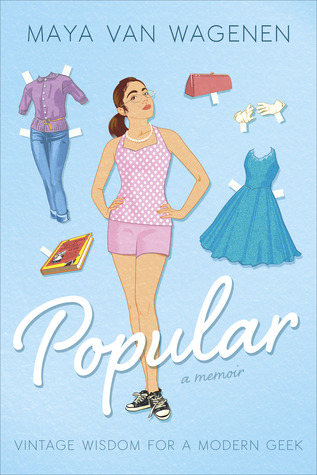
Popular: Vintage Wisdom for a Modern Geek by Maya Van Wagenen
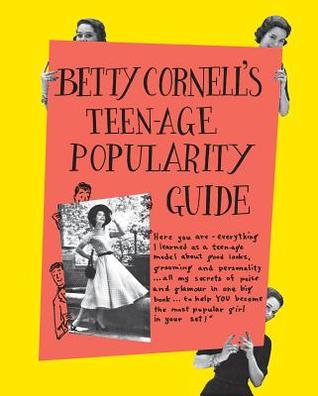
This is actually a two book review in one. I saw this book and the book that inspired it (Betty Cornell's Teenage Guide to Popularity), and figured that since they were both there, I should just read them both.
Popular: Vintage Wisdom for a Modern Geek is a memoir by Maya. She's at the lowest rank of the school hierarchy. So when she finds Betty Cornell's Teenage Guide to Popularity, she decides to spend one month per chapter in a bid to be popular (as defined by her at the start of the book).
Betty Cornell's Teenage Guide to Popularity is exactly what the title says. Covering topics like health, dressing, skin care, make-up, how to behave and more, it's reminds me of finishing school, but in a book.
So what happens when you put an (admittedly dated) guide book with a geek living in a less-than conventional place (this ain't the suburbs after all)?
Well, something approximating what I expected. Maya does make more friends, but it's not because she suddenly becomes popular, like a teen movie. No, she starts to make friends because she starts reaching out to people. And in the process, she realises that how you treat people that's more important than how you look (although how you look can influence your self-esteem, so that's no excuse to slack off).
Despite the fact that Maya and I come from very different backgrounds, I really empathise with her. I know what it's like to not belong to one group, but I think how Maya ends up - friends with everyone, is the best way to end up. You get to meet a lot more people that way.
Popular actually contains enough excerpts from Betty Cornell's Guide that you don't have to read both of them. You can just reading one. But, I found it interesting to read the guide (even though I won't follow anything). After all, it's always fun to peek into the mindset of another age.
When I get back to Singapore, I should go hang around the used bookstores a little more. I might find something cool like this.
Popular: Vintage Wisdom for a Modern Geek is a memoir by Maya. She's at the lowest rank of the school hierarchy. So when she finds Betty Cornell's Teenage Guide to Popularity, she decides to spend one month per chapter in a bid to be popular (as defined by her at the start of the book).
Betty Cornell's Teenage Guide to Popularity is exactly what the title says. Covering topics like health, dressing, skin care, make-up, how to behave and more, it's reminds me of finishing school, but in a book.
So what happens when you put an (admittedly dated) guide book with a geek living in a less-than conventional place (this ain't the suburbs after all)?
Well, something approximating what I expected. Maya does make more friends, but it's not because she suddenly becomes popular, like a teen movie. No, she starts to make friends because she starts reaching out to people. And in the process, she realises that how you treat people that's more important than how you look (although how you look can influence your self-esteem, so that's no excuse to slack off).Despite the fact that Maya and I come from very different backgrounds, I really empathise with her. I know what it's like to not belong to one group, but I think how Maya ends up - friends with everyone, is the best way to end up. You get to meet a lot more people that way.
Popular actually contains enough excerpts from Betty Cornell's Guide that you don't have to read both of them. You can just reading one. But, I found it interesting to read the guide (even though I won't follow anything). After all, it's always fun to peek into the mindset of another age.
When I get back to Singapore, I should go hang around the used bookstores a little more. I might find something cool like this.
Labels:
fashion/beauty
,
historical
,
non-fiction
,
women
Thursday, January 15, 2015
The Night Garden by Lisa van Allen
This book has a recommendation from Debbie Macomber and was compared to Sarah Addison Allen (whose books, I just realised, I didn't really review here, so I'll have to rectify that). There is no way I can not request this book.
And perhaps, it's because of such high hopes that I was slightly let down. Yes, the book was interesting, and yes, I was absorbed, but it wasn't magical enough. Plus, at points in time, it felt like the writer was just playing with language for language's sake.
The Night Garden is about Olivia, the caretaker of a mysterious garden maze that's supposed to help you solve your problems. She's an enigma in her community, and that's because she hides a secret. Her world is dull, but safe and she is content, until Sam comes back into her life. Sam, who is struggling to live up to his family reputation, was Olivia's childhood love, or at least, he was until she ended things with them. This time, he's back, and he's not about to give up so easily.
Throw into that a meddling woman called Gloria, who really wishes to impose her will on the valley, a pregnant drifter called Mei, and a town that doesn't fully understand Olivia and her family, and you have your story.
For some reason, I never really understood Gloria. I knew her role in the story, but her redemption arc was very weak to me, and quite unconvincing. The same goes for Mei. I can't help but think that so much care went into the two main characters that these two were just left to the side.
And for disclaimer's sake, while this is a really tame romance, there is one fairly explicit scene.
This wasn't a bad book. The prose felt a bit too much at times, and I didn't care for two of its supporting characters, but at its core, it's a book about rediscovering love and second chances. It's just too bad it wasn't magic to me.
Disclaimer: I got a free copy of this book from the publisher via NetGalley in exchange for a free and honest review.
And perhaps, it's because of such high hopes that I was slightly let down. Yes, the book was interesting, and yes, I was absorbed, but it wasn't magical enough. Plus, at points in time, it felt like the writer was just playing with language for language's sake.
The Night Garden is about Olivia, the caretaker of a mysterious garden maze that's supposed to help you solve your problems. She's an enigma in her community, and that's because she hides a secret. Her world is dull, but safe and she is content, until Sam comes back into her life. Sam, who is struggling to live up to his family reputation, was Olivia's childhood love, or at least, he was until she ended things with them. This time, he's back, and he's not about to give up so easily.
Throw into that a meddling woman called Gloria, who really wishes to impose her will on the valley, a pregnant drifter called Mei, and a town that doesn't fully understand Olivia and her family, and you have your story.
For some reason, I never really understood Gloria. I knew her role in the story, but her redemption arc was very weak to me, and quite unconvincing. The same goes for Mei. I can't help but think that so much care went into the two main characters that these two were just left to the side.
And for disclaimer's sake, while this is a really tame romance, there is one fairly explicit scene.
This wasn't a bad book. The prose felt a bit too much at times, and I didn't care for two of its supporting characters, but at its core, it's a book about rediscovering love and second chances. It's just too bad it wasn't magic to me.
Disclaimer: I got a free copy of this book from the publisher via NetGalley in exchange for a free and honest review.
Monday, October 20, 2014
Fly Away by Kristin Hannah
I haven't read Kristin Hannah's books lately, but when I first started blogging (I took a look, and I can't believe my reviews were so sparse and short last time! But that's for another blogpost - how reviews change :p), I went on a Kristin Hannah kick. I think it started when I went to the US and came back with a bunch of her books. So far, my absolute favourite book of her's is Magic Hour.
But this isn't a review of Magic Hour. It's a review of Fly Away, the sequel to Firefly Lane. And, for some reason, I don't think I've read Firefly Lane, although the title sounds really familiar to me.
Fly Away looks at what happens to a friendship when one of the two dies. Tully and Kate are best friends, through life's ups and downs. But then, Kate dies from cancer. Before that, the two had a two year quarrel, which I assumed was the focus on the book but wasn't (I guess that was the subject of Firefly Lane). The book looks at how Tully and Kate's family falls apart following Kate's death, as a critically-ill Tully tells Kate what has happened. At the same time, Kate's husband Johnny habours a grudge against Tully (I'm not too sure why, but I think it's about the quarrel), and tries to raise his three kids successfully. Tully's mother is trying to recconect with the daughter she believes is going down the same dangerous path she went. And Tully's accident is what brings them together.
I must say, this book kept me near tears from the start. I was actually reading this on the way to golf, which explains why I didn't actually cry. Any other time, and I think the waterworks would have flowed.
This book covers a whole host of issues, from abusive relationships, to grief, to parenting. I find it a complex novel, and I loved how all the characters existed in this web of relationships, instead of several different subplots. If you like character-driven novels, you'll probably like this.
I'm torn between wanting to pick up Firefly Lane, and not wanting to read it, for fear that it'll be spoilt because of this book.
But this isn't a review of Magic Hour. It's a review of Fly Away, the sequel to Firefly Lane. And, for some reason, I don't think I've read Firefly Lane, although the title sounds really familiar to me.
Fly Away looks at what happens to a friendship when one of the two dies. Tully and Kate are best friends, through life's ups and downs. But then, Kate dies from cancer. Before that, the two had a two year quarrel, which I assumed was the focus on the book but wasn't (I guess that was the subject of Firefly Lane). The book looks at how Tully and Kate's family falls apart following Kate's death, as a critically-ill Tully tells Kate what has happened. At the same time, Kate's husband Johnny habours a grudge against Tully (I'm not too sure why, but I think it's about the quarrel), and tries to raise his three kids successfully. Tully's mother is trying to recconect with the daughter she believes is going down the same dangerous path she went. And Tully's accident is what brings them together.
I must say, this book kept me near tears from the start. I was actually reading this on the way to golf, which explains why I didn't actually cry. Any other time, and I think the waterworks would have flowed.
This book covers a whole host of issues, from abusive relationships, to grief, to parenting. I find it a complex novel, and I loved how all the characters existed in this web of relationships, instead of several different subplots. If you like character-driven novels, you'll probably like this.
I'm torn between wanting to pick up Firefly Lane, and not wanting to read it, for fear that it'll be spoilt because of this book.
Friday, October 10, 2014
Princess: More Tears to Cry by Jean Sasson
I should make it clear from the start that I haven't read the previous books in this series (I found it out it was a series when I started reading). So, I'm pretty much reacting to the book as a first time reader.
Princess: More Tears to Cry is a look into the life of women in Saudi Arabia. It doesn't just focus on the sultana (or 'Princess' of this novel), but expands to include the various women that she's met/helped over the years and their stories. There was much less family drama than I expected (there's a story about her brother Ali in here, but from the introduction, I expected a lot more backstabbing). Instead, it focuses more on the lives of other women, and how it has changed since the first books were written.
To me, it seems like Saudi women have made great strides. More of them are being educated, more are being helped, and a few are even doctors now. It's a truly encouraging thing.
On the other hand, rampant sexism and discrimination against women still exist. It's still way too easy to divorce a women, and the penalties for crimes against them is laughable. There are so many sad stories in there, and not all of them have a happy ending. Reading it, you may come close to tears.
Bear in mind, the book does stress that this discrimination is the fault of the culture, not religion. Or rather, the book draws a distinction between religion and men of religion. Personally, I didn't feel like this book was wholeheartedly condemning a religion, just an unjust culture.
I do not think it's appropriate to say that I enjoyed such a heart-rending book, so I will merely say that it was eye-opening.
Disclaimer: I got a free copy of this book from the publisher via NetGalley in exchange for a free and honest review.
Princess: More Tears to Cry is a look into the life of women in Saudi Arabia. It doesn't just focus on the sultana (or 'Princess' of this novel), but expands to include the various women that she's met/helped over the years and their stories. There was much less family drama than I expected (there's a story about her brother Ali in here, but from the introduction, I expected a lot more backstabbing). Instead, it focuses more on the lives of other women, and how it has changed since the first books were written.
To me, it seems like Saudi women have made great strides. More of them are being educated, more are being helped, and a few are even doctors now. It's a truly encouraging thing.
On the other hand, rampant sexism and discrimination against women still exist. It's still way too easy to divorce a women, and the penalties for crimes against them is laughable. There are so many sad stories in there, and not all of them have a happy ending. Reading it, you may come close to tears.
Bear in mind, the book does stress that this discrimination is the fault of the culture, not religion. Or rather, the book draws a distinction between religion and men of religion. Personally, I didn't feel like this book was wholeheartedly condemning a religion, just an unjust culture.
I do not think it's appropriate to say that I enjoyed such a heart-rending book, so I will merely say that it was eye-opening.
Disclaimer: I got a free copy of this book from the publisher via NetGalley in exchange for a free and honest review.
Labels:
NetGalley
,
non-fiction
,
women
Wednesday, July 9, 2014
The Nanny Diaries by Emma McLaughlim and Nicola Kraus
I really really don't know where I first heard about The Nanny Diaries, but like I said before, I think I heard good things about it. Thankfully, the book lived up to my expectations - it was entertaining and unexpectedly emotionally gripping. The only thing that ruined the book (slightly) for me was the ending.
There are three main characters in the book. As I introduce them, you'll get an idea of what the book is about.
Nanny, or Nan - the main character of the book, and the titular Nanny. She's a university student who wanted to work part-time as a nanny, but she gets sucked into being more-or-less a full-time slave for Mrs X, and slowly gets emotionally attached to the rambunctious Grover. Nanny was a meh character for me, since she doesn't actually do anything heroic in the novel, but her narration was entertaining.
Grover - the child, and therefore one of the main characters. Grover was a spoilt brat at first, but as the book goes on, it's clear that he suffers from behavioural problems because of the emotional neglect from his parents. I have a soft spot for him, because I do have a younger brother about his age, so most of the feels/emotionally gripping parts came from him.
Mrs X - the unreasonable employer and therefore the antagonist of the book. She's actually the second wife of Mr. X, and while she does have some drama of her own, she more or less negates any pity the reader might have for her by being a terrible mother and employer.
Most of this book was actually very entertaining. I enjoyed reading about the trials of being a nanny to a rich kid with a distant but overly-controlling mother. But, I felt that the ending was a let down. As the book progressed, my expectation that something was going to happen, something was going to change grew higher and higher. But in the end, nothing happened. The non-ending was really a let down for me.
I think, if you're looking for a light read, this book would suit that perfectly. Just don't expect a traditional ending, where the antagonist suffers some sort of fall, or where the protagonist gains a victory.
There are three main characters in the book. As I introduce them, you'll get an idea of what the book is about.
Nanny, or Nan - the main character of the book, and the titular Nanny. She's a university student who wanted to work part-time as a nanny, but she gets sucked into being more-or-less a full-time slave for Mrs X, and slowly gets emotionally attached to the rambunctious Grover. Nanny was a meh character for me, since she doesn't actually do anything heroic in the novel, but her narration was entertaining.
Grover - the child, and therefore one of the main characters. Grover was a spoilt brat at first, but as the book goes on, it's clear that he suffers from behavioural problems because of the emotional neglect from his parents. I have a soft spot for him, because I do have a younger brother about his age, so most of the feels/emotionally gripping parts came from him.
Mrs X - the unreasonable employer and therefore the antagonist of the book. She's actually the second wife of Mr. X, and while she does have some drama of her own, she more or less negates any pity the reader might have for her by being a terrible mother and employer.
Most of this book was actually very entertaining. I enjoyed reading about the trials of being a nanny to a rich kid with a distant but overly-controlling mother. But, I felt that the ending was a let down. As the book progressed, my expectation that something was going to happen, something was going to change grew higher and higher. But in the end, nothing happened. The non-ending was really a let down for me.
I think, if you're looking for a light read, this book would suit that perfectly. Just don't expect a traditional ending, where the antagonist suffers some sort of fall, or where the protagonist gains a victory.
Monday, January 13, 2014
Cinderella ate my Daughter by Peggy Orenstein
Personally, I love all things Disney, although considering that my favourite 'princess' was Mulan, I don't think it made me girlier in some way. After all, when I was a child, I was known for loudly and frequently stating that girls were better than boys. But needless to say, Disney tends to stand for everything girly.
Which is why Peggy Orenstein, the author of this book, was worried that Disney was just part of a culture that teaches girls that their source of empowerment comes from their looks. And when give empowerment to something to arbitrary (seriously, looks?), well, you can image how it's may wreck havoc on little girls' (and not-so-little girls') self-esteem.
So this book, which explores this question, was really fascinating. Peggy Orenstein interviews many people, and she's clearly invested in getting an answer. She has a little girl she's trying to raise into a confident young woman after all.
I really enjoyed reading this book. It brought up a lot of subjects that I haven't even considered. I mean, I like pink, but I never wondered if it was due to marketing. And I've never really thought about the messages of the Disney stories. I loved to watch them but I never had a "I want to be a princess phase". After all, I cried when I was put in a barbie dress (it itched) and most of my play-acting with my sisters and cousins consisted of war games (I suppose I needed an excuse to read, and a bunker during the war was a good enough reason).
This is definitely a book that I'll be revisiting in the future. I hope I can find other books by this author soon - if they're like this one, they'll be an interesting, thoughtful read.
Which is why Peggy Orenstein, the author of this book, was worried that Disney was just part of a culture that teaches girls that their source of empowerment comes from their looks. And when give empowerment to something to arbitrary (seriously, looks?), well, you can image how it's may wreck havoc on little girls' (and not-so-little girls') self-esteem.
So this book, which explores this question, was really fascinating. Peggy Orenstein interviews many people, and she's clearly invested in getting an answer. She has a little girl she's trying to raise into a confident young woman after all.
I really enjoyed reading this book. It brought up a lot of subjects that I haven't even considered. I mean, I like pink, but I never wondered if it was due to marketing. And I've never really thought about the messages of the Disney stories. I loved to watch them but I never had a "I want to be a princess phase". After all, I cried when I was put in a barbie dress (it itched) and most of my play-acting with my sisters and cousins consisted of war games (I suppose I needed an excuse to read, and a bunker during the war was a good enough reason).
This is definitely a book that I'll be revisiting in the future. I hope I can find other books by this author soon - if they're like this one, they'll be an interesting, thoughtful read.
Labels:
non-fiction
,
western
,
women
Wednesday, September 4, 2013
The Art Of Falling by Kathryn Craft
On Monday, I read Wintergirls (link leads to review), and now, I read The Art OF Falling. The Art of Falling also touches on eating disorders, but unlike Wintergirls, the protagonists refuses to admit she has a disorder - she sees herself as eating healthily.
The book starts off when Penelope falls forteen stories and survives. She ended up blocking the fall from her memory. The book, really, is how she copes with having to leave the dance world, and the events leading up to the fall.
Personally, I found the story interesting, but I didn't like Penelope very much. Yes, I can understand why she's closed off and slightly bitter about things, but she comes across as very self-centered to me. She does change for the better within the book, but first impressions don't leave so easily.
I guess for some reason, I just didn't connect with this book. That's a bit strange to me, because I do like dance (watching that is, I did do ballet before and well, I can't dance at all). But somehow, I never felt fully drawn into the world of ballet. I suppose Penelope's refusal to talk about how she was different made the story less compelling to me. Plus, the novel is on her journey, so not that much emphasis is placed on ballet itself. It's a pity, because I really could have loved this novel.
Disclaimer: I got a free copy of this book from the publishers via NetGalley in exchange for a free and honest review.
The book starts off when Penelope falls forteen stories and survives. She ended up blocking the fall from her memory. The book, really, is how she copes with having to leave the dance world, and the events leading up to the fall.
Personally, I found the story interesting, but I didn't like Penelope very much. Yes, I can understand why she's closed off and slightly bitter about things, but she comes across as very self-centered to me. She does change for the better within the book, but first impressions don't leave so easily.
I guess for some reason, I just didn't connect with this book. That's a bit strange to me, because I do like dance (watching that is, I did do ballet before and well, I can't dance at all). But somehow, I never felt fully drawn into the world of ballet. I suppose Penelope's refusal to talk about how she was different made the story less compelling to me. Plus, the novel is on her journey, so not that much emphasis is placed on ballet itself. It's a pity, because I really could have loved this novel.
Disclaimer: I got a free copy of this book from the publishers via NetGalley in exchange for a free and honest review.
Friday, July 19, 2013
Madame Bovary by Gustave Flaubert
I'm in two minds about this book. I liked it, but I also took the longest time to finish it (that may just be my reluctance to finish reading an actual paper book and hence reduce the amount of books I have to read though).
If you haven't heard of this really famous book, basically, Madame Bovary is about um, Madame Bovary, the wife of a country doctor called Charles Bovary. She read a lot and had a lot of romantic notions, but her marriage to Charles wasn't as romantic as she hoped. So she entered two affairs, one after the other and ruined herself with the second one.
To me, the strength of the book lies in its characters. Madame Bovary (Emma) is complex, to say the least. The way she treats her husband and how her guilt influences her actions is interesting. She makes some really stupid decisions, but when she makes them, as the reader, I understood why she made them. Monsieur Bovary, on the other hand, is the perpetual trusting husband. He really is sweet, and if it wasn't for the fact that he's incompetent and has very little ambition, I think he really could have made Emma happy.
But, having said that, I somehow felt a disconnect with Emma's two lovers. For some reason, I didn't really understand them, and I probably felt more emotion over more minor characters than them (I was more angry at the tradesman that conned Emma then them, for one thing).
All in all, I think this is a very interesting book that you should read. It's a nuanced, beautiful book, and it's definitely one that I could read over and over again. In fact, I probably will re-read it sometime in the future, because I'll like to analyse it (perhaps on the second reading certain themes will jump out).
If you haven't heard of this really famous book, basically, Madame Bovary is about um, Madame Bovary, the wife of a country doctor called Charles Bovary. She read a lot and had a lot of romantic notions, but her marriage to Charles wasn't as romantic as she hoped. So she entered two affairs, one after the other and ruined herself with the second one.
To me, the strength of the book lies in its characters. Madame Bovary (Emma) is complex, to say the least. The way she treats her husband and how her guilt influences her actions is interesting. She makes some really stupid decisions, but when she makes them, as the reader, I understood why she made them. Monsieur Bovary, on the other hand, is the perpetual trusting husband. He really is sweet, and if it wasn't for the fact that he's incompetent and has very little ambition, I think he really could have made Emma happy.
But, having said that, I somehow felt a disconnect with Emma's two lovers. For some reason, I didn't really understand them, and I probably felt more emotion over more minor characters than them (I was more angry at the tradesman that conned Emma then them, for one thing).
All in all, I think this is a very interesting book that you should read. It's a nuanced, beautiful book, and it's definitely one that I could read over and over again. In fact, I probably will re-read it sometime in the future, because I'll like to analyse it (perhaps on the second reading certain themes will jump out).
Labels:
fiction
,
historical
,
western
,
women
Subscribe to:
Posts
(
Atom
)