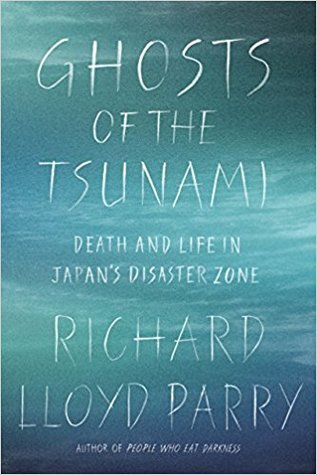
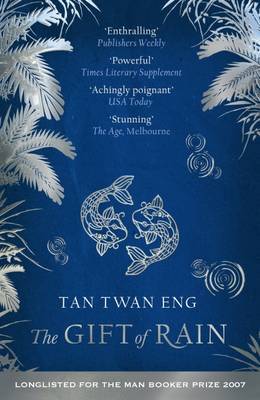
The Rainbow Troops is not only a fantastically written book, it also showed me that I can handle non-traditional narrative styles as long as they’re well written (for a time, I thought I could only read the ‘traditional’ style).
The Rainbow Troops follows the students at Muhammadiyah elementary school on Belitung, Indonesia. The school is at risk of closing down and the students and their two teachers must do their best to keep the school open.
That’s the main goal of the book, but the book is actually broken into three main arcs: the two trophies the students win (one for creativity and one for academics) and the fight to save the school. That said, the front few chapters are spent introducing the characters and the island they live in, as well as a few of their escapades, before they start on their quest for the first trophy.
The book is an autobiographical novel, which I’m pretty sure means “based on true events”. It’s also written a lot like a memoir, from the perspective of someone looking back on the past and telling you what happened. Ordinarily, that would be quite hard for me to read, since it’s full of opinions of the older narrator, but I found myself so entranced by the world created and the people in it that I didn’t even mind the narrative style. Just goes to show that good writing is what counts.
I do want to talk about the ending so BEWARE SPOILERS AHEAD. The book could have ended on an easy high, with them saving the school. Instead, it took a different route and showed how most of them didn’t succeed. Only Ikal, the narrator, and Kucai, their self-serving class president ever ‘made it good’.
The two geniuses in their group ended up living in poverty, their minds wasted. Another one of their friends, the decent but otherwise unimpressive Trapani, ended up in a mental hospital. Seeing how their country failed them despite the best efforts of them and their teachers was heartbreaking. While the book does go on from that crushing reveal to end on a slightly more hopeful note, I was still crushed by the ending.
END OF SPOILERS
Overall, this was a really good read. It’s not your typical feel-good story, but it’s not total pessimism either. Rather, it’s a story about how far determination and effort can go (and how far it cannot). Would totally recommend.
Showing posts with label SEA reading challenge. Show all posts
Tuesday, September 18, 2018
Friday, August 17, 2018
The Zenith by Duong Thu Huong
After enjoying the first two Anne of Green Gables books, I decided to try something harder - one of the books that I’ve been thinking of reading for the SEA Reading Challenge. And now that I’ve finished it, I can confidently say that if not for this challenged, I would not have picked up this book or finished it.
The Zenith is a confusing story. As far as I can make out, there are two plot lines. One follows the aging president of Vietnam as he slowly dies in isolation, supposedly loved and respected but really under house arrest, and his relationship with one of his subordinates (who has his own relationship issues). The other follows a family in the Woodcutter’s Hamlet, as the father remarries and brings strife (and lots of gossip to the village).
As it turns out, the patriarch of the family in the woodcutter’s hamlet is the guy who died in the opening of the book. I’m sure that they referenced it somewhere at the start, but I didn’t make the connection until much later.
Looking back, I guess there was some action in the story, but it just felt so long. Everyone seemed inclined to make a speech about politics or sex or sex and politics/marital relationships which dragged the story out. I think that if all the speeches were cut out, the book would be half it’s length and at least twice as interesting.
Although I’m not sure if that would help because the story about the president bored me. The characters were unsympathetic and not very interesting, and it felt like the message of “all ideals will be corrupted by power and politics” was hammered into every speech. In fact, the times where I considered giving up on this book happened mostly during the section about the president and his party officials.
I suppose that if this book was only about the family in the Woodcutter’s Hamlet and without speeches, I would have enjoyed it a lot more. There is, after all, some romance and lots of family drama inside. But as it is, this book felt like a thinly veiled political essay and that isn’t really what I wanted to read
The Zenith is a confusing story. As far as I can make out, there are two plot lines. One follows the aging president of Vietnam as he slowly dies in isolation, supposedly loved and respected but really under house arrest, and his relationship with one of his subordinates (who has his own relationship issues). The other follows a family in the Woodcutter’s Hamlet, as the father remarries and brings strife (and lots of gossip to the village).
As it turns out, the patriarch of the family in the woodcutter’s hamlet is the guy who died in the opening of the book. I’m sure that they referenced it somewhere at the start, but I didn’t make the connection until much later.
Looking back, I guess there was some action in the story, but it just felt so long. Everyone seemed inclined to make a speech about politics or sex or sex and politics/marital relationships which dragged the story out. I think that if all the speeches were cut out, the book would be half it’s length and at least twice as interesting.
Although I’m not sure if that would help because the story about the president bored me. The characters were unsympathetic and not very interesting, and it felt like the message of “all ideals will be corrupted by power and politics” was hammered into every speech. In fact, the times where I considered giving up on this book happened mostly during the section about the president and his party officials.
I suppose that if this book was only about the family in the Woodcutter’s Hamlet and without speeches, I would have enjoyed it a lot more. There is, after all, some romance and lots of family drama inside. But as it is, this book felt like a thinly veiled political essay and that isn’t really what I wanted to read
Labels:
eastern
,
fiction
,
SEA reading challenge
Tuesday, July 17, 2018
Smaller and Smaller Circles by F.H. Batacan
I feel like this year has been fairly good for the SEA Reading Challenge so far because I’ve read two fantastic books - Track Faults and other Glitches and Smaller and Smaller Circles. I found this while searching for SEA fiction and borrowed it the minute I saw “Pinoy detective fiction” because I love mysteries.
Smaller and Smaller Circles Stars Father Saenz, a Jesuit priest who is also a forensic anthropologist, and Father Jerome. When the mutilated bodies of young boys are found in Payatas, they decide that they have to be part of this investigation and get to the bottom of the matter. In the subplot, Father Saenz is on a crusade to get a child-molesting priest away from the charity that puts him in contact with young boys.
This is so much more than an amazing detective story. I really felt the weight of bureaucracy and corruption as Father Saenz, Father Jerome, and the Director of the NBI try to marshal their resources to achieve justice for the poor that normally get less than nothing. Add in the weight of the subplot (with a man of the Church pushing for justice) and you get a stunning indictment of corruption in both the civil service and the Church.
And this is not a spoiler, but if you read the book, pay attention to chapter 34. It’s my favourite, and in my opinion, the most powerful chapter because it humanises the people of Payatas and shows us that these boys were loved and did have worth - even if the ‘higher ups’ didn’t think they were worth devoting resources to.
The characters were also expertly written - there are the two Fathers, who want the best but also know the worst of the world, Director Lastimosa, who is merely a stop-gap for the real appointee but still tries his best, and Arcinas, the ambitious attorney. They all sprang to life on the page and I find it sad that this is not the start of a series because I would love to see how all of them and the relationships between them continue to change.
I would highly recommend this to everyone who wants a good read. It’s superbly written, with great characters and a plot that will keep you turning. I know this book came out several years ago but I’m still going to hope that a sequel is in the works.
Smaller and Smaller Circles Stars Father Saenz, a Jesuit priest who is also a forensic anthropologist, and Father Jerome. When the mutilated bodies of young boys are found in Payatas, they decide that they have to be part of this investigation and get to the bottom of the matter. In the subplot, Father Saenz is on a crusade to get a child-molesting priest away from the charity that puts him in contact with young boys.
This is so much more than an amazing detective story. I really felt the weight of bureaucracy and corruption as Father Saenz, Father Jerome, and the Director of the NBI try to marshal their resources to achieve justice for the poor that normally get less than nothing. Add in the weight of the subplot (with a man of the Church pushing for justice) and you get a stunning indictment of corruption in both the civil service and the Church.
And this is not a spoiler, but if you read the book, pay attention to chapter 34. It’s my favourite, and in my opinion, the most powerful chapter because it humanises the people of Payatas and shows us that these boys were loved and did have worth - even if the ‘higher ups’ didn’t think they were worth devoting resources to.
The characters were also expertly written - there are the two Fathers, who want the best but also know the worst of the world, Director Lastimosa, who is merely a stop-gap for the real appointee but still tries his best, and Arcinas, the ambitious attorney. They all sprang to life on the page and I find it sad that this is not the start of a series because I would love to see how all of them and the relationships between them continue to change.
I would highly recommend this to everyone who wants a good read. It’s superbly written, with great characters and a plot that will keep you turning. I know this book came out several years ago but I’m still going to hope that a sequel is in the works.
Labels:
Best Of
,
fiction
,
mystery
,
SEA reading challenge
Tuesday, July 3, 2018
The SEA is Ours edited by Jaymee Goh and Joyce Chng
Found this in the library and decided to borrow it for the SEA Reading Challenge! Like the title says, this is an anthology of short stories set in Southeast Asia, largely by Southeast Asian authors (from the back it seems like at least half the authors were born and raised in Southeast Asia while the rest have Southeast Asian roots). There are twelve stories in this anthology and they are:
The collection starts with a short introduction that, to be very honest, left me with a bad impression of the book before I started reading (good thing I borrowed the book without reading the introduction). It felt so angry and I didn’t really understand why - as far as I could tell, they were angry at the tropes in steampunk (Victorian England) because of diversity. Not sure how they connect but the anger was palpable.
There are twelve stories in this anthology and they are:
1. On the Consequence of Sound: This was about flying and flying whales! Very cool and I liked how Tagalog was woven into the stories - I was asking Jo Jie Jie about the sentences. It’s a pretty haunting story about ambition and sacrifice and a strong start to the collection.
2. Chasing Volcanoes: Another story set in the Philippines and another really good one! It’s set on an airship and has two strong female characters - the captain and the rebel princess who’s trying to save a village.
3. Ordained: This seems to be a family drama but to be honest, it was too short and I couldn’t grasp the story.
4. The Last Aswang: My brother and I have been talking about aswang with Jo Jie Jie and so I was really excited for this story. Unfortunately, it was a letdown. Perhaps it was the influence of the introduction (I really don’t like activist fiction, it’s not my thing) but this felt like an “our culture is better than the colonial culture” sort of story. Which could be good if done well (the story Devil Wind from Young Warriors is a good example), but in this case, it felt like the author started with a message in mind, which totally did not appeal to me.
5. Life under Glass: This was a short story about hunting rare creatures. I kind of wish it was longer because I didn’t get a chance to connect with the main character.
6. Between Severed Souls: It took me a little while to get into this story about a Filipino Pygmalion in the midst of a civil war but when I did, I thoroughly enjoyed it. The steampunk elements fit in well and I felt like all the characters had their own motivations and hurts, which made them come to life.
7. The Unmaking of Cuadro Amoroso: This was pretty good - three genius students plan and execute their revenge after the fourth in their group dies. Again, it took me a while to understand what was going on but the ending was very satisfying.
8. Working Woman: A steampunk story set in colonial Singapore, with triad lords and half-machine Samsui women. This was definitely one of the strongest stories in the book and one of my favourites because it had plot, it had strong characters, and it was in a world that was strange yet familiar. Would definitely recommend this to people looking for a Singapore steampunk story.
9. Spider Here: Another Singaporean steampunk story but this one wasn’t as strong was Working Woman. The world was intriguing, with the idea of ‘threads’ in living creatures that can be manipulated and a protagonist in a walking chair, but I wasn’t clear about what was happening even by the end of the story.
10. The Chamber of Souls: This was Vietnamese steampunk and one of the stronger stories in the collection. It deals with a group of refugees who are accepted into what seems like paradise - until they’re under attack. Add in a robot whose main purpose is to serve tea and store souls and you’ve got a story that kept me interested until the end.
11. Petrified: Another story taking place on a steamship, this was a fairly enjoyable (but also sad) tale with automatons that can pass for human. It felt like most of the action took place off the page (told to us in a recap) but I liked the concept, start, and ending.
12. The Insects and Women Sing Together: The last story in the collection was, sadly, a weak ending. Like with Ordained and Life Under Glass, I didn’t understand what was going on, even at the end.
Overall, this was a pretty uneven collection. It’s a pity because I am always for tropes being broken in a smart manner, but some of the stories didn’t connect and/or make sense to me. There were some good stories, but I went into this collection expecting an anthology as strong as Track Faults and Other Glitches and sadly, I didn’t find it.
The collection starts with a short introduction that, to be very honest, left me with a bad impression of the book before I started reading (good thing I borrowed the book without reading the introduction). It felt so angry and I didn’t really understand why - as far as I could tell, they were angry at the tropes in steampunk (Victorian England) because of diversity. Not sure how they connect but the anger was palpable.
There are twelve stories in this anthology and they are:
1. On the Consequence of Sound: This was about flying and flying whales! Very cool and I liked how Tagalog was woven into the stories - I was asking Jo Jie Jie about the sentences. It’s a pretty haunting story about ambition and sacrifice and a strong start to the collection.
2. Chasing Volcanoes: Another story set in the Philippines and another really good one! It’s set on an airship and has two strong female characters - the captain and the rebel princess who’s trying to save a village.
3. Ordained: This seems to be a family drama but to be honest, it was too short and I couldn’t grasp the story.
4. The Last Aswang: My brother and I have been talking about aswang with Jo Jie Jie and so I was really excited for this story. Unfortunately, it was a letdown. Perhaps it was the influence of the introduction (I really don’t like activist fiction, it’s not my thing) but this felt like an “our culture is better than the colonial culture” sort of story. Which could be good if done well (the story Devil Wind from Young Warriors is a good example), but in this case, it felt like the author started with a message in mind, which totally did not appeal to me.
5. Life under Glass: This was a short story about hunting rare creatures. I kind of wish it was longer because I didn’t get a chance to connect with the main character.
6. Between Severed Souls: It took me a little while to get into this story about a Filipino Pygmalion in the midst of a civil war but when I did, I thoroughly enjoyed it. The steampunk elements fit in well and I felt like all the characters had their own motivations and hurts, which made them come to life.
7. The Unmaking of Cuadro Amoroso: This was pretty good - three genius students plan and execute their revenge after the fourth in their group dies. Again, it took me a while to understand what was going on but the ending was very satisfying.
8. Working Woman: A steampunk story set in colonial Singapore, with triad lords and half-machine Samsui women. This was definitely one of the strongest stories in the book and one of my favourites because it had plot, it had strong characters, and it was in a world that was strange yet familiar. Would definitely recommend this to people looking for a Singapore steampunk story.
9. Spider Here: Another Singaporean steampunk story but this one wasn’t as strong was Working Woman. The world was intriguing, with the idea of ‘threads’ in living creatures that can be manipulated and a protagonist in a walking chair, but I wasn’t clear about what was happening even by the end of the story.
10. The Chamber of Souls: This was Vietnamese steampunk and one of the stronger stories in the collection. It deals with a group of refugees who are accepted into what seems like paradise - until they’re under attack. Add in a robot whose main purpose is to serve tea and store souls and you’ve got a story that kept me interested until the end.
11. Petrified: Another story taking place on a steamship, this was a fairly enjoyable (but also sad) tale with automatons that can pass for human. It felt like most of the action took place off the page (told to us in a recap) but I liked the concept, start, and ending.
12. The Insects and Women Sing Together: The last story in the collection was, sadly, a weak ending. Like with Ordained and Life Under Glass, I didn’t understand what was going on, even at the end.
Overall, this was a pretty uneven collection. It’s a pity because I am always for tropes being broken in a smart manner, but some of the stories didn’t connect and/or make sense to me. There were some good stories, but I went into this collection expecting an anthology as strong as Track Faults and Other Glitches and sadly, I didn’t find it.
Labels:
eastern
,
fiction
,
SEA reading challenge
,
short story
,
steampunk
Monday, May 21, 2018
Track Faults and Other Glitches by Nicholas Yong
I haven’t been reading much Singapore books (or SEAsian books for that matter) but this short story collection was really great and I'm really grateful to the person who recommended this to me.
Track Faults and Other Glitches is a collection of collection of stories set in Singapore. The stories are:
- The Ministry of Zombie Advancement: A very fun, unique tale about zombies in Singapore. The zombies in Singapore concept reminded me of Land of the Meat Munchers, and I realised that it was by the same author! No wonder I liked this.
- You’ll Believe a Man Can Fly: About seeing superheroes at work. The ending was ambiguous which makes it interesting to speculate about.
- Wake Me Up When It’s 2116: Not a good idea to read this in the train because I was tearing up by the end of it! It’s about progress and human life and reminds me of some of Bradbury’s short stories (which are also referenced here). This is one of my favourite stories in the collection.
- Track Fault: Another one of my favourite stories in this book, this deals with an MRT train that goes missing. Warning: there are no answers to this mystery but the story is so good!
- Haru & Hui Ling: These are actually two stories but they are two parts of one whole. It’s about the bond between dogs and their human families but also about love and loss.
- Three Nights in Camp: an NS ghost story. Kinda ambivalent on this one, but I think it’s because I haven’t gone through NS.
- A Dream Within A Dream: this is about a guy in a coma and I actually thought it was a little confusing but it still tugged at my heartstrings. I don’t know what’s going on, but the story made me feel.
- Polling Day: One of the weaker stories in my collection, in my opinion. It follows a reporter as he finds out that the opposition has won all contest seats. Very timely, given the recent election in Malaysia but I didn’t really get the story.
- The Uncle in the Kopitiam: The last story in the collection, this is a story within a story, reaching back to the folklore of Singapore. I really enjoyed the twist and I like this story.
Overall, I really enjoyed this collection! It was really well-written and extremely fun to read. Each story has a message, but the message doesn’t overpower the story like some local short stories do. I am totally hoping to find more stories like this!
Track Faults and Other Glitches is a collection of collection of stories set in Singapore. The stories are:
- The Ministry of Zombie Advancement: A very fun, unique tale about zombies in Singapore. The zombies in Singapore concept reminded me of Land of the Meat Munchers, and I realised that it was by the same author! No wonder I liked this.
- You’ll Believe a Man Can Fly: About seeing superheroes at work. The ending was ambiguous which makes it interesting to speculate about.
- Wake Me Up When It’s 2116: Not a good idea to read this in the train because I was tearing up by the end of it! It’s about progress and human life and reminds me of some of Bradbury’s short stories (which are also referenced here). This is one of my favourite stories in the collection.
- Track Fault: Another one of my favourite stories in this book, this deals with an MRT train that goes missing. Warning: there are no answers to this mystery but the story is so good!
- Haru & Hui Ling: These are actually two stories but they are two parts of one whole. It’s about the bond between dogs and their human families but also about love and loss.
- Three Nights in Camp: an NS ghost story. Kinda ambivalent on this one, but I think it’s because I haven’t gone through NS.
- A Dream Within A Dream: this is about a guy in a coma and I actually thought it was a little confusing but it still tugged at my heartstrings. I don’t know what’s going on, but the story made me feel.
- Polling Day: One of the weaker stories in my collection, in my opinion. It follows a reporter as he finds out that the opposition has won all contest seats. Very timely, given the recent election in Malaysia but I didn’t really get the story.
- The Uncle in the Kopitiam: The last story in the collection, this is a story within a story, reaching back to the folklore of Singapore. I really enjoyed the twist and I like this story.
Overall, I really enjoyed this collection! It was really well-written and extremely fun to read. Each story has a message, but the message doesn’t overpower the story like some local short stories do. I am totally hoping to find more stories like this!
Labels:
fiction
,
SEA reading challenge
,
short story
,
Singapore
Wednesday, February 21, 2018
The Gatekeeper by Nuraliah Norasid
My first book for 2018’s SEA Reading Challenge is from Singapore! It’s called The Gatekeeper and it’s a fantasy novel heavily influenced by Malay culture.
Obviously heavily inspired by Singapore, the novel takes place in Manticura. It starts when the young medusa Ria experiences betrayal and in her panic, freezes an entire village of people. Since this makes her a criminal, her sister Barani and her run to the underground city of Nelroote. When the war comes, Ria becomes the Gatekeeper of the city, which is how she meets Eedric, a human with monster blood.
Despite the fantastical elements and setting, this isn’t really a fantasy novel. There is no quest for the hero, instead the novel focuses on the developing relationship between Ria and Eedric, which some thinly-veiled criticisms of race relations in Singapore. Er, I mean monster-human relations in Manticura.
What I loved about this book was the setting. It was amazing to see a world with Greek and Malay influences and I very much enjoyed the language in the novel. It’s a refreshing change from most fantasy books.
What I wasn’t too fond of was the plot. It started strong, with Ria and her sister having to go into hiding, but then it slowed down considerably. It felt like a good portion of the book was on world-building and the slowly-developing relationship between Ria and Eedric, which is a pity because I feel like the beginning promised a much more exciting read. Not to mention that it almost becomes message-fiction at times, which is a bit too heavy-handed for my tastes.
And there were a couple of things I didn’t understand. At first, I thought that Nelroote was where the monsters hid from humans, but then I saw that monsters live in Manticura too. Then I thought that perhaps these monsters were just in complete hiding, but ‘surface relatives’ are mentioned and one monster is even sent to the outside world for schooling.
In that case, what is the point of hiding? Are they even hiding, if they have enough documentation to get into schools? And if so, why did it take the authorities so long to find Ria? Those are questions that were not answered satisfactorily in the book.
Overall, I liked this book. The setting was very well-done and it had a strong start. Although I’m not a fan of the slow plot, you should consider reading this book if you’re looking for a fantasy with a twist.
P.s. The ebook isn't available yet so it's only available in paper form (according to the publisher, they don't release the ebooks until 2 to 3 years after the book is published)
Obviously heavily inspired by Singapore, the novel takes place in Manticura. It starts when the young medusa Ria experiences betrayal and in her panic, freezes an entire village of people. Since this makes her a criminal, her sister Barani and her run to the underground city of Nelroote. When the war comes, Ria becomes the Gatekeeper of the city, which is how she meets Eedric, a human with monster blood.
Despite the fantastical elements and setting, this isn’t really a fantasy novel. There is no quest for the hero, instead the novel focuses on the developing relationship between Ria and Eedric, which some thinly-veiled criticisms of race relations in Singapore. Er, I mean monster-human relations in Manticura.
What I loved about this book was the setting. It was amazing to see a world with Greek and Malay influences and I very much enjoyed the language in the novel. It’s a refreshing change from most fantasy books.
What I wasn’t too fond of was the plot. It started strong, with Ria and her sister having to go into hiding, but then it slowed down considerably. It felt like a good portion of the book was on world-building and the slowly-developing relationship between Ria and Eedric, which is a pity because I feel like the beginning promised a much more exciting read. Not to mention that it almost becomes message-fiction at times, which is a bit too heavy-handed for my tastes.
And there were a couple of things I didn’t understand. At first, I thought that Nelroote was where the monsters hid from humans, but then I saw that monsters live in Manticura too. Then I thought that perhaps these monsters were just in complete hiding, but ‘surface relatives’ are mentioned and one monster is even sent to the outside world for schooling.
In that case, what is the point of hiding? Are they even hiding, if they have enough documentation to get into schools? And if so, why did it take the authorities so long to find Ria? Those are questions that were not answered satisfactorily in the book.
Overall, I liked this book. The setting was very well-done and it had a strong start. Although I’m not a fan of the slow plot, you should consider reading this book if you’re looking for a fantasy with a twist.
P.s. The ebook isn't available yet so it's only available in paper form (according to the publisher, they don't release the ebooks until 2 to 3 years after the book is published)
Labels:
fantasy
,
fiction
,
SEA reading challenge
,
Singapore
Sunday, December 31, 2017
2017 Reading Roundup
I'm cutting it very close, but here's my roundup for this year! This year as more eventful than most and reading really became my escape. I only did one challenge, because I didn't want to put pressure on my reading time, and I think that was the right decision.
SEA Reading Challenge Update
Anyway, last year I decided that I wanted to read more stories set in SEA, written by SEAsian writers. It turned out to be way harder than I thought, because the NLB doesn’t have much of an e-selection and I was in Japan for most of the year.
Books that I read for the SEA Reading Challenge (All links lead to the review)
1. The Gift of Rain (Malaysia)
2. Illustrado (Philippines)
3. Last Night I Dreamed of Peace (Vietnam)
4. The Woman Who Had Two Navels and Tales of the Tropical Gothic (Philippines)
5. Land of the Meat Munchers (Singapore)
6. The Kite of Stars (Philippines)
So by my own standards, I’m an ‘exchange student’.
Half the books are from Philippines. I’m not sure why, but maybe their literary history is longer? When I search for books from the other SEA countries, I mostly find non-fiction, mostly written by someone not from that country. If it’s fiction by someone from that country, a lot of it is about leaving the country and settling in the states, which is not what I’m looking for.
Or maybe it’s just the kind of books NLB has.
I also realised that I’m not very interested in literary fiction. Literary fiction does have its merits, but I want to see fun stories. Why must ‘writing about SEA’ = ‘writing serious’? Why can’t we write genre and just have them in SEA like it’s normal? (Okay, maybe this is because I’m not a literary fiction person in general)
On the bright side, I have seen more mysteries coming up. They just aren’t really in ebook format.
My favourite books from this year
In a stunning reversal from last year, only 2 of the 6 favourite books for this year are non-fiction. I’m not sure if it’s because I read so much awesome non-fiction last year that it’s hard for this year's books to compare, or if it’s because I’ve been more conscious of great fiction. Probably a bit of both.
And now, my top 6 books of the year:
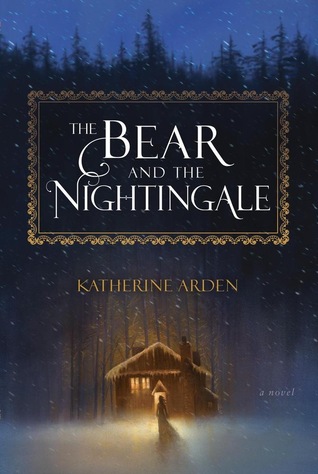
1. The Bear and the Nightingale by Katherine Arden
By now, I trust that you have caught on to the fact that I LOVE FAIRY TALES. And The Bear and the Nightingale is one of the best fairytale inspired story that I’ve ever read, which is why it’s one of my favourites for the year.
The Bear and the Nightingale is inspired by Russian fairytales. Vasya, the protagonist, has received an enchantment passed down from her mother and grandmother, allowing her to see and talk to the magical creatures around her.
However, her idyllic world is shattered when her father remarried, bringing her stern stepmother into their lives. Where Vasya sees magic, her stepmother sees demons.
What I love about this book (apart from the fairy tale references) is the world building and the nuanced characterisations. So basically the whole thing.
The second book, The Girl in the Tower, is already out (review to come) and it’s awesome so go read that too!
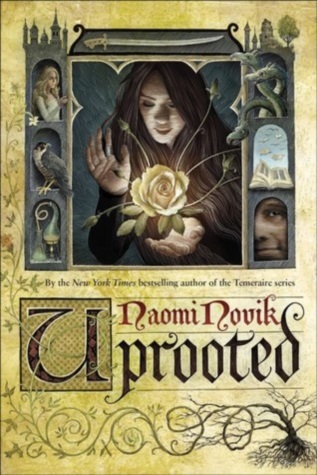
2. Uprooted by Naomi Novik
Uprooted is a bit hard to explain, but there’s Agnieszka, a witch whose magic is differen from the norm, a dragon who’s a wizard and not evil, Kasia, the best friend and a sentient forest. It also manages to fit a trilogy’s worth of content in one book without feeling rushed.
Like The Bear and the Nightingale, this book has a definite “fairytale” feel and I really enjoyed it.
3. The Radium Girls by Kate Moore
Right now, we are all aware that radium is life-threateningly dangerous. But way back in the days of WWI, radium was thought to be healthy and scores of girls were hired to paint the dials with radium. However, when they started to sicken (and die), the companies that hired them denied that it was due to radium and did their best not to pay them compensation.
The Radium Girls is the story of the girls who worked with radium. Their work saved the lives of soldiers, but in return all they got were damaged bodies. This story is important and the book does an amazing job of showing us both the big picture and the individual girls affected.
Definitely a must-read.
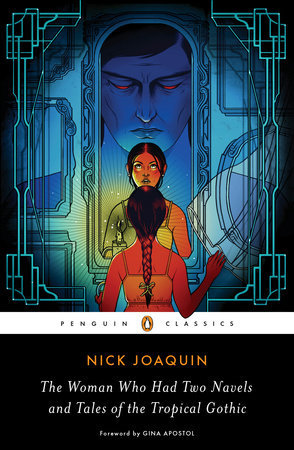
4. The Woman Who Had Two Navels and Tales of the Tropical Gothic by Nick Joaquin
I read this for the SEA Reading Challenge this year and it was amazing! Totally worth the challenge.
The Woman with Two Navels and Tales is the Tropical Gothic is a collection of short stories. The language is amazingly beautiful and even if I don’t get the stories, they make me feel. The stories contain the heat of the place, the dense humidity, the chaos of life and is both universal and specific.
Truly amazing.
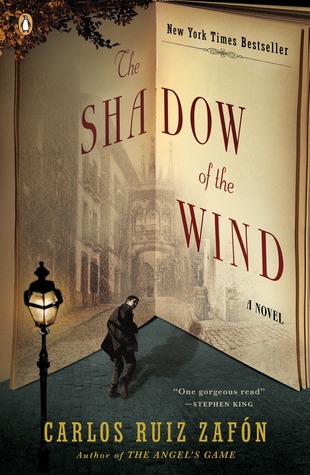
5. The Shadow of the Wind by Carlos Ruiz Zafon
I was introduced to this book when a friend sent me the third book in the series and I decided that I had to read the first book first.
The Shadow of the Wind is a coming of age + mystery about books (like how awesome is that?) The story starts when Daniel (the protagonist) is brought to the Cemetery of Forgotten Books and allowed to take one book back. The book that calls to him is The Shadow of the Wind by Julian Carax.
As Daniel grows up, he finds out that someone has been buying and burning copies of Carax’s novels. As he slowly makes friends and enemies, he does his best to find out who Julian Carax is and why someone is targeting his books.
Not only is this wonderful story about books, it manages to balance the mystery and Daniel’s coming of age story perfectly.
Totally a book for bookworms.
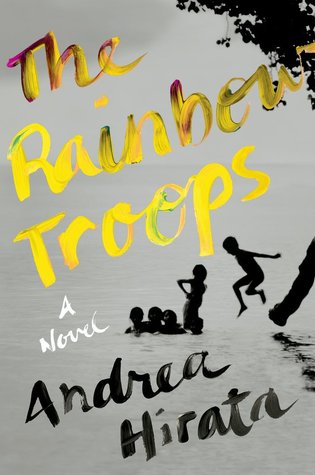
6. Ghosts of the Tsunami by Richard Lloyd Parry
Some books are hard to read but they’re necessary. Ghosts of the Tsunami is about the aftermath relating Okawa Elementary School, where a series of tragic misdecisions led to the deaths of 74 out of 78 students and 10 out of 11 teachers.
When you face a tragedy this big, you’ll want answers. But answers weren’t forthcoming, and the parents ended up taking things into their own hands.
By focusing on the emotions and reactions of the survivor parents, the book touches on issues of grief, survivor’s guilt, the feeling of loss, how they started rebuilding, and how the community reacted.
This is one of the most powerful books that I’ve read this year.
2018 Reading Plans
I don’t really have a number goal (I normally just set it to 100 so I can get the Goodreads counter), but I’m hoping that working in Singapore doesn't affect my book reading habit. There are quite a few series that I intend on continuing, like Bryant and May, the Shardlake mysteries, the sequel to Three Dark Crowns, etc so I hope they get read in 2018. Plus the backlist from authors like Cyril Hare to explore.
And of course, I have my perpetual growing TBR list to conquer as well.
What I would like to do more of is the SEA Reading Challenge. I definitely want to see if I can read more than 6 books in 2018 because it’s kind of sad that I don’t know much about the writers and stories around me. Hopefully being in Singapore will help.
I guess these are my plans. I really don’t think I can put too much on (so no other challenges) because reading is my way of relaxing and too many reading challenges/goals just make it stressful. I’ve got enough stress as it is.
SEA Reading Challenge Update
Anyway, last year I decided that I wanted to read more stories set in SEA, written by SEAsian writers. It turned out to be way harder than I thought, because the NLB doesn’t have much of an e-selection and I was in Japan for most of the year.
Books that I read for the SEA Reading Challenge (All links lead to the review)
1. The Gift of Rain (Malaysia)
2. Illustrado (Philippines)
3. Last Night I Dreamed of Peace (Vietnam)
4. The Woman Who Had Two Navels and Tales of the Tropical Gothic (Philippines)
5. Land of the Meat Munchers (Singapore)
6. The Kite of Stars (Philippines)
So by my own standards, I’m an ‘exchange student’.
Half the books are from Philippines. I’m not sure why, but maybe their literary history is longer? When I search for books from the other SEA countries, I mostly find non-fiction, mostly written by someone not from that country. If it’s fiction by someone from that country, a lot of it is about leaving the country and settling in the states, which is not what I’m looking for.
Or maybe it’s just the kind of books NLB has.
I also realised that I’m not very interested in literary fiction. Literary fiction does have its merits, but I want to see fun stories. Why must ‘writing about SEA’ = ‘writing serious’? Why can’t we write genre and just have them in SEA like it’s normal? (Okay, maybe this is because I’m not a literary fiction person in general)
On the bright side, I have seen more mysteries coming up. They just aren’t really in ebook format.
My favourite books from this year
In a stunning reversal from last year, only 2 of the 6 favourite books for this year are non-fiction. I’m not sure if it’s because I read so much awesome non-fiction last year that it’s hard for this year's books to compare, or if it’s because I’ve been more conscious of great fiction. Probably a bit of both.
And now, my top 6 books of the year:
1. The Bear and the Nightingale by Katherine Arden
By now, I trust that you have caught on to the fact that I LOVE FAIRY TALES. And The Bear and the Nightingale is one of the best fairytale inspired story that I’ve ever read, which is why it’s one of my favourites for the year.
The Bear and the Nightingale is inspired by Russian fairytales. Vasya, the protagonist, has received an enchantment passed down from her mother and grandmother, allowing her to see and talk to the magical creatures around her.
However, her idyllic world is shattered when her father remarried, bringing her stern stepmother into their lives. Where Vasya sees magic, her stepmother sees demons.
What I love about this book (apart from the fairy tale references) is the world building and the nuanced characterisations. So basically the whole thing.
The second book, The Girl in the Tower, is already out (review to come) and it’s awesome so go read that too!
2. Uprooted by Naomi Novik
Uprooted is a bit hard to explain, but there’s Agnieszka, a witch whose magic is differen from the norm, a dragon who’s a wizard and not evil, Kasia, the best friend and a sentient forest. It also manages to fit a trilogy’s worth of content in one book without feeling rushed.
Like The Bear and the Nightingale, this book has a definite “fairytale” feel and I really enjoyed it.
3. The Radium Girls by Kate Moore
Right now, we are all aware that radium is life-threateningly dangerous. But way back in the days of WWI, radium was thought to be healthy and scores of girls were hired to paint the dials with radium. However, when they started to sicken (and die), the companies that hired them denied that it was due to radium and did their best not to pay them compensation.
The Radium Girls is the story of the girls who worked with radium. Their work saved the lives of soldiers, but in return all they got were damaged bodies. This story is important and the book does an amazing job of showing us both the big picture and the individual girls affected.
Definitely a must-read.
4. The Woman Who Had Two Navels and Tales of the Tropical Gothic by Nick Joaquin
I read this for the SEA Reading Challenge this year and it was amazing! Totally worth the challenge.
The Woman with Two Navels and Tales is the Tropical Gothic is a collection of short stories. The language is amazingly beautiful and even if I don’t get the stories, they make me feel. The stories contain the heat of the place, the dense humidity, the chaos of life and is both universal and specific.
Truly amazing.
5. The Shadow of the Wind by Carlos Ruiz Zafon
I was introduced to this book when a friend sent me the third book in the series and I decided that I had to read the first book first.
The Shadow of the Wind is a coming of age + mystery about books (like how awesome is that?) The story starts when Daniel (the protagonist) is brought to the Cemetery of Forgotten Books and allowed to take one book back. The book that calls to him is The Shadow of the Wind by Julian Carax.
As Daniel grows up, he finds out that someone has been buying and burning copies of Carax’s novels. As he slowly makes friends and enemies, he does his best to find out who Julian Carax is and why someone is targeting his books.
Not only is this wonderful story about books, it manages to balance the mystery and Daniel’s coming of age story perfectly.
Totally a book for bookworms.
6. Ghosts of the Tsunami by Richard Lloyd Parry
Some books are hard to read but they’re necessary. Ghosts of the Tsunami is about the aftermath relating Okawa Elementary School, where a series of tragic misdecisions led to the deaths of 74 out of 78 students and 10 out of 11 teachers.
When you face a tragedy this big, you’ll want answers. But answers weren’t forthcoming, and the parents ended up taking things into their own hands.
By focusing on the emotions and reactions of the survivor parents, the book touches on issues of grief, survivor’s guilt, the feeling of loss, how they started rebuilding, and how the community reacted.
This is one of the most powerful books that I’ve read this year.
2018 Reading Plans
I don’t really have a number goal (I normally just set it to 100 so I can get the Goodreads counter), but I’m hoping that working in Singapore doesn't affect my book reading habit. There are quite a few series that I intend on continuing, like Bryant and May, the Shardlake mysteries, the sequel to Three Dark Crowns, etc so I hope they get read in 2018. Plus the backlist from authors like Cyril Hare to explore.
And of course, I have my perpetual growing TBR list to conquer as well.
What I would like to do more of is the SEA Reading Challenge. I definitely want to see if I can read more than 6 books in 2018 because it’s kind of sad that I don’t know much about the writers and stories around me. Hopefully being in Singapore will help.
I guess these are my plans. I really don’t think I can put too much on (so no other challenges) because reading is my way of relaxing and too many reading challenges/goals just make it stressful. I’ve got enough stress as it is.
Labels:
others
,
reading challenge
,
SEA reading challenge
,
Two or More books
Thursday, December 7, 2017
The Kite of Stars by Dean Francis Alfar
I have been wanting to read Dean Francis Alfar ever since I heard about him! To be honest, I wanted to read How to Traverse Terra Incognita but the library only had The Kite of Stars. It’s a really solid collection of short stories, though, so I have no regrets!
There are 18 stories in this collection, and while I didn’t understand a few of these, I liked a lot of what I read. Some of my favourites where:
- L’Aquilone du Estrellas (The Kite of Stars): the titular story about the lengths people go to for love, which had a very sad twist ending.
- Saturdays with Fray Villalobos: a story about a priest who loves food (perhaps a bit too much), which also touches on the subject on religions.
- The Maiden and the Crocodile: Written in the style of a local legend but with the ending first. But it’s only when you get to the start that you understand the ending.
- How Rosang Taba Won a Race: a very fun story about getting the better of the colonial masters. Lots of Tagalog in this one, which is why I brought the book to Jo-Jie Jie for help. (Although you can get the gist of the story without knowing Tagalog)
- An Excerpt from Princes of the Sultanate: I like this mainly for the form because it tells a story through footnotes (and in the medium of a short story too)
What I like about these stories is how inventive they are. They all have twists in them or are a new form of a familiar topic. If you’re in the mood for short stories, you’ll probably find one to suit you here.
There are 18 stories in this collection, and while I didn’t understand a few of these, I liked a lot of what I read. Some of my favourites where:
- L’Aquilone du Estrellas (The Kite of Stars): the titular story about the lengths people go to for love, which had a very sad twist ending.
- Saturdays with Fray Villalobos: a story about a priest who loves food (perhaps a bit too much), which also touches on the subject on religions.
- The Maiden and the Crocodile: Written in the style of a local legend but with the ending first. But it’s only when you get to the start that you understand the ending.
- How Rosang Taba Won a Race: a very fun story about getting the better of the colonial masters. Lots of Tagalog in this one, which is why I brought the book to Jo-Jie Jie for help. (Although you can get the gist of the story without knowing Tagalog)
- An Excerpt from Princes of the Sultanate: I like this mainly for the form because it tells a story through footnotes (and in the medium of a short story too)
What I like about these stories is how inventive they are. They all have twists in them or are a new form of a familiar topic. If you’re in the mood for short stories, you’ll probably find one to suit you here.
Labels:
fiction
,
SEA reading challenge
,
short story
Tuesday, November 7, 2017
Land of the Meat Munchers by Nicholas Yong
Now this is the kind of stuff that I wanted to read when I started the SEAReadingChallenge . An ordinary zombie story but set in Singapore and by a Singaporean author. I started this yesterday so I guess this is why I had that zombie dream.
Slight digression: I don't know why, but when I search for ebooks (not print books - I assume the situation might be different there) set in South East Asia and by South East Asian authors, I see a lot of literary fiction and stories where the South East Asian protagonist moves to a Western country. Which is cool because we need all sorts of books, but why must SEAsian culture be so overwhelmingly written about in relation to Western culture? Can't we just have books about us without comparing us to other countries?
Or maybe the only reason why I see this phenomenon is because most of the books made into ebooks are these literary & cultural conflict type and there's a lot of other books line Land of the Meat Munchers that exist only in print (really hope this is the case).
/Digression over
Land of the Meat Munchers is a tale of zombie Singapore. A mysterious zombie virus hits Singapore, leaving Jim and other survivors alone to fend for themselves. Chased while out on a food hunt, Jim must make his way back to his group in Tiong Bahru MRT station, with only his new friends - Selina and Raj, for help.
I admit, it was initially weird to see Singapore and hear Singlish in a zombie book. Then I caught myself and realised that there is no reason for this to feel weird. If the US or the UK can be the setting for a zombie apocalypse, then Singapore (and Malaysia and Indonesia and Thailand and everywhere else) can be a setting too. It shouldn't be weird.
The setting was very Singaporean, which was great. At first, I was a bit worried that it would be like a typical zombie book, but with a few names changed. But apart from Singlish dialogue, the book also has Beng zombies, HDBs, the word "ponding" and much more, all well-woven into the story itself. This wasn't a zombie world with Singapore added to it, this was a Singaporean zombie world.
I also found myself really enjoying the fact it was set in Singapore and how Jim, Selina, and Raj were learning to work together. Each of them had their own traumatising past and seeing them learn to work together (or not) was something that I enjoyed reading. Although Jim is the main character, I felt that all three were equally fleshed-out and well-written.
I also liked the fact that the book considered the question of how a zombie outbreak would occur and why we would be isolated. Though the question was never answered because all communication lines and power lines were down, the fact that the characters wondered about this made the setting feel a bit more realistic. If there ever is a second book, I hope the question of why Singapore would be left alone would be answered (or if the zombies managed to travel the causeway)
If you're a fan of zombie books or just looking for fiction set in Singapore, I think you'll really enjoy this. A lot of thought clearly went into making this zombie story Singaporean (including a zombie all in white that continues to try to shake people's hands even in death) and I found this to be a really fun read.
P.s. There is some mature language in this book so it may not be suitable for kids.
Slight digression: I don't know why, but when I search for ebooks (not print books - I assume the situation might be different there) set in South East Asia and by South East Asian authors, I see a lot of literary fiction and stories where the South East Asian protagonist moves to a Western country. Which is cool because we need all sorts of books, but why must SEAsian culture be so overwhelmingly written about in relation to Western culture? Can't we just have books about us without comparing us to other countries?
Or maybe the only reason why I see this phenomenon is because most of the books made into ebooks are these literary & cultural conflict type and there's a lot of other books line Land of the Meat Munchers that exist only in print (really hope this is the case).
/Digression over
Land of the Meat Munchers is a tale of zombie Singapore. A mysterious zombie virus hits Singapore, leaving Jim and other survivors alone to fend for themselves. Chased while out on a food hunt, Jim must make his way back to his group in Tiong Bahru MRT station, with only his new friends - Selina and Raj, for help.
I admit, it was initially weird to see Singapore and hear Singlish in a zombie book. Then I caught myself and realised that there is no reason for this to feel weird. If the US or the UK can be the setting for a zombie apocalypse, then Singapore (and Malaysia and Indonesia and Thailand and everywhere else) can be a setting too. It shouldn't be weird.
The setting was very Singaporean, which was great. At first, I was a bit worried that it would be like a typical zombie book, but with a few names changed. But apart from Singlish dialogue, the book also has Beng zombies, HDBs, the word "ponding" and much more, all well-woven into the story itself. This wasn't a zombie world with Singapore added to it, this was a Singaporean zombie world.
I also found myself really enjoying the fact it was set in Singapore and how Jim, Selina, and Raj were learning to work together. Each of them had their own traumatising past and seeing them learn to work together (or not) was something that I enjoyed reading. Although Jim is the main character, I felt that all three were equally fleshed-out and well-written.
I also liked the fact that the book considered the question of how a zombie outbreak would occur and why we would be isolated. Though the question was never answered because all communication lines and power lines were down, the fact that the characters wondered about this made the setting feel a bit more realistic. If there ever is a second book, I hope the question of why Singapore would be left alone would be answered (or if the zombies managed to travel the causeway)
If you're a fan of zombie books or just looking for fiction set in Singapore, I think you'll really enjoy this. A lot of thought clearly went into making this zombie story Singaporean (including a zombie all in white that continues to try to shake people's hands even in death) and I found this to be a really fun read.
P.s. There is some mature language in this book so it may not be suitable for kids.
Labels:
dystopia/utopia
,
fiction
,
SEA reading challenge
,
Singapore
Thursday, June 29, 2017
The Woman Who Had Two Navels and Tales of the Tropical Gothic by Nick Joaquin
Finally finished another book for the SEA Reading Challenge and this is probably my favourite book so far!
The Woman With Two Navels and tales of the tropical Gothic is a collection of short stories by Nick Joaquin, who is apparently very famous in Philippines but sadly unknown almost anywhere else (at least that's what I got from the introduction before I skipped it because I do not want to read literary analysis before I read the text).
These are stories that you experience rather than read. I've never been to the Philippines so I can't tell if this is an accurate picture of the country, but the stories gave me the impression of heat, of humidity that might choke you, of the chaos of life and everything I've said so far sounds universal (at least to SEA) but it also feels so specific. I would, for example, never mistake these stories for being set in Singapore or Malaysia.
Each story is a snapshot of an aspect of life, and if I'm honest I don't quite get what they're about, but they make me feel. It's intense and amazing. Even the last story, 'A Portrait of the Artist as Filipino', which is actually a play in three acts and which I was unsure if I could pay enough attention managed to pull me in and make me experience a squabbling family with a treasure that functions more like a threat.
Warning: the sentences here are really long and you will need to come up for air every now and then, but I find that the language is beautiful without being distracting. I admire it when I've closed the book but when I'm reading, it feels really immersive.
I really, really love this book. I do not understand it, probably because that requires work and I haven't analysed anything since IB (I think?) but it was such a fantastic reading experience. It's available from the NLB's ebook lending service too so as long as you have a phone you can get this too.
The Woman With Two Navels and tales of the tropical Gothic is a collection of short stories by Nick Joaquin, who is apparently very famous in Philippines but sadly unknown almost anywhere else (at least that's what I got from the introduction before I skipped it because I do not want to read literary analysis before I read the text).
These are stories that you experience rather than read. I've never been to the Philippines so I can't tell if this is an accurate picture of the country, but the stories gave me the impression of heat, of humidity that might choke you, of the chaos of life and everything I've said so far sounds universal (at least to SEA) but it also feels so specific. I would, for example, never mistake these stories for being set in Singapore or Malaysia.
Each story is a snapshot of an aspect of life, and if I'm honest I don't quite get what they're about, but they make me feel. It's intense and amazing. Even the last story, 'A Portrait of the Artist as Filipino', which is actually a play in three acts and which I was unsure if I could pay enough attention managed to pull me in and make me experience a squabbling family with a treasure that functions more like a threat.
Warning: the sentences here are really long and you will need to come up for air every now and then, but I find that the language is beautiful without being distracting. I admire it when I've closed the book but when I'm reading, it feels really immersive.
I really, really love this book. I do not understand it, probably because that requires work and I haven't analysed anything since IB (I think?) but it was such a fantastic reading experience. It's available from the NLB's ebook lending service too so as long as you have a phone you can get this too.
Labels:
Best Of
,
fiction
,
SEA reading challenge
,
short story
Wednesday, April 26, 2017
Last Night I Dreamed of Peace by Dang Thuy Tram
Finally finished another book for the SEAReadingChallenge! This book is from Vietnam and it's the first non-fiction book that I've read for the challenge. Last Night I Dreamed Of Peace is a diary written by a young (27 when she died, only slightly older than me!) Vietnamese doctor as she worked in the front lines during the Vietnam War.I think this is my favourite book of the challenge so far! Dang Thuy Tram is an introspective woman and she writes extremely movingly about what she sees and experiences. It's an extremely good reminder that there are two sides to every story, and that even on the 'wrong' side (Dang Thuy Tram is from North Vietnam), there are people who truly believe in what they're fighting for.
But the thing about the book that occasionally annoyed me (and this is no fault of the translators) is how naive Dang Thuy Tram is. Apart from the fact that she doesn't ever change her view of the communist party or the other side (she comes close in the beginning but seems to double down on her beliefs after), the number of 'pure love' relationships she has is... staggering. I'm pretty sure that some of those guys are in love with her, but she basically denies everything. And while that was fine with me in the beginning, the fact that her mindset never change got a little annoying towards the end of the book. I was expecting her to grow but she didn't.
Still, I managed to suppress these feelings for the most part, and I genuinely enjoyed reading this book. If you want to see another facet of the Vietnam war, you have to pick this up.
Labels:
eastern
,
non-fiction
,
SEA reading challenge
Tuesday, April 18, 2017
Teaser Tuesday - Last Night I Dreamed of Peace by Dang Thuy Tram
Hey everyone! I'm now in my actual department (second day!) and am slowly getting used to work. Which means I haven't had much time to read, although I try to make up for that on the weekend. Right now, I'm slowly reading Last Night I Dreamed of Peace as part of my SEA reading challenge. It's a diary of a doctor who worked for North Vietnam during the Vietnam war.My teaser:
"With only a few short minutes in the middle of the crowd, I somehow comprehend and feel what those dear eyes are saying to me: We are silent, but we understand each other entirely.
Good-bye, dearest dark eyes."What about you? What are you reading?
How to participate in Teaser Tuesday:
•Grab your current read
• Open to a random page
• Share two (2) “teaser” sentences from somewhere on that page
• BE CAREFUL NOT TO INCLUDE SPOILERS! (make sure that what you share doesn’t give too much away! You don’t want to ruin the book for others!)
• Share the title & author, too, so that other TT participants can add the book to their TBR Lists if they like your teasers! Everyone loves Teaser Tuesday.
Labels:
non-fiction
,
SEA reading challenge
,
teaser tuesday
Friday, March 3, 2017
Ilustrado by Miguel Syjuco
I have finished my second book for the SEA Reading Challenge! Ilustrado is written by Miguel Syjuco, a Pinoy writer. It's got tons of good reviews from prestigious places, and I decided to read it because it sounded interesting - a writer commits suicide and his magnum opus disappears. His friend goes back to the Philippines to find out about him and what happened to the manuscript.
Sounds like an interesting mystery, right?
Well, it was extremely hard work.
The story is told through: blog posts and comments, excerpts from the dead writer's work, excerpts from a biography of the dead writer, narration from the protagonist (first and third person) and probably a few more that I've forgotten. It's a tricky form of narration and unfortunately, it doesn't quite work for me. Apart from the fact that the story was hard to find, everything sounded the same.
There was some good stuff in there - I particularly like the observations about writers living overseas and writing in a language non-native to their country yet receiving acclaim as a representative voice. The frustration (and envy) of the local writers was understandable and I wish this was explored in more detail in the book.
The seedy world of the rich and powerful was also intriguing, though it reminded me of Crazy Rich Asians. I suppose some things don't change.
I didn't quite get the connection between the [SLIGHT SPOILER ALERT] political unrest/riots at the end of the story and the story itself. It seems like there is a connection, but I can't see the point.
If I had read this in IB, I supposed I would have enjoyed the book a little more. The author has clearly put a lot of work into this: the protagonist is named after him, and the start of the book reads like non-fiction, which I think is to blur the lines between fiction and reality. But, I'm in the stage where a book has to be first and foremost entertaining, and any literary message a plus (not impossible: see Fahrenheit 451, To Kill a Mockingbird, and tons of other classics).
Finally, I wonder who this is aimed for. For Filipinos? For the literary elite of the country? Or is it for the literary elite in the West?
Sounds like an interesting mystery, right?
Well, it was extremely hard work.
The story is told through: blog posts and comments, excerpts from the dead writer's work, excerpts from a biography of the dead writer, narration from the protagonist (first and third person) and probably a few more that I've forgotten. It's a tricky form of narration and unfortunately, it doesn't quite work for me. Apart from the fact that the story was hard to find, everything sounded the same.
There was some good stuff in there - I particularly like the observations about writers living overseas and writing in a language non-native to their country yet receiving acclaim as a representative voice. The frustration (and envy) of the local writers was understandable and I wish this was explored in more detail in the book.
The seedy world of the rich and powerful was also intriguing, though it reminded me of Crazy Rich Asians. I suppose some things don't change.
I didn't quite get the connection between the [SLIGHT SPOILER ALERT] political unrest/riots at the end of the story and the story itself. It seems like there is a connection, but I can't see the point.
If I had read this in IB, I supposed I would have enjoyed the book a little more. The author has clearly put a lot of work into this: the protagonist is named after him, and the start of the book reads like non-fiction, which I think is to blur the lines between fiction and reality. But, I'm in the stage where a book has to be first and foremost entertaining, and any literary message a plus (not impossible: see Fahrenheit 451, To Kill a Mockingbird, and tons of other classics).
Finally, I wonder who this is aimed for. For Filipinos? For the literary elite of the country? Or is it for the literary elite in the West?
Labels:
eastern
,
fiction
,
SEA reading challenge
Thursday, January 26, 2017
The Gift of Rain by Tan Twan Eng
Finished my first book for the #SEAreadingchallenge . The Gift of Rain is a WWII novel set in Penang, by Malaysian author Tan Twan Eng.
The Gift of Rain follows Phillip Hutton, a Eurasian boy who doesn't feel like he belong. One day, he meets a Japanese named Hayato Endo and begins studying the art of Aikijutsu (Aikido) as well as Japanese culture. However, when WWII comes, Phillip has to make a difficult choice about which choice to support.
I had really high hopes for this, but ended up talking a long time to warm up to the book. In fact, I wanted to stop reading a few times, but decided to continue for the challenge. I have a few complaints about the book, such as:
First, Penang never really comes alive. There is some description, largely in the latter half, but I never felt like I was in Malaysia, unlike when I was reading The Ghost Bride. In fact, I felt the presence of China more strongly than Malaysia, despite the fact that it only has one chapter dedicated to it.
Second, I never felt Phillips exclusion. True, he complained a lot about feeling like he didn't belong, but all I saw was him holding himself apart, rather than society rejecting him.
Finally, the use of non-English words felt very grating. Despite the fact that the book is loosely framed as a reminiscence of the past to a Japanese lady, every time a Japanese word appears for the first time, a translation always follows. If you're telling a story to a Japanese person, I highly doubt you need to translate the Japanese words. Perhaps the author should have chosen a different listener. But really, the translations were unnecessary, because the words were either going to be used enough times that a reader could infer their meaning, or could be omitted entirely.
Luckily, the book got better in the second half, when the Japanese occupied Penang. I thought the moral question that the book brought out was interesting - is it better to work with the enemy and try to save lives, or is it better to resist and risk the killing of innocents? The addition of this dilemma made the second half a lot more enjoyable and way more gripping than the first half. So while the first half felt very slow, the second half sped by.
Overall, this is a decent WWII novel, though I wouldn't read it to get a feel of Malaysia (it feels like it could take place anywhere in Asia). It's got a slow start, but if you're willing to persevere, the second half is much stronger and raises some interesting questions.
The Gift of Rain follows Phillip Hutton, a Eurasian boy who doesn't feel like he belong. One day, he meets a Japanese named Hayato Endo and begins studying the art of Aikijutsu (Aikido) as well as Japanese culture. However, when WWII comes, Phillip has to make a difficult choice about which choice to support.
I had really high hopes for this, but ended up talking a long time to warm up to the book. In fact, I wanted to stop reading a few times, but decided to continue for the challenge. I have a few complaints about the book, such as:
First, Penang never really comes alive. There is some description, largely in the latter half, but I never felt like I was in Malaysia, unlike when I was reading The Ghost Bride. In fact, I felt the presence of China more strongly than Malaysia, despite the fact that it only has one chapter dedicated to it.
Second, I never felt Phillips exclusion. True, he complained a lot about feeling like he didn't belong, but all I saw was him holding himself apart, rather than society rejecting him.
Finally, the use of non-English words felt very grating. Despite the fact that the book is loosely framed as a reminiscence of the past to a Japanese lady, every time a Japanese word appears for the first time, a translation always follows. If you're telling a story to a Japanese person, I highly doubt you need to translate the Japanese words. Perhaps the author should have chosen a different listener. But really, the translations were unnecessary, because the words were either going to be used enough times that a reader could infer their meaning, or could be omitted entirely.
Luckily, the book got better in the second half, when the Japanese occupied Penang. I thought the moral question that the book brought out was interesting - is it better to work with the enemy and try to save lives, or is it better to resist and risk the killing of innocents? The addition of this dilemma made the second half a lot more enjoyable and way more gripping than the first half. So while the first half felt very slow, the second half sped by.
Overall, this is a decent WWII novel, though I wouldn't read it to get a feel of Malaysia (it feels like it could take place anywhere in Asia). It's got a slow start, but if you're willing to persevere, the second half is much stronger and raises some interesting questions.
Labels:
eastern
,
fiction
,
historical
,
Malaysia
,
SEA reading challenge
Tuesday, January 17, 2017
Teaser Tuesday - The Gift of Rain by Tan Twan Eng
Happy Tuesday everyone! How's the year starting out for you? I'm slowly getting into the "moving" gear, since my uni-related stuff will be winding down and I'll be moving to a different prefecture next month. I've still got some time, but the thought of packing (especially all my books! I think I've double - maybe tripled - the number I own since I arrived) fills me with fear.
I finished The Bear and the Nightingale yesterday, and it was fantastic. Right now, I've just started The Gift of Rain, which is also very highly acclaimed (or at least so I've heard). I'm just hoping that the high from The Bear and the Nightingale doesn't influence how I feel about The Gift of Rain.
My teaser:
I finished The Bear and the Nightingale yesterday, and it was fantastic. Right now, I've just started The Gift of Rain, which is also very highly acclaimed (or at least so I've heard). I'm just hoping that the high from The Bear and the Nightingale doesn't influence how I feel about The Gift of Rain.
My teaser:
"On the day I was born, my father planted a casuarina tree.
It was a tradition begun by his grandfather."What about you? What are you reading?
How to participate in Teaser Tuesday:
•Grab your current read
• Open to a random page
• Share two (2) “teaser” sentences from somewhere on that page
• BE CAREFUL NOT TO INCLUDE SPOILERS! (make sure that what you share doesn’t give too much away! You don’t want to ruin the book for others!)
• Share the title & author, too, so that other TT participants can add the book to their TBR Lists if they like your teasers! Everyone loves Teaser Tuesday.
Labels:
fiction
,
SEA reading challenge
,
teaser tuesday
Subscribe to:
Posts
(
Atom
)