Showing posts with label Singapore. Show all posts

Monday, May 21, 2018

Track Faults and Other Glitches by Nicholas Yong

I haven’t been reading much Singapore books (or SEAsian books for that matter) but this short story collection was really great and I'm really grateful to the person who recommended this to me.

Track Faults and Other Glitches is a collection of collection of stories set in Singapore. The stories are:

- The Ministry of Zombie Advancement: A very fun, unique tale about zombies in Singapore. The zombies in Singapore concept reminded me of Land of the Meat Munchers, and I realised that it was by the same author! No wonder I liked this.

- You’ll Believe a Man Can Fly: About seeing superheroes at work. The ending was ambiguous which makes it interesting to speculate about.

- Wake Me Up When It’s 2116: Not a good idea to read this in the train because I was tearing up by the end of it! It’s about progress and human life and reminds me of some of Bradbury’s short stories (which are also referenced here). This is one of my favourite stories in the collection.

- Track Fault: Another one of my favourite stories in this book, this deals with an MRT train that goes missing. Warning: there are no answers to this mystery but the story is so good!

- Haru & Hui Ling: These are actually two stories but they are two parts of one whole. It’s about the bond between dogs and their human families but also about love and loss.

- Three Nights in Camp: an NS ghost story. Kinda ambivalent on this one, but I think it’s because I haven’t gone through NS.

- A Dream Within A Dream: this is about a guy in a coma and I actually thought it was a little confusing but it still tugged at my heartstrings. I don’t know what’s going on, but the story made me feel.

- Polling Day: One of the weaker stories in my collection, in my opinion. It follows a reporter as he finds out that the opposition has won all contest seats. Very timely, given the recent election in Malaysia but I didn’t really get the story.

- The Uncle in the Kopitiam: The last story in the collection, this is a story within a story, reaching back to the folklore of Singapore. I really enjoyed the twist and I like this story.

Overall, I really enjoyed this collection! It was really well-written and extremely fun to read. Each story has a message, but the message doesn’t overpower the story like some local short stories do. I am totally hoping to find more stories like this!

Wednesday, February 21, 2018

The Gatekeeper by Nuraliah Norasid

My first book for 2018’s SEA Reading Challenge is from Singapore! It’s called The Gatekeeper and it’s a fantasy novel heavily influenced by Malay culture.

Obviously heavily inspired by Singapore, the novel takes place in Manticura. It starts when the young medusa Ria experiences betrayal and in her panic, freezes an entire village of people. Since this makes her a criminal, her sister Barani and her run to the underground city of Nelroote. When the war comes, Ria becomes the Gatekeeper of the city, which is how she meets Eedric, a human with monster blood.

Despite the fantastical elements and setting, this isn’t really a fantasy novel. There is no quest for the hero, instead the novel focuses on the developing relationship between Ria and Eedric, which some thinly-veiled criticisms of race relations in Singapore. Er, I mean monster-human relations in Manticura.

What I loved about this book was the setting. It was amazing to see a world with Greek and Malay influences and I very much enjoyed the language in the novel. It’s a refreshing change from most fantasy books.

What I wasn’t too fond of was the plot. It started strong, with Ria and her sister having to go into hiding, but then it slowed down considerably. It felt like a good portion of the book was on world-building and the slowly-developing relationship between Ria and Eedric, which is a pity because I feel like the beginning promised a much more exciting read. Not to mention that it almost becomes message-fiction at times, which is a bit too heavy-handed for my tastes.

And there were a couple of things I didn’t understand. At first, I thought that Nelroote was where the monsters hid from humans, but then I saw that monsters live in Manticura too. Then I thought that perhaps these monsters were just in complete hiding, but ‘surface relatives’ are mentioned and one monster is even sent to the outside world for schooling.

In that case, what is the point of hiding? Are they even hiding, if they have enough documentation to get into schools? And if so, why did it take the authorities so long to find Ria? Those are questions that were not answered satisfactorily in the book.

Overall, I liked this book. The setting was very well-done and it had a strong start. Although I’m not a fan of the slow plot, you should consider reading this book if you’re looking for a fantasy with a twist.

P.s. The ebook isn't available yet so it's only available in paper form (according to the publisher, they don't release the ebooks until 2 to 3 years after the book is published)

Tuesday, November 7, 2017

Land of the Meat Munchers by Nicholas Yong

Now this is the kind of stuff that I wanted to read when I started the SEAReadingChallenge . An ordinary zombie story but set in Singapore and by a Singaporean author. I started this yesterday so I guess this is why I had that zombie dream.

Slight digression: I don't know why, but when I search for ebooks (not print books - I assume the situation might be different there) set in South East Asia and by South East Asian authors, I see a lot of literary fiction and stories where the South East Asian protagonist moves to a Western country. Which is cool because we need all sorts of books, but why must SEAsian culture be so overwhelmingly written about in relation to Western culture? Can't we just have books about us without comparing us to other countries?

Or maybe the only reason why I see this phenomenon is because most of the books made into ebooks are these literary & cultural conflict type and there's a lot of other books line Land of the Meat Munchers that exist only in print (really hope this is the case).

/Digression over

Land of the Meat Munchers is a tale of zombie Singapore. A mysterious zombie virus hits Singapore, leaving Jim and other survivors alone to fend for themselves. Chased while out on a food hunt, Jim must make his way back to his group in Tiong Bahru MRT station, with only his new friends - Selina and Raj, for help.

I admit, it was initially weird to see Singapore and hear Singlish in a zombie book. Then I caught myself and realised that there is no reason for this to feel weird. If the US or the UK can be the setting for a zombie apocalypse, then Singapore (and Malaysia and Indonesia and Thailand and everywhere else) can be a setting too. It shouldn't be weird.

The setting was very Singaporean, which was great. At first, I was a bit worried that it would be like a typical zombie book, but with a few names changed. But apart from Singlish dialogue, the book also has Beng zombies, HDBs, the word "ponding" and much more, all well-woven into the story itself. This wasn't a zombie world with Singapore added to it, this was a Singaporean zombie world.

I also found myself really enjoying the fact it was set in Singapore and how Jim, Selina, and Raj were learning to work together. Each of them had their own traumatising past and seeing them learn to work together (or not) was something that I enjoyed reading. Although Jim is the main character, I felt that all three were equally fleshed-out and well-written.

I also liked the fact that the book considered the question of how a zombie outbreak would occur and why we would be isolated. Though the question was never answered because all communication lines and power lines were down, the fact that the characters wondered about this made the setting feel a bit more realistic. If there ever is a second book, I hope the question of why Singapore would be left alone would be answered (or if the zombies managed to travel the causeway)

If you're a fan of zombie books or just looking for fiction set in Singapore, I think you'll really enjoy this. A lot of thought clearly went into making this zombie story Singaporean (including a zombie all in white that continues to try to shake people's hands even in death) and I found this to be a really fun read.

P.s. There is some mature language in this book so it may not be suitable for kids.

Wednesday, September 27, 2017

Notes from an Even Smaller Island by Neil Humphreys

Decided to take a trip down memory lane and reread this! I remember it being side-splittingly funny and luckily my memory isn't as bad as I feared. If you haven't heard of the book before, Notes from an Even Smaller Island is basically a collection of essays by Neil Humphrey, an ang moh who moved to Singapore from Britain.

I remember the book being funny the first time round, but I didn't remember it making such good points. The book actually tackles issues like depending on filial piety to support the elderly, education in Singapore and even the kampung spirit (of course, there are many chapters on the funny people that Neil knows so this is by no means a serious book). I found that I agreed with a lot of his points and I like that he made them with humour.

On thing that I particularly liked was when he was talking about our (and expats) tendency to congregate together. In Singapore, expats tend to have their own enclaves. Overseas, Asians tend to stick together. This isn't a bad thing, but I do agree with Neil that it's a bit of a waste if you do overseas and end up replicating the life and social circle that you had back home.

Also, I did not realise that as recently as 2001 (ok that isn't so recent) there were Singaporeans who would go on tour to America and have Chinese food for almost every meal! That is seriously inconceivable to me (and I think many people now) and I'm glad that we've outgrown that (I hope).

The book does feel a little dated because he's describing a snapshot of Singapore, but there is so much warmth and humour here that I found myself enjoying this reread as much as I did the first time. In fact, I may have enjoyed it more this time round.

Thursday, September 21, 2017

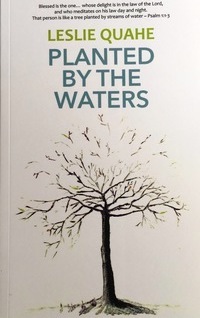
Planted by the Waters by Leslie Quahe

This book was given to me by one of my friends!  It's a collection of stories from Leslie Quah's life. The title is a reference to Psalms 1:1-3, which says:

"Blessed is the man who walks not in the counsel of the wicked, nor stands in the way of sinners, nor sits in the seat of scoffers; but his delight is in the law of the Lord, and on his law he meditates Day and night. He is like a tree planted by streams of water that yields it's fruit in its season, and its leaf does not wither. In all that he does, he prospers."

But to be honest the title reminds me more of the song:

"I'm gonna be like a tree, planted by the waters, trusting in the Father to keep me strong"

Which is based on the Psalm so all's good, I guess?

Like I mentioned at the start, this is a collection of Leslie Quah's experience and how the Lord has always been taking care of him. Each story is short, so you can use it as a quick method of reminding yourself about the goodness of the Lord.

The only thing I wish was different was in how the stories were connected. I think the stories are told in chronological order, but they are not connected so it's like *boom* Harley Davidson, *boom* pro golfer, and I'm like "when did you learn to ride a motorbike or play golf?"

Apart from that minor quibble, I thought this was a really good book! It's an encouraging read and Leslie's faith is something that we all can learn from.

Thursday, February 2, 2017

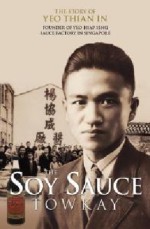
The Soy Sauce Towkay by Alfred Yeo

My mom passed me this book quite some time ago, but I didn't get around to reading it till now. It's a biography of Yeo Thian In, and by extension Yeo Hiap Seng, the company that he founded.

The Soy Sauce Towkay focuses on Yeo Thian In (the "towkay" in question) and his Christian faith. And the fact that my Church is mentioned probably explains why my mom knew about this book. And if you're not Singaporean or Malaysian, "towkay" means "boss" in English.

The book is divided into four parts: the background, as in what happened before the company was founded, the founding of the company and how it grew (I didn't know that Yeos started out with Soy Sauce! I only know it for the drink), the Yeo family, and more background, this time on Christianity in China, Chinese business practices, etc. The appendix is a discussion on what makes a business Christian.

And I think in the second part, on the business, they have a chapter about how soy sauce is made, so there's more background there.

I don't know if it's because the book is fairly short, but Yeo Thian In remained a distant historical figure throughout. Unlike some biographies which can resemble novels in style, this read more like a history book.

In addition, I wish that the book went into more detail. For example, it was mentioned that the Yeo family didn't join the Hokkien Association because of religious beliefs, but I would have liked a lot more detail on how that might make doing business more difficult (or not, but it seems like a disadvantage).

That being said, I'm still glad that I read the book, because it's a part of Singapore history that I didn't know, and that I think it's worth knowing. We tend to focus on the same few individuals (like Tan Tock Seng) in our history classes and museums, so it's nice to read about someone else.

Sunday, January 22, 2017

What (Nonfiction) Do Singaporeans Read?

Singapore's Nonfiction Bestseller List

Last Saturday, an article titled "Can Singaporeans Read?" appeared in The Straits Times. I have loads of things to say about it, but these two passages caught my eye:
"One clue to what Singaporeans read is provided by The Sunday Times' bestseller list. The list of non-fiction books should be seen as a national wall of shame. Instead of looking at the world and trying to understand how it is changing, Singaporeans indulge in self-help books. 
[...] 
Even the titles are embarrassing. They include Money: Master The Game And Jumpstart Your Priorities. Week after week, Singaporeans drown themselves in self-help books. The underlying assumption of many Singaporeans seems to be that if I take care of my individual self, I will be fine."
There are basically two claims here:

1. Singaporeans indulge in self-help books.

2. Singaporeans read embarrassing self-help books.

I don't know why, but I was intrigued by the statement, so I went to verify it. Basically, I decided to take about one year and one week's worth (so 2016 and the first week of 2017) best selling titles and see how many weeks they spent on the chart, and what their genre was.

I determined genre by going to Goodreads and reading the book description and seeing which "shelves" the book has been assigned. Normally, there's one that stands out and I took that as the genre (ignoring the "nonfiction" shelves). In certain cases, like Elon Musk, a book could be shelved as Technology or Biography, so I put the main genre as whatever was more and listed the second "genre" in a separate column

By the way, something is off with the Strait's Times site so I only ended up with 50 weeks worth of bestsellers, but I think 500 data points should be enough.

First up, let's look at the most popular books. In this case, I defined popular books in terms of staying power (i.e. How many weeks they stayed on the Best Seller list). These are books that have been in high demand for a long time.

The complete list:


The image may be a little hard to read, but the top 10 books are:

1. When Breath Becomes Air by Paul Kalanithi (46 weeks)

2. Elon Musk by Ashlee Vance (45 weeks)

3. Connectography by Parag Khanna (36 weeks)

4. A Hakka Woman's Singapore Stories by Lee Wei Ling (35 weeks)

5. Never Give Up: Jack Ma In His Own Words by Suk Lee and Bob Song (23 weeks)

6. Winning With Honour by Lim Siong Guan and Joanne Lim (21 weeks)

7. Warren Buffett's Ground Rules by Jeremy C Miller (20 weeks)

8. The 21 Most Powerful Minutes In A Leader's Day by John C Maxwell (20 weeks)

9. Inventology: How We Dream Up Things That Change The World by Pagan Kennedy (18 weeks)

10. Primary Greatness by Stephen R Covey (17 weeks)

Out of these 10 books, 4 are biographies/autobiographies, 3 are on business/economics and only 3 are on self-help. Self-help doesn't even make the top 5.

Clearly, Singaporeans are not drowning themselves in self-help books. But I was on a roll at this stage, so here's the breakdown of books by genre (I included both the main and secondary genre because you never know why someone reads a book):


Business/economics related books are the largest genre at 33%. Self-help is the second at 17%, but it wins only by 1 percentage point to biography/autobiography which is 16% of the list. And as the top 10 books showed, biography/autobiography has a lot more staying power.

Looking at this and the rankings, I am reasonable confident in saying that no, Singaporeans do not indulge in self-help books. In fact, they have an interest learning from others (as seen by the biographies) and learning about the outside world (as seen by books like Connectography: Mapping the Future of Global Civilisation, which spent 36 weeks on the bestseller list).

Incidentally, the books mentioned in the article - Jumpstart your Priorities (the author seems pretty popular too) and The Money: Master Your Game - spent 10 and 4 weeks respectively on the best seller list. Jumpstart your Priorities is number 20, and The Money is much lower.

Limitations of the data

The bestsellers list is a "compilation of lists from Books Kinokuniya, MPH, Times and Popular Bookstores". In order words, it doesn't factor in library loans or the ebook market. I don't know how big each of these left-out segments are, but it's possible that adding them in could switch the top books quite drastically.

Still, if the purchasing trends offline are the same online, and are similar to books being borrowed, then I'm reasonable confident that the conclusions I made will hold.

Thoughts on 'Can Singaporeans Read by Kishore Mahbubani'

My criticisms start with the title, which may not be very fair if the author didn't choose it. But it's one of the rare question-style questions where answering "no" would be a mistake.

Can Singaporeans read?

Obviously. I think our education has given us at least rudimentary reading and writing skills.

The title might be better phrased as 'Do Singaporeans read?' but since the author is accusing us of reading too much of one genre, that isn't really appropriate either.

Perhaps the most accurate (but spoiler-y) title would be "Do Singaporeans read too much self-help books?"

The first section of the article is on the changes in the world. Not much to comment on here. It then segues into 'some people were surprised about these changes but not me' sort of thing, plus a mention of the author's book. Personally, I don't think surprise = did not know. They could have read the predictions and just didn't believe it but whatever.

And then it goes into the section that raised my eyebrows, the 'Wall of shame' that is our nonfiction bestseller list (although it seems that he and I are looking at two very different lists).

To be honest, what is the problem with reading self-help? If self-help is what gets someone to start something new, to face a problem, to move to a better place, then bravo for self-help books.

Sometimes, you need to help yourself before you can help the world.

And besides, what is the definition of self-help? There are corny titles, but what about books like Grit by Angela Duckworth (also on the list) and Peak by Anders Ericsson (didn't see it on the list but you should read it). Both books could be classified as self-help, but they are based on research and could be used to create programmes that help others.

The author also says that
"(As an aside, I'd like to point out that the New York Times has created a sensible precedent of separating self-help books from the serious books, and I think other papers, including The Sunday Times, should emulate this practice.)"
Personally, I think that the New York Times Bestseller list, while famous, has its own problems and it's a bit disingenuous to invoke it without acknowledging that. After all, this is the list that created the Children's section in response to Harry Potter, the list that at one time could be bought, the list whose controversies include the specific exclusion of books it doesn't like (like Ted Cruz). The rules are constantly changed (no more multi-author box sets, and too bad for you if most of your fans like to buy from Amazon) and it's not an unreasonable conclusion that the NYT bestsellers list is not as impartial as one might think.

I mean sure, we could separate the list into thousands of sub genres, but then what's the point? Like I said before, what's so bad about self-help?

People read books for different purposes, and maybe people read self-help because they find something valuable in it that 'serious' books don't have. Besides, how do we know that these people aren't reading the latest articles instead of books? Books, especially those published by traditional publishers, have a fairly long lead time.

For example, a book on Industry 4.0 may become obsolete one month after it comes out because of how rapidly the industry is changing. At least in my personal experience, articles and conversations at trade fairs were far more relevant and easier to get my hands on.

In summary, I have three problems with this article:

1. Casting self-help books as a problem

2. Ignoring the possibility that Singaporeans are getting their information about the outside world from sources other than books.

3. Inaccurately describing the reading habits of Singaporeans.

Friday, September 30, 2016

Aunty Lee's Chilled Revenge by Ovidia Yu

My first Aunty Lee mystery and let me just say that I really wanted to love this book. But if I have to say this, then the next sentence is something like "but I didn't". While I did think that it was decent, I was constantly pulled out of the story.

The story: Aunty Lee is drawn into a case where an expat named Allison Love (nee Fitzgerald) is the murderer. This is a big deal because she was once the target of a social media storm in Singapore. And because her business partner is involved.

I won't say too much here, because I might give away the plot twists and those are the best parts of the book (apart from Aunty Lee).

First, the good: Apart from it being refreshing to see a Singaporean mystery (endorsed by Louise Penny, no less!), I really did like Aunty Lee and the older generation in general. The American (Allison's sister Valerie) was ugly as inside as out, and Allison's ex-husband was... Not that likeable. The younger set was meh.

Now for the bad: I was constantly pulled out of the story by the over explaining and digressions. Aunty Lee's digressions felt pretty natural, but the rest was just annoying. A cop reflects on the necessity of Foreign Talent when talking to the domestic helper, thoughts on trees lead to Lee Kuan Yew, etc. You get the picture. I'm generally a fan of Lee Kuan Yew and the PAP but this annoyed even me.

The second was the constant over-explaining. I think it might be worse than during The Ghost Bride. It felt like the author didn't expect Singaporeans to read the book and instead was writing for a completely different audience and treating them like babies. I really would have preferred all the explanations and digressions out - it would have made the book a lot more enjoyable.

The weird: I picked up this book because it includes Singapore's social media culture (though the theme was never really developed). Halfway through, I realised that this was based on a real incident - when an expat named Allison McElwee euthanised her puppy for "aggression" even though she was asked to wait while a new home was arranged. Even the "lying that it was given away" thing is similar. The differences are in the last name and hopefully the character.

Despite this, the book never mentions that it was inspired/based on a real incident. This is despite a thick "bonus section", with discussions for book clubs and a guide to things Aunty Lee recommends in Singapore.

This didn't affect my enjoyment of the book - I just thought it was weird.

Oh, and I forgot to mention, but the constant head-hopping was jarring. Perhaps she was trying to emulate Jane Austen, but it didn't really work for me.

I'm not totally going to write off the series though (although I probably won't be reading the previous books, if they're similar). Aunty Lee really is a fun character, and it's possible that as the series gets established, the over explanations and head hopping will slowly cease to be.

Wednesday, June 3, 2015

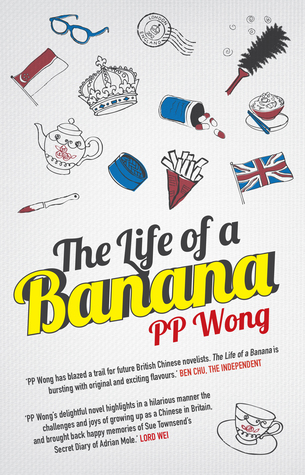
The Life of a Banana by PP Wong

I actually heard about this book in The Straits Times, so I was super excited. It's about British Born Chinese, the Chinese part coming from Singapore. I'll just say up front that my standards for this are probably higher than most other fiction I read, because I've been looking for awesome Singapore fiction. Plus, after that disastrous Singapore Lover book, I'm probably overly sensitive to depictions of Singapore and Singaporeans.

So dun say I complain too much hor. Like is like lah, but still must say bad things if got, right?

(And if you understood that, congrats, you understand Singlish. Or at least, what remains of Singlish after you study overseas for a few years :p)

The Life of a Banana is about Xing Li, a BBC (British-Born Chinese). One day, her mom passes away, and she and her older brother Lai Ker have to move in with their rich grandmother that they don't really know (or like). Living in the same house are Auntie Mei, a wannabe actress and Uncle Ho, who's strange. School isn't much better either, because she's getting picked on, and she has only one friend, a Jamaican-Chinese boy called Jay.

What I loved:

Xing Li's voice. It's fantastic, and it drew me in immediately. I don't really have much more to say about it, really, except that I love the voice. (This is short, but it's like, five stars for narrative voice, wheeee!)

The story: At first, I thought this was going to be a memoir-style story, where things happen to the author rather than her doing things in reaction to events. But, as I read on, I started getting more and more engrossed in the story. It may be the voice, but I think the story of growing up and finding out your identity starts to come out as the book progresses (and it helps that Xing Li starts being more proactive as the book goes on).

What I wasn't too keen on:

Any third-person narrative section. I think there were only two, and both of them were terrible, especially compared to how awesome the first person narrative voice was. When the book shifts to third person limited, the author seems to jump from one POV to another awkwardly, and it just comes across as... weird. The dialogue somehow becomes stiff: "I come from a poverty stricken background... you see, my foolish personality renders me to have a soft heart..." somehow becomes moving speech for the headmaster, who's been headmaster for forty years. I know you change your speech to the occasion, but this is strange.

Grandma's speech. Grandma speaks in broken English. At first, I thought it was because English isn't her native language, but then it's mentioned that she has "tons of brains", and (slight spoiler alert), she has friends who speak excellent English and write in said English with her. And I believe that friend and her grew up together, so why would one have good, standard English, and the other not? Please don't tell me it's just to emphasise the "foreignness", because it doesn't even read like Singapore-accented English to me. Like, even the old ah ma's in Singapore speak better English (those who can speak English, that is).

Others:

While we're on the topic of Singapore, I'm glad to say that while Singapore only appears for a few chapters, its portrayal was more accurate than that Singapore Lover book. For one thing, prata appears! I miss prata! And Milo Dinosaur and Milo Godzilla.

Oh, and I found it strange that while there was some Singlish (people explaining Singlish words), hardly anyone used Singlish in Singapore. Like, what? Lah appeared twice, meh appeared once as an example of Singlish, and lor not at all. Then again, I'd rather the author not mangle Singlish if she's not used to it. It's just something I found strange.

One more strange thing that isn't really a complaint is that I'm not sure how Xing Li gets into a club. I'm pretty sure we're strict about stuff like this, and she's not even in her teens, but I might have misread that chapter, or mistook her age because the voice sounded so young.

Overall, this was way better than Singapore Lover. It's not the perfect book, but I did enjoy it, despite my complaints (then again, it is said that one of the Singaporean past-times is complaining. The other is queueing).

Disclaimer: I got a free copy of this book from the publisher via NetGalley in exchange for a free and honest review.

P.s. The author has this website for Asian writers called "Banana Writers - Where Asian Writers Get Unpeeled". Am I the only one who took the term "Banana" in the context of the novel and thought it meant "helping Asian writers become more Western"?

Thursday, May 7, 2015

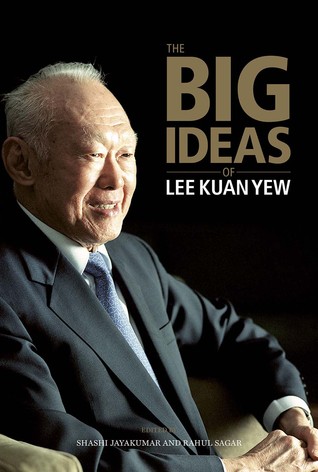
The Big Ideas of Lee Kuan Yew Edited By Shashi Jayakumar and Rahul Sagar

I was under the impression that I've reviewed Men in White and Hard Truths, but I can't really find them on the blog. Oh well, I know I read them, so when I go back to Singapore next year, perhaps I'll re-read them. Anyway, for those of us that don't have the patience or time to go through all the books about Lee Kuan Yew, there's always The Big Ideas of Lee Kuan Yew.

I picked this book up on the way back to Japan. It seemed interesting, and well, after a week of non-stop narration about his life (incredibly educational, by the way. If I had it during O'Levels, I would have probably brought my combined Humanities score up), I wanted something that was a bit shorter and a bit more about his policies. Hence, this book.

The Big Ideas of Lee Kuan Yew is divided into 5 parts of 2 opinion pieces per part. The first part are the personal reminiscences, but the next four cover "Law and Politics", "Governance", "Society and Economics" and "Foreign Affairs".

My favourite pieces were "Bilingualism: A Never-ending Journey" and the two in "Foreign Affairs", namely "Small State Survival" and "Playing Chess". All were interesting and informative, but these three stood out for a couple of reasons.

The first (and quite possibly largest reason) is purely personal. I like learning languages, and I've went through the bilingual policy by virtue of having grown up in Singapore. When I read the piece, I learnt things I didn't know, like the fact that Mr. Lee was the Minister for Education in 1975 (for four months, which means that he had hands-on experience with the MOE (Ministry of Education). As for the foreign affairs pieces, it's because I used to be in MUN, and so have slightly more interest in things like these.

My favourite story about Mr. Lee and international politics isn't the one by Dr. Kissinger, or any of those in the two foreign chapters (even though the anecdotes about how he worked to help US-China relations was interesting), but the one about his first official visit to China in 1976. In that visit, he was given a pro-China book about the Sino-Indian War of 1962. When told that "this is the correct version of the India-China war", Mr. Lee handed the book back to the then Chinese premier and said, "Mr. Prime Minister, this is your version of the war. There is another version, the Indian version. And in any case, I am from Southeast Asia - it's nothing to do with us." I think he had a lot of guts to do this on his first official meeting.

This book is by no means comprehensive, but if you want a distilled primer of Lee Kuan Yew's policies, I think this is a good book to get.

Tuesday, April 28, 2015

Teaser Tuesday - Big Ideas of Lee Kuan Yew

Hey! How's everyone? I've been completely swamped with schoolwork (four reports to write in a week), and haven't been able to blog lately. In fact, I'm not sure if I have time to blog this week :/ Thankfully, I don't have any blogging stops.

Anyway, this week, instead of a current book, I thought I'd share an excerpt from a book I just finished (before all the school madness started). It's called The Big Ideas of Lee Kuan Yew, edited by Shashi Jayakumar and Rahul Sagar. If you're curious as to why I chose to read this book, you can read my reasons here.

My teaser:

"The Chinese leaders were probably aware of Vladimir Lenin's famous maxim: "Probe with a bayonet: If you meet steel, stop. If you meet much, then push." By demonstrating a steely spine in his dealings with great powers, Mr. Lee helped to expand the geopolitical space for Singapore." (page 12)

If you're wondering, this particular "dealing" would be Mr. Lee telling the Chinese government that the book they tried to give him is merely their version of history, and that India has its own version. And that anyway, what the Chinese thought had nothing to do with us. That was a brave move, in my opinion.

Teaser Tuesdays is a weekly bookish meme, hosted by MizB of A Daily Rhythm. Anyone can play along! Just do the following:

  • Grab your current read
  • Open to a random page
  • Share two (2) “teaser” sentences from somewhere on that page
  • BE CAREFUL NOT TO INCLUDE SPOILERS! (make sure that what you share doesn’t give too much away! You don’t want to ruin the book for others!)
  • Share the title & author, too, so that other TT participants can add the book to their TBR Lists if they like your teasers!
What is your teaser Tuesday? 

Monday, November 18, 2013

My Singapore Lover by Judy Chapman

It seems like this year, books set in Singapore have finally started to become popular. And I'm not talking locally published books. First there was Crazy Rich Asians (read my review here), and now, My Singapore Lover, which, to be honest, I requested because of the word Singapore.

Sadly, it seems like my search for an awesome book set in Singapore and published to a worldwide audience is not over. I didn't actually like this book very much.

Why? You ask. For one thing, the speech. At least for Crazy Rich Asians, the Singaporeans talk like Singaporeans. Here, the Singaporeans all sound too.... strange. I know that Sara isn't a Singaporean, but still, you'd think that the book could afford to put in Singlish now and then.

Another thing would be that  I didn't like Sara. I think I liked her less than Rachel Chu, the protagonist of Crazy Rich Asians. At least Rachel was a sufficiently empty character that I could enjoy the setting. Here, the book was full of Rachel's voice, which was just whiny to me. Not so much of a learning journey, but just her whining until she decides to put on her big-girl clothes. I'm serious. She doesn't realise anything, she's running and she knows it. And unfortunately, she wasn't a sympathetic enough character for me to root for her.

The third, and last thing, would be the inaccuracies in the book. It's not that much, but they appear mostly in the beginning, which prevented me from liking the book. You can skip the list (actually, I'm just three points, not all that caught my eye) if you want:

1. A character 'slices fried carrot cake.' The only type of carrot cake that you can slice would be the baked one. If you can slice this:
Picture from Wikipedia Commons
Then I sincerely congratulate you. In all my years eating it, I've either picked it up directly with chopsticks or with a fork - it's already in little pieces, why would I need to slice it?

2. "Crystal Jade is situated on the fifth floor of Paragon Shopping Centre and is one of Singapore's finest establishments for chilli crab, a local seafood dish." While I have eaten at Paragon's Crystal Jade a few times (there are a few outlets by the way), and it is a nice, though extremely expensive place, I'd hesitate to say that it's known for Chilli Crab. If you ask me where the best Chilli Crab is found, I'll probably say something like Jumbo Seafood restaurant. Not Crystal Jade, which for me, is more for when you want a high class Chinese dinner. 

3. "It does not take me long to discover that infidelity is not as forbidden here as in other countries." Please, just last week or so we banned Ashley Madison, the adultery website. The government banned it as a symbolic stand on where our societal values are (they know you can always use a VPN to get around it), and because many many many Singaporeans made a huge fuss. Considering that the book was set in 2005 (the 'Year of the Rooster'), I'd have thought that we were, if anything, more conservative then.

The only saving grace of this book is that every now and then, it describes a part of Singapore in a beautiful way. Like the migrant workers, or parts of Chinatown and Little India, those bits of prose were what stood out to me. 

Which means that I would have liked the book a lot more if they just kept those descriptions of Singapore and added photos, making it a travel guide. 

I wish I did like this book. After all, I'd love for Singapore to be the setting for many books. But unfortunately, the occasional gems in the prose was not enough to save the annoying characters and the inaccuracies. 

Disclaimer: I got a free copy of this galley from the publishers via NetGalley in exchange for a free and honest review. 

Friday, October 4, 2013

Crazy Rich Asians by Kevin Kwan

Crazy Rich Asians is set in Singapore.

Really.

Although I'm definitely not going to recommend it if you want to learn about Singapore. After all, this was a Singapore that even I didn't recognise.

And before you say "oh no, it's because this is the Singapore for the rich", I should let you know that I grew up in two of the schools mentioned - MGS and ACS. If we are so full of over-the-top rich kids, I would have realised. We have facebook in this time and age after all. But honestly, we're all middle/upper-middle class. Not a bunch of spoilt, rich brats.

Crazy Rich Asians is about Rachel Chu (an American Born Chinese) as she follows her boyfriend Nicholas Young back to Singapore for the first time. This 'normal' girl (who somehow has very rich friends - seriously, even her friend who isn't in the 'inner circle' of the Singapore rich is still filthy rich) is obviously shocked, the high society of Singapore doesn't approve of her, and blah blah blah. It's a classic Chinese story (boy meets girl, boy brings back (the unsuitable girl), family and friends wage a campaign to break them up)

And I, well, I enjoyed the story, but probably for the wrong reasons. For some reason, I didn't really like Rachel Chu. I felt that rather than being a real character, she was just this conduit to showcase how the super-rich in Singapore lives. So the whole 'real-girl' thing felt a bit fake to me - she claimed to hate money, but she reconciled with her boyfriend because he spent a ton on an (admittedly) touching gesture. Which is why, I felt quite some glee whenever she felt out of place.

Plus, her drama distracts from the guilty-indulgence sort of gossipy read about high society. On the other hand, Astrid, Nicholas' cousin was my favourite character. She was funny, and although insanely rich, had her head on the right way. I was behind her every step of the way - in fact, if the book was just about her and her drama, I'd be even happier.

In short, if you'd like to read a gossipy story about high society intrigue, I'd recommend this book. But if you want to get to know Singapore, hmm... try Tais Toi or anything by Neil Humphrey. I'm really hoping that there's a sequel that focuses on Astrid though, that would be a fun read.

Saturday, July 6, 2013

Long Reads #21

I really wanted to do a book-centered long-reads post, but I ended up reading a bunch of different articles. They're all really interesting though, and I think my opinion the first article may get me reviled.

Death in Singapore by Raymond Bonner and Christine Spolar - Basically, Shane Todd was murdered, the Singapore police is incompetent and we want the FBI to lead the investigation despite the fact that this isn't America. Oh please. I actually have faith in the Singapore police force. And Singapore is no lackey of China and there's no way we would interfere with an investigation and move it in China's favour. And we aren't the lackey of the USA either - Why should we let the FBI in? We're a sovereign nation. I understand that you may not want to accept that your son killed himself (as a Christian, I understand the implications), but the way to go is not to blame another country. And yes, I know as a Christian, all this anger is un-Christianlike, but really, I can't stay calm while my country is insulted. (Although what convinced me that he wasn't murdered was when I learnt that the much vaulted thumbdrive was handed to the Todd Family in the presence of US embassy staff rather than being found by them, as they claimed.)

Mad Men - And the Women Who Love Them by Sarah-Jane Collins - Boy, am I glad that I wasn't born in the time of Mad Men. And while I haven't actually seen the show (whoops), I really do want to watch it now. I'm not sure if I can take the sexism though (I know it's an accurate portrayal, but I can't help but think that my blood pressure would be raised anyway).

If You Call It Art, Is It Still A Crime? by Mike Bowers - This was really interesting. But ultimately, I think that if you didn't take the image yourself, but only edited it, you have to cite the original photographer. I don't really care if you made it 100 times better, it's still someone else's work. It's like the difference between Homage and Plagiarism.

She stole another's identity, and she took her secret to the grave. Who was she? by Maureen O'Hagan - This was a really interesting read. It's about Jane Doe, a woman who stole the identity of another women called Lori Ruff and lived a lie for many many years. Well, her life with a stolen identity wasn't happy and her death was quite tragic. But I really am curious, who is she, and why did she feel the need for a fresh start?

What have you been reading recently?

Saturday, September 22, 2012

Long Reads #11

I'm trying a new way of writing, in hopes that it means that I can read more articles and write more about them too! This time, I focused on Singapore. Yes, I'm homesick.

Disneyland with the Death Penalty by William Gibson - I'm assuming that this piece was written a long long time ago because it feels dated. And honestly, how is Singapore like Disneyland? We only just got a USS. Apparently, Singapore is too boring, except for the death penalty. Well.... when I went to America, it was, interesting (if you count seeing a lady walk a man with a leash and collar interesting) but still, it just made me decide that I didn't not want to live there. I think there's something under appreciated about peace and quiet (and a healthcare system that is somewhat affordable).

Singapore by Ian Burma - Again, something written really long ago. If anyone knows long-form essays written about Singapore published recently, please tell me. These articles seem to value journalistic freedom very highly, without considering if the papers sued by the goverment/ Lee family really did commit libel. I don't know the facts so I can't say much, but that's why I read articles like that.

The Place to Disappear by Susan Orlean - I forgot that the Singapore Sling is a famous drink (don't ask me why). This article is actually about one particular road in Thailand that's the destination for back-packing tourists. It's an interesting article and reads like a travel article.

The Singapore Solution by Mark Jacobson - The article is fairly recent, published only two years ago. And I think out of all the articles I read, this was the most balanced article. Yes, he does talk about Singapore's censorship, but he also mentions that it's a trade-off for peace and prosperity. And I thought he made some good points about the internet. Plus, he got to interview the (ex)MM Lee Kuan Yew, which yielded interesting insights. If you're going to read about Singapore, this is the article to read.

What about you?

Wednesday, March 14, 2012

My Short Trip to Malaysia

The reason why I haven't posted since Saturday is that I've been at my Malaysia home since Sunday and I only got back last night. Despite the lack of Internet there (and now, I don't have my laptop for a week), it was an extremely productive trip in terms of reading. I finished 5 books!

Two of those books are G. A. Henty books. G. A. Henty wrote a lot of books (99 in total). And, my aunt has all of them. So I borrowed two - When London Burned and The Cat of Bubastes: A Tale of Ancient Egypt. Both stories follow blond haired blue eyed boys (in The Cat of Bubastes, the protagonist is a Rebu prince who was made a slave), who are typically brave, moral, humble and all other good qualities.

In terms of plot, the stories follow the boys life more than they do any plot. This is why in When London Burned, the fire was at the end of the book, and even then, only an incident in Cyril (the protagonist's) very eventful life thus far. This is also why the cat in The Cat of Bubastes is killed near the half-way mark rather than the beginning of the story.

But what you should do is enjoy the details in each book. As far as I know, each book is meant to be historically accurate. which is why for some homeschooling programmes (like the Robinson curriculum), it's used as part of unit studies. Plus, the books really are enjoyable to read, although it might take some time getting used to the pace of the book.

The best part of this is that the books are now in public domain, so you can get an ebook for free from Project Gutenberg or ManyBooks (I like ManyBooks cause the covers are nicer, but that's all). I'm going to set myself the personal challenge of reading all 99 books(: oh, and without a time limit.

I also read Lee Kuan Yew's latest book: Hard Truths to Keep Singapore going. I admire Mr Lee for what he has done for Singapore (this does not mean I agree with everything he does), and it was interesting reading about his thoughts on various subjects. If he speaks as how the book reports, I can see why he's a very persuasive leader. And it's really cool that he doesn't take bullshit from anyone else, and by extension, that he speaks his mind (astonishingly frankly for the age of political correctness we live in). I disagree with his stance on intelligence and homosexuality and a few others, but it's still, there's much to admire in him.

For some reason, I read another 'old' book: The Lais of Marie De France. At first, I didn't think I would find it, but yay! It was on Project Guternberg! The book is basically a collection of medieval love stories. Although it's explain in the preface why all of them feature adultery in a positive light, I don't understand how they can see the Church condoning this. There is a very clear stance in the Bible, which makes me think that the characters in the book were only nominal Christians.

Finally, I re-read one of the books I have there: Different Dragons by Jean Little. It's a very simple story, for kids younger than me, but I still love it. The book spans 2 days and in those two days, Ben (the protagonist) grows. He doesn't go on any heart-stopping adventures, he just makes friends with a dog (he hated doges previously) and gets trapped in an attic for about 2 hours. It may sound boring, and I don't know why, but I really enjoy reading it. I suppose it's the way it's told, letting you sympathize with Ben and cheering him on to make friends with the dog. Or maybe it's because I like animals but never had a pet (fish don't count, and mine committed suicide after a day...)

And that, in a very long post, is what I read in Malaysia.