Showing posts with label writing. Show all posts

Thursday, January 11, 2018

A Field Guide for Immersion Writing by Robin Hemley

As I was preparing for last year's trip to England, I started looking for travel-related books. One of the books that caught my eye was A Field Guide for Immersion Writing and even though it wasn't a travel guide/memoir, I decided to read it.

The book is divided into five chapters (six sections, if you count the introduction). The introduction introduces the concept of immersion writing, chapter one talks about the immersion memoir, chapter two is about immersion journalism, chapter three about travel writing, chapter four about ethics and legal considerations, and chapter five about story (book and magazine) proposals. Each chapter ends with exercises for the reader.

Personally, the introduction felt a little scatter-shot and I briefly considered abandoning the book, but I was hooked in the first chapter. The definition of the immersion memoir, which I really liked, is that “the immersion memoirist is interested in self-revelation or evaluation while using the outside world as his/her vehicle.” Basically, you’re looking at yourself by looking at outside events.

The first three chapters basically go through the different types of immersion writing in these similar but not identical genres. No matter if you’re a memoirist, travel writer, or journalist, if you’re doing immersion writing, you can divide immersion writing into five categories:

1. Re-enactment
2. Experiment
3. Infiltration
4. Investigation (for memoirs, this is more for biographies than autobiographies)
5. Quest

Through this book, I’ve realised that a lot of books that I’ve read are immersion writing, and I enjoy most of it. Of course, there are a lot more books that I haven’t read and I could see my TBR list growing as I read (hopefully I can get to them soon).

If you’re interested in what this genre of writing is about and you’re looking for books to read (or you want to write a book yourself), you should definitely read this.

Friday, January 5, 2018

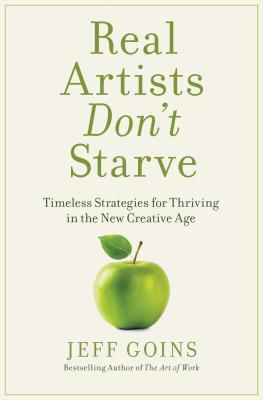
Real Artists Don't Starve by Jeff Goins

I first heard about Jeff Goins on The Creative Penn podcast, and with me in a writing rut, I decided to try and read this to try and motivate me. And after reading this, I really wish that I've read the book sooner (and that I own a copy) because it is incredibly inspiring.

Real Artists Don't Starve tries to debunk the myth of the starving artist, that if you're in the creative field, you shouldn't expect to make money. To do that, the book is organised into three parts:

Part 1: Mind-set talks about the myths related to what it means to be an artist and what it means to be a creative person

Part 2: Market talks about the myths related to art and what it means to be a professional

Part 3: Money talks about the myths related to art and making money of it (it's actually very similar to part 2 and they could probably be combined into one section).

These three parts cover the 12 principles, and each principle is explored in detail. The ones that struck me during this reading were:

- "Most significant change begins with a simple step, not a giant leap": People don't magically wake up and become artists. I didn't wake up with a finished book. Art is completed by taking one small step at a time - writing a couple of pages a day, taking lessons, etc. It reminded me that the daily writing habit that I've lost is invaluable.

- "Great artists do not try to be original. They copy of the work of both masters and peers": this does not mean that we should be plagiarists (the book is very clear on that). This principle says that we should learn the rules of our art so thoroughly that when we break them, we know what we're doing. And we learn the rules by watching and modelling ourselves after masters and other peers in our field.

- the big break is a myth: people get lucky at some time, but a lot of 'breakout stars' have a lot of hard work behind them which means that we need to put in the work instead of hoping that someone looks at us and recognises our 'genius'

- you must surround yourself with fellow artists: not only to learn from, but because a network is how you get discovered. With the internet, we can find a community no matter where we are.

- "Promotion isn't something an artist avoids; it's an essential part of the job": Art needs and audience and as an artist, we have to find an audience. I am always reluctant to self-promote/do marketing, but it's true that no one will find me if I don't make myself easy to find, so this is something that I need to work on.

- "Charging brings dignity to our work": a lot of people expect free stuff, but it's part of human nature to value what we paid for more highly than something we got for free. As an artist, we should be comfortable asking people to pay for our art (of course, the other side of the argument is that for fields like books, we might need to give something for free so that people don't have a barrier to try our work. And ideally after they read it, they buy the rest)

- we must learn how to take appropriate risks: it might be romantic to think of art in all or nothing terms, but you cannot make good art if you aren't fulfilling your basic needs. Ways you can support your art includes:

a. Selling it to the market (what I'm trying to do)

b. Finding patrons (and patrons aren't just one or two wealthy people, they are everyone who helps support you)

c. Find a way to support your work yourself: this can be via a part-time job or by teaching your art, etc.

- "Own your work": this is more for fields where copyright is important (like characters or books), but it's important not to sell the copyright to your works too early and to take a careful look at the terms first, because your rights are what will help bring long-term financial security.

This book was definitely inspiring. The next step will be to try and convince my brain to act on all the inspiration that I've gotten. I'll probably be rereading this when I'm more settled in Singapore and I'll definitely be checking out other books by Jeff Goins.

Wednesday, November 22, 2017

Wired for Story by Lisa Cron

Although I'm not participating in NaNoWriMo this year, I read this book as part of a NaNoWriMo activity (even if I'm not challenging myself to write 50k words, I should be trying to use the time to improve my writing) and found it one of the most helpful writing books that I've read so far.

This book was impressive from the content page. It's not often you find a content page that doubles as a summary for the book and just reading it made me realise that I would enjoy this. Wired for Story starts with hooks (the beginning) and goes on to various specific aspects of writing and ends with a chapter on the revision process.

Every chapter was filled with concrete advice and I bookmarked so many pages. I liked that the author uses lots of examples, and the checkpoints at the end of each chapter do a good job of providing specific tips as well. Examples of things I thought were good reminders/enlightening are:

- conflict doesn't add drama to a story unless it's something that a protagonist must address to overcome his/her issue.

- showing isn't about showing an action, it's about showing the reader the why behind the action. For example, don't just write copious description about how a protagonist cries, show the reader how the event that led to the crying unfolds

- how and when to reveal information (too long to summarise, sadly)

- pacing is the length of time between moments of conflict (this is from Nathan Bransford)

There is only one part in the book where the author and I don't agree. The author says that: "the narrative voice is almost always neutral, meaning that as an omniscient narrator, you're invisible and just reporting the facts."

While an omniscient narrator has to be reliable because they know everything, they can have a personality and their own opinions. Death in The Book Thief is an omniscient narrator and he has an extremely strong personality. The trick is not to overdo it.

To me, this book would be useful before writing and as a guide during revision, to find out why the story isn't working. The writing is clear and there is a lot of good advice in it. I would love to get my own copy because I can see myself reading this again and again as a reminder.

Monday, July 3, 2017

The Story Cure by Dinty Moore

Since I've been too tired to write or revise my stories recently, I decided to use the little free time I have to continue learning more about writing. I saw this book on Netgalley and thought it sounded interesting.

The Story Cure has two main sections: Cures (problems that occur when you're writing your first draft) and Checkups (revision and other things). Cures is the longer section and it covers topics like: getting to the heart of the story (I liked this the best because it was the most original part), starting a story, writing good scenes, dialogue and settings, and even plot. Most of the instructions about story elements can be found in other writing books, but the advice does seem very sound. The heart of the story chapter was the most interesting, and probably what ties all the story elements together because it's about hooking the reader and keeping his/her attention.

Checkups basically covers revision, habits (like writing daily) and last comments. It feels more like an afterword, but I think that if you're a new writer trying to finish a first draft, this will be helpful advice for you.

Did I get something valuable from this?

Yup. The advice is solid and I like the way examples (good and bad) were used to illustrate the points. If you're the type that needs to read it (especially bad examples) to know what to do or what to avoid, this will be helpful.

Is this THE writing book?

I don't think so. Then again, I don't think that there's a perfect writing book. If you've been writing for a while, you may find most of the advice repetitive, but if you're a new writer or want a refresher, then this book may be useful for you.

Disclaimer: I got a free copy of this book from the publisher via NetGalley in exchange for a free and honest review.

Thursday, June 22, 2017

The Five Day Novel by Scott King

I heard about this book from the Rocking Self Publishing podcast (available on iTunes, Overcast and other apps, so definitely go listen to this episode/subscribe) when the author was interviewed about how he wrote Ameriguns in 5 days. This is from pre-writing (prepping for the story) to line editing.

While the podcast has the basics of the book, I decided to grab a copy because I was interested in learning more about the process.

Personally, I think first time writers/aspiring writers will benefit the most from this book. Scott King takes the reader through the entire writing process, from the preparation to the rewriting in an easy to understand and non-intimidating style. He has a list of 'assignments' for each day (each stage of writing) which can be used as stepping stones/checklists.

I found lots of gems throughout this book. From the pitch to the three act structure and how to 'fix' characters, I'm pretty sure that I'll be going back to this book as each stage of writing ends. Sure, it's not the most detailed of books, but it provides a good overview and a good starting point for authors.

And if you're wondering how useful his advice is, I checked out his book on Amazon and it has more reviews (and a good average) and a better sales rank than me so he's definitely doing something right (although to be honest it'd be pretty easy to do better than me so you have no excuse not to write and publish/submit to agents).

While I'm not going to be writing a novel in a month, it might be a fun challenge to try and squeeze his process into NaNoWriMo. It does mean that I would have to be more of a planner than I currently am, but I would have a lot of time to prepare.

If you need an encouraging, practical book to get you to start writing, I highly recommend this book. The price is reasonable too - I got it for 299 yen, which is much lower than many other writing books that I've seen. If you're unsure whether you want to get it, give the episode where he's on a listen first.

Monday, June 12, 2017

The Story Works Guide to Writing Point of View by Alida Winterheimer

I was (and am) so excited about this book! I really liked the first one, and since I still can't afford to hire Alida a second time, this is the closest that I can get to learning more from her. Like with the previous book, this is a review copy.

Like the title says, this second guide in the story works series is all about point of view (POV). This story is a very thorough guide of the basics - what is point of view (hint: it's not just the narrator), what are the types of point of view and which point of view you should choose. It sounds short when I sum it up in one sentence, but it's actually a very hefty book because Alida goes into immense detail. And at the end, she goes through some common mistakes writers make with point of view and how they can fix it. And like the previous book, this one has lots of examples and exercises so that you can use this book as a textbook of sorts.

So I won't go into too much detail but basically, POV consists of:

1. Person (Is it "I", "He/She", "You", "They","We" - the later few are very rare though)
2. Tense (past or present)
3. Number (is it a single POV or are there multiple or perhaps even an omniscient narrator?)
4. Distance (are you close to the POV character or are you a bit more distant)

What I liked about this book is that each chapter is very focused, so you can go back and focus on things that you don't quite grasp. While I normally read everything once through, for non-fiction (and especially books that I want to use as references), having the chapters be very focused makes it easier for me to go back and find information, instead of having to go through the entire book to piece together the same thing.

I would recommend this book to all authors who are looking to improve their craft. If you're a beginning writer, this is a very good and solid introduction to point of view. If you're an experienced writer, this is a good referesher with exercises that might help you work out a story problem.

Disclaimer: I got a free copy of this book from Alida in exchange for a free and honest review. I've also hired her as an editor once and was very happy with her services.

Sunday, March 5, 2017

Giveaway!

I thought that I've shared this here, but it seems like I totally forgot since it was around the time of the move (if you want to see where I've moved to, I just blogged about my apartment here). Anyway, I'm holding a giveaway!


I'll be giving away paperback copies of The Nutcracker King and Beauty's Daughter, which are my (fairly dark) takes on what happens after the fairytale ends.

The giveaway is being hosted on my other blog, so just click on this link to get there. The giveaway is on until March 23rd, so there's still plenty of time to enter. If fairy tales are your thing, you have nothing to lose(:

All the best!

Monday, January 9, 2017

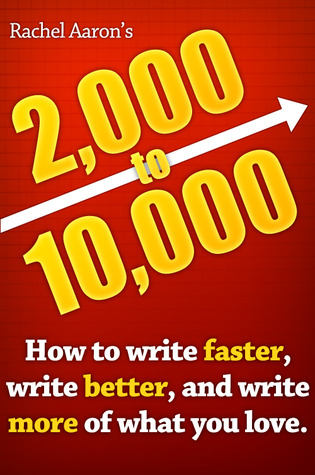
2k to 10k by Rachel Aaron

I've heard nothing about good things about this book, and since I spent 2015 building a daily writing habit, I wanted to use 2016 to improve the habit itself - more words, and better words, if possible. I heard nothing but good things about 2k to 10k, so when I managed to get one more month on Scribd, I took the chance to read it. And then I spent 2016 trying to put it into practice which is why this review is only coming out now, in 2017.

The book itself is pretty short, but a really useful read. It's broken into two parts: How to actually write more, and tips for plotting and editing. The how to write more section, which was the main draw, basically boils down to this:

1. Prewriting is very important. Even just sketching out the scene can make a huge difference.

2. Find out your optimal writing time. This may involve writing at different times, tracking the output and quality of the words before you find out.

3. Muster up enthusiasm for the writing. If you're not interested, the words aren't going to flow.

As for the plotting/editing tips - well, I'm not much of a plotter, so the plotting thing wasn't very useful for me. I mean, I do try, and I liked Libbie Hawker's Take Off Your Pants (which I found useful for reworking drafts), but no matter how much prep I do, most of the things I discover about the world invariably take place while I'm writing. So the most I do is to plot a few chapters, then plot more/adjust as I write.

But the editing tips, the editing tips were awesome! I never felt so inspired to edit after reading that section. Basically, Rachel Aaron suggests writing out a scene list (bullet point your novel) and using that to make a timeline. From there, it should be easier to spot the problems, so make a to-do list and tackle the problems from the largest to the smallest, not back to front.

Personally, I haven't noticed a big change when writing (certainly not a five-time increase), but I think I have become slightly more efficient at writing. Plus during on NaNoWriMo, it was easier to hit my daily word count. I really like the tip about prewriting, because it does help make the writing easier. I've actually managed to work that into my everyday writing scene and I can normally get to the end of the chapter without writer's block (how long that chapter is, though, I still can't really control).

Oh, and despite tracking my writing, I haven't really found my optimal writing time. Though I notice that I do tend to write at night, after all my schoolwork for the day has been done.

I would definitely recommend this book. It's pretty useful, and I think that if I was a bit more strict with myself on following her advice, I would have a much greater improvement. Still, the tips are solid and I will probably buy a copy for myself in the future.

Monday, October 10, 2016

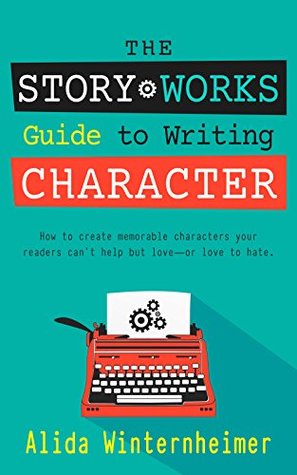
The Story Works Guide to Writing Character by Alida Winterheimer

I was so excited to hear about Alida's series on writing craft. I managed to scrounge up enough cash to have her edit The Nutcracker King, and while I wish I could hire her for every book I write, I'm still a poor student and that is not possible. So with the Story Works Guide for Writing Character, I have a book that I can use as a reference when writing/revising my stories.

The Story Works Guide for Writing Characters is, as the title says, focused on characters. But since Alida considers characters, setting and plot to be three strands of one story braid, she does talk about the other two elements as and when they're related to character (for example, character arcs and plot are quite closely related).

Each chapter comes with an exercise (there are 12 in total), ranging from "finding the flaw in your plot" to "the agency tree" (I really, really like the agency tree). Alida also uses excerpts from her own books and the books of authors she has edited to illustrate her points, which make things easy to understand.

Bottom line: if you're looking to improve your craft (and if you don't have enough money to hire a developmental editor) this book is perfect for you. It's not going to beat talking to an expert, but it will help you correct many of the common mistakes that people make when writing.

Disclaimer: I received a free book from Alida in exchange for a free and honest review.

Saturday, August 6, 2016

Why I'm No Longer Using WriteOn


Slightly less than two years ago, I talked about this writing site that I signed up to, named WriteOn. It was great for quite a long time, and when I did a WriteOn vs Figment vs Wattpad post, I chose it as my favourite (which reminds me, with all the updates that have happened, that post is really out of date, but I'm probably not the right person to write the updated version). And then two months after it was out of beta (slightly more than a year ago), the place started changing, and not for the better. But still, I really believed in the site, and I continued to use it until one or two months ago, when I just stopped. Unlike Figment, which I just stopped using for no particular reason, I can identify three reasons why I've stopped using WriteOn, and I thought it would be good to have it down in a post.

For the record, WriteOn has introduced me to some awesome writing friends, and email is amazing (not to mention chat groups) because that has become how we keep in contact). So yeah, the site was incredibly helpful to me at one point in time, but now... I think it's more toxic than anything. Anyway:

Reasons why I'm leaving (in no particular order): 

1. Support has more or less vanished.

I have seen the official accounts a few times, but unlike the early days, where the mods were present and interacting with everyone, support seems to have more or less vanished. I know I can't expect a high level of support all the time, but considering the fact that there has been at least one thread talking about where the mods might have gone, I think it's safe to say that a lot of the users miss them.

2. A lot of (the) members (I know) have left.

Brackets are needed because the site is probably adding new members every day, and I'm just not seeing them. But yeah, a lot of the people that I know have either become a lot less active, or have left and it's a bit of a shame. I mentioned that one member who gave awesome feedback has gone, and well, a lot of the other members from that period of time seem to have left too, which doesn't really give me a reason to stay.

3. The Forums are getting/are already toxic

I started using the site less and less because of this (it started from one toxic member, who thankfully was left, but it seems like nature really does abhor a vacuum), and well, I visited the forums recently and was pretty shocked at how hostile the members are to each other. It's really just two camps of people, but the feud seems to have started on a different writing site, so I don't understand why it was brought here in the first place. Both sides seem intent on holding on to the grudge, and I feel like while one side is genuinely clueless about how they're contributing to the problem, another side seems to revel in making waves, and well... I really don't need a toxic environment.

What am I using right now?

Well, I occasionally post chapters on my Dayre (though that isn't the primary purpose for it), but surprisingly, the writing site I am most likely to be on is Wattpad. I'm still very terrible at it (and don't know how to use it properly), but I have managed to make a few friends, and well, friends are basically what anchors me to sites/apps, so I'll probably be there for a little while. I'm not very into forums right now though, because of the whole toxicity thing. But I guess I'll probably be back one day.

(Although truth be told, I haevn't logged on for about two weeks because I've had exams.)

Thursday, June 9, 2016

Online Marketing for Busy Authors by Fauzia Burke

I requested this book because it's a topic that I'm very interested in. How can I, as a full-time student who also happens to be job hunting, do online marketing without burning out?

The book is basically divided into three sections:

1. Know yourself
2. Know your audience
3. Ways to reach the audience

Or at least, that's how I see it. The book itself says that it's divided into three phases:

1. Getting Organised
2. Turning your thinking into action
3. Staying the course.

Either way, it's the same thing.

What I liked about this book is that there were concrete exercises on how you can define your author voice and how you can narrow down your target audience. The advice on how to promote pretty much corresponds to everything I've heard and read from self-publishing advice podcasts and books. Actually, I think The Creative Penn, Rocking Self Publishing and the like may be slightly more advanced with the type of marketing they're trying.

Most of the advice seems to be more suited for the non-fiction author, although I think that fiction authors can probably adapt the advice.

The only thing I didn't really agree with was the line "if you are self-publishing your book, you will probably get fewer reviews than if you were published by an established publisher." If you're talking editorial reviews, then I can see how this is the case, but if you're talking about customer reviews (aka Amazon/Goodreads/Kobo/etc reviews), then I don't see how being traditionally published is going to automatically get you more reviews. I think your marketing is going to play a bigger part.

All in all, the advice seems pretty solid and aimed at the beginning author (like me). But, if you're willing to listen to the various podcasts, read blogs, you can probably get much of the same information for free. The next step would be putting it into practice (which I am admittedly lagging behind on)

Disclaimer: I got a free copy of this book from the publisher via Netgalley in exchange for a free and honest review.

Thursday, April 7, 2016

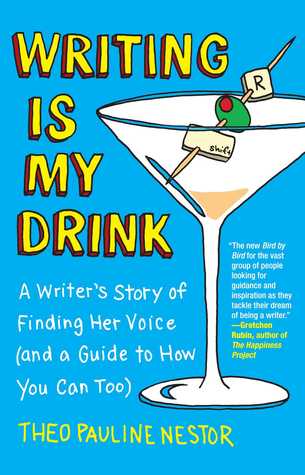
Writing is my Drink by Theo Pauline Nestor

If something is blurbed as "the new Bird by Bird", you can be sure that I'm going to read it. I remember Bird by Bird, and though I'm not sure if I actually learnt anything from it, I remember being inspired by it, and I was hoping that Writing is my Drink would do the same.

This is basically a memoir of the author, with each chapter supposed to illustrate a point of writing. At the end of each chapter, there are exercises that you can do.

To be honest, I could have done without the exercises at the end. Most of the book is memoir, about how the author writes, so to suddenly come to a "checklist/to-do list" was a bit of a shock. And I'll admit that thinking of Bird by Bird made any concrete writing exercises a bit of a surprise.

Speaking of writing exercises - I actually did one! I wasn't going to, at first, but I loved the concept of the 21 minute memoir, so I decided to give it a go. And it was pretty fun (link), although what I wrote bore absolutely no resemblance to the others in her website. I did, however, manage to get a few people on Dayre to do it, and it was amazing reading their stories.

All in all, this was a decent read. I think it would have been more powerful without the exercises, since most of the book feels more inspirational than craft-focused, but since I actually did do one of the exercises, I can't say they were all totally distracting. Perhaps they would have been better served at the end of the book?

Speaking of writing inspiration, I should really go and re-read Bird by Bird when I get the chance.

Monday, February 29, 2016

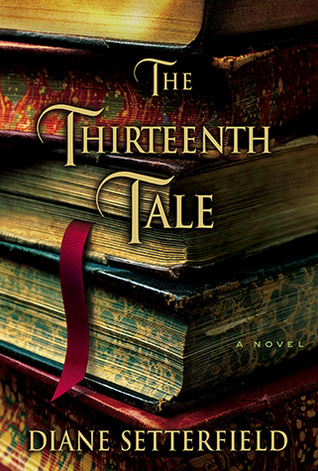
The Thirteenth Tale by Diane Setterfield

I think this is the type of book that you either hate or love. For me, I loved it. Seriously seriously loved it. Miss Vida Winter is my new favourite fictional although - I want to write as well as her, though I definitely don't want to have to go through all the things she has.

The Thirteenth Tale is a sort of gothic novel, where the protagonist/narrator is pulled out of her quiet life at an antique bookstore and asked to be the biographer of the nation's most famous writer, Miss Vida Winter.

At first, she doesn't want to take the offer, but once she reads Miss Winter's stories, she's hooked. Especially from one book, with a mysteriously missing thirteenth tale. And so, as she sits with Miss Winter to hear her story, the story comes together, piece by piece.

For me, I loved the tone of the story. It was extremely addictive, and I found it hard to stop at just one chapter, even if I had my accounting to study for.

The 'mystery' was also intriguing to me. Apart from the mystery of Miss Vida Winter, even the Margaret (the protagonist) has her own ghosts. But do ghosts exist? Or are they figments of imagination? Many times, it could go both ways.

But I guess, what I love most about this novel is the language. Like one of my friends said when she found out that I was reading this, it's so full of quotable lines, and I definitely highlighted many of them.

I really think this is my lucky year in books (or maybe I'm just being more open to their influence?). It's only February, and I've already found a few that can qualify as 'best books of the year'. This is definitely one of them.

And to end the review, one of the many quotes I highlighted:

Silence is not a natural environment for stories. They need words. Without them they grow pale, sicken and die. And then they haunt you.

Saturday, December 5, 2015

Self-Published: The Nutcracker King

I don't really know how to announce this, so I'm just going to come right out and say it - I've self-published my first novella!

The Nutcracker King was one of the stories that I wrote for last year's NaNoWriMo rebel project, and after one year of rewriting, fiddling with the sentences, and general procrastination due to fear of embarking on the next step, I finally worked up the courage to self-publish.

Of course, this wouldn't have been possible without a lot of people. The Google+ community got me back into writing as a habit and gave me many self-publishing role models, and WriteOn gave me more author friends like M.N. Arzu and Lincoln Cole, who not only provided me with encouragement, but took away all my silly excuses not to self-publish. And the Dayre community - I just entered the community, but all of them have been lovely and supportive.

And of course, my friends, like James who did a mock-up cover that got me so excited I immediately opened D2D accounts and started formatting. And Rachel, who did the actual cover. And everyone else, who spent the time listening to me talk about how I want to publish without pouring cold water on my dreams (as well as reading my first drafts).

Now, things that most people will probably be concerned about:

How will this affect my reviews? 

The bottom line is: it doesn't. I may, however, be more picky about books in the fairytale retelling genre, and only review those that I really love. But on the whole, it should be business as usual - honest reviews about the books I read (thankfully, I love most of the books I read, so I don't foresee any problems here).

Without further ado, The Nutcracker King:


Synopsis:
What if there was no ‘Happily Ever After’? 

It has been eight years since the defeat of the Mouse King. Marie has never told the Nutcracker she loves him, and he has never broken the curse. Instead, Marie dances her nights away at Marzipan castle every night, while the Nutcracker tries to break the curse. Desperate, he uncovers a dark secret about his kingdom, and decides to use the knowledge to reverse the curse. In the end, who will get their happily ever after - Marie or the Nutcracker?

This story is a roughly 30,000 word novella.

As a new author, I'd really love some reviews (and sales. But I'm focusing on reviews first). If anyone would like a review copy, please email me at eustacia.tan[at]gmail.com, letting me know if you would like an ePub or mobi copy, and I'll send one to you straight away. Review copies are available until the 12th of December.

And to end, buy links! My novella is available on:
Amazon (link leads to the .com site)
Kobo
Scribd
Apple
Nook
Oyster
Page Foundry
Tolino (Can't find the link, sorry)

Thursday, September 3, 2015

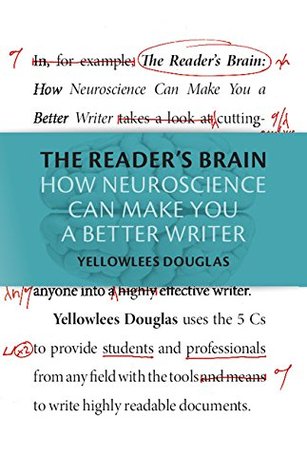
The Reader's Brain by Yellowlees Douglas

I requested this book mainly because it held the promise of being able to make my writing better. While I won't have many opportunities to write academic papers in English (for now),  there's always the chance I'll need it for my future job.

Basically, The Reader's Brain is supposed to teach you how to use the 5Cs - clarity, continuity, coherence, concision, and cadence, to write more effectively. The book contains a fair amount of research about how reading works, and provides lots of examples. There'll be an example one (normally the horrible writing), and then an example two, so the reader can see what the author means. At the end of the book is a quick grammar guide.

I admit, I skimmed the parts about reading. I'm not sure why, since that was why I got the book, but it turned out that the parts that interested me the most were probably the expert tips, since they were short and basically summarisations of what the author just said, written in a "how to apply it to writing" format.

What I learnt from the book can be summed up as: use active voice, and put what you want people to remember in the front. And make sure you vary your sentence lengths and structure. So, KISS with an addition of "mix it up now and then".

Oh, and how to identify passive voice. Basically, if you can insert the phrase "by zombies" after the verb and the sentence still makes sense, it's passive voice. So, if I'm applying this right,

"After consuming penicillin, Tim was was healed by zombies" - passive.
"The penicillin healed Tim by zombies" - active voice.

All in all, this book is a clearly written guide on how to improve your non-fiction writing. I like that lots of example were raised, and it seems be be backed up by science. It is, however, not a grammar book, despite the brief guide at the end, so think of this as for the middle-to-advanced writer.

Disclaimer: I got a free copy of this book from the publisher via NetGalley in exchange for a free and honest review.

Friday, June 12, 2015

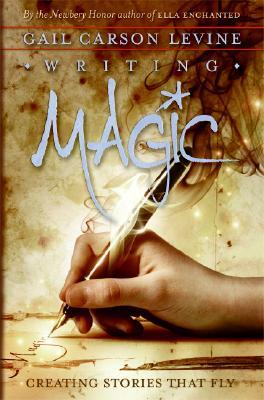
Writing Magic and Writer to Writer by Gail Carson Levine

I haven't really reviewed Gail Carson Levine's books on this blog (definitely a mistake), but I remember a period of time, long long ago when I was still in Primary School, where I was binge reading her books. So while at the library with my little brother, I saw her two writing books, unsuccessfully tried to get my brother interested in it, and then borrowed it anyway.

Writing Magic may be a thin little book, but I wish someone gave me this when I was younger. It covers the basics of writing, from characters to plot ideas to getting through writers block. The chapters are short and digestible, and there are plenty of exercises for one to do. In fact, every chapter ends with the words "save what you wrote", because, as she explains it, as you grow and learn, your writing will change, and saving your writing is the same as building a time machine. When you look back at what you wrote, you'll see yourself as you were in the past.

The only chapter I disagreed with was the one on publishing. Gail Carson Levine basically warns people off putting their work on the Internet if they want to sell it, but well, lately the news has been talking about writers being picked up from Wattpad, and Fanfiction sites, so I don't think it holds true now. But this isn't a publishing book, so it's pretty easy to ignore that one chapter.

The sequel/companion to Writing Magic is Writer to Writer, which is really the "best of" from Gail Carson Levine's blog. Oh, except the section on writing poetry, which is new. I haven't read her blog, so I found the book interesting, and an expansion on what she was saying in Writing Magic. There are many examples and the story prompts were interesting. If you're a long time reader of her blog though, and don't really have an interest in poetry, you may not need to get this book.

Oh, and I'm not very good at poetry (I like Robert Frost, and Wilfred Owen and Shel Silverstein, but that's about it), so I can't judge the poetry chapters for usefulness. I enjoyed reading them, but the odds of me writing poetry isn't happening in the foreseeable future, ceteris paribus.

If I had to pick between the two books, I would probably go for Writer to Writer. It's much more comprehensive, and the same basic subjects are covered in the two books. Except perhaps writer's block, which isn't explicitly mentioned in Writer to Writer. But, she does have a chapter called "drops of blood", which is around the same thing, in my opinion.

These books will probably inspire young writers, and not-so-young writers as well. I really enjoyed reading it, and I could totally see myself doing a few prompts if I owned a copy and didn't just borrowed it.

Saturday, May 9, 2015

WriteOn: (Almost) 2 Months Out of Beta

I've previously blogged about WriteOn, and even did a comparison with Figment and Wattpad. I also mentioned that this was really a recommendation of the site while it was in Beta, but as of March 11, the site has gone public. Now that almost 2 months have gone by, I thought it's time to provide an update.

Actually, I wanted to do this a month ago, but then school started and boom. All my time was gone.

Anyway, before I even start, here's a relevant post on Feedback. It's a relevant post because it affects how strongly I recommend WriteOn, but that's something that I'll be talking about later.

First off, let's talk about the obvious changes:


The site has undergone a revamp, and it's much, much brighter now. The notifications also disappear after you check them (unlike the past, where you were permanently "notified"), and they have numbers too. Author reads of their own story are no longer counted (this was a cause of much joy), and comment statistics are also included, so that uh, you can see how many comments other people have written, I guess.

A lot of new members have also come in, and they have really awesome stories with them. I'm really enjoying reading them.

But, and this is a big but, the tone of the site seems to be going downhill slowly. I talked about it on the Feedback post, but it's getting "risky" to give constructive criticism. Authors with thin-skin will call you a hater and/or naive/ignorant/stupid, and dog-piling has occurred.

I also don't think this is related, but I know at least one member who gave awesome, detailed feedback who left the site. She wasn't bullied, but she wasn't getting feedback back. There's another member who has stopped giving feedback because she was dog-piled on. That means that the quality of feedback is lower compared to the early-beta days.

The forum too, has gotten meaner, and that's thanks to one member. She speaks as though she won the Nobel Prize for Literature and Man Booker Prize and what have you, referencing her work constantly instead of, I don't know, Shakespeare or Austen or Twain. If you dare to disagree with her, you're an idiot. Oddly enough, she likes to rail against the Western Education she received, but somehow I'm the dumb one. A real puzzle, that one. But then again, I'm dumb.

My forum participation has basically gone down to threads where I "know" the posters and am pretty sure that divisive personalities won't be participating in.

The mods have stepped in once or twice (pretty much after the storm), but not enough to make me feel like this is an actively moderated community.

Does that mean WriteOn is doomed? Nah.

While I'm not going going to be recommending the site as wholeheartedly as I did before, it's still my writing site of choice because I've made the most friends there. I've found a small group of users whose opinions I trust and that's where most of my activity takes place. I will give feedback if asked, and I do reach out now and then, but for the most part, I'm just in my tiny little circle that I'm trying to slowly expand.

Just to be clear, there are a lot of awesome people on WriteOn. It's not the next Wattpad (yet), but tt's still a good community if you want feedback. I'm still hopeful that the small group bringing it down will either eventually get tired and quit, or that we'll be able to "block" users.

Wednesday, March 25, 2015

This Is Not A Writing Manual by Kerri Majors

Due to NaNoWriMo, the NLB's eBooks program was recommending me a bunch of writing books. It took me some time after Nano, but I decided to take a look at their selection. I've heard of this book before (I think), so I decided to give it a go. After all, I'm still on my NaNoWriMo high.

This is Not a Writing Manual is catered towards young writers (for some reason, I think young female writers instead of people like my brother. I don't know why, it's just a feeling I got), and it's divided into three parts:

Part 1: The writing process. This was pretty interesting, and since it covers things like drafting, feedback (how to take feedback), revision, what you can learn from soap operas, and much more. I really like the advice of leaving your ego at the door. This was probably the most useful section to me.

Part 2: The Writing Life. Here, she talks about workshops, writing groups, and classes. She strongly strongly recommends writing classes. Sadly, I don't think there is a writing class in my uni. I do agree with the writing circles thing though, she praises Figment, and I'd like to add in WriteOn as a way to get good feedback (My review of Figment vs WriteOn vs Wattpad here).

Part 3: Looking ahead - Supporting yourself, Getting Published and not Getting Published. This part... I didn't like so much. Perhaps it's because we got off on the wrong foot, when she started by debating whether writing was a hobby or a job. I agree it can be a job (there are plenty of self-publishing authors who make a full-time living at this). But she calls her writing "work" but her friend Phils attempts at triatholons and photography a "hobby". But wait, Julia Child's writing is a job. And her conclusion is "writing is not a hobby because it's too much work." Uh well, yes, it is work, but it's also fun. Every hobby is going to involve work (except perhaps doing TV drama marathons. Although I suppose the work needed to get back to normal will be tremendous). So yes, I disagree with her here - I think writing can be a hobby or a job, depending on what you want.

The second thing is about self-publishing. She talks about it briefly, basically saying that it's a lot more work than traditional publishing, but you know, it's gaining respectability. So far so good, but then she says "You will also have to swallow Amazon's (or Barnes and Noble's, or Apple's) standard profit-sharing rate for e-publishing." Because my latest reading-up topic is self-publishing (one of the not-so-weird topics, I used to google the weirdest stuff), I really wish she actually gave figures. For Amazon, it's 35% or 70%. That's still more than traditional publishing, where it's between 8%-15% based on type of paper book and volume, and 25% of ebooks. (And don't forget, agents get 15% of your cut) So even the highest tradpub royalty rate is lower than Amazon's lowest rate. When you think about it this way, paying Amazon 30% to sell your books is really cheap.

Woah, that deviated quickly. Ok, back to topic - The craft section of this book will be inspiring to a young author. Part 2 may or may not be helpful depending on where you live, but Part 3 is meh. I would say this is for the author-to-be's, those that need a dose of encouragement.

Thursday, December 18, 2014

Books, Baguettes and Bedbugs by Jeremy Mercer

What am I supposed to feel about this book??

Shakespeare and Co. is a really famous bookshop that even I've heard of. So of course any look into how the bookshop is run would interest me. But, it didn't really talk about anything but the inhabitants of the bookshop, and that's the part that I'm not sure I like.

Shakespeare and Co. is an unconventional bookshop in Paris. The owner's a communist, and he lets any writer sleep in the bookshop for free. As long as, you know, they help out. The author Jeremy Mercer arrives to Paris after being threatened for breaking a promise he made with a criminal. In an effort to save money, he ends up living at Shakespeare and Co., and rediscovers his dream to be a writer.

Except, not much writing seem to take place. Sure, he's required to read a book a day, and he mentions writing a few times, but the impression I have is that reading and writing take a backseat to the true stars - the eccentric characters living in the bookshop - Kurt, Nadia, Simon, George (the owner) and many others.

In fact, the cast was so 'interesting' that it drowned out everything. If I didn't know the book was set in Paris, I could easily imagine it set in a commune somewhere. The people in the book are talked about more for their eccentricities than for their writing. Whether you like this bunch depends not on whether you like their writing (because you don't see much of it), but whether you like their characters.

All in all, this was an amusing book. If you like the characters, you'll probably like it. If you want to read about a bookshop, you may be disappointed.

Saturday, December 6, 2014

WriteOn vs Wattpad vs Figment


UPDATE: This post is really out of date, and I'm no longer using WriteOn, for reasons the reasons in this blogpost. I still have an account there, but I don't use it anymore.

Previously, I wrote about WriteOn, my new writing site of choice. Since I've wrote about it, WriteOn has made a few more changes, Wattpad did an update, and I've did NaNoWriMo on WriteOn, and I thought it's time for a comparison between the three writing sites (Click the link to see my previous post about Figment vs Wattpad). Of course, some of this information may become moot when WriteOn comes out of beta - I'll do another followup post then.

Creating a multi-chapter story
WriteOn: Creating a story is extremely easy. Click on the "Create" tab, and start. You can add chapters, save, move chapters around, add your cover, spend as much time making your book perfect as you want without having to post your story. I've typed, saved and exited, and come back, without any problems. Everything is in one page, and it's extremely easy to use.

Wattpad: There is a create button, but it seems to lead you to the My Works page (or is that just me?), from which I have to click on the new story button. And everything seems to be published as soon as you hit create - there's no testing here (not without deleting it anyway. And one thing about Wattpad that annoys me is that I cannot toggle between chapters very easily. I have to write, go back to the main page, and then edit. It's only one extra step, but I imagine it'll be very annoying if I'm doing major edits.

Figment: Like Wattpad, Figment's "Start writing" button on the main page leads you to the writing page, from which you create a new story. On the bright side, the organisation of the story is similar to WriteOn. You can add chapters, move them around, edit the actual contents, all on the same page.

Winner: WriteOn, followed by Figment. Wattpad is still too clumsy for me. 


In lieu of the site logo, here's a screenshot of the site. 
Cover Creator
WriteOn: I believe that the cover creator in WriteOn is the same as KDP. I'm not sure, because I've never published on KDP, but that's what I heard. Anyway, the cover creator here has many different pictures you can use (you can also search by category or enter a keyword), a few templates (6 image-based templates and 4 Non-image based templates), and font size and choice customisation. It's not as good as Canva (on which I'll base all comparisons), but for a free program, there's a decent amount of changes you can make. I don't recall a default cover.

Wattpad: Wattpad used to have the worst cover creator. Or at least, I didn't remember a cover creator, just the option between an awful default cover (still awful - it's your profile picture with the cover) or your own upload. But, I was pleasantly surprised to find that they had a creator from March of this year (which explains a lot, I haven't tried looking for a cover creator since... quite a few years ago). There is a very limited number of pictures (I think 10, or less), and the option to change font choice and size, and I think colour. There are no template options.

Figment: Although it possibly has the nicest default template (it's clean simple, although you don't have your title or name on it), the cover creator is now tied with Wattpad (since it improved). You have a choice of certain backgrounds (I think the number of choices are about the same as Wattpad), although none of them are pictures, and I think two places where you can place the title, with very limited font choices.

Winner: Canva. Oh wait, sorry. I mean WriteOn, for sheer choice. And then Figment and Wattpad are tied.


Getting Readers
WriteOn: Since it's still in Beta, there are more writers than readers. Not the best way to build up a fan-base, especially since you need to log in just to read the stories, but who knows what will happen once it leaves beta mode?

Wattpad: I think there's very little competition for Wattpad so far. There are way more readers than authors on this site, plus a reader-friendly mobile app (my sister uses it), and if you know how to work it, you might be able to develop a following. I've never had any success, even in the days where I was actively reading other people's works, but it's worked for a lot of people. But be warned, there are some big-named writers there, so you face a lot of competition.

Figment: Figment is probably where I get the most unknown eyes on my story. Even with me doing very little, every now and then, I get a notification that someone liked my story and/or reacted to it. So something is working there. Readers can also read the story without logging in, but they can't vote or react.

Winner: Depending on the person, either Wattpad or Figment. For most, it might be Wattpad, since they have mobile apps that make it easy for people to read your stories. WriteOn isn't in the running, since it's still in beta and is closed off from all non-member readers. 

Getting Feedback
WriteOn: I've gotten the best feedback on WriteOn so far, hands down. Perhaps it's because of the site culture that they've been trying to inculcate, plus the fact that authors can customise their feedback requests (you can tick areas "e.g. characters, plot, proofread" AND include a personal message "hey, I think my MC is whiny, what do you think?"). But I don't know why, on average, my feedback received on WriteOn has been the most helpful and longest. You can request feedback in the "Ask and ye shall receive" subforum. This may change when WriteOn goes out of beta, although I'm very optimistic by the discussion about how to encourage good feedback taking place in the forums.

Wattpad: I don't actually recall getting feedback. From my impression, Wattpad is for your nice, polished stories (despite what the site says in their interview with The Verge), not for getting beta feedback. Of course, it's possible that in certain genres that I don't write in (like fanfiction), Wattpad may be good to get beta-readers.

Figment: The second-best feedback I've gotten is from Figment. Some members make it a point to leave detailed, useful feedback, while others just give general encouragement. You can also request feedback in the forums.

Winner: WriteOn, followed by Figment. This order may change when WriteOn comes out of beta, but who knows. Wattpad is trailing behind. 


Others
WriteOn: Apart from an active forum, WriteOn has what they call Feedback Fridays, where you participate by reading someone's book, giving feedback, and having others give feedback to you. It's all managed through the weekly thread. There's also Thank You Tuesday, started by Katie Adee, who gave the best feedback ever (and she wrote pretty fantastic children's stories), where you're reminded to thank your readers and reviewers in your status. They're also getting a few authors to come in now and then to do interviews and give feedback on member stories, which is really awesome and helpful. And, they just started a bookclub to give members who have completed their novels beta readers. Ok, I started it, after getting permissions from the mods. I heard something about genre-specific clubs coming up in the future.

WriteOn mod squad/team: Oh, and I can't not mention the WriteOn team. They've been extremely receptive to feedback, with one active subforum for member complaints/bugs found. And it's not just talk, we've had changes suggested by members implemented. If they keep this up, WriteOn will really develop into an awesome community.

Wattpad: I'm not really on there, so I can't say, but they seem to have annual contests, like the Wattys. And of course, the aforementioned famous authors putting their books up (although I've not heard anything about them giving feedback). Depending on your genre, their contents might be your thing.

Figment: I know of Figment ambassadors and several contests, as well as a prompt of the day. The contests tend to generate a lot of swap requests (more for hearts than anything), but that's only natural, I think. There are also excerpts of novels there.

Winner: Depends on whether you're more of a reader or writer. Writeon's extra features are geared more to writers, while Wattpad seems geared to readers. Figment is probably closer to the writer segment, although quite a few of their contests seem to be to promote new releases. 

Overall
So, which is the site for you? It depends on whether you want readers or feedback. For feedback, I really reccomend WriteOn, especially if you do not write in YA (WriteOn has a lot more different types of writers that can give feedback). Wattpad is the established go-to site to get readers, so if you have a polished permafree, you might want to put it there. Figment is very much like Wattpad to me, only easier to create stories, so between Wattpad and Figment, I'll choose Figment. But for now, my writing site is WriteOn, for the feedback I've gotten.

Note: While I'm totally recommending WriteOn now, please keep in mind that this is my experience of WriteOn in beta. As more people join, the tone and culture of the site is going to change (I've already noticed some changes, as have a few members that joined even earlier). It might become something like Wattpad in the end, it might be like Figment, but it might (and I hope it does) remain like it is now.