Showing posts with label Best Of. Show all posts

Friday, August 3, 2018

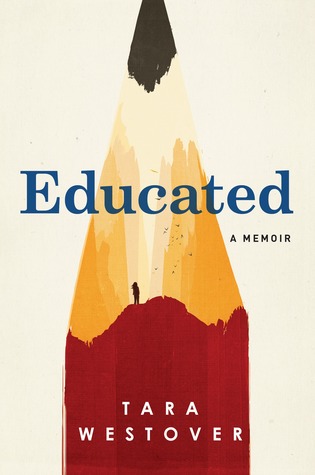
Educated by Tara Westover

I heard so many good things about this book that as soon as I saw that the NLB had an ecopy, I placed a hold on it. And all the rave reviews were true - this did not disappoint.

Educated is the memoir of Tara Westover. She was raised by a paranoid father who saw government conspiracies and a mother who drifted into alternative healing (oddly enough, her mother never indicated that chakras and essential oils were incompatible with Mormonism).

Due to this unusual family dynamic, Tara never went to school or even socialised much with people her age. Luckily, she had an amazing voice and brothers who managed to go to university, which gave her a longing for the wider world. So although she was afraid that her actions would betray her family, she started teaching herself to read.

This book was simply absorbing and I couldn’t put it down. Tara and her brother Tyler are amazing for the way they managed to gain an education. But the ways that her family stayed trapped was heartbreaking, especially the way they let her older brother Shawn rule the family with his temper. Their emotional manipulation was really off the charts and my heart broke whenever I saw Tara doubt herself.

This book was also a hopeful one because I saw how people would come to Tara’s aid when she needed it most. People that stood out were her bishop in her ward, who gave her a space to talk it out and got her monetary support, as well as the various professors who recognised her academic talent and encouraged her.

Oh yeah, and even though Tara and her community are all Mormon, this book isn’t about really about religion. While Tara does struggle with some tenets of her faith, she never explicitly casts it off, instead impartially talking about the Mormons and non-Mormons who helped her. It’s clear that religion wasn’t the sole or even main reason for her childhood (though it did play a big part) - her dad’s mental illness probably was.

I would highly, highly recommend this book. It is an amazingly well-written read about how one woman managed to overcome her childhood with the support of people in her life. And do you know what I want to read next? Her PhD thesis. It sounds fascinating.

Monday, July 23, 2018

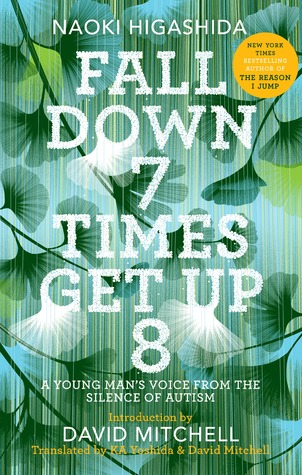
Fall Down 7 Times Get Up 8 by Naoki Higashida

Someone from Church lent me this and it is so good! Written by the same author of The Reason I Jump (which I haven’t read but really want to now), this book contains the thoughts of a young man who happens to be severely autistic.

Naoki Higashida writes using an alphabet grid, without anyone else’s hand touching his, so you can be sure that the words in this book really did come out of his mind. And when you look at the subjects he muses about, his poetry, and his short story, it’s clear that he has an extra-ordinary mind.

In this books, he talks about his struggles to learn and communicate, as well as encourage all neurotypical people not to give up on people with autism, because they do want to live their best life and they can pick up our emotions. If this wasn’t a library book, I would have highlighted so many quotes, such as:
"On the surface, a sheltered life spent on your favourite activities might look like paradise but I believe that unless you come into contact with some of the hardships other people endure, your own personal development will be impaired."
And I probably would have bookmarked all his poetry. I’m normally not a poetry type of person, but I find that his poems inspire and uplift, even when they look on the slightly more unpleasant side of life. Two that I particularly liked are Rumours and Words - look out for them if you're reading the book!

I would totally recommend this book! It’s a moving and uplifting insight into a person that we might not even think we can communicate with. The beauty of his words show that there is deep potential within everyone, and that we should not be so quick to write off people as unable to contribute to society.

Definitely read this if you have the chance!

Tuesday, July 17, 2018

Smaller and Smaller Circles by F.H. Batacan

I feel like this year has been fairly good for the SEA Reading Challenge so far because I’ve read two fantastic books - Track Faults and other Glitches and Smaller and Smaller Circles. I found this while searching for SEA fiction and borrowed it the minute I saw “Pinoy detective fiction” because I love mysteries.

Smaller and Smaller Circles Stars Father Saenz, a Jesuit priest who is also a forensic anthropologist, and Father Jerome. When the mutilated bodies of young boys are found in Payatas, they decide that they have to be part of this investigation and get to the bottom of the matter. In the subplot, Father Saenz is on a crusade to get a child-molesting priest away from the charity that puts him in contact with young boys.

This is so much more than an amazing detective story. I really felt the weight of bureaucracy and corruption as Father Saenz, Father Jerome, and the Director of the NBI try to marshal their resources to achieve justice for the poor that normally get less than nothing. Add in the weight of the subplot (with a man of the Church pushing for justice) and you get a stunning indictment of corruption in both the civil service and the Church.

And this is not a spoiler, but if you read the book, pay attention to chapter 34. It’s my favourite, and in my opinion, the most powerful chapter because it humanises the people of Payatas and shows us that these boys were loved and did have worth - even if the ‘higher ups’ didn’t think they were worth devoting resources to.

The characters were also expertly written - there are the two Fathers, who want the best but also know the worst of the world, Director Lastimosa, who is merely a stop-gap for the real appointee but still tries his best, and Arcinas, the ambitious attorney. They all sprang to life on the page and I find it sad that this is not the start of a series because I would love to see how all of them and the relationships between them continue to change.

I would highly recommend this to everyone who wants a good read. It’s superbly written, with great characters and a plot that will keep you turning. I know this book came out several years ago but I’m still going to hope that a sequel is in the works.

Friday, June 8, 2018

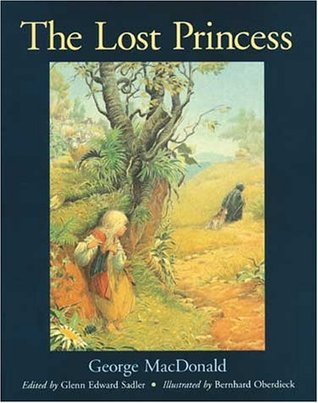
The Lost Princess by George MacDonald

Recently, my Church did a spring clean and decided to let go of two tables full of books. As I was browsing through, I found this book and the title entranced me enough that I decided to bring it home. I am so glad I did because this book is just too lovely!

The Lost Princess is a fairytale about two spoiled little girls who were both raised to think that they were Somebody rather than themselves. And as a result, they had terrible tempers and were ungovernable. But there is also a Wise Woman, who loves the girls and takes them away that they might learn to be better.

I loved, loved, loved this book! It is so enchanting and even though it's very much about our world, George Macdonald has succeeded in making this feel like a fairytale. The language very much reminds me of G.K. Chesterton, which means that it may not be for everyone but it's definitely for me. And while the idea of not indulging every emotion and passion that arises may not be popular nowadays, The Lost Princess shows just how clearly giving in to our baser natures will twist us into an ugly human being.

The edition I read was illustrated really beautifully as well - look for the illustrations by Bernhard Oberdieck if you're curious!

I would definitely encourage everyone who loves fairytales to read this. It's a fantastic book and I want to end my review by sharing two of my favourite quotes from it:
"Whether it is a good thing or a bad thing not to be afraid depends on what the fearlessness is founded upon. Some know no fear because they have no knowledge of danger; there is nothing fine in that. Some are too stupid to be afraid; there is nothing fine in that. Some who are not easily frightened would yet turn their backs and run the moment they were frightened; such never had more courage than fear. eBut the person who will do his or her work in spite of his or her fear is a person of true courage."
and
"Nobody can be a princess, do not imagine you have yet been anything more than a mock one - until she is a princess over herself, that is, until, when she finds herself unwilling to do the thing that is right, she makes herself do it. So long as any mood she is in makes her do the thing she will be sorry for when the mood is over, she is a slave and not a princess."

Tuesday, May 1, 2018

The Invisible Library by Genevieve Cogman

I keep hearing about the invisible library series from Wendy at Literary Feline and every time I see her reviews, I put the book on my TBR list. After a pointlessly long time, I finally read the first book in the series and it is fantastic!

This series is about a Library and the Librarians are spies! They go into different alternate realities to steal, um I mean acquire, different rare books that help to refine the Language, which is a language that can be used to command people or things.

Irene is a Librarian who’s suddenly given someone (Kai) to mentor and the task to retrieve a book. It should be an easy task, since it’s Kai’s first mission, but Irene and Kai soon realise that there is far more than meets the eye and that an old nemesis of the Library may be behind everything.

I loved everything about this book! Firstly, there’s the world-building. I love the concept of the Library and the Language, which pulled everything together. The worldbuilding was also very well-done, with the information coming at a good pace that didn’t interfere with the plot.

The characters are also well-done. I really loved Irene, who loves books too and is a bit of a badass. She’s perhaps a bit too unquestioningly loyal to the Library, but she’s a fantastic mentor and I rooted for her from the first page. Kai, her mentee, was also really interesting and I sense a possible romance between them.

The plot was also good. The mystery of the book she has to steal was really engaging and I liked how she tied it to the larger plot. And while the main plot is wrapped up by the end, Cogman has left enough threads hanging that I can see that it’s the start of a series and I’m very eager to read the next book!

If you like books, kickass heroines, a mystery surrounding a book and lots of fun, I’m pretty sure that you’ll enjoy The Invisible Library. I know I’m looking forward to reading the next book.

Thursday, April 5, 2018

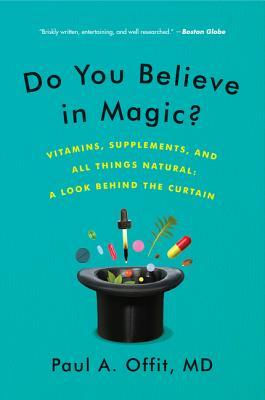
Do You Believe in Magic? by Paul A. Offit

It would be really funny if I read this book while eating some vitamins or other alternative medicine things but I read it while eating chips (okay I only did this for the last few chapters). Which probably isn’t the healthiest thing to do, come to think of it.

Do You Believe in Magic is a book about alternative medicine. Each chapter looks at a particular cure, going into its history and the (lack of) science behind it. Areas covered are:

- Vitamins and supplements
- Hormone replacement
- Autism ‘cures’
- Chronic Lyme disease and how it isn’t real
- Curing Cancer
- Alternative medicine and children
- Homeopathy

Apart from looking at specific areas of alternative medicine (which really should be called “medicine that doesn’t work”), Offit also looks at the power of the placebo effect.

Now, the author isn’t against TCM or other herbs. He acknowledges that traditional folk medicine has contained remedies that science has verified. What the author is against is unverified/verifiably false cures that sell false hope, and in some cases, result in deaths that could have been prevented. There is a line between placebo medicine and quackery and the author is not afraid to draw it.

I found this book to be eye-opening. I already heard of some of this stuff, but I wasn’t aware as to how damaging some of the ‘alternative medicines’ can be, or how scientifically false they are. It’s particularly heartbreaking to read about how parents are harming their kids and/or depleting their lifesavings because they end up falling for these hucksters.

If you’re interested in the field of homeopathy or alternative medicine, you have to read this book. It’s a well-written explanation about how much you can trust the alternative medicine industry and its proponents and will definitely open your eyes to their practices. And if you want to read more, I recently found this blog called Naturopathic Diaries (https://www.naturopathicdiaries.com) where an ex-Naturopath pulls back the curtain on her Industry.

Tuesday, March 6, 2018

Trust Me, I'm Lying by Ryan Holliday

I just finished this and this is definitely a must read! It’s super eye-opening, although it’s also very disheartening and will make you very cynical. So prepare yourselves for a long review because I’m really going to summarise this book.

Trust Me, I’m Lying is basically a book about exposing the dark side of online/modern media. It’s broken into two parts and to start, let’s go back in time to the history of newspapers.

First, there was the party press, which was to explain party policies to members. This is mainly editorial and based on a subscription model. After that came the yellow press, which fought for daily sales. Since they had to sell themselves anew every day, they relied on gossip and sensation. The third stage is the modern stable press, which went back to subscriptions. Since there was a fairly stable income, they had room for more nuance and discussion, and reputation started to matter more than notoriety. Of course, it wasn’t perfect, because the paper had to please its readers, but it was better than yellow journalism.

Right now, however, the internet/new media is in the yellow press stage. Blogs (the books generic term for everything on the internet) make money by generating pageviews (for the ads). Scoops lead to traffic which lead to money, which means that there’s a built in incentive for sensationalism. And with the thousands of blogs competing for your attention, there isn’t much incentive to take the time to fact-check, because that time could mean that you break the news second, not first.

These blogs get their news by something called ‘trading up the chain’. Holliday defines the chain as having three big stages: an entry point (small, local blogs), legacy media (sites like wired), and national news (New York times). Because they want to break the news, blogs will look downwards to the smaller sites for ‘scoops’, which means that if you can disseminate information at the entry level, it can reach the big leagues.

To add to that, the time-pressed nature of journalism (thanks to the CNN effect) means that journalists are dependent on self-interested sources, which can be easily manipulated (sites like HARO - Help A Reporter Out basically ask people to submit tips). And because they need to churn out articles, press releases and Wikipedia can be used to make news too.

In fact, this digital news environment is a product of the link economy, which “is designed to conform and support, not to question and correct.” If you think about the origins of PageRank (Google’s algorithm), which uses the number of links back to a page to judge relevance, then it’s easy to see how a vicious cycle of fake news is created.

I’m guessing you can see how all this can be manipulated - you can plant fake news at the lower levels and use the news cycle to ‘alter reality’ (he uses the example of how he defaced Tucker Max’s billboards to raise awareness of Tucker Max’s books). You can also bribe reporters, not only with free gifts, but the hope of future jobs and tips that help them with their current jobs.

Even in Singapore, you can see how it works. For example, sites like mothership often use Facebook posts and even Dayre posts as ‘news’ sources. And what about the time someone discovered that the same few people were forever being quoted in the articles by the Straits Times?

So the first part is on how the news is made and can be manipulated. A few other points that I thought were good included:

- Headlines tend to be ambiguous (and he also repeated something I’ve heard and believe: if the headline asks a question, the answer is probably ‘no’?)

- People tend to believe the news is what’s important, instead of realising that the news is content that made it past the filters

- There is a trend towards shorter, easier to read pieces which tend to take the nuance out of things.

The second part of the book names some of the worst media manipulators and looks at the effects of this new digital news environment.

People Holliday names as master manipulators include Irin Carmon, Breitbart, Steve Bannon, James O’Keefe, and Charles Johnson. He also talks a lot about how this news environment contributed to fake news and made three very interesting points:

First, the best way to get your message out is to make your critics angry. When they’re angry, they’ll respond and invariably spread your message. Your best bet is to stay quiet and let them embarrass themselves.

Two, there is something called narcotising dysfunction, where we “mistake the business of the media with real knowledge and confuse spending time consuming that with doing something.”

Third, that you can recognise snark when you realise that there is no way to reply to it because it doesn’t actually have any substance. It’s just an effective way to dismiss criticisms that one doesn’t like and enforce social norms.

So, where do we go from here? Holliday mentions a re-emergence of the subscription model, citing the New York Time’s new paywall model. He doesn’t talk about mention patreon, but I think it could also help with breaking the “need for page-views” cycle. If people trust you enough to pay for your stories, then you don’t have as much pressure to push out unverified stories.

For example, if you trust sgbudgetbabe and her investment analysis (and there is absolutely no reason to trust her), you could choose to support her patreon and get her analysis first. That support will help her to continue being able to give unbiased investment news and analysis.

He also mentions the need to draw a line in the sand, which is something that Singapore does (I suppose I should add that I never really found the rules here draconian since you’ll be fine if you tell the truth).

The appendix is also worth reading since it contains articles and interviews with people who admit manipulating the news (including the guy who convinced newspapers that chocolate would help you lose weight)

I already knew some of this, but I never knew it was that bad, so if you’re curious about how the news work, or even if you’re not, you need to read this. It’s probably going to dishearten you because you’ll see how easily the news can be manipulated (and has been manipulated) but knowledge is power and if we want to be informed citizens, we must know how to get to the truth.

Books mentioned in this book (which I’m going to read)

1. Say Everything: How Blogging Began, What It's Becoming, and Why It Matters by Scott Rosenberg

2. Being Wrong: Adventures in the margin of error by Katherine Schulz

3. So You’ve been publicly Shamed by Jon Ronson (I’ve read this and it’s a fantastic read if you wanna look into the whole online shaming thing).

4. Not a book, but the article on how to be an Amazon Bestseller by someone in his company is a hoot! I read it a couple of years ago but didn’t connect the article with this book until he mentioned it.

Tuesday, November 21, 2017

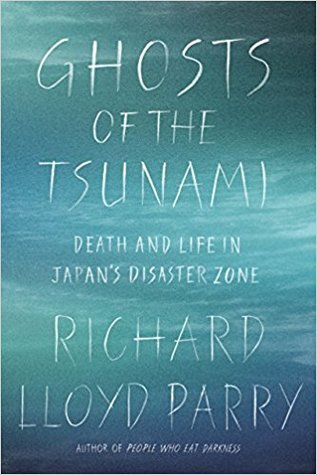
Ghosts of the Tsunami by Richard Llyod Parry

This is another NetGalley book, one that I wished for and was granted to me. I'm thankful that I got to read this because it's a heartbreaking account of the effect of the March 11th tsunami. Instead of trying to show all the destruction, Ghosts of the Tsunami focuses on Okawa Elementary School, where a series of heartbreakingly wrong decisions led to the deaths of 74 out 78 students and 10 out of 11 teachers.

Desperate for some answers and frustrated by the actions of the school and the principal, a group of parents took the brave step of bringing things to court. But this is not a legal drama. The book takes an intimate look at the lives of all those involved by talking to survivors and relatives of victims to build an account of what happened and what happened after, including the court case.

There are many heartbreaking moments in this book, such as a grandfather unable to recognise the body of his granddaughter, whom he lifted out of the mid, because of the state she was in.

Or the words of this mother:
"We used to think that we were bringing up our children," said Sayomi Shinto. "But then we discovered that it was we, the parents, who were brought up by them. We thought that the children were the weakest among us, and that we protected them. But they were the keystone. All the other pieces depended on them. When they were taken away, we realised this for the first time. We thought that we were looking after them. But it was the children who supported us."
And by making sure the book isn't too narrowly focused on the court case, instead following the lives of the parents and one of the surviving children, Richard Lloyd Parry managed to convey how the community of Tohoku reacted. For example, the way the community divided into two regarding what to do with the school - preserve it or not - reflected how they chose to deal with grief; whether they wanted to face it and talk about it or to hide it away.

There was only one moment in the book that made me double take. Someone was talking about the size of the tsunami and the words "twenty feet" was quoted. I suppose that this is to make things easier for Americans to understand, despite the fact that all but three countries in the world use the metric system, but I didn't like it. If you're quoting someone, I would prefer that the translation be as accurate as possible, and yes, meters to feet is a small change but if I doubt the small things, then I might end up doubting the important things too.

Overall, though, this was a fantastic book and one of the most powerful things that I've read this year. If you're going to read one book on the 3/11 Tsunami, this is it. By the way, if you want a sneak pic, the Guardian has a good excerpt that you should read.

Disclaimer: I got a free copy of this book from the publisher via NetGalley in exchange for a free and honest review.

Friday, August 4, 2017

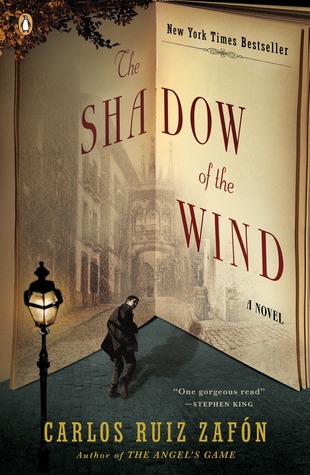
The Shadow of the Wind by Carlos Ruiz Zafon

Few things leave a deeper mark on a reader than the first book that finds its way into his heart.
This is definitely one of the best books of this year!! Thank you so much Gen for sending me the third (?) book in the series and hence getting me to start with this. Now I'm half-excited and half-scared to start the book that you gave me cause I don't know if it's as good!

Unlike the previous book-themed mystery (and I'm definitely classifying this as a mystery), this was fantastic and seriously amazing. The Shadow of the Wind starts when Daniel is taken to the Cemetery of Forgotten Books by his father. There, he is allowed to take one book back and the book that calls to him is an unknown novel called The Shadow of the Wind by Julian Carax (which I also want to read)

In his quest to find out more about the author, he discovers that someone has been buying (or if unsuccessful stealing) copies of Julian Carax's novels and burning them. Plus a menacing and definitely corrupt police officer shows up. These lead to a years-long mystery that ushers Daniel into adulthood.

I'm actually not sure if the above summary does the book justice because it is a lot more complex with a whole cast of characters. Apart from Daniel, the character that made the strongest impression on me was Fermin, a homeless drunk with an amazing ability to find books. He also has a silver tongue and a past with that menacing Inspector. He becomes one of Daniel's most important allies in his quest to find out what really happened.

I feel that the cast of characters and their relationships to one another were so well-written that they helped balance the whole book. It's easy to let the mystery dominate or the growing up Daniel has to do dominate, but since the characters are involved with both and each half cannot be untangled, everyone comes together in one seamless whole, and the journey for the truth becomes Daniel's path to adulthood.

Even the romance was something I enjoyed reading. Not gonna give spoilers (I hope! I will try!) because it is something that happens pretty late in the book, but I thought the false love lost and real love found arc was really good. By the way, adult themes are in this book although it's never explicit and there is swearing so don't give this to children and maybe younger teens (depending on their maturity).

The ending is happy, although not completely. There is one character and one relationship that doesn't end well (or as well as I'd hope) but I find that the little bit of sadness makes the happiness that Daniel and the rest get feel much more real.

I would recommend pretty much everyone (who isn't a kid, like I mentioned before) read this, especially if you like books and mysteries surrounding books. I loved everything about this - the plot, the characters (except the bad guys, though there was one character redemption that was surprising but still believable) and the writing.

Thursday, June 29, 2017

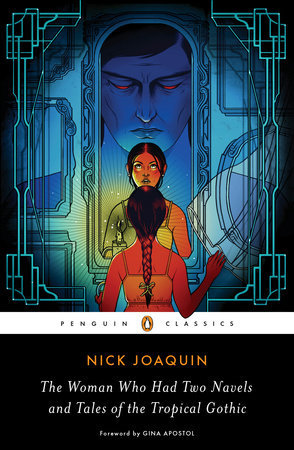
The Woman Who Had Two Navels and Tales of the Tropical Gothic by Nick Joaquin

Finally finished another book for the SEA Reading Challenge and this is probably my favourite book so far!

The Woman With Two Navels and tales of the tropical Gothic is a collection of short stories by Nick Joaquin, who is apparently very famous in Philippines but sadly unknown almost anywhere else (at least that's what I got from the introduction before I skipped it because I do not want to read literary analysis before I read the text).

These are stories that you experience rather than read. I've never been to the Philippines so I can't tell if this is an accurate picture of the country, but the stories gave me the impression of heat, of humidity that might choke you, of the chaos of life and everything I've said so far sounds universal (at least to SEA) but it also feels so specific. I would, for example, never mistake these stories for being set in Singapore or Malaysia.

Each story is a snapshot of an aspect of life, and if I'm honest I don't quite get what they're about, but they make me feel. It's intense and amazing. Even the last story, 'A Portrait of the Artist as Filipino', which is actually a play in three acts and which I was unsure if I could pay enough attention managed to pull me in and make me experience a squabbling family with a treasure that functions more like a threat.

Warning: the sentences here are really long and you will need to come up for air every now and then, but I find that the language is beautiful without being distracting. I admire it when I've closed the book but when I'm reading, it feels really immersive.

I really, really love this book. I do not understand it, probably because that requires work and I haven't analysed anything since IB (I think?) but it was such a fantastic reading experience. It's available from the NLB's ebook lending service too so as long as you have a phone you can get this too.

Wednesday, June 7, 2017

The Radium Girls by Kate Moore by Kate Moore

I managed to finish this book in one of my off days because it was absolutely gripping and once again, I'm shocked by how little I know (everyone should know about this!)

During WWI, there were radium companies that employed girls (often teenagers or just out of their teens!) to paint dials with radium. The pay was by piece, which meant that the very skilled could take home quite a lot, and the girls quickly grew to be very close. Plus, America was in the midst of a radium craze where anything radium was considered to be healthy. So the fact that this girls were in contact with so much radium they glowed in the dark was an added bonus, right?

Wrong.

Radium is a radioactive substance and prolonged exposure to it killed many of these girls. The deaths were slow and painful, as their bones crumbled and they developed cancer (many of the girls' jawbones broke and their wounds wouldn't heal). The radium poisoning was made worse by the fact that these women used their mouths to help shape the brushes that were dipped in radium. So not only were they covered in radium, they were ingesting it! And because radium was so new and there was so little research, the doctors couldn't figure out what was wrong with them at first. When they did, however, the company that employed them denied all responsibility and did their best not to pay them compensation.

But these women were brave and tenacious, despite all the pain they were in, and they fought the companies in the courts and basically helped change safety standards, laws, and raised awareness of the dangers of radium. Oh, and their work helped saved the lives of soldiers during the war so they were basically heroes many times over.

The radium girls is an engrossing, well-written book that focuses on the girls and their stories. The author has clearly done a lot of research, and she has managed to tell the story of the individual girls without losing sight of the broader picture. Although the book is fairly long, it felt short and I just couldn't put it down. I'd recommend this to EVERYONE because it is a story that needs to be heard.

Disclaimer: I got a free copy of this book from the publisher via NetGalley in exchange for a free and honest review.

Friday, May 12, 2017

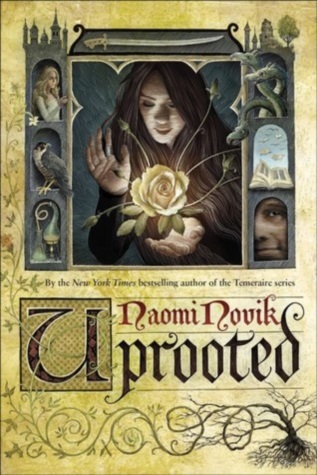
Uprooted by Naomi Novik

This book was recommended to me by Wendy from Literary Feline (link to her review) and it was fantastic! I normally use my phone on the train (back when I was taking the train) because it's only 10 minutes but this was so good that I decided to use all my free time to read.

Uprooted is hard to explain. There's Agnieszka, a witch whose magic doesn't work the way it usually works, a dragon who's actually a wizard, Kasia, the best friend who was supposed to be taken but wasn't, and a sentient wood. And there are princes and battles and all the usual stuff. It sounds like a lot, but it all goes together so well! In fact, I really liked how the plot moved. Thinking back, it has enough plot for what would probably a trilogy in many books nowadays, but it doesn't feel rushed. It feels perfect in terms of pacing.

The characters are really well-written too. Agnieszka is clumsy and insecure but she has a good heart. The dragon is stern but he's actually a really nice guy. And I really liked Kasia, the best friend who played the part without going over the top. Agnieszka and Kasia are really good friends, but their friendship isn't perfect (they are jealous of each other, a little). I found that made them more believable and the fact that they chose to stick together after knowing that proof that they really were good friends.

The only complaint I have is about the relationship between Agnieszka and the Dragon (which, coincidentally, Wendy also has :D). I feel like they've had a mentor-student relationship the whole time, even if it's contentious, and the sudden swerve into romance was not believable at all. Like, really, it felt unnecessary.

That said, the other relationship - the friendship between Agnieszka and Kasia was very well done and more prominent than the romance so my complaint is a fairly small one.

This is definitely going to be one of my top books for the year. It's a fun and well-written read, much like a fairytale, and if you're into fantasy, you HAVE to pick this up.

(It's available on NLB so there's no excuse if you're Singaporean)

Friday, January 20, 2017

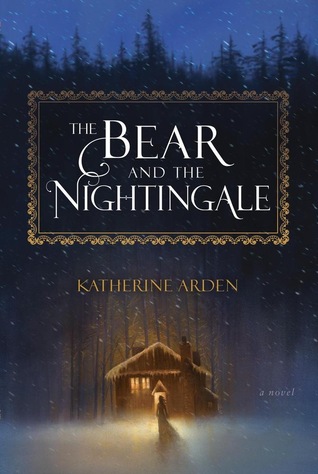
The Bear and the Nightingale by Katherine Arden

I know we're still in January but this is definitely going to be one of my favourite books of the year. I mean, it's gonna be pretty hard for any other fairytale-inspired book (or any book, really) to top this.

The Bear and the Nightingale is inspired by a host of Russian fairytales and stars Vasya (I hope I'm spelling her name right because everyone seems to have 12345 different nicknames). Vasya is special not just because her mother died after giving birth to her, but because the enchantment that was in her grandmother and mother seems to be passed down to her. She can see the magical creatures living around the house/estate and they, in turn, teach her.

Unfortunately, Vasya's idyllic childhood ends after her father brings back her stepmother, Anna. Anna is actually her mother's niece (so her cousin?!), but since her father is the Grand Prince of Rus', her father couldn't exactly say no to the marriage.

Where Vasya sees magic, Anna sees demons.

Soon after, a haughty priest named Konstantin is assigned to their village, and everything goes downhill.

What I loved about this book: EVERYTHING.

First up, world building. I'm not familiar with Russia, but I seriously felt drawn into the world (and the world of the magical creatures too). There's an author's note in front that indicates that she's done a lot of research for this, so I'm guessing that those familiar with Russian culture and history would like this too.

Second, the characters. Apart from Vasya, there are also her siblings (Sasha, the brother that became a warrior monk stands out) and Dunya, their nurse. All were very well-written and I would happily read books about them.

The villains too, were much better than I had expected. Anna is the 'evil stepmother', and certainly played the part well, but I never expected to sympathise with her that much. She was a victim of her gift and character and could have had a peaceful life if not for chance. Konstantin, too, started off as a proud but devout man. His gradual obsession with Vasya and him being duped by the main 'villain' of the book was well-written and I kept hoping he could be redeemed till he was past the point. Other notable characters: the frost king, the horses, and the various magical creatures. I loved them all (especially the horses!).

Finally, the plot. The book is split into three parts: her childhood, the threat and the battle. Not gonna give any spoilers, but I thought it was very well-paced and couldn't put the book down.

If you're into fairytales, you have to read this book. It's magical and amazing and I cannot recommend it highly enough.

Disclaimer: I got a free copy of this book from the publisher via Netgalley in exchange for a free and honest review.

Tuesday, November 1, 2016

Grit by Angela Duckworth

Note: I'll be headed to Saga to volunteer in the Saga International Balloon Fiesta tomorrow, so I may not be able to post for the rest of the week. 

I bought Grit because I couldn't find it in the library AND IT DID NOT DISAPPOINT.

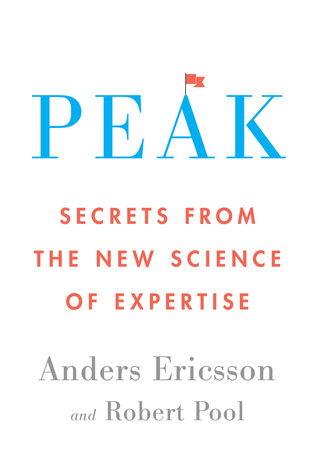
Grit is really about the power of perseverance and should definitely be read with Peak by Anders Ericsson (there's actually a chapter dedicated to deliberate practice, but Peak goes into much more detail).

This book is divided into three parts:

Part 1: Why is Grit and Why it Matters

Basically, Grit is this combination of passion and perseverance for long term goals and it is found in a lot of high achievers. So while talent does play a role in how successful you are, grit plays a huge role too. Angela Duckworth represents it using the formula:

Talent x effort = skill ⇨ skill x effort = achievement.

So to repeat:

Talent is not the be-all and end-all (though it may give you that initial advantage)

And by the way, there is a grit scale (you can find it on her site) and I'm only about 3.7/5, which according to her means I'm grittier than about 50% of Americans.

Clearly I'm not an exceptionally gritty person. My longest runny "passion" has probably been stories (reading, and then reading and writing them) and "business" (but which area of business changes pretty often). Plus my 123456 thousand interests at any one time (knitting, sewing, cooking, etc)

Luckily, there's hope:

Part 2: Growing Grit from the Inside Out

Luckily for me, you can grow grit. You need your interest (or passion), then you need to stick with it and practice it (that was the chapter on deliberate practice), and one way to keep at it is if your passion has a purpose (does it help others? E.g. The sommelier who wants everyone to enjoy wine). And of course, have a positive growth mindset (aka hope) and don't get too negative about things.

But no man is an island, so

Part 3: Growing Grit from the Outside In

This last part is about how we can cultivate grit in others, and the author admits that this is the part with the least amount of research. But she feels that authoritative/wise parenting (being loving and demanding), which is not to be confused with authoritarian parenting (being demanding but not loving) may be the way to go.

And of course, since we're all slightly lemming-like, seeking out a culture of grittiness does help. If everyone around us is pushing their limits and never giving up, then it's easier for us to push ourselves to the limit too.

Conclusion:

You really, really need to read this book. It takes one topic and focuses on it, which means that by the end of the book one gets a much deeper understanding of what grit is and how we can cultivate it.

This went way beyond what I heard in the Freakonomics podcast, though the podcast did cover the basics. If you think the podcast is enough, then you don't need to read the book, but if you found that you wanted more, then get the book.

The book itself is very easy to read, with lots of anecdotes to back up the studies that the author did at West Point, or the other studies that are related. There is a recommended reading, which I totally intend to read (and I see I've read at least two of the books on that list, and I loved those two so it's a good sign).

Monday, September 19, 2016

Peak by Anders Ericsson

I first heard about this book from the Freakonomics podcast (they had a self-improvement month), and apparently, he's the guy whose research Malcolm Gladwell drew on to create the 10,000-hour rule. He says that Gladwell isn't all that correct (though he isn't completely wrong).

This book focuses on one thing: how do people become experts? Hearteningly, "innate talent" does not seem to be the determining factor.

According to Andersson's research, humans are extremely adaptable people. However, most of us settle for "good enough" (nothing wrong with that, by the way), and assume that once we hit a plateau, we've reached the limits of our innate ability.

That's not quite true. Through deliberate practice (and lots of time), we too can become experts.

By the way, there are two types of practice mentioned in the book: purposeful and deliberate. Both are good, and purposeful practice will definitely help you improve much more than naive practice (which is what most of us do), but deliberate is better.

But just because, purposeful practice:

1. Has well-defined, specific goals: you aren't just "playing the song", you are "playing the song while making sure that I don't make XYZ mistake"

2. Involves feedback: if you made a mistake, someone tells you.

3. Requires getting out of one's comfort zone: growth happens when you're stretching yourself.

Now on to deliberate practice, which is more complicated:

1. Deliberate practice develops skills that other people have already figured out how to do and for which effective training techniques that have already been established

2. Takes place outside one's comfort zone

3. Involves well-defined, specific goals and often involves improving some aspect of target performance (not overall)

4. It requires your full attention and conscious actions.

5. Involves feedback and modification of actions in response to feedback:

6. Deliberate practice both produces and depends on effective mental representations. Basically, you're using your long term memory for things.

So it's obvious that deliberate practice is more involved that purposeful practice. And thinking back, this all does make sense.

My golf never got better when I was just hitting balls. But when I was focused on my form, it got way better (and I didn't lose as much 'skill' after a long hiatus, though obviously I didn't get better). I haven't, however, added specific goals to the practice, so that's something I can do, even at the range.

I highly recommend reading the whole book, because he talks about deliberate practice on the job and in everyday life. Plus, it's an accessible book.

One last thing: it's easier to do deliberate practice in certain fields (e.g. Violin, piano, golf, chess) because there is a standard that can be used as a judge. But it's applicable to skills in general.

I may have borrowed this from the library, but I'm seriously considering buying my own copy because I think that I will want to reread this, and try and figure out how I can use deliberate practice to get better.

Friday, June 3, 2016

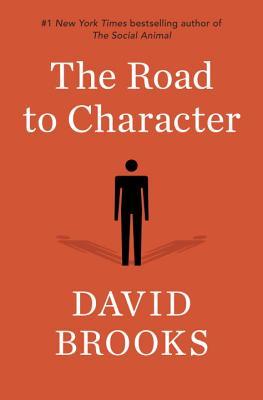
The Road to Character by David Brooks

I borrowed this book because I read about it in the newspaper, making it the first time the newspaper ever made me want to read a book. However, this was in the opinion section, not the books section, so... I guess the official reviews still have a ways to go.

Anyway, The Road to Character has two premises:

One, there is an Adam I and Adam II in us. Adam I is the career-minded, materialistic self, while Adam II is the internal self. The one that wants to "embody certain moral qualities". These two selves are the reason for a continual tension within us.

Two, society has, in recent times, moved from a Little Me mindset to a Big Me mindset, where we put ourselves first. While this isn't wholly unjustified, Brooks argues that we have swung too far in the direction of self-love and self-centeredness, and that we need to take a step back.

To be clear, this doesn't mean the past is better than the present. Brooks says as much in the opening chapters. There are changes we've made that are for the better. But what he is saying is that there are things we can and should learn from the past.

The bulk of the book are the eight biographies of various people, from Frances Perkins to A. Philip Randolph to Augustine. As Brooks goes through their lives, he pauses to talk about certain characteristics they embodied, which is where I ended up saving loads of quotes from. Among others:

Love is a surrender. You expose your deepest vulnerabilities and give up your illusions of self-mastery. [...] Love depends on the willingness of each person to be vulnerable and it depends that vulnerability. It works because each person exposes their nakedness and the other rushes to meet it.

To be sure, none of these people lead perfect lives. Their characters tended to leave them under-compensated in some ways, so while they might accomplish great things, they had their own personal sufferings.

But taken as a whole, these people point the way towards how we could leave more contented, fuller lives. It is not a life of ease, since it is a life consisting of balancing two eternally conflicting selves, but it is a rewarding one.

I borrowed this from the library, but I totally want my own copy.

Monday, April 11, 2016

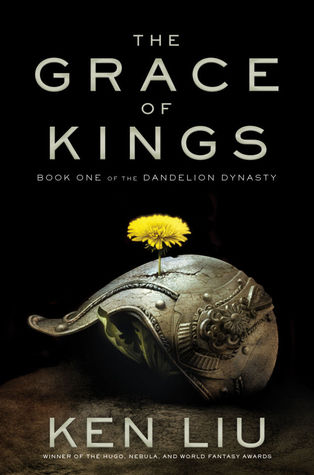
The Grace of Kings by Ken Liu

Have you ever read a book that pulled you in so deeply that when you resurfaced in the normal world everything seemed just a little off kilter? That's what reading The Grace of Kings was like for me. I started it in a McDonalds, over lunch, and when I finally had to leave, it took me a while to realise I was back in Japan, not in Dara.

I basically picked up The Grace of Kings because I heard it was Chinese-inspired steampunk fantasy. The keyword here is Chinese. How many big fantasy novels (in English) have you seen that are inspired by Chinese history? This is my first. But if you know of others, TELL ME.

About the actual story: the lands of Dara have been united under the rule of Mapidere, but the people are discontented. In the uprising, two rebels come to prominence - Mata Zyndu, the son of a disposed duke, and Kuni Garu, a loafer turned bandit. They start of as close friends, almost brothers, but as the rebellion succeeds, they end up pitted against each other. Oh, and there are gods squabbling about some pack too. It's like an alternative version of 三国演义 (the romance of the three kingdoms), although I don't remember the gods being there.

When I first heard that this was based on Chinese history, I was a bit scared to read it because, hello, I'm the girl who barely made it through higher Chinese. What I know comes from my grandma's stories, TV dramas and the occasional book my school made me read.

But I'm very proud to say that I recognised quite a few of the incidents! True, I had to look some up to confirm it, but I remembered them! The book rang true to me in a way that most Western-myth based books didn't (even Lord of The Rings and Narnia, which I love very much).

And that is why I loved the book. It brought me to another world that felt sort of, but not quite, like my childhood, watching the Condor Heros and other Chinese dramas. Yes, the world building was gorgeous and the cast of characters was varied, but I love this most for giving me a link back to my past (even if I wasn't the best Chinese student).

Now, let's talk about characters. I suspect everyone will have their own favourite but mine is Kuni Garu, not Mata Zyndur.

Why? Because Kuni wants to make the world into a better place, while Mata wants to make the world into his ideal place. Plus, Kuni has that streak of kindness that Mata lacks. Other characters I liked were Jia, Kuni's wife, Soto, Jia's housekeeper with a secret, and the kickass Gin Mazoti.

I know that this is the start to a series, but honestly, to me the book is complete the way it is. I want to imagine the characters moving to a future with uncertainty and doubt, but to believe that they will move towards the best future. I don't want to read a sequel and see that my hopes were dashed.

Monday, February 29, 2016

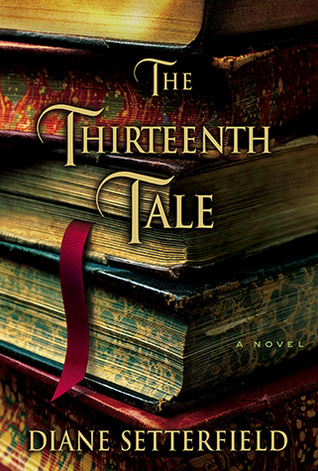
The Thirteenth Tale by Diane Setterfield

I think this is the type of book that you either hate or love. For me, I loved it. Seriously seriously loved it. Miss Vida Winter is my new favourite fictional although - I want to write as well as her, though I definitely don't want to have to go through all the things she has.

The Thirteenth Tale is a sort of gothic novel, where the protagonist/narrator is pulled out of her quiet life at an antique bookstore and asked to be the biographer of the nation's most famous writer, Miss Vida Winter.

At first, she doesn't want to take the offer, but once she reads Miss Winter's stories, she's hooked. Especially from one book, with a mysteriously missing thirteenth tale. And so, as she sits with Miss Winter to hear her story, the story comes together, piece by piece.

For me, I loved the tone of the story. It was extremely addictive, and I found it hard to stop at just one chapter, even if I had my accounting to study for.

The 'mystery' was also intriguing to me. Apart from the mystery of Miss Vida Winter, even the Margaret (the protagonist) has her own ghosts. But do ghosts exist? Or are they figments of imagination? Many times, it could go both ways.

But I guess, what I love most about this novel is the language. Like one of my friends said when she found out that I was reading this, it's so full of quotable lines, and I definitely highlighted many of them.

I really think this is my lucky year in books (or maybe I'm just being more open to their influence?). It's only February, and I've already found a few that can qualify as 'best books of the year'. This is definitely one of them.

And to end the review, one of the many quotes I highlighted:

Silence is not a natural environment for stories. They need words. Without them they grow pale, sicken and die. And then they haunt you.

Wednesday, February 24, 2016

An Ordinary Man by Paul Rusesabagina

Ok, some of you may have watched the movie Hotel Rwanda. I did, and I cried bucketloads. If you haven't, then you should. Anyway, An Ordinary Man is the autobiography of the man whom the movie is based on. Paul Rusesabagina was the hotel manager of the Hôtel des Mille Collines during the Rwanda Genocide who saved 1268 Tutsi and moderate Hutu people.

Or as he put it, 4 hours worth of lives out of a hundred days.

In his autobiography, Mr. Rusesabagina talks about how the genocide started, and what he did in order to keep his hotel running and protect the refugees. He had to make nice with some very bad people, but he did what he had to do, and he saved many lives.

To him, that's the normal thing to do. I say the guy's a hero for holding on to his humanity in such terrible days.

In fact, I basically had tears pricking the back of my eyes as I was reading this book, especially towards the end. If I wasn't in public, I probably would have cried.

What struck me the most was his reasons for why the genocide started. According to him, the division between the Hutu and the Tutsis were imposed by the colonial powers as a divide and conquer rule. And the reason why it worked so well was because it appealed to one basic aspect of people's nature:

There is something living deep within us all that welcomes, even relishes, the role of victimhood for ourselves. There is no cause in the world more righteously embraced than our own when we feel someone has wronged us.

I think that is very true. If we're the victim, it's easy enough to want to do something to stand-up for ourselves, and to translate thoughts into actions. Conversely, if someone else is the victim, it's much easier to stand by. Call it the by-stander effect, if you will.

And the way nations just stood by while the genocide happened is just chilling. Mostly because it could so easily happen today. For example, ASEANS non-interference principle, which I happen to support in most circumstances, could be used to engineer conditions for yet another genocide. It hasn't happened yet, but looking at things like the Rohingya crisis scares me into think that it's totally possible.

All in all, this is a powerful story, simply told. The author doesn't bother dressing the story up in fancy language, probably because he doesn't have to. The narrative itself is a powerful message for all of us, and because it's told so simply, its power is amplified.

This is a book everyone should read.

Note: A version of this review first appeared on my Dayre

Thursday, February 11, 2016

The Shift by Lynda Gratton

This was recommended to me by a Japanese friend - he read the Japanese version, which is titled "Work Shift" and confused me because I could NOT find a book by that title. But eventually I found it, and woah, is it a thought provoking read.

The book goes like this. First, the author identifies what she thinks are the most important macro-trends taking place. Next, she looks at six possible aspects of the future, three positive and three negative.

The negative aspects are:
1. Fragmentation - a world where a multitude of things constantly demand our attention.

2. Isolation - a world where the reliance on virtual technology and working from home has led to a dramatic decrease (and almost elimination) of face-to-face meetings.

3. Exclusion - ok, this was a bit hard for me to swallow, because exclusion exists even now. According to the author, the difference is that
"the axis of exclusion has shifted from where you are born to your natural talents and motivations and the specifics of your personal connections." 
To be very clear, I don't think the "specifics of your personal connections" part is a good thing, because it's got a lot relying on who you are born too, which is not something anyone can choose. But the natural talents and motivations bit? It sounds like a fairer world to me. The case study involved a girl who loves World of Warcraft and spends at least four hours a day on it.

Assuming that everyone gets the same baseline education, then I see nothing wrong in a smart and ambitious kid from Vietnam or Cambodia beating out a kid from a Western nation, who prioritises games. If there was a failing in the education system, or some intentional bias in there, then yeah, I see a problem, but other than that, I'm fine with it. I don't think that "where you are born" should determine that you get a better life than someone. "Natural talents and motivations" sounds a lot more meritocratic to me.

Again, I am assuming the same baseline education (i.e. everyone who wants to learn can learn), and that even if you choose to work only part-time because you want to game, you are still able to earn a living. Not a luxurious living, with trips overseas or fancy food, but enough to buy the groceries and pay the bills. I understand the future may be a lot more nuanced, but the way the author expresses the idea means that I don't totally agree that it's a terrible thing. And obviously, the increasing disparity between the rich and the poor is a bad thing too.

The positive aspects are:

1. Co-creation - Working with many people to solve large problems

2. Social engagement - Better work life balance, increased empathy and an option for people who want to, to be able to do meaningful work/take time off from work for long stretches to do volunteer work.

3. Micro-entrepreneurship - People making a living through ecosystems.

After this, the author identifies three shifts that we need to make:

1. From shallow generalist to serial master.

2. From isolated competitor to innovative connector

3. From voracious consumer to impassioned producer.

With recent events like the rise of ISIS and the sudden drop in oil prices may affect the accuracy of the predictions (either by delaying them or changing them), what I appreciated about the book was that it was truly global in outlook. Most of the time, all these books focus on the West, which makes does not really apply to a very large segment of the world. But this book has research done in India, Singapore (our Ministry of Manpower was a sponsor too), and the futures, while do not mention Singapore, are set in Brazil, India etc. I found this very refreshing, and made the arguments more compelling to me, because they seemed more relevant.

 The other thing I liked was the use of 'case studies', where they imagine someone's life in 2025. It makes the concepts a lot easier to understand, especially since things like fragmentation can be a bit confusing.

Overall, this is a though-provoking book, and one that I would encourage everyone to read (Also, you can tell that a book is good when even some time after reading it, it makes a big enough impression that you use it in your arguments on why we do not necessarily need to fear that the future will dehumanise us, even if it is a possibility).