I was intrigued by this book the minute I saw the title because I love Agatha Christie. In The Shadow of Agatha Christie is a collection of crime fiction by women writers who came before Christie. I’m not sure why it cuts off at 1917, but it does.
There are sixteen stories in this anthology and it starts with The Advocate’s Wedding Day. As a first story, I wasn’t too fond of it because it was all narration and not much story. In fact, it felt a bit like a story synopsis than a story. But we traveled towards the near past, I started to enjoy them more. Some of my favourites were:
- Mrs. Todhetley’s Earrings: This stars a young man named Johnny as the main character/narrator, although he isn’t so much a detective as a participant in the story. I liked this mainly because of the twist ending.
- The Statement of Jared Johnson: A confession, this one stars a reporter as a detective. The solution is really clever and the story is very enjoyable.
- The Blood Red Cross: I would love to read more from the authors of this story! The story is very Holmesian, with a detective and his archenemy. There’s a mysterious young lady and alchemical solutions, which makes for a fascinating case.
- The Winning Sequence: I don’t think this is a mystery story per se, although I guess it can fall under crime fiction. But it is a very poignant story and can probably serve as an anti-gambling ad.
The last story was Jury of Her Peers, which happens to be the first story of A Moment on the Edge, another anthology of women crime writers. I would highly recommend both books!
Showing posts with label short story. Show all posts
Monday, September 3, 2018
Monday, August 13, 2018
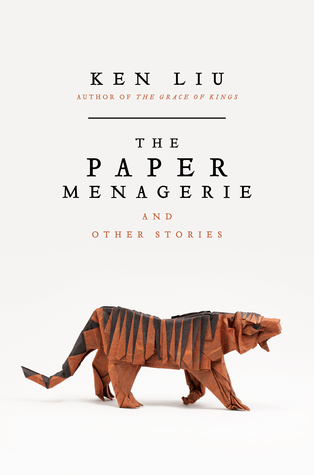
The Paper Menagerie by Ken Liu
The first time I saw this book, a stranger was reading it in Japanese. I thought it looked interesting, but didn't give it a second thought. But after enjoying The Three Body Problem (which he translated) and having loved The Grace of Kings (which he wrote), I decided to pick this up. As you can probably guess, I had high expectations for this collection.
The stories in this collection are:
- The Book Making Habits or Select Species: This is just an exploration/worldbuilding piece on how other alien species might read. There isn’t any plot but it’s still a cute piece.
- State Change: I loved this one! It’s about Rina, this girl who’s soul is an ice-cube. Her life revolves around making sure her soul doesn’t melt, until she meets an interesting guy in the office. I felt that this was such a great story because it had a good plot with twist, great characters, and a unique setting.
- The Perfect Match: Think of Google’s ledger, if it came to life. But, the story questions of the huge company running the internet is good or bad, which adds another layer of nuance to this story about preferences, algorithms, and free will. Another story that I loved.
- Good Hunting: A story about hunting hulijing and what happens when Western ‘magic’ invades. An East vs West clash kinda story but very captivating.
- Literomancer: Another East meets West story, but this time of an American girl who moves to Taiwan and meets a Literomancer, a man who divines meanings from words. It adds in politics to turn the charming story into a sad one.
- Simulacrum: Another very strong story that I really enjoyed, centered around a father and daughter, about how holograms, recording memories, and what it means to betray another.
- The Regular: Someone is killing high class prostitutes. Ruth Law is asked to find out why. I almost skipped this because the first section is pretty graphic but it turned out to be a good crime story.
- The Paper Menagerie: About a half-Chinese boy who tries to reject his Chinese half, and his mother who makes living, moving paper animals for him. It’s a good story, but somehow, it didn’t touch me.
- An Advanced Readers’ Picture Book of Comparative Cognition: I did not understand this one.
- The Waves: A story about people on the space ship and the choice between immortality and letting your kid grow up. I felt that it started strong but I lost interest halfway, probably because the ending wasn’t really related to the beginning.
- Mono no Aware: It’s the story of this sole Japanese guy on an American spaceship that managed to escape the destruction of earth. Despite the fact that parts of this took place in Kitakyushu and Kagoshima, I didn’t feel like the characters were there at all (I know this is alternate reality but on some level, it should at least feel like the Kyushu I lived in). Which means that I don’t know why he picked a Japanese main character when any other would do.
- All the Flavours, A Tale of Guan Yu, the Chinese God of War, in America: I didn’t think I would like this but I did! It’s about someone who probably is Guan Yu, moving to America to pan for gold, and the little girl he makes friends with. A good story about how different cultures can meld together.
- A Brief History of the Trans-Pacific Tunnel: An alternate history story where Japan became a world power peacefully and there wasn’t WWII. This story didn’t really engage me for some reason. And I was quite puzzled by these lines:
“ “Hoka no okyakusan ga imasu yo. Nani wo chuumon shimasu ka?” Her Japanese is quite good [...] though she is not using the honorific.”
I didn’t quite understand the “she is not using the honorific” line. The Japanese was in standard Japanese, the kind that is fine for strangers and that I’ve heard in many restaurants. So I don’t get why it’s singled out. If the author is referring to “keigo”, then yeah I get it but I would think that if they were going the five-star service way, there’s no way that she would have said “hoka no okyakusan ga imasu yo”, even in the ultra-polite form.
I feel like if I said that at my former workplace, the managers would have told me off for making the customer uncomfortable because we are not to rush them.
- The Litigation Master and the Monkey King: I loved this historical fiction story. It’s based on the Yangzhou Massacre and asks the question: “is it more important to do what’s right, or to keep yourself alive?”
- The Man Who Ended History: A Documentary: The last story in this anthology, it’s about a Chinese-American and Japanese-American couple that claim they can get people to literally experience history. I’m not sure if it’s because of the narrative form, but I did not get this story and ended up tuning out halfway.
Overall, I thought this was a pretty good collection! There were a few stories that I just didn’t get, but that’s more on my part than the story’s (I can see that the story is well-written, but it just did not resonate with me emotionally). I would definitely recommend it to fans of science fiction and fantasy.
The stories in this collection are:
- The Book Making Habits or Select Species: This is just an exploration/worldbuilding piece on how other alien species might read. There isn’t any plot but it’s still a cute piece.
- State Change: I loved this one! It’s about Rina, this girl who’s soul is an ice-cube. Her life revolves around making sure her soul doesn’t melt, until she meets an interesting guy in the office. I felt that this was such a great story because it had a good plot with twist, great characters, and a unique setting.
- The Perfect Match: Think of Google’s ledger, if it came to life. But, the story questions of the huge company running the internet is good or bad, which adds another layer of nuance to this story about preferences, algorithms, and free will. Another story that I loved.
- Good Hunting: A story about hunting hulijing and what happens when Western ‘magic’ invades. An East vs West clash kinda story but very captivating.
- Literomancer: Another East meets West story, but this time of an American girl who moves to Taiwan and meets a Literomancer, a man who divines meanings from words. It adds in politics to turn the charming story into a sad one.
- Simulacrum: Another very strong story that I really enjoyed, centered around a father and daughter, about how holograms, recording memories, and what it means to betray another.
- The Regular: Someone is killing high class prostitutes. Ruth Law is asked to find out why. I almost skipped this because the first section is pretty graphic but it turned out to be a good crime story.
- The Paper Menagerie: About a half-Chinese boy who tries to reject his Chinese half, and his mother who makes living, moving paper animals for him. It’s a good story, but somehow, it didn’t touch me.
- An Advanced Readers’ Picture Book of Comparative Cognition: I did not understand this one.
- The Waves: A story about people on the space ship and the choice between immortality and letting your kid grow up. I felt that it started strong but I lost interest halfway, probably because the ending wasn’t really related to the beginning.
- Mono no Aware: It’s the story of this sole Japanese guy on an American spaceship that managed to escape the destruction of earth. Despite the fact that parts of this took place in Kitakyushu and Kagoshima, I didn’t feel like the characters were there at all (I know this is alternate reality but on some level, it should at least feel like the Kyushu I lived in). Which means that I don’t know why he picked a Japanese main character when any other would do.
- All the Flavours, A Tale of Guan Yu, the Chinese God of War, in America: I didn’t think I would like this but I did! It’s about someone who probably is Guan Yu, moving to America to pan for gold, and the little girl he makes friends with. A good story about how different cultures can meld together.
- A Brief History of the Trans-Pacific Tunnel: An alternate history story where Japan became a world power peacefully and there wasn’t WWII. This story didn’t really engage me for some reason. And I was quite puzzled by these lines:
“ “Hoka no okyakusan ga imasu yo. Nani wo chuumon shimasu ka?” Her Japanese is quite good [...] though she is not using the honorific.”
I didn’t quite understand the “she is not using the honorific” line. The Japanese was in standard Japanese, the kind that is fine for strangers and that I’ve heard in many restaurants. So I don’t get why it’s singled out. If the author is referring to “keigo”, then yeah I get it but I would think that if they were going the five-star service way, there’s no way that she would have said “hoka no okyakusan ga imasu yo”, even in the ultra-polite form.
I feel like if I said that at my former workplace, the managers would have told me off for making the customer uncomfortable because we are not to rush them.
- The Litigation Master and the Monkey King: I loved this historical fiction story. It’s based on the Yangzhou Massacre and asks the question: “is it more important to do what’s right, or to keep yourself alive?”
- The Man Who Ended History: A Documentary: The last story in this anthology, it’s about a Chinese-American and Japanese-American couple that claim they can get people to literally experience history. I’m not sure if it’s because of the narrative form, but I did not get this story and ended up tuning out halfway.
Overall, I thought this was a pretty good collection! There were a few stories that I just didn’t get, but that’s more on my part than the story’s (I can see that the story is well-written, but it just did not resonate with me emotionally). I would definitely recommend it to fans of science fiction and fantasy.
Labels:
fantasy
,
science fiction
,
short story
Tuesday, July 3, 2018
The SEA is Ours edited by Jaymee Goh and Joyce Chng
Found this in the library and decided to borrow it for the SEA Reading Challenge! Like the title says, this is an anthology of short stories set in Southeast Asia, largely by Southeast Asian authors (from the back it seems like at least half the authors were born and raised in Southeast Asia while the rest have Southeast Asian roots). There are twelve stories in this anthology and they are:
The collection starts with a short introduction that, to be very honest, left me with a bad impression of the book before I started reading (good thing I borrowed the book without reading the introduction). It felt so angry and I didn’t really understand why - as far as I could tell, they were angry at the tropes in steampunk (Victorian England) because of diversity. Not sure how they connect but the anger was palpable.
There are twelve stories in this anthology and they are:
1. On the Consequence of Sound: This was about flying and flying whales! Very cool and I liked how Tagalog was woven into the stories - I was asking Jo Jie Jie about the sentences. It’s a pretty haunting story about ambition and sacrifice and a strong start to the collection.
2. Chasing Volcanoes: Another story set in the Philippines and another really good one! It’s set on an airship and has two strong female characters - the captain and the rebel princess who’s trying to save a village.
3. Ordained: This seems to be a family drama but to be honest, it was too short and I couldn’t grasp the story.
4. The Last Aswang: My brother and I have been talking about aswang with Jo Jie Jie and so I was really excited for this story. Unfortunately, it was a letdown. Perhaps it was the influence of the introduction (I really don’t like activist fiction, it’s not my thing) but this felt like an “our culture is better than the colonial culture” sort of story. Which could be good if done well (the story Devil Wind from Young Warriors is a good example), but in this case, it felt like the author started with a message in mind, which totally did not appeal to me.
5. Life under Glass: This was a short story about hunting rare creatures. I kind of wish it was longer because I didn’t get a chance to connect with the main character.
6. Between Severed Souls: It took me a little while to get into this story about a Filipino Pygmalion in the midst of a civil war but when I did, I thoroughly enjoyed it. The steampunk elements fit in well and I felt like all the characters had their own motivations and hurts, which made them come to life.
7. The Unmaking of Cuadro Amoroso: This was pretty good - three genius students plan and execute their revenge after the fourth in their group dies. Again, it took me a while to understand what was going on but the ending was very satisfying.
8. Working Woman: A steampunk story set in colonial Singapore, with triad lords and half-machine Samsui women. This was definitely one of the strongest stories in the book and one of my favourites because it had plot, it had strong characters, and it was in a world that was strange yet familiar. Would definitely recommend this to people looking for a Singapore steampunk story.
9. Spider Here: Another Singaporean steampunk story but this one wasn’t as strong was Working Woman. The world was intriguing, with the idea of ‘threads’ in living creatures that can be manipulated and a protagonist in a walking chair, but I wasn’t clear about what was happening even by the end of the story.
10. The Chamber of Souls: This was Vietnamese steampunk and one of the stronger stories in the collection. It deals with a group of refugees who are accepted into what seems like paradise - until they’re under attack. Add in a robot whose main purpose is to serve tea and store souls and you’ve got a story that kept me interested until the end.
11. Petrified: Another story taking place on a steamship, this was a fairly enjoyable (but also sad) tale with automatons that can pass for human. It felt like most of the action took place off the page (told to us in a recap) but I liked the concept, start, and ending.
12. The Insects and Women Sing Together: The last story in the collection was, sadly, a weak ending. Like with Ordained and Life Under Glass, I didn’t understand what was going on, even at the end.
Overall, this was a pretty uneven collection. It’s a pity because I am always for tropes being broken in a smart manner, but some of the stories didn’t connect and/or make sense to me. There were some good stories, but I went into this collection expecting an anthology as strong as Track Faults and Other Glitches and sadly, I didn’t find it.
The collection starts with a short introduction that, to be very honest, left me with a bad impression of the book before I started reading (good thing I borrowed the book without reading the introduction). It felt so angry and I didn’t really understand why - as far as I could tell, they were angry at the tropes in steampunk (Victorian England) because of diversity. Not sure how they connect but the anger was palpable.
There are twelve stories in this anthology and they are:
1. On the Consequence of Sound: This was about flying and flying whales! Very cool and I liked how Tagalog was woven into the stories - I was asking Jo Jie Jie about the sentences. It’s a pretty haunting story about ambition and sacrifice and a strong start to the collection.
2. Chasing Volcanoes: Another story set in the Philippines and another really good one! It’s set on an airship and has two strong female characters - the captain and the rebel princess who’s trying to save a village.
3. Ordained: This seems to be a family drama but to be honest, it was too short and I couldn’t grasp the story.
4. The Last Aswang: My brother and I have been talking about aswang with Jo Jie Jie and so I was really excited for this story. Unfortunately, it was a letdown. Perhaps it was the influence of the introduction (I really don’t like activist fiction, it’s not my thing) but this felt like an “our culture is better than the colonial culture” sort of story. Which could be good if done well (the story Devil Wind from Young Warriors is a good example), but in this case, it felt like the author started with a message in mind, which totally did not appeal to me.
5. Life under Glass: This was a short story about hunting rare creatures. I kind of wish it was longer because I didn’t get a chance to connect with the main character.
6. Between Severed Souls: It took me a little while to get into this story about a Filipino Pygmalion in the midst of a civil war but when I did, I thoroughly enjoyed it. The steampunk elements fit in well and I felt like all the characters had their own motivations and hurts, which made them come to life.
7. The Unmaking of Cuadro Amoroso: This was pretty good - three genius students plan and execute their revenge after the fourth in their group dies. Again, it took me a while to understand what was going on but the ending was very satisfying.
8. Working Woman: A steampunk story set in colonial Singapore, with triad lords and half-machine Samsui women. This was definitely one of the strongest stories in the book and one of my favourites because it had plot, it had strong characters, and it was in a world that was strange yet familiar. Would definitely recommend this to people looking for a Singapore steampunk story.
9. Spider Here: Another Singaporean steampunk story but this one wasn’t as strong was Working Woman. The world was intriguing, with the idea of ‘threads’ in living creatures that can be manipulated and a protagonist in a walking chair, but I wasn’t clear about what was happening even by the end of the story.
10. The Chamber of Souls: This was Vietnamese steampunk and one of the stronger stories in the collection. It deals with a group of refugees who are accepted into what seems like paradise - until they’re under attack. Add in a robot whose main purpose is to serve tea and store souls and you’ve got a story that kept me interested until the end.
11. Petrified: Another story taking place on a steamship, this was a fairly enjoyable (but also sad) tale with automatons that can pass for human. It felt like most of the action took place off the page (told to us in a recap) but I liked the concept, start, and ending.
12. The Insects and Women Sing Together: The last story in the collection was, sadly, a weak ending. Like with Ordained and Life Under Glass, I didn’t understand what was going on, even at the end.
Overall, this was a pretty uneven collection. It’s a pity because I am always for tropes being broken in a smart manner, but some of the stories didn’t connect and/or make sense to me. There were some good stories, but I went into this collection expecting an anthology as strong as Track Faults and Other Glitches and sadly, I didn’t find it.
Labels:
eastern
,
fiction
,
SEA reading challenge
,
short story
,
steampunk
Monday, May 21, 2018
Track Faults and Other Glitches by Nicholas Yong
I haven’t been reading much Singapore books (or SEAsian books for that matter) but this short story collection was really great and I'm really grateful to the person who recommended this to me.
Track Faults and Other Glitches is a collection of collection of stories set in Singapore. The stories are:
- The Ministry of Zombie Advancement: A very fun, unique tale about zombies in Singapore. The zombies in Singapore concept reminded me of Land of the Meat Munchers, and I realised that it was by the same author! No wonder I liked this.
- You’ll Believe a Man Can Fly: About seeing superheroes at work. The ending was ambiguous which makes it interesting to speculate about.
- Wake Me Up When It’s 2116: Not a good idea to read this in the train because I was tearing up by the end of it! It’s about progress and human life and reminds me of some of Bradbury’s short stories (which are also referenced here). This is one of my favourite stories in the collection.
- Track Fault: Another one of my favourite stories in this book, this deals with an MRT train that goes missing. Warning: there are no answers to this mystery but the story is so good!
- Haru & Hui Ling: These are actually two stories but they are two parts of one whole. It’s about the bond between dogs and their human families but also about love and loss.
- Three Nights in Camp: an NS ghost story. Kinda ambivalent on this one, but I think it’s because I haven’t gone through NS.
- A Dream Within A Dream: this is about a guy in a coma and I actually thought it was a little confusing but it still tugged at my heartstrings. I don’t know what’s going on, but the story made me feel.
- Polling Day: One of the weaker stories in my collection, in my opinion. It follows a reporter as he finds out that the opposition has won all contest seats. Very timely, given the recent election in Malaysia but I didn’t really get the story.
- The Uncle in the Kopitiam: The last story in the collection, this is a story within a story, reaching back to the folklore of Singapore. I really enjoyed the twist and I like this story.
Overall, I really enjoyed this collection! It was really well-written and extremely fun to read. Each story has a message, but the message doesn’t overpower the story like some local short stories do. I am totally hoping to find more stories like this!
Track Faults and Other Glitches is a collection of collection of stories set in Singapore. The stories are:
- The Ministry of Zombie Advancement: A very fun, unique tale about zombies in Singapore. The zombies in Singapore concept reminded me of Land of the Meat Munchers, and I realised that it was by the same author! No wonder I liked this.
- You’ll Believe a Man Can Fly: About seeing superheroes at work. The ending was ambiguous which makes it interesting to speculate about.
- Wake Me Up When It’s 2116: Not a good idea to read this in the train because I was tearing up by the end of it! It’s about progress and human life and reminds me of some of Bradbury’s short stories (which are also referenced here). This is one of my favourite stories in the collection.
- Track Fault: Another one of my favourite stories in this book, this deals with an MRT train that goes missing. Warning: there are no answers to this mystery but the story is so good!
- Haru & Hui Ling: These are actually two stories but they are two parts of one whole. It’s about the bond between dogs and their human families but also about love and loss.
- Three Nights in Camp: an NS ghost story. Kinda ambivalent on this one, but I think it’s because I haven’t gone through NS.
- A Dream Within A Dream: this is about a guy in a coma and I actually thought it was a little confusing but it still tugged at my heartstrings. I don’t know what’s going on, but the story made me feel.
- Polling Day: One of the weaker stories in my collection, in my opinion. It follows a reporter as he finds out that the opposition has won all contest seats. Very timely, given the recent election in Malaysia but I didn’t really get the story.
- The Uncle in the Kopitiam: The last story in the collection, this is a story within a story, reaching back to the folklore of Singapore. I really enjoyed the twist and I like this story.
Overall, I really enjoyed this collection! It was really well-written and extremely fun to read. Each story has a message, but the message doesn’t overpower the story like some local short stories do. I am totally hoping to find more stories like this!
Labels:
fiction
,
SEA reading challenge
,
short story
,
Singapore
Tuesday, December 12, 2017
Sketches of Young Gentlemen and Couples by Charles Dickens
I wanted to read something by Charles Dickens before my trip and this looked interesting. Plus the library didn’t have David Copperfield or A Christmas Carol.
Sketches of Young Gentlemen and Young Couples is a collection of ‘sketches’ of different stereotypes of men and couples in Victorian Times. Sketches of Young Gentlemen was written in response to Sketches of Young Ladies by Edward Caswall (aka ‘Quiz’), and so Sketches of Young Ladies is also included in this slim volume. The people profiles include:
- The Young Lady who Sings
- The Literary Young Lady
- The Mysterious Young Lady
- The Bashful Young Gentlemen
- The Political Young Gentlemen
- The Funny Young Gentlemen
- The Loving Couple
- The Couple who Dote upon their Children
- The Egotistical Couple
And much more. In total there are 24 sketches of Young Ladies, 12 of Young Gentlemen and 11 of couples.
There’s also a really long introduction that I stopped reading, although I did learn that “the journalistic format of short fiction, essays, sketches, serials, and miscellaneous writings was very much the dominant mode of publication in the 1830s.
Personally, I really enjoyed these sketches, even those that weren’t by Dickens. Maybe it’s because I’ve read some older fiction, but I recognised a lot of the tropes and enjoyed the satirisation of them. They’re also pretty short, so it’s easy to read a sketch or two when I have some free time.
The main difference between Dickens and Caswall’s sketches is that Caswall speaks a lot more in generalities while Dickens tends to focus on one example of the stereotype. I like both styles so I don’t really have a preference (and they’re not that different anyway).
If you want to try reading Charles Dickens but don’t want to read one of his novels (because they can be quite long), you should consider Sketches of Young Gentlemen and Couples. It’s a pretty slim volume and good for a chuckle, which makes it easy to read.
Sketches of Young Gentlemen and Young Couples is a collection of ‘sketches’ of different stereotypes of men and couples in Victorian Times. Sketches of Young Gentlemen was written in response to Sketches of Young Ladies by Edward Caswall (aka ‘Quiz’), and so Sketches of Young Ladies is also included in this slim volume. The people profiles include:
- The Young Lady who Sings
- The Literary Young Lady
- The Mysterious Young Lady
- The Bashful Young Gentlemen
- The Political Young Gentlemen
- The Funny Young Gentlemen
- The Loving Couple
- The Couple who Dote upon their Children
- The Egotistical Couple
And much more. In total there are 24 sketches of Young Ladies, 12 of Young Gentlemen and 11 of couples.
There’s also a really long introduction that I stopped reading, although I did learn that “the journalistic format of short fiction, essays, sketches, serials, and miscellaneous writings was very much the dominant mode of publication in the 1830s.
Personally, I really enjoyed these sketches, even those that weren’t by Dickens. Maybe it’s because I’ve read some older fiction, but I recognised a lot of the tropes and enjoyed the satirisation of them. They’re also pretty short, so it’s easy to read a sketch or two when I have some free time.
The main difference between Dickens and Caswall’s sketches is that Caswall speaks a lot more in generalities while Dickens tends to focus on one example of the stereotype. I like both styles so I don’t really have a preference (and they’re not that different anyway).
If you want to try reading Charles Dickens but don’t want to read one of his novels (because they can be quite long), you should consider Sketches of Young Gentlemen and Couples. It’s a pretty slim volume and good for a chuckle, which makes it easy to read.
Labels:
fiction
,
short story
Thursday, December 7, 2017
The Kite of Stars by Dean Francis Alfar
I have been wanting to read Dean Francis Alfar ever since I heard about him! To be honest, I wanted to read How to Traverse Terra Incognita but the library only had The Kite of Stars. It’s a really solid collection of short stories, though, so I have no regrets!
There are 18 stories in this collection, and while I didn’t understand a few of these, I liked a lot of what I read. Some of my favourites where:
- L’Aquilone du Estrellas (The Kite of Stars): the titular story about the lengths people go to for love, which had a very sad twist ending.
- Saturdays with Fray Villalobos: a story about a priest who loves food (perhaps a bit too much), which also touches on the subject on religions.
- The Maiden and the Crocodile: Written in the style of a local legend but with the ending first. But it’s only when you get to the start that you understand the ending.
- How Rosang Taba Won a Race: a very fun story about getting the better of the colonial masters. Lots of Tagalog in this one, which is why I brought the book to Jo-Jie Jie for help. (Although you can get the gist of the story without knowing Tagalog)
- An Excerpt from Princes of the Sultanate: I like this mainly for the form because it tells a story through footnotes (and in the medium of a short story too)
What I like about these stories is how inventive they are. They all have twists in them or are a new form of a familiar topic. If you’re in the mood for short stories, you’ll probably find one to suit you here.
There are 18 stories in this collection, and while I didn’t understand a few of these, I liked a lot of what I read. Some of my favourites where:
- L’Aquilone du Estrellas (The Kite of Stars): the titular story about the lengths people go to for love, which had a very sad twist ending.
- Saturdays with Fray Villalobos: a story about a priest who loves food (perhaps a bit too much), which also touches on the subject on religions.
- The Maiden and the Crocodile: Written in the style of a local legend but with the ending first. But it’s only when you get to the start that you understand the ending.
- How Rosang Taba Won a Race: a very fun story about getting the better of the colonial masters. Lots of Tagalog in this one, which is why I brought the book to Jo-Jie Jie for help. (Although you can get the gist of the story without knowing Tagalog)
- An Excerpt from Princes of the Sultanate: I like this mainly for the form because it tells a story through footnotes (and in the medium of a short story too)
What I like about these stories is how inventive they are. They all have twists in them or are a new form of a familiar topic. If you’re in the mood for short stories, you’ll probably find one to suit you here.
Labels:
fiction
,
SEA reading challenge
,
short story
Friday, November 10, 2017
Father Brown: The Essential Tales by G.K. Chesterton
Father Brown: The Essential Tales is supposed to be a "definitive collection" of fifteen of the Father Brown mysteries (short stories) by G. K. Chesterton, selected by the American Chesterton Society and with an introduction by P. D. James.
If you don't know about Father Brown, he's this little priest who uses his knowledge of human nature to solve crimes. But this being Chesterton, the writing is rich and lyrical and Father Brown is definitely not a conventional detective. He takes leaps of logic that end up making sense because it follows the human heart.
These stories are really more about the human condition as Chesterton saw it than a normal mystery. The writing is a lot more lyrical than something by say, Agatha Christie (who I also love dearly) and contains sentences like:
I think the Father Brown stories are for fans of Chesterton, for people who already like Orthodoxy or The Man Who Was Thursday. While I adore his writing, I realise it's not for everyone so you may want to try a story or two before deciding if you want to read the whole book.
If you don't know about Father Brown, he's this little priest who uses his knowledge of human nature to solve crimes. But this being Chesterton, the writing is rich and lyrical and Father Brown is definitely not a conventional detective. He takes leaps of logic that end up making sense because it follows the human heart.
These stories are really more about the human condition as Chesterton saw it than a normal mystery. The writing is a lot more lyrical than something by say, Agatha Christie (who I also love dearly) and contains sentences like:
"A man who does next to nothing but hear men's real sons is not likely to be wholly unaware of human nature."And
"Humility is the mother of giants. One sees great things from the valley; only small things from the peak.
[...]
'I know a man,' he said, 'who began by worshipping with others before the altar, but who grew fond of high and lonely places to pray from, corners or niches in the belfry or the spire. And in one of those dizzy places, where the whole world seemed to turn under him like a wheel, his rained turned also and he fancied he was God. So that though he was a good man, he committed a great crime.' "Father Brown is the central figure in all these stories. Occasionally, someone called Flambeau will appear, first as a master thief and then as a semi-private detective (and Father Brown's friend). But there isn't a Watson or Hastings, so it's best not to expect one. Of Flambeau, he is once described (as he packs for a boat journey):
"Flambeau had stocked it with such things as his special philosophy considered necessary. They reduced themselves, apparently, to four essentials: tins of salmon, if he should want to eat; loaded revolvers, if he should want to fight, a bottle of brandy, presumably in case he should faint; and a priest, presumably in case he should die."Which I think is a wonderful description of him. My favourite stories definitely feature him.
I think the Father Brown stories are for fans of Chesterton, for people who already like Orthodoxy or The Man Who Was Thursday. While I adore his writing, I realise it's not for everyone so you may want to try a story or two before deciding if you want to read the whole book.
Labels:
fiction
,
mystery
,
short story
,
western
Monday, August 14, 2017
Beauty and the Beast: Classic Tales of Animal Brides and Grooms from Around the World edited by Maria Tatar
Finally picked up this book, which I got aaaaalllllll the way back in June when I went back to Singapore. I've been 'saving' it for no particular reason and I can sort of see why. This was a good read and the anticipation of reading it made it even better.
(Also I just found out that NLB has an ecopy but I love that I have my own. Some books you just want to own)
Anyway, this collection of stories really is from around the world. Apart from the usual Western suspects, I saw stories from India, Japan, Ghana, Myanmar and much more. The only (to me really obvious) country that was left out was China. I mean, how can you miss Madame White Snake or any number of tales about humans and foxes? But I digress.
The stories are organised by topic, and they are:
1. Model couples from ancient times
2. Charismatic couples in the popular imagination
3. Animal grooms
4. Animal brides
The first two categories had tales that were familiar to me, but most of the stories in the latter two categories weren't. I enjoyed them all.
What makes this book stand out from other collections is the introduction! There is a very interesting introduction by Maria Tatar, covering things like classification, background to the tales and what they mean to humans. And there is a one-paragraph introduction to each tale, which provided background and a little bit of commentary without any spoilers.
If you are a fan of fairy tales, you will want a copy of this book. Apart from the introductions, there is real value in being able to read and compare tales like this from a variety of cultures. They show that we aren't as different as we might think (although obviously we aren't all identical because that would be boring)
(Also I just found out that NLB has an ecopy but I love that I have my own. Some books you just want to own)
Anyway, this collection of stories really is from around the world. Apart from the usual Western suspects, I saw stories from India, Japan, Ghana, Myanmar and much more. The only (to me really obvious) country that was left out was China. I mean, how can you miss Madame White Snake or any number of tales about humans and foxes? But I digress.
The stories are organised by topic, and they are:
1. Model couples from ancient times
2. Charismatic couples in the popular imagination
3. Animal grooms
4. Animal brides
The first two categories had tales that were familiar to me, but most of the stories in the latter two categories weren't. I enjoyed them all.
What makes this book stand out from other collections is the introduction! There is a very interesting introduction by Maria Tatar, covering things like classification, background to the tales and what they mean to humans. And there is a one-paragraph introduction to each tale, which provided background and a little bit of commentary without any spoilers.
If you are a fan of fairy tales, you will want a copy of this book. Apart from the introductions, there is real value in being able to read and compare tales like this from a variety of cultures. They show that we aren't as different as we might think (although obviously we aren't all identical because that would be boring)
Labels:
fairy-tales
,
short story
Thursday, June 29, 2017
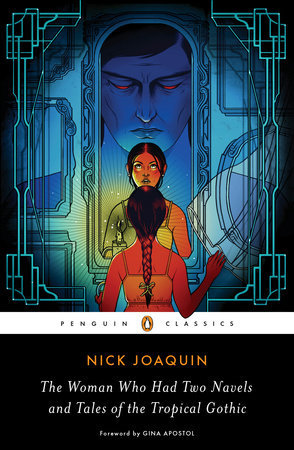
The Woman Who Had Two Navels and Tales of the Tropical Gothic by Nick Joaquin
Finally finished another book for the SEA Reading Challenge and this is probably my favourite book so far!
The Woman With Two Navels and tales of the tropical Gothic is a collection of short stories by Nick Joaquin, who is apparently very famous in Philippines but sadly unknown almost anywhere else (at least that's what I got from the introduction before I skipped it because I do not want to read literary analysis before I read the text).
These are stories that you experience rather than read. I've never been to the Philippines so I can't tell if this is an accurate picture of the country, but the stories gave me the impression of heat, of humidity that might choke you, of the chaos of life and everything I've said so far sounds universal (at least to SEA) but it also feels so specific. I would, for example, never mistake these stories for being set in Singapore or Malaysia.
Each story is a snapshot of an aspect of life, and if I'm honest I don't quite get what they're about, but they make me feel. It's intense and amazing. Even the last story, 'A Portrait of the Artist as Filipino', which is actually a play in three acts and which I was unsure if I could pay enough attention managed to pull me in and make me experience a squabbling family with a treasure that functions more like a threat.
Warning: the sentences here are really long and you will need to come up for air every now and then, but I find that the language is beautiful without being distracting. I admire it when I've closed the book but when I'm reading, it feels really immersive.
I really, really love this book. I do not understand it, probably because that requires work and I haven't analysed anything since IB (I think?) but it was such a fantastic reading experience. It's available from the NLB's ebook lending service too so as long as you have a phone you can get this too.
The Woman With Two Navels and tales of the tropical Gothic is a collection of short stories by Nick Joaquin, who is apparently very famous in Philippines but sadly unknown almost anywhere else (at least that's what I got from the introduction before I skipped it because I do not want to read literary analysis before I read the text).
These are stories that you experience rather than read. I've never been to the Philippines so I can't tell if this is an accurate picture of the country, but the stories gave me the impression of heat, of humidity that might choke you, of the chaos of life and everything I've said so far sounds universal (at least to SEA) but it also feels so specific. I would, for example, never mistake these stories for being set in Singapore or Malaysia.
Each story is a snapshot of an aspect of life, and if I'm honest I don't quite get what they're about, but they make me feel. It's intense and amazing. Even the last story, 'A Portrait of the Artist as Filipino', which is actually a play in three acts and which I was unsure if I could pay enough attention managed to pull me in and make me experience a squabbling family with a treasure that functions more like a threat.
Warning: the sentences here are really long and you will need to come up for air every now and then, but I find that the language is beautiful without being distracting. I admire it when I've closed the book but when I'm reading, it feels really immersive.
I really, really love this book. I do not understand it, probably because that requires work and I haven't analysed anything since IB (I think?) but it was such a fantastic reading experience. It's available from the NLB's ebook lending service too so as long as you have a phone you can get this too.
Labels:
Best Of
,
fiction
,
SEA reading challenge
,
short story
Monday, June 26, 2017
Death on the Air and Other Stories by Ngaio Marsh
Finally read this! Chose it because it was the only non-audiobook Book from Ngaio Marsh that the NLB had.
I skipped over the introduction (stopped when they mentioned she writes better than Agatha Christie because I do not need to have inflated expectations) and dove straight into the stories.
The first two 'stories' are Ngaio Marsh discussing two of her recurring characters - Alleyn and Troy. It was interesting but I don't know them so I wasn't emotionally engaged.
And then it was time for the short stories. On the whole, I enjoyed them, although the shorter short stories were a bit confusing. Perhaps it's because of the constraints of length (or lack of), but with the short stories, I had trouble understanding how a deduction was reached. A lot of the time, it felt like a hunch or a natural series of events rather than a deduction. But they were still enjoyable.
Two stories that I particularly liked were:
Chapter and Verse: concerning an old family Bible that hints at murders having been committed. The only problem is that the victims never existed!
The Cupid Mirror: great twist at the end, won't say anymore so I won't spoil it.
The last story is a screenplay which was actually more exciting than I thought. I'm not very fond of screenplays, but this one held my attention. It's about the trial of the murder of the dog and both the plaintiff and the defendant are unpleasant characters and the case was very ambiguous, which made for a head-scratcher.
The last entry is her advice to a young person who wants to be a writer. The parts concerning publishing companies are out of date, but the rest of the letter was really good (especially her reply to the offer to write a book together).
On the whole, I don't think that starting with a collection of short stories was a good idea, but I enjoyed the book and I definitely would read a full-length novel starring Alleyn if I had the chance.
I skipped over the introduction (stopped when they mentioned she writes better than Agatha Christie because I do not need to have inflated expectations) and dove straight into the stories.
The first two 'stories' are Ngaio Marsh discussing two of her recurring characters - Alleyn and Troy. It was interesting but I don't know them so I wasn't emotionally engaged.
And then it was time for the short stories. On the whole, I enjoyed them, although the shorter short stories were a bit confusing. Perhaps it's because of the constraints of length (or lack of), but with the short stories, I had trouble understanding how a deduction was reached. A lot of the time, it felt like a hunch or a natural series of events rather than a deduction. But they were still enjoyable.
Two stories that I particularly liked were:
Chapter and Verse: concerning an old family Bible that hints at murders having been committed. The only problem is that the victims never existed!
The Cupid Mirror: great twist at the end, won't say anymore so I won't spoil it.
The last story is a screenplay which was actually more exciting than I thought. I'm not very fond of screenplays, but this one held my attention. It's about the trial of the murder of the dog and both the plaintiff and the defendant are unpleasant characters and the case was very ambiguous, which made for a head-scratcher.
The last entry is her advice to a young person who wants to be a writer. The parts concerning publishing companies are out of date, but the rest of the letter was really good (especially her reply to the offer to write a book together).
On the whole, I don't think that starting with a collection of short stories was a good idea, but I enjoyed the book and I definitely would read a full-length novel starring Alleyn if I had the chance.
Labels:
mystery
,
short story
,
western
Thursday, January 19, 2017
While the Light Lasts by Agatha Christie
This is another one of the books I bought during the new year! Being an Agatha Christie fan, I couldn't pass up a chance to read a collection of her short stories. There are nine in this collection, each with an afterward that talks a little about them. The stories are:
The House of Dreams: about a guy that dreams about a beautiful house, and then meets a girl that refuses to marry him. Very sad and a bit creepy.
The Actress: I really enjoyed this one, which is about how a girl decides to outsmart her blackmailer. She remade herself into an actress, and nothing will make her fall. Normally, she'll be the villain but in this case, she's the hero.
The Edge: I've either read this before or Agatha Christie's used it for one of her novels. A woman discovers that the wife of the man she loves is having an affair. But she has to do the moral thing, which is to...
Christmas Adventure: the BBC made this into a radio drama under one of its other names "The Adventure of the Christmas Pudding". I'm not sure if this is the rewritten version since the structure is different (but the resolution and case the same), but it stars Hercule Poirot which makes it enjoyable (even if Christie wanted to kill him).
The Lonely God: this is a very strange romance, because while it has a Happily Ever After, it doesn't have a lot of what I associate with the romance genre. It could very well lead to a murder mystery, that's the kind of atmosphere the story had.
Manx Gold: I dare say that if I was alive when this was part of a treasure hunt I would have loved it, but reading it now, I just felt confused. Plus I wasn't a fan of the protagonists, who were modelled after Tommy and Tuppence.
With a Wall: Possibly my favourite story of the collection, even with (or perhaps because) of its ambiguous ending. About the relationship between artist, his wife, and the muse he doesn't realise is his muse.
The Mystery of the Baghdad Chest: I feel like I've read it, but I guess it's because it's a Poirot and I've read quite a lot of stories featuring him. It's an entertaining mystery where me trying to summarise it will only spoil it, so I shan't.
While the Light Lasts: Apparently this was inspiration for her Mary Westmacott books, which I'm very interested in reading now. A wife discovers that the love of her life wasn't killed in war. But can she give up her creature comforts for love? (Not a mystery though)
Overall, I really enjoyed this and I'd recommend it to anyone who's a fan of Agatha Christie. It shows that she doesn't just write mysteries.
The House of Dreams: about a guy that dreams about a beautiful house, and then meets a girl that refuses to marry him. Very sad and a bit creepy.
The Actress: I really enjoyed this one, which is about how a girl decides to outsmart her blackmailer. She remade herself into an actress, and nothing will make her fall. Normally, she'll be the villain but in this case, she's the hero.
The Edge: I've either read this before or Agatha Christie's used it for one of her novels. A woman discovers that the wife of the man she loves is having an affair. But she has to do the moral thing, which is to...
Christmas Adventure: the BBC made this into a radio drama under one of its other names "The Adventure of the Christmas Pudding". I'm not sure if this is the rewritten version since the structure is different (but the resolution and case the same), but it stars Hercule Poirot which makes it enjoyable (even if Christie wanted to kill him).
The Lonely God: this is a very strange romance, because while it has a Happily Ever After, it doesn't have a lot of what I associate with the romance genre. It could very well lead to a murder mystery, that's the kind of atmosphere the story had.
Manx Gold: I dare say that if I was alive when this was part of a treasure hunt I would have loved it, but reading it now, I just felt confused. Plus I wasn't a fan of the protagonists, who were modelled after Tommy and Tuppence.
With a Wall: Possibly my favourite story of the collection, even with (or perhaps because) of its ambiguous ending. About the relationship between artist, his wife, and the muse he doesn't realise is his muse.
The Mystery of the Baghdad Chest: I feel like I've read it, but I guess it's because it's a Poirot and I've read quite a lot of stories featuring him. It's an entertaining mystery where me trying to summarise it will only spoil it, so I shan't.
While the Light Lasts: Apparently this was inspiration for her Mary Westmacott books, which I'm very interested in reading now. A wife discovers that the love of her life wasn't killed in war. But can she give up her creature comforts for love? (Not a mystery though)
Overall, I really enjoyed this and I'd recommend it to anyone who's a fan of Agatha Christie. It shows that she doesn't just write mysteries.
Labels:
fiction
,
short story
,
western
Monday, December 12, 2016
Winter Solstice: Short Stories from the Worlds of KP Novels
I wonder if you've heard of Kindle Scout before. It's this program where you can read an exerpt of a book and then vote for it (up to 3 books at a time). At the end of the campaign, the Kindle Scout staff will review the book and decide whether to publish it or not. I've actually voted for a few, then I realised that my Amazon account wouldn't let me download them because I was voting with a non-Japan store (same email though, so that's weird). Finally, though, I managed to read it using the cloud reader and that brings me to this novel - short stories from various Kindle Scout winners. All the stories are related to the world, and hopefully I'll find a few that I like and that I voted for (and thus received a free copy.
There are several categories involved in this, so let me go through them one by one:
Romance - I'm not really on a romance kick now, but I thought they were pretty good. Out of the three stories, I liked "Coconutty Christmas: Holiday in Hawaii", which was a fun look at what happens when a staff member of a Hawaiian resort gets attracted to one of the guests (and vice versa)
Sci-Fi, Fantasy, & Horror - I thought the stories here were really strong, but that's probably because I've always like these genres. I liked all three, but my vote for this category would be for Awash in Christmas Spirit, which is about Beth, a 15 year old who can heal people. Kind of sadly, I didn't vote for this so I don't have a copy to read.
Mystery, Thriller, & Suspense - This was the most uneven category for me (and the one with 6 stories, twice the number of the previous two). Some stories were great, while I just wasn't feeling a few of the stories - there were some passages where I felt like information was being recapped. I really liked Killing Anna, which had a really great twist that left me questioning who the real killer was. The book it's related to is Random Acts of Unkindness, which I actually voted for and have! Quite excited to read that! All I Want for Christmas was pretty good too, and I liked how the story moved (and the fact that it had a happy ending! If it's a Christmas story or has Christmas in the title, I kinda want it to have a happy ending).
Literary Fiction - There was only one story here, and I wasn't really feeling it, but I'm picky when it comes to literary fiction anyway.
Overall, this is a pretty good collection to get if you've got a bunch of books and you don't know what to read first. The stories should be pretty representative of the author, and I'm hoping that if I like the short story, I'll enjoy the novel too. After all, I did like the first few chapters enough to vote for it.
Disclaimer: I received a free copy of this book in exchange for a free and honest review.
There are several categories involved in this, so let me go through them one by one:
Romance - I'm not really on a romance kick now, but I thought they were pretty good. Out of the three stories, I liked "Coconutty Christmas: Holiday in Hawaii", which was a fun look at what happens when a staff member of a Hawaiian resort gets attracted to one of the guests (and vice versa)
Sci-Fi, Fantasy, & Horror - I thought the stories here were really strong, but that's probably because I've always like these genres. I liked all three, but my vote for this category would be for Awash in Christmas Spirit, which is about Beth, a 15 year old who can heal people. Kind of sadly, I didn't vote for this so I don't have a copy to read.
Mystery, Thriller, & Suspense - This was the most uneven category for me (and the one with 6 stories, twice the number of the previous two). Some stories were great, while I just wasn't feeling a few of the stories - there were some passages where I felt like information was being recapped. I really liked Killing Anna, which had a really great twist that left me questioning who the real killer was. The book it's related to is Random Acts of Unkindness, which I actually voted for and have! Quite excited to read that! All I Want for Christmas was pretty good too, and I liked how the story moved (and the fact that it had a happy ending! If it's a Christmas story or has Christmas in the title, I kinda want it to have a happy ending).
Literary Fiction - There was only one story here, and I wasn't really feeling it, but I'm picky when it comes to literary fiction anyway.
Overall, this is a pretty good collection to get if you've got a bunch of books and you don't know what to read first. The stories should be pretty representative of the author, and I'm hoping that if I like the short story, I'll enjoy the novel too. After all, I did like the first few chapters enough to vote for it.
Disclaimer: I received a free copy of this book in exchange for a free and honest review.
Labels:
fiction
,
short story
Friday, November 18, 2016
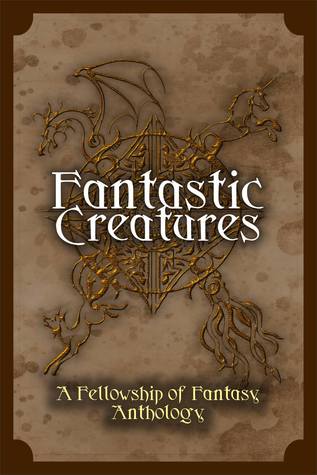
Fantastic Creatures: An Anthology by Fellowship of Fantasy
The Fantastic Creatures anthology is by the Fellowship of Fantasy, a group created to provide a diverse range of fantasy stories, but without graphic scenes or swearing. So it's something that you can let kids read, though it can get pretty dark at times.
There are 21 stories in this anthology, and on the whole, they are really well-written. Generally, I preferred the stories set in a more traditional setting instead of modern day earth, but that's more because of personal preference than story quality. A few that I particularly liked were:
Snapdragon by Lea Doue: It's the princess and the frog, only that the princess is the cursed daughter of a witch (with thorns growing out of her) and the frog is a tiny dragon. I loved it.
Seekers by Intisar Khanani: I am biased because I loved Intisar's stories. This intriguing tale in selkies was short but bittersweet. I would not like to be the father in the tale, but I'm glad things worked out for Maggie.
Skin by Morgan Smith: Resembling a traditional fairytale in tone and plot, this story has an interesting female protagonist (Katya) who ends up gambling with a monstrous prince. And to think it started with a demand for a bride.
Destiny's Flight by Frank Luke: Fantastic Christian fantasy with knights and griffins! If this was a full-length series, I'll buy the book immediately (but it doesn't seem like that). I also liked that the romance was unconventional and that even though the two characters who obviously liked each other didn't end up together, we were left with the promise that they would be happy.
This is turning out to be a too-short review of every other story so I'll stop after Talori and the Shark by Jessica L. Elliot. It reminds me of that myth about Cupid where he got married but his wife wasn't allowed to see his face, only this takes place underwater and with mermaids! Intrigued, right?
ETA: I've been told that this issue has been corrected, but since it's a whole paragraph of the review, I'm just leaving it here. The only story that made me stop and go "oh no" in dismay was The Kappa by Leila Rose Foreman. It's not a bad story, but every time Hanako calls her mother "mama-san", I just wince. And nope, there's no indication that her mother actually is a mama-san. Considering how basic knowledge of this word is (Wikipedia has a page on this - in English!), the mistake shouldn't have been made. I don't know if the author will see this review but hopefully, it gets corrected soon.
Overall, this is a strong and diverse collection of fantasy short stories. There's enough variety in setting and tone and plot that there should be something for everyone.
Disclaimer: I received a free copy of this book from the publisher in exchange for a free and honest review.
There are 21 stories in this anthology, and on the whole, they are really well-written. Generally, I preferred the stories set in a more traditional setting instead of modern day earth, but that's more because of personal preference than story quality. A few that I particularly liked were:
Snapdragon by Lea Doue: It's the princess and the frog, only that the princess is the cursed daughter of a witch (with thorns growing out of her) and the frog is a tiny dragon. I loved it.
Seekers by Intisar Khanani: I am biased because I loved Intisar's stories. This intriguing tale in selkies was short but bittersweet. I would not like to be the father in the tale, but I'm glad things worked out for Maggie.
Skin by Morgan Smith: Resembling a traditional fairytale in tone and plot, this story has an interesting female protagonist (Katya) who ends up gambling with a monstrous prince. And to think it started with a demand for a bride.
Destiny's Flight by Frank Luke: Fantastic Christian fantasy with knights and griffins! If this was a full-length series, I'll buy the book immediately (but it doesn't seem like that). I also liked that the romance was unconventional and that even though the two characters who obviously liked each other didn't end up together, we were left with the promise that they would be happy.
This is turning out to be a too-short review of every other story so I'll stop after Talori and the Shark by Jessica L. Elliot. It reminds me of that myth about Cupid where he got married but his wife wasn't allowed to see his face, only this takes place underwater and with mermaids! Intrigued, right?
ETA: I've been told that this issue has been corrected, but since it's a whole paragraph of the review, I'm just leaving it here. The only story that made me stop and go "oh no" in dismay was The Kappa by Leila Rose Foreman. It's not a bad story, but every time Hanako calls her mother "mama-san", I just wince. And nope, there's no indication that her mother actually is a mama-san. Considering how basic knowledge of this word is (Wikipedia has a page on this - in English!), the mistake shouldn't have been made. I don't know if the author will see this review but hopefully, it gets corrected soon.
Overall, this is a strong and diverse collection of fantasy short stories. There's enough variety in setting and tone and plot that there should be something for everyone.
Disclaimer: I received a free copy of this book from the publisher in exchange for a free and honest review.
Labels:
fantasy
,
short story
Monday, November 14, 2016
Invisible Planets Translated and Edited by Ken Liu
If you read fantasy/steampunk, you may have heard of The Grace of Kings. If you read sci-fi, you may know The Three Body Problem. Ken Liu is related to both these works - he is the author of the former and the translator of the latter. So when I heard that he has translated and edited a collection of Chinese Sci-Fi, I knew I had to read it.
The anthology had stories from Chen Qiufan, Xia Jia, Ma Boyong, Hao Jingfang (who contributed the story that gives the collection its name), Tang Fei, Cheng Jingbo and the man of the hour, Liu Cixin. The authors, while all writing Sci-Fi, all have write in the different subgenres, which makes this a pleasure to read.
I'm not going to review each story individually, but I will say that if you're read The Three Body Problem, Liu Cixin's The Circle will feel familiar to you.
My favourite story has got to be A Hundred Ghosts Parade Tonight, which is about robots, ghosts and even talks about tourism! Actually, I think Xia Jia (the author of this story) is my favourite author of them all because I enjoyed all three stories that were contributed.
Liu Cixin's stuff was good too, though that may be because I already have a very good impression of him. But in general, all the authors wrote enjoyable stories (though I didn't completely understand a few of them).
At the end of the collection, there are three essays: "The world of all possible universes and the best of all possible earths: Three Body and Chinese Science Fiction", "The Torn Generation: Chinese Science Fiction in a Culture of Transition" and "What makes Chinese Science Fiction Chinese?" All three are pretty interesting and definitely worth reading too.
The only part of the book I didn't really agree with was the request not to view the works through Western lens. While I think it's an interesting exercise if the reader wants to, Reader-Response Criticism is a valid way of reading texts. And in its most extreme form (if I'm remembering correctly), the author's intentions don't even factor into the interpretation. I'm all for reading stories the way you want to read them, so asking people to avoid a particular way of reading isn't really something I can get behind. Basically, if you want to read and digest it naturally, go ahead. If you want to try and read without preconceived notions, then go ahead and do that.
Plus, if you have a story about censorship that was censored to pass the Chinese censors, I think it's not a wild/extremely unorthodox thing to read it as being about the censorship by the Chinese government.
If you're looking to widen your reading horizon but still want to stick to the English language, definitely get this collection. It's a good look (though as Ken Liu admits, not comprehensive) at Chinese Sci-Fi.
Disclaimer: I got a free copy of this book from the publisher via NetGalley in exchange for a free and honest review.
The anthology had stories from Chen Qiufan, Xia Jia, Ma Boyong, Hao Jingfang (who contributed the story that gives the collection its name), Tang Fei, Cheng Jingbo and the man of the hour, Liu Cixin. The authors, while all writing Sci-Fi, all have write in the different subgenres, which makes this a pleasure to read.
I'm not going to review each story individually, but I will say that if you're read The Three Body Problem, Liu Cixin's The Circle will feel familiar to you.
My favourite story has got to be A Hundred Ghosts Parade Tonight, which is about robots, ghosts and even talks about tourism! Actually, I think Xia Jia (the author of this story) is my favourite author of them all because I enjoyed all three stories that were contributed.
Liu Cixin's stuff was good too, though that may be because I already have a very good impression of him. But in general, all the authors wrote enjoyable stories (though I didn't completely understand a few of them).
At the end of the collection, there are three essays: "The world of all possible universes and the best of all possible earths: Three Body and Chinese Science Fiction", "The Torn Generation: Chinese Science Fiction in a Culture of Transition" and "What makes Chinese Science Fiction Chinese?" All three are pretty interesting and definitely worth reading too.
The only part of the book I didn't really agree with was the request not to view the works through Western lens. While I think it's an interesting exercise if the reader wants to, Reader-Response Criticism is a valid way of reading texts. And in its most extreme form (if I'm remembering correctly), the author's intentions don't even factor into the interpretation. I'm all for reading stories the way you want to read them, so asking people to avoid a particular way of reading isn't really something I can get behind. Basically, if you want to read and digest it naturally, go ahead. If you want to try and read without preconceived notions, then go ahead and do that.
Plus, if you have a story about censorship that was censored to pass the Chinese censors, I think it's not a wild/extremely unorthodox thing to read it as being about the censorship by the Chinese government.
If you're looking to widen your reading horizon but still want to stick to the English language, definitely get this collection. It's a good look (though as Ken Liu admits, not comprehensive) at Chinese Sci-Fi.
Disclaimer: I got a free copy of this book from the publisher via NetGalley in exchange for a free and honest review.
Labels:
Chinese
,
eastern
,
fiction
,
NetGalley
,
science fiction
,
short story
Friday, September 16, 2016
Trigger Warning by Neil Gaiman
I'm finally back from my camp! It was totally fun, but extremely tiring. Anyway, one of the books I finished before I went for the camp was this Neil Gaiman book of short stories and it is excellent! Neil Gaiman really is a master of the short story format - he's kinda like Roald Dahl, where the stories are dark, disturbing and come with a twist.I liked almost all the stories, but my especial favourites were:
- The Thing about Cassandra, which contained a twist that I did not see coming
- My Last Landlady: a poem, but one with a deliciously dark story.
- Orange: I didn't expect this format (answers to a written questionnaire) to work, but it did and it create an intriguing and self-constrained tale.
- The Case of Death and Honey: a fantastic Sherlock Holmes story, which very cleverly uses a dual story narrative (maybe it's dual-POV?) that eventually merged into one story.
- The Man Who Forgot Ray Bradbury: Neil Gaiman writing about Ray Bradbury, without actually using his name. Of course it's fantastic.
- Nothing O'Clock: a Dr. Who story, but one accessible and interesting even to someone like me, who hasn't watched the show before.
- Observing the Formalities: a fairytale poem. Enough said
There were only two stories that I didn't really get were:
- 'The Truth is a Cave in the Black Mountains...': I'm not sure why, but I didn't really get this story. It kinda dragged for me, and was only interesting towards the end.
- Black Dog: There was an interesting twist, but it came too late to me.
I guess for these two stories (which were on the longer side) the build-up was too long, and I lost interest before the twist.
Overall, if you're a Neil Gaiman fan, or just a fan of dark short stories, you should definitely give this book a read. You won't regret it.
Labels:
fiction
,
short story
,
western
Thursday, June 2, 2016
Thirty Hours with a Corpse by Maurice Level
Thirty Hours with a Corpse is a collection of short stories by a French writer named Maurice Level. Apparently he used to be super popular, but now he's an unknown.
Anyway, I actually put off reading this book for a few days, because I only had time to read at night and the cover scared me so that I only wanted to read it during the day. But the cover turned out to be the scariest thing.
I actually sort of recognised the first story in the collection. Or at least, I've read something similar - it's about a bank robber that leaves his loot under an assumed name... Then discovers he forgot it.
Oops, that may have been the twist. But the ending hasn't been given away. And there are a lot more stories in the book anyway.
Most of the stories are like the first. They're about the human nature rather than the supernatural or horror.
And they contain a twist.
The twist, and the liberal use of ellipses, are probably the two defining characteristics of the book. Which is why you really shouldn't read a bunch of them in a row, like I did. Sure, they're short and entertaining, but after a while, you learn to expect the unexpected, and the twist loses its impact.
Oh yeah, and the stories are really short. I wish they were longer, because they felt like snapshots rather than fully formed stories.
But overall, this was an entertaining collection. I don't know if the author wrote any novels that have been translated into English, but I would be interested in reading them if they exist.
Disclaimer: I received a free copy of this book from the publisher via NetGalley in exchange for a free and honest review.
Anyway, I actually put off reading this book for a few days, because I only had time to read at night and the cover scared me so that I only wanted to read it during the day. But the cover turned out to be the scariest thing.
I actually sort of recognised the first story in the collection. Or at least, I've read something similar - it's about a bank robber that leaves his loot under an assumed name... Then discovers he forgot it.
Oops, that may have been the twist. But the ending hasn't been given away. And there are a lot more stories in the book anyway.
Most of the stories are like the first. They're about the human nature rather than the supernatural or horror.
And they contain a twist.
The twist, and the liberal use of ellipses, are probably the two defining characteristics of the book. Which is why you really shouldn't read a bunch of them in a row, like I did. Sure, they're short and entertaining, but after a while, you learn to expect the unexpected, and the twist loses its impact.
Oh yeah, and the stories are really short. I wish they were longer, because they felt like snapshots rather than fully formed stories.
But overall, this was an entertaining collection. I don't know if the author wrote any novels that have been translated into English, but I would be interested in reading them if they exist.
Disclaimer: I received a free copy of this book from the publisher via NetGalley in exchange for a free and honest review.
Labels:
fiction
,
NetGalley
,
short story
,
western
Wednesday, April 20, 2016
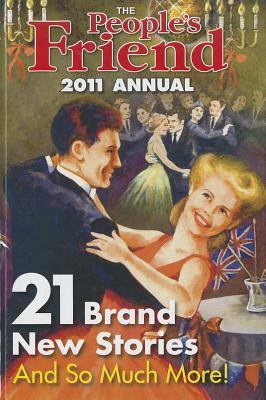
People's Friend Annual 2011
This is probably going to mark me as extremely uncool, but I ordered this annual over the holidays! If you like Chicken Soup and short stories like that, and you like the UK, you'll probably like this. This annual is basically a collection of stories + paintings + columns about books + poems.
For some reason, I had a 2002 annual at home, and it was a book that I read repeatedly over the years. So when I saw that the 2011 annual was part of Amazon Prime, I decided to just order it. I don't actually own many of these, because I don't seem to see this in Singapore or Japan (only in King's bookshop in Vivocity, but it's closed now. Unless anyone from Singapore knows where it went?).
Which leads back to the question - how did the first annual even get into my home?
All the stories are about love, and I think there's quite a nice balance between the different types of love. My favourite stories are the family stories though - like A Grand Night In which is about a grandma and her grandkids who come to stay; Hokey-Cokey Weather, about a grandma who is learning to try something new; and A Patchwork of Memories which follows a recently widowed father and his daughter as they get over their grief by learning how to make a patchwork quilt.
All the stories are heartwarming, and possibly very corny/cliched. But I find them very comforting to read. To me, they're sweet but not saccharine.
The columns this year are on children's classics. Enid Blyton also gets a column, as does Black Beauty, the book that makes me cry every time I read it. I've probably read most of the books (Little Women, anyone?), but I haven't read The Water Babies yet, so that's going to go on the ever lengthening TBR list.
I have absolutely no regrets buying this. Job hunting has been pretty stressful, and the stories here made me smile.
For some reason, I had a 2002 annual at home, and it was a book that I read repeatedly over the years. So when I saw that the 2011 annual was part of Amazon Prime, I decided to just order it. I don't actually own many of these, because I don't seem to see this in Singapore or Japan (only in King's bookshop in Vivocity, but it's closed now. Unless anyone from Singapore knows where it went?).
Which leads back to the question - how did the first annual even get into my home?
All the stories are about love, and I think there's quite a nice balance between the different types of love. My favourite stories are the family stories though - like A Grand Night In which is about a grandma and her grandkids who come to stay; Hokey-Cokey Weather, about a grandma who is learning to try something new; and A Patchwork of Memories which follows a recently widowed father and his daughter as they get over their grief by learning how to make a patchwork quilt.
All the stories are heartwarming, and possibly very corny/cliched. But I find them very comforting to read. To me, they're sweet but not saccharine.
The columns this year are on children's classics. Enid Blyton also gets a column, as does Black Beauty, the book that makes me cry every time I read it. I've probably read most of the books (Little Women, anyone?), but I haven't read The Water Babies yet, so that's going to go on the ever lengthening TBR list.
I have absolutely no regrets buying this. Job hunting has been pretty stressful, and the stories here made me smile.
Labels:
fiction
,
short story
,
western
Thursday, March 31, 2016
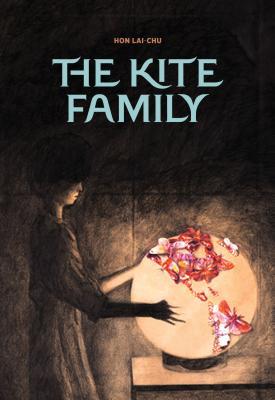
The Kite Family by Hon Lai Chu
I had really, really high expectations for this book. I mean, true, I'm not very well-informed on Hong Kong's literary scene (all I know is about Lee Bo), but I have grown up watching Hong Kong dramas. So I figured that I should enjoy this book.
Unfortunately, my expectations were certainly set too high.
The introduction sounded really good, and made me really excited. But the stories... were confusing. It wasn't that they were surreal - I can deal with surreal, it's that I couldn't find a plot. Let me deal with them one by one:
The first story is 'Spoiled Brains'. I had absolutely no idea what it was about. I think it's about immigration?
The next was 'The Kite Family', the titular story. Ok, I sort of understood this one. It's about a family who is genetically predisposed to become extremely obese. I do not get the point of the story though, it felt like it was just describing a family.
The third chair was possibly the one that I liked the best. "Forrest Woods, Chair", is about a man who realises that he was meant to be a chair. Yes, it's weird, but it made sense in its own way.
The fourth story also made sense, which gave me a bit of hope. It's called "Front Teeth", and it's about a lady who has way too many teeth. And the dentist, though I didn't really understand what was going on with the dentist.
Next was "Heartbreak Hotel", which I'd rank as somewhere between "The Kite Family" and "Forrest Woods, Chair". I sort of understood it, but I wasn't sure what it was trying to say. It's about a woman who goes to live in a hotel after the building she was living in collapses.
Lastly was "Notes on an Epidemic", about some strange epidemic for which the cure is social interaction. I got the setting, but not the plot, and definitely not the ending.
While I was reading this book, I had this sense that the author was trying to make a point about Hong Kong society. It's a bit like reading Catherine Lim, only I know what she's complaining/making a point about because she's slightly more obvious and I'm Singaporean, so the references come faster to me. Here, I "catch no ball", as we say in Singlish.
It's a real pity. I was hoping to find a Hong Kong author that I could become a fan of. I guess I'm not meant for Works With A Point (which makes me a terrible ex-Literature student, I guess)
Disclaimer: I got a copy of this book from the publisher via NetGalley in exchange for a free and honest review.
Unfortunately, my expectations were certainly set too high.
The introduction sounded really good, and made me really excited. But the stories... were confusing. It wasn't that they were surreal - I can deal with surreal, it's that I couldn't find a plot. Let me deal with them one by one:
The first story is 'Spoiled Brains'. I had absolutely no idea what it was about. I think it's about immigration?
The next was 'The Kite Family', the titular story. Ok, I sort of understood this one. It's about a family who is genetically predisposed to become extremely obese. I do not get the point of the story though, it felt like it was just describing a family.
The third chair was possibly the one that I liked the best. "Forrest Woods, Chair", is about a man who realises that he was meant to be a chair. Yes, it's weird, but it made sense in its own way.
The fourth story also made sense, which gave me a bit of hope. It's called "Front Teeth", and it's about a lady who has way too many teeth. And the dentist, though I didn't really understand what was going on with the dentist.
Next was "Heartbreak Hotel", which I'd rank as somewhere between "The Kite Family" and "Forrest Woods, Chair". I sort of understood it, but I wasn't sure what it was trying to say. It's about a woman who goes to live in a hotel after the building she was living in collapses.
Lastly was "Notes on an Epidemic", about some strange epidemic for which the cure is social interaction. I got the setting, but not the plot, and definitely not the ending.
While I was reading this book, I had this sense that the author was trying to make a point about Hong Kong society. It's a bit like reading Catherine Lim, only I know what she's complaining/making a point about because she's slightly more obvious and I'm Singaporean, so the references come faster to me. Here, I "catch no ball", as we say in Singlish.
It's a real pity. I was hoping to find a Hong Kong author that I could become a fan of. I guess I'm not meant for Works With A Point (which makes me a terrible ex-Literature student, I guess)
Disclaimer: I got a copy of this book from the publisher via NetGalley in exchange for a free and honest review.
Labels:
eastern
,
fiction
,
NetGalley
,
short story
Thursday, October 15, 2015
Manhattan Mayhem edited by Mary Higgins Clark
Manhattan Mayhem is a collection of mystery short stories, and obviously, I had to request it from NetGalley. Mystery!
But, as much as I would like to say so, the book wasn't a unanimous hit. I liked quite a few of the stories, but I didn't understand (or connect) with a fair few either. It's probably a matter of personal taste, but I would say that the number of stories I didn't get/was bored with was roughly the same as the number of stories I loved, while the rest were fairly normal. So instead of talking about the stories I didn't get, like the play, I thought I'd just pick out a few of my favourite short stories from the collection.
White Rabbit by Julie Hyzy: How can I not love anything that has Alice in Wonderland as an inspiration? I thought the story was well-done, and the twist at the ending definitely surprised me. I was completely fooled by the author.
Three Little Words: About a terminally ill patient who was killed. There's family drama, and I spent a lot of the time wondering who on earth killed her. Obviously, I was wrong (again), but there were some great moments of tension here.
Damage Control by Thomas H. Cook: A girl dies, and her foster father is contacted. It was an interesting look at how people can see the same event differently. I was left wondering who's perception of the events was the truth - and we'll never know, since the only person who knows her intentions is now dead.
Serial Benefactor by Jon L. Breen: My second favourite story in this collection! It's about a series of mysterious murders, and while the murderer is never explicitly mentioned, I have my own suspicions. Whether I'm right or not depends on whether the narrator is an unreliable narrator.
Red Headed Stepchild by Margaret Maron: My favourite story in the entire book, even though it's not really a mystery. Even though it's on the short side compared to the other stories, the author packs a punch and a twist in it. I really enjoyed reading it.
So these are my favourite 5 out of 17 stories. On the whole, the collection was enjoyable, although there weren't enough stories that I loved that would make me buy a permanent copy. Borrow it, yes, but not buy it.
Disclaimer: I got a free copy of this book from the publisher via Netgalley in exchange for a free and honest review.
But, as much as I would like to say so, the book wasn't a unanimous hit. I liked quite a few of the stories, but I didn't understand (or connect) with a fair few either. It's probably a matter of personal taste, but I would say that the number of stories I didn't get/was bored with was roughly the same as the number of stories I loved, while the rest were fairly normal. So instead of talking about the stories I didn't get, like the play, I thought I'd just pick out a few of my favourite short stories from the collection.
White Rabbit by Julie Hyzy: How can I not love anything that has Alice in Wonderland as an inspiration? I thought the story was well-done, and the twist at the ending definitely surprised me. I was completely fooled by the author.
Three Little Words: About a terminally ill patient who was killed. There's family drama, and I spent a lot of the time wondering who on earth killed her. Obviously, I was wrong (again), but there were some great moments of tension here.
Damage Control by Thomas H. Cook: A girl dies, and her foster father is contacted. It was an interesting look at how people can see the same event differently. I was left wondering who's perception of the events was the truth - and we'll never know, since the only person who knows her intentions is now dead.
Serial Benefactor by Jon L. Breen: My second favourite story in this collection! It's about a series of mysterious murders, and while the murderer is never explicitly mentioned, I have my own suspicions. Whether I'm right or not depends on whether the narrator is an unreliable narrator.
Red Headed Stepchild by Margaret Maron: My favourite story in the entire book, even though it's not really a mystery. Even though it's on the short side compared to the other stories, the author packs a punch and a twist in it. I really enjoyed reading it.
So these are my favourite 5 out of 17 stories. On the whole, the collection was enjoyable, although there weren't enough stories that I loved that would make me buy a permanent copy. Borrow it, yes, but not buy it.
Disclaimer: I got a free copy of this book from the publisher via Netgalley in exchange for a free and honest review.
Labels:
fiction
,
mystery
,
NetGalley
,
short story
,
western
Saturday, May 11, 2013
A Glove Shop in Vienna by Eva Ibbotson
There's a really strong Russian-influence in this story. Well, Russia and Eastern Europe. It really does make me want to learn Russian, but I have other classes that clash with this. Perhaps I can take a class next year. But anyway, back to the Russian-influence. A lot of the novels involve a Russian protagonist, or is even set in Russia. If not, it's probably in Eastern Europe, and the last story should be set in England. Quite Europe-ish, if you like that sort of thing (which I do).
And I remember reading this somewhere, but most of her stories revolve around a "great love". That is true. There is always a great love, and sometimes it's tragic, sometimes it's not. You'd think that this would get repetitious, but it doesn't - I loved all the stories. The exception I can think of would be the first story, which is about about the Christmas Angel and growing up. I think that would be my favourite story, because of how much the protagonist learns. And probably because it's not about romance, like the other stories.
It's making me mushy.... But seriously, I'm quite amazed at how this doesn't feel similar to the other YA romances out there nowadays. YA nowadays is very "we're both special (and possible mortal enemies but our forbidden love will triumph". At least, it's like that to me! But somehow, even if the love is forbidden in this collection, it feels nothing like all the YA novels. If you're looking for something different, I highly recommend this.
If you love Eva Ibbotson's other novels, you'll probably love this. And if you like stories with a European influence, you'll also like this. Give it a try!
Labels:
fiction
,
historical
,
short story
,
western
Subscribe to:
Posts
(
Atom
)