Monday, February 6, 2017

Alone by GCM

I wasn't quite sure what I expected from Alone. It's about Yuuta, a boy from Ishikawa who moves to Kyoto for high school. It starts off promisingly, with him making a new friend, but then he gets hits by a car driven by a man named Kurokami.

And what is with the strange girl that he sees everywhere?

It was pretty hard to do a summary of this book (as seen by the terrible attempt above) because this book is centered on Yuuta and his state of mind. The plot itself is pretty simple: Yuuta is in a hospital for most of the book. To describe more would be to give the story away.

What I liked about this book was its atmosphere. The sense that something is wrong is very heavy, and the oddness of the things that Yuuta goes through is contrasted with the mundane hospital life where he does nothing but sleep and meet with few visitors. Nothing is what it seems, and I was left wondering how unreliable a narrator Yuuta was.

I can't say that I fully understand the ending of the book, but I have a rough idea. Plus, it was creepy and fit in perfectly with the atmosphere that the entire story had. To be honest, I'm hoping for a sequel which explores this version of Japan a little bit more because I have so many questions that are left unanswered.

Friday, February 3, 2017

The Chibok Girls by Helon Habila

I confess that even though I knew about the kidnapping of the Chibok girls, I never really looked at the subject in depth. It was another tragedy in a world full of tragedies. So when I saw this book, I decided that it was time to educate myself a little more on this subject.

The Chibok Girls is an account not only of the kidnapping, but also a clear explanation of the past and the current situation in Nigeria, and how the Boko Haram ended up carrying up such a thing. It's a large even to examine, and the author ties it together through a personal account of his trips to investigate more about this. And in order to understand the significance of the tragedy, the author goes into detail about the history and current situation of the area.

This is done through three parts. Part 1 contains an introduction to the area, the incident, and a brief history lesson. Part 2 is about the religious tensions in the area and Part 3 is more about the incident and contains an interview with one of the girls who have escaped.

At 112 pages, the book isn't very detailed, but it is a sufficient introduction to the Chibok Girls' Kidnapping and the meaning of it. And to a complete newcomer like me, the book has just enough details - not too much (which would be overwhelming) or not too little (which would have left me confused). I'm not sure what someone already familiar with the subject would think about it, though.

If you're looking to understand more about this tragedy, I think this book would be a good start. It's an easy to read book and does its intended purpose well.

Disclaimer: I got a free copy of this book from the publisher via NetGalley in exchange for a free and honest review.

Thursday, February 2, 2017

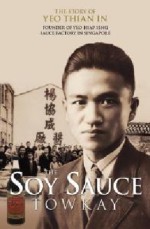
The Soy Sauce Towkay by Alfred Yeo

My mom passed me this book quite some time ago, but I didn't get around to reading it till now. It's a biography of Yeo Thian In, and by extension Yeo Hiap Seng, the company that he founded.

The Soy Sauce Towkay focuses on Yeo Thian In (the "towkay" in question) and his Christian faith. And the fact that my Church is mentioned probably explains why my mom knew about this book. And if you're not Singaporean or Malaysian, "towkay" means "boss" in English.

The book is divided into four parts: the background, as in what happened before the company was founded, the founding of the company and how it grew (I didn't know that Yeos started out with Soy Sauce! I only know it for the drink), the Yeo family, and more background, this time on Christianity in China, Chinese business practices, etc. The appendix is a discussion on what makes a business Christian.

And I think in the second part, on the business, they have a chapter about how soy sauce is made, so there's more background there.

I don't know if it's because the book is fairly short, but Yeo Thian In remained a distant historical figure throughout. Unlike some biographies which can resemble novels in style, this read more like a history book.

In addition, I wish that the book went into more detail. For example, it was mentioned that the Yeo family didn't join the Hokkien Association because of religious beliefs, but I would have liked a lot more detail on how that might make doing business more difficult (or not, but it seems like a disadvantage).

That being said, I'm still glad that I read the book, because it's a part of Singapore history that I didn't know, and that I think it's worth knowing. We tend to focus on the same few individuals (like Tan Tock Seng) in our history classes and museums, so it's nice to read about someone else.

Wednesday, February 1, 2017

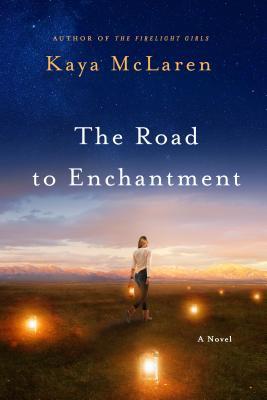
The Road to Enchantment by Kaya McLaren

I can't quite remember why I requested this book (perhaps it's because of the cover), but I found myself enjoying it despite the fact that nothing happens.

The Road to Enchantment starts when Willow receives word that her mother has died, breaks up with her boyfriend, and then finds out she's pregnant (in said order). Having moved back to the home she and her mother lived in, Willow must find a way to pay off her mother's debts and decide what to do with the baby.

The solutions to these problems are actually very simple. Willow sells the wine her mom has been making, and the animals on the farm, and solves the debt problem (more-or-less). The community rallies around her and manages to dissolve her already hesitant decision to abort the baby. The biggest question is whether she will go back to where she was, or stay in New Mexico (and it's pretty obvious to the reader which it is, even if it's not to Willow).

To me, the beauty in this book are the characters and the gradually merging of past and present. First, the characters. The place in New Mexico where Willow grew up borders an Apache reservation and the community is almost all Apache. I really loved how that became part of the story - how the customs and language and people became a part of her life, even if she didn't initially feel like she belonged.

And speaking of characters, both Willow's mom and dad were flawed people. I probably sympathised more with her dad than mom, despite the fact that it would normally be the other way round because I so acutely felt the embarrassment that Willow's mom caused her. Her dad, on the other hand, was largely absent (because her mom moved her to New Mexico) so my impression of him wasn't so bad.

The second: Willow's acceptance of her past. The book alternates between the present day and Willow's memories, and it quickly begins to be clear that how Willow saw and experienced the world back then still affects her. So when she can finally accept her past, her present can start moving into the future.

The only thing that I didn't like about the ending (mild spoilers ahead! Although to be honest there isn't much plot to spoil) is that Willow still ends up with a man in her life. A better man, to be granted, but for a good portion of the book, I thought this would be about the non-romantic type of love and how it can support people. To end with Willow in a relationship seemed to say that in the end, women need a man to be happy.

Apart from that one (fairly large to me) point, I enjoyed this book. Willow's journey isn't dramatic, but she does make a journey and I dare say that she's happier at the end of it.

Disclaimer: I got a free copy of this book from the publisher via NetGalley in exchange for a free and honest review.