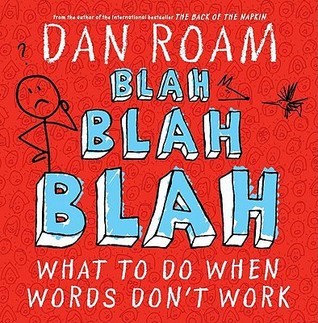
One of my colleagues recommended this to me because I’m more of a words person and she thought this might help me become more balanced in my thinking. Blah Blah Blah is basically a book on how to balance writing with visuals for better communication.
So disclaimer: I’m not a visual person. I like taking photos but I express myself much better in words than pictures. Even when I read books about mind maps and get really excited about them, they never really work for me. So I was a little wary of the book, despite its claims that it’s for everyone.
The basis of this book is the idea that words aren’t enough - we’ll need pictures to fully understand an issue. The land of Blah Blah Blah is a land where words are boring, foggy, or even misleading. And by checking things out against the Blah-blahmeter, we can check use ‘vivid’ to clarify things, make the message even more appealing, explore ideas, or debunk fake news.
Now what is vivid? Vivid stands for VIsual + Verbal InterDependent thinking. Basically using words to illustrate words. The idea is that by using both halves of the brain, we can see connections and communicate more clearly than we can without only words or with only images. And the way to use vivid is to use something called the vivid grammar graph:
In the vivid grammar graph, people are represented by portraits, numbers by charts, positions by maps, tense by timelines, interactions by flowcharts and reasons by multivariable plots. The third section, and the majority, of the book is on how to use vivid to improve your ideas.
The book was very nicely written and illustrated. It’s easy to understand and representing the verbal mind with a fox and the visual mind with a hummingbird was a very cute touch.
The book’s summary of The Ascent of Money by Niall Ferguson’s did convince me that visuals can help in understanding. But is it a method suitable for me? I have no idea. I’ve tried to use it as I read it, but I didn’t really see it expanding the way I think.
That said, I can see vivid as a useful tool for summarising and communicating. While I like words, I know that not everyone does and a picture can be a very effective way of communicating. I’ll definitely be keeping vivid checklist in the back of my mind next time I have to present something.
Wednesday, June 27, 2018
Tuesday, June 26, 2018
The Beautiful Mystery by Louise Penny
I’ve been searching for this book for quite some time because I want to read the series in order for the long-running subplot.
In The Beautiful Mystery, Gamache and Jean Guy travel to a reclusive monastery to investigate the murder of its prior. Bound by a vow of silence, this monastery would be unnoticeable if not for one thing:
Their Gregorian chants
Although seemingly like other Gregorian chants, these monks have managed to sing “the words of God in the voice of God”, bringing them widespread acclaim. And among such holy men is a killer, one who is still among them.
Because this book is set solely in the monastery (and not in Three Pines), the book is able to go deep into the community within a short period of time. And it’s in this remote community that the subplot involving the leaked video of the botched raid takes some pretty big steps.
I have to say, this book was more intense than I expected. Perhaps it’s because of its setting, but it seemed to be very much imbued with musings on music and faith.
And while most of the characters were new characters, I found myself very invested in them. All the brothers are given distinct personalities and I enjoyed reading about them.
Speaking of characters, I was on an emotional rollercoaster thanks to Gamache and Jean Guy. The tension from the aftermath of the raid that was present in the other books was really ramped up here, partly because they were the only two officers on the case and partly because of the presence of Francoeur, a higher up in the force and Gamache’s enemy. In fact, Francoeur reminded me of the serpent in the garden of Eden, with his smooth words poisoning everything.
I am so glad to have finally found this book. It is intense and I’m glad that I read it in order because the subplot is intense. Hopefully, I can find the next book in the series soon.
In The Beautiful Mystery, Gamache and Jean Guy travel to a reclusive monastery to investigate the murder of its prior. Bound by a vow of silence, this monastery would be unnoticeable if not for one thing:
Their Gregorian chants
Although seemingly like other Gregorian chants, these monks have managed to sing “the words of God in the voice of God”, bringing them widespread acclaim. And among such holy men is a killer, one who is still among them.
Because this book is set solely in the monastery (and not in Three Pines), the book is able to go deep into the community within a short period of time. And it’s in this remote community that the subplot involving the leaked video of the botched raid takes some pretty big steps.
I have to say, this book was more intense than I expected. Perhaps it’s because of its setting, but it seemed to be very much imbued with musings on music and faith.
And while most of the characters were new characters, I found myself very invested in them. All the brothers are given distinct personalities and I enjoyed reading about them.
Speaking of characters, I was on an emotional rollercoaster thanks to Gamache and Jean Guy. The tension from the aftermath of the raid that was present in the other books was really ramped up here, partly because they were the only two officers on the case and partly because of the presence of Francoeur, a higher up in the force and Gamache’s enemy. In fact, Francoeur reminded me of the serpent in the garden of Eden, with his smooth words poisoning everything.
I am so glad to have finally found this book. It is intense and I’m glad that I read it in order because the subplot is intense. Hopefully, I can find the next book in the series soon.
Friday, June 22, 2018
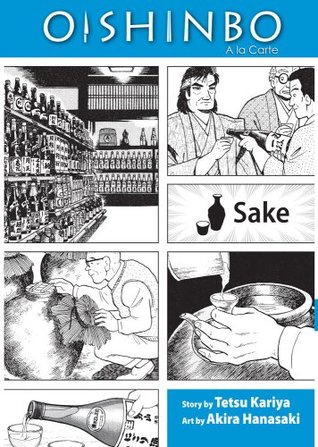
Oishinbo: Sake by Tetsu Kariya
Every time I read Oishinbo, I wish that it was translated and published in English in chronological order like most manga. Having them published by subject means that the overarching plot becomes jumbled and impossible to follow. That said, having them published by subject means that it’s possible to quickly and easily learn about one aspect of Japanese cuisine.
Like the title says, Oishinbo: Sake is all about sake. Sake is actually a generic word for alcohol, what this book focuses on is mostly nihonshu (Japanese alcohol), with one story on champagne. There are six stories in this book and they basically focus on how a lot of sake in Japan is fake sake (diluted with alcohol and additives) which tastes completely different from real sake. And that real sake pairs wonderfully with food and can hold its own against the finest wines.
While most of the stories are short, there is one six-part story called “The Power of Sake” that goes into detail on how sake is made, how to differentiate between the different types of sake, and the sake scene in Japan (at the time it was written - this manga is really old so things probably have changed a lot by now). There is an abundance of information here and I wish that I read this earlier.
As someone who wasn’t fond of nihonshu when I lived in Japan, I wonder if my dislike of the strong alcohol taste was because I wasn’t drinking the real stuff. As a student, our class parties would take place at restaurants with all-you-can-drink options, which I guess makes it natural that they would only serve the cheaper nihonshu.
I would definitely recommend this book (and entire series) to anyone who loves Japanese food! The style of drawing is slightly different from the regular shoujo and shounen manga around today, but the stories are interesting and information-packed. I only managed to read the first few volumes in Japanese, so if I see other English translations, I’m gonna borrow them even though the big storyline won’t make sense.
Like the title says, Oishinbo: Sake is all about sake. Sake is actually a generic word for alcohol, what this book focuses on is mostly nihonshu (Japanese alcohol), with one story on champagne. There are six stories in this book and they basically focus on how a lot of sake in Japan is fake sake (diluted with alcohol and additives) which tastes completely different from real sake. And that real sake pairs wonderfully with food and can hold its own against the finest wines.
While most of the stories are short, there is one six-part story called “The Power of Sake” that goes into detail on how sake is made, how to differentiate between the different types of sake, and the sake scene in Japan (at the time it was written - this manga is really old so things probably have changed a lot by now). There is an abundance of information here and I wish that I read this earlier.
As someone who wasn’t fond of nihonshu when I lived in Japan, I wonder if my dislike of the strong alcohol taste was because I wasn’t drinking the real stuff. As a student, our class parties would take place at restaurants with all-you-can-drink options, which I guess makes it natural that they would only serve the cheaper nihonshu.
I would definitely recommend this book (and entire series) to anyone who loves Japanese food! The style of drawing is slightly different from the regular shoujo and shounen manga around today, but the stories are interesting and information-packed. I only managed to read the first few volumes in Japanese, so if I see other English translations, I’m gonna borrow them even though the big storyline won’t make sense.
Labels:
food
,
manga/anime
Thursday, June 21, 2018
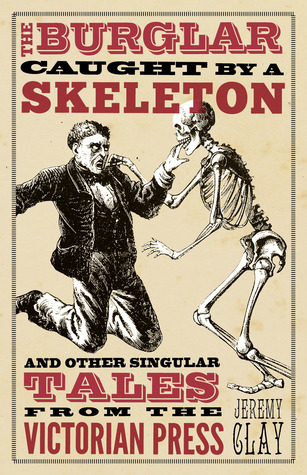
The Burglar Caught by a Skeleton by Jeremy Clay
I have to admit, I requested this book based on the title - you don't really hear about weird Victorian news these days (or I suppose any day since most people don't read the Victorian newspapers).
The Burglar Caught by a Skeleton is basically a collection of weird Victorian news stories that may be exaggerated or made up (or perhaps reality really is that strange). The topics covered range from animals (lots of wild animals in Britain, apparently), to health and medicine, and even wagers. Some of the weirder stories include monkeys committing suicide a large, headless turkey ghost. The latter half of the book is quite sad, though, since it covers tragic incidents rather than the ludicrous. The last section is a brief follow up on some of the stories.
While the stories are definitely strange and unbelievable, they aren't told in a very interesting way. It seems like the newspapers like to report things rather drily, so this isn't really a book that I wanted to binge. It was, however, pleasant to read it over several sittings, to take in the strangeness that managed to pass as news back then.
By the way, the titular burglar caught by a skeleton is really what it says. A burglar was in the house of a doctor, got his hand caught by a skeleton while fumbling in the dark, and then promptly fainted and was found by the doctor whose house he was in.
Looks like skeletons may be better than guard dogs.
Overall, this was an interesting collection of stories that will appeal to people who like weird and obscure history.
Disclaimer: I got a free copy of this book from the publisher via NetGalley in exchange for a free and honest review.
The Burglar Caught by a Skeleton is basically a collection of weird Victorian news stories that may be exaggerated or made up (or perhaps reality really is that strange). The topics covered range from animals (lots of wild animals in Britain, apparently), to health and medicine, and even wagers. Some of the weirder stories include monkeys committing suicide a large, headless turkey ghost. The latter half of the book is quite sad, though, since it covers tragic incidents rather than the ludicrous. The last section is a brief follow up on some of the stories.
While the stories are definitely strange and unbelievable, they aren't told in a very interesting way. It seems like the newspapers like to report things rather drily, so this isn't really a book that I wanted to binge. It was, however, pleasant to read it over several sittings, to take in the strangeness that managed to pass as news back then.
By the way, the titular burglar caught by a skeleton is really what it says. A burglar was in the house of a doctor, got his hand caught by a skeleton while fumbling in the dark, and then promptly fainted and was found by the doctor whose house he was in.
Looks like skeletons may be better than guard dogs.
Overall, this was an interesting collection of stories that will appeal to people who like weird and obscure history.
Disclaimer: I got a free copy of this book from the publisher via NetGalley in exchange for a free and honest review.
Labels:
historical
,
NetGalley
,
non-fiction
,
western
Subscribe to:
Posts
(
Atom
)