Thursday, August 9, 2018

A Thirst for Empire by Erika Rappaport

I first heard about this book from NPR's article "From Raucous To Ritzy: A Brief History Of Christmas Tea" (would recommend this if you want to know about more about how Christmas tea came about!). The book sounded interesting and since the NLB had it, I decided to borrow it.

Unfortunately, I didn't realise how thick and academic this would be. It took me quite a few days just to read through the whole thing once, and then I had to go through it a second time to make sure I roughly understood what it said. Or perhaps this is just an indication of how rusty my brain has gotten.

Although this book is subtitled "how tea shaped the modern world", it really is very much focused on the British empire. America, China, and India are fairly extensively discussed, but my impression is that this is only in relation to Britain and the British tea industry.

As you're probably aware, tea is from China but for some reason, it's also seen as a very British drink (in particular, black tea). This book traces the journey of tea as its status changes from foreign import to a symbol of Britishness, going into things like how the taste for tea was created, how this influenced Imperial Britain, and even the role of tea in the Great Depression and World War II.

I talked about parts of the book in more detail in my previous posts on Tea and Temperance and the history of Fake Tea, but another thing I learned from this book was how the British moved from Chinese to Indian teas. I had always thought that Robert Fortune's discovery of tea adulteration was the main cause of the shift to black, Indian teas, but this book showed me that there was also a concerted effort to promote 'Imperial' (Indian) teas. In fact, most consumers didn't like the taste of Indian teas at first, and some tea shops ended up blending Chinese and Indian teas to make them more palatable!

One more thing that I found interesting was the subtle shift in the image of tea. During the heyday of the British empire, Indian teas were sold as 'Imperial' products and that consumers would be helping the empire by buying them. However, "by the late 1930s, it was no longer clear that empire added value. Instead, health and bodily renewal became watchwords of the day, shaping advertising and many other facets of European culture." What this means is that tea was introduced as a healthy Chinese drink, and then through a series of marketing campaigns marketed as a British product, and then when that failed, went back to being a healthy drink that would revive you. In a way, it's come full circle (but then again, really not since the British public didn't go back to drinking Chinese teas).

If you're interested in the history of tea and how it relates to Britan and the British empire, I think you'd really enjoy this book. It's fairly dry in tone but it has so much information crammed into it that after reading it a couple of times, I think you'll find that your view of tea has been changed.

P.s. This review was first posted at my other blog, Eustea.

Monday, August 6, 2018

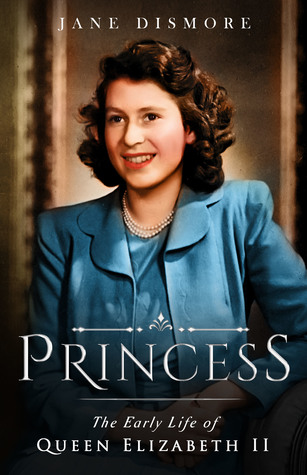
Princess by Jane Dismore

I was intrigued as soon as I saw this book on NetGalley because I don't know anything about Queen Elizabeth before she became queen (I didn't even know how she looked like when she was young!). So when I heard that this book also contained unpublished material from letters and interviews, I decided to request for it.

Princess is a sensitively written account of Queen Elizabeth's early life. It starts off with the moment she became queen (very sadly, she was one of the last people to know) and then backtracks to when she was born before going forward from there. It covers her childhood, marriage, and life as a newlywed.

I was actually pretty surprised at how normally her parents raised her. You always hear of extravagant lifestyles but it seems like Queen Elizabeth and her sister were raised to be as down to earth as possible. Part of it may have been the times where they grew up, but it seems like a part of it is also due to her parents and their personality. I felt that they had a very genuine and loving relationship, which was very touching.

Also touching was her relationship with Prince Phillip. Because she eventually marries him, the book does touch on key moments of his life before they met. There isn't anything scandalous in their love story, but it's a very sweet account.

The one thing that surprised me while reading was the Duke and Duchess of Windsor. I didn't really have any views about them because I knew nothing about them except that the King abdicated to marry Wallis Simpson, so it was a shock to find out that both of them had pro-Nazi views. I’m definitely going to side-eye anyone who praises Wallis Simpson now.

Overall, this was an interesting and informative account of Queen Elizabeth’s early life. The only thing I wish it added were photos of key moments - while they are probably just one google search away, it would be nice to be able to flip to them in the book. Hopefully it’s just my advance copy that doesn’t have pictures because I think it would add a lot to have them.

Disclaimer: I got a free copy of this book from the publisher via NetGalley in exchange for a free and honest review.

Friday, August 3, 2018

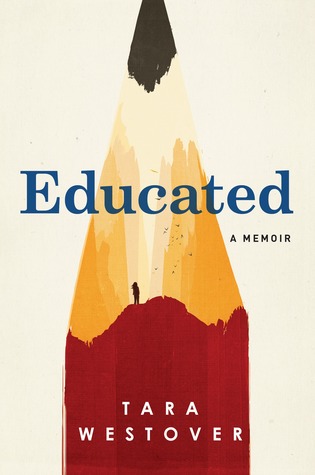
Educated by Tara Westover

I heard so many good things about this book that as soon as I saw that the NLB had an ecopy, I placed a hold on it. And all the rave reviews were true - this did not disappoint.

Educated is the memoir of Tara Westover. She was raised by a paranoid father who saw government conspiracies and a mother who drifted into alternative healing (oddly enough, her mother never indicated that chakras and essential oils were incompatible with Mormonism).

Due to this unusual family dynamic, Tara never went to school or even socialised much with people her age. Luckily, she had an amazing voice and brothers who managed to go to university, which gave her a longing for the wider world. So although she was afraid that her actions would betray her family, she started teaching herself to read.

This book was simply absorbing and I couldn’t put it down. Tara and her brother Tyler are amazing for the way they managed to gain an education. But the ways that her family stayed trapped was heartbreaking, especially the way they let her older brother Shawn rule the family with his temper. Their emotional manipulation was really off the charts and my heart broke whenever I saw Tara doubt herself.

This book was also a hopeful one because I saw how people would come to Tara’s aid when she needed it most. People that stood out were her bishop in her ward, who gave her a space to talk it out and got her monetary support, as well as the various professors who recognised her academic talent and encouraged her.

Oh yeah, and even though Tara and her community are all Mormon, this book isn’t about really about religion. While Tara does struggle with some tenets of her faith, she never explicitly casts it off, instead impartially talking about the Mormons and non-Mormons who helped her. It’s clear that religion wasn’t the sole or even main reason for her childhood (though it did play a big part) - her dad’s mental illness probably was.

I would highly, highly recommend this book. It is an amazingly well-written read about how one woman managed to overcome her childhood with the support of people in her life. And do you know what I want to read next? Her PhD thesis. It sounds fascinating.

Wednesday, August 1, 2018

A Tale of Two Murders by Heather Redmond

I requested this from NetGalley because the cover was pretty and it’s a Dicken’s inspired novel! I like (and know enough) about his work that fanfic like this is interesting and something that I would like to try reading.

In A Tale of Two Murders, Charles Dickens is drawn into the role of a detective when the girl living next to his editor is murdered. Because another girl in the neighbourhood died the same way a year ago, and stricken by the lovely Kate Hogarth, his editor’s daughter, Dickens decides to find the truth of what happened.

Though he isn’t part of the upper class, the mother of the dead girl, Lady Lugoson, also suspects murder and she helps to open doors. However, Dickens soon comes across family secrets and he must decide which of the many suspects is the actual culprit.

To be honest, this book started off a little slowly for me. For some reason, I found the language a little clunky, which made immersing myself in the story and the time period harder. It was only after a few chapters that I managed to get into the rhythm of the story and start to wonder about who killed poor Miss Lugoson.

Apart from the language, one thing that made it harder for me to get into the story was that the murder plot wasn’t the most dominant. I felt that the start of the book was preoccupied with Dicken’s budding relationship with Kate Hogarth and that influenced his actions more than getting to the truth. While their romance is very sweet and I admire Kate for knowing what she wants and sticking to it, it felt like half or more the story was a romance, which wasn’t what I wanted to read.

Speaking of Kate, I really liked her character! She’s a sensible young lady, and it was refreshing to see the female lead portrayed as equally capable as the male lead. Although she couldn’t be there when Dickens made some important discoveries because they weren’t married, I like how she spoke her mind and wasn’t afraid to contradict Dickens.

I’m not too sure about how accurate the portrayal of Dickens was, though. He seems like a idealist romantic here, but I have read that his marriage didn’t go very smoothly, so I do wonder how accurately the book portrayed him.

Overall, this was a pretty enjoyable book. It took some time for me to get into the story, but I enjoyed it once I was caught up. If you’re a fan of Charles Dickens, you’ll probably want to give it a try.

Disclaimer: I received a free copy of this book from the publisher via NetGalley in exchange for an honest review.