I'm not familiar with the Aeneid, although I have heard of Odysseus and the Trojan war. So when I read the synopsis of The Way Home, a retelling of the Aeneid, I was intrigued and thought it would be a good way to introduce myself to this aspect of the myth.
The Way Home follows the journey of Aeneas, a Trojan prince. It starts when the Greeks are ransacking the city, having been smuggled in by the giant horse (although I don't think Aeneas ever realised this is how they got in). Unfortunately, he didn't manage to save the royal family or his wife and ends up leading a band of refugees. And thus, their journey to find their new home begins.
At the same time, we see that this is part of a fight between Hera and Zeus. Hera wants to make her preferred city dominant, while Zeus has other plans (which involve Aeneas). The other gods are pulled in as they side with one or the other, or even switch allegiances.
I absolutely enjoyed this story. Although I didn't really know of Aeneas before, I have a translation of The Odessy before so I knew the other side of the myth. It was very interesting to see how Virgil retold the story from a relatively 'minor' character's viewpoint, and how that was, in turn, retold as The Way Home. I actually paused the story quite a lot to google certain characters or events and read more about it.
By the way, is anyone else shocked at how young Aeneas was when the story began? The book introduces his son, Julos, first and I thought he was in his twenties or something but then a few paragraphs later, I find that he's only nineteen! I know that was a product of the times but wow, the kid is extremely mature for his age. And I guess the book making his age clear at the beginning was a good move because I found myself giving him a lot of latitude after that.
Since this is a YA retelling, the language is simple and direct, which makes it a good introduction to the myth. I found it easy to empathise with Aeneas and his people, even though they lived thousands of years ago and thousands of kilometers away.
However, since this is the first in a trilogy, the book ends on a sort-of cliffhanger. It's not a very big one, but it did make me impatient for the second book. Perhaps I'll find one of the accessible translations of The Aeneid and read that while waiting.
Disclaimer: I got a free copy of this book from the publisher via NetGalley in exchange for a free and honest review.
Showing posts with label mythological. Show all posts
Monday, August 27, 2018
Tuesday, April 24, 2018
Meet Me in Atlantis by Mark Adams
I decided to borrow this book because I quite like reading about weird stuff, even if I don’t necessarily believe in it. Meet Me in Atlantis is Mark Adam’s account of his attempts to find the fabled lost city.
And I must say, I’m a bit envious of how much travel he did. He visited the proposed sites for Atlantis, such as Santorini, Morroco, and Malta. Along the way, he meets and talks with a number of Atlantologists to hear and think about their theories before presenting his theory on what happened.
What I liked about this book is that it didn’t purport to know the truth about where Atlantis was or if it even existed. While Adams respects the people he talks to and tries to understand where they come from, he also readily expresses his doubts about their theories.
Through all these conversations, I got to learn quite a bit about the theories about Atlantis. Although I must confess to being a complete noob because I didn’t even know that this whole thing originated with Plato (which is why a lot of people start with “was this a story of Plato or history”).
Oh, and I admit to being happy when I read about the cult of Pythagoras because I heard about it on Tanis. Pretty nice to see something I heard about referenced in another book - and if anyone knows a good book about Pythagoras, let me know!
Overall, I enjoyed this. I don’t think I’m going to go out and read all the books about Atlantis available, but the next time I listen to a podcast that references conspiracy theories rooted in Ancient Greek culture, I’ll actually know what they’re talking about.
And I must say, I’m a bit envious of how much travel he did. He visited the proposed sites for Atlantis, such as Santorini, Morroco, and Malta. Along the way, he meets and talks with a number of Atlantologists to hear and think about their theories before presenting his theory on what happened.
What I liked about this book is that it didn’t purport to know the truth about where Atlantis was or if it even existed. While Adams respects the people he talks to and tries to understand where they come from, he also readily expresses his doubts about their theories.
Through all these conversations, I got to learn quite a bit about the theories about Atlantis. Although I must confess to being a complete noob because I didn’t even know that this whole thing originated with Plato (which is why a lot of people start with “was this a story of Plato or history”).
Oh, and I admit to being happy when I read about the cult of Pythagoras because I heard about it on Tanis. Pretty nice to see something I heard about referenced in another book - and if anyone knows a good book about Pythagoras, let me know!
Overall, I enjoyed this. I don’t think I’m going to go out and read all the books about Atlantis available, but the next time I listen to a podcast that references conspiracy theories rooted in Ancient Greek culture, I’ll actually know what they’re talking about.
Labels:
mythological
,
non-fiction
,
western
Wednesday, February 28, 2018
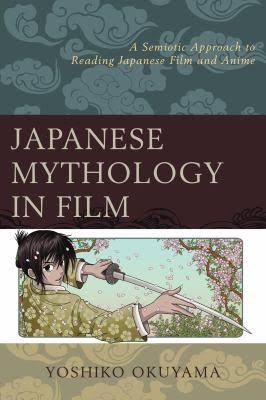
Japanese Mythology in Film by Yoshiko Okuyama
I had to borrow this book as soon as I saw it because I took a class on Miyazaki Hayao’s films. That’s a very tenuous connection but I’m clinging on to it all the same.
Japanese Mythology in Film is an introduction to the study of Japanese culture through movies (both live action and anime). The author argues that semiotics can be used to uncover signs of Japanese mythology which in turn can be used to develop cultural or visual literacy.
First, a few definitions:
Semiotics is “the study of a system of signs to determine how symbolic meanings are created and transmitted through use of words, concepts, images, and so forth.” In other words, studying the meaningful words and pictures in the movie (at least in my understanding).
Mythology in this book is defined as “the stories and allegories of deities and humans, the afterlife, and natural phenomena and supernatural forces as well as to other myths and legends of the mainstream and folk religions of Japan.” So basically religious Japanese culture.
After explaining what semiotics is in detail and why it’s a valid way of analysing film, as well as the presence of mythology in film, the book goes on to analyse the following topics:
- Taoism and Shintoism in Onmyoji and Onmyoji II
- Folklore motifs in Spirited Away and Princess Mononoke (Obviously this was my favourite chapter)
- Buddhist and Folklore motifs in Dorito and Departures
- Eclectic myths in Mushi-Shi and Cyber mythology of Ghost in the Shell 2: Innocence
I’m only familiar with Miyazaki’s movies and I’ve watched a few episodes of Mushi-shi, but the book does a great job of summarising the movies so that I can understand the analysis (and it made me want to watch everything mentioned).
If I start to go into detail about what I learnt, I’d just end up summarising the whole book. Perhaps it’s because of the breadth of the work, but I felt that this book taught me more about Japanese mythology and culture than the Miyazaki module.
Because this book is aimed at undergraduates, the tone is academic. However, it is definitely not inaccessible and I would recommend this to anyone interested in Japan, myths, and/or cinema.
Japanese Mythology in Film is an introduction to the study of Japanese culture through movies (both live action and anime). The author argues that semiotics can be used to uncover signs of Japanese mythology which in turn can be used to develop cultural or visual literacy.
First, a few definitions:
Semiotics is “the study of a system of signs to determine how symbolic meanings are created and transmitted through use of words, concepts, images, and so forth.” In other words, studying the meaningful words and pictures in the movie (at least in my understanding).
Mythology in this book is defined as “the stories and allegories of deities and humans, the afterlife, and natural phenomena and supernatural forces as well as to other myths and legends of the mainstream and folk religions of Japan.” So basically religious Japanese culture.
After explaining what semiotics is in detail and why it’s a valid way of analysing film, as well as the presence of mythology in film, the book goes on to analyse the following topics:
- Taoism and Shintoism in Onmyoji and Onmyoji II
- Folklore motifs in Spirited Away and Princess Mononoke (Obviously this was my favourite chapter)
- Buddhist and Folklore motifs in Dorito and Departures
- Eclectic myths in Mushi-Shi and Cyber mythology of Ghost in the Shell 2: Innocence
I’m only familiar with Miyazaki’s movies and I’ve watched a few episodes of Mushi-shi, but the book does a great job of summarising the movies so that I can understand the analysis (and it made me want to watch everything mentioned).
If I start to go into detail about what I learnt, I’d just end up summarising the whole book. Perhaps it’s because of the breadth of the work, but I felt that this book taught me more about Japanese mythology and culture than the Miyazaki module.
Because this book is aimed at undergraduates, the tone is academic. However, it is definitely not inaccessible and I would recommend this to anyone interested in Japan, myths, and/or cinema.
Labels:
japan
,
mythological
,
non-fiction
Thursday, February 22, 2018
Norse Mythology by Neil Gaiman
If you're a fan of the Myths and Legends podcast or just a fan of mythology in general, you need to read this. Norse Mythology is Neil Gaiman’s retelling of the Norse myths, such as how Thor got his hammer, the strange wedding of Freya, Loki’s children and much more. Most the stories end with a line about Ragnarok so that even though the stories are disparate, they have a sense of purpose. Everything leads to the end. Everything leads to Ragnarok.
The language here is Gaiman at his best. It rings with the timelessness of myth, with the added inclusion of wry humour. [Slight spoilers] I also liked how most of the book was in past tense, until the time of Ragnarok, where it changed to present tense which gave it a ring of prophecy.
The characters too were well-written. Thor is a great hero but he’s not the wisest. Loki is truly ambiguous, the trickster who’s allegiance is only for himself (leading to some pretty comic situations). Then there are tragic characters, like Hod, who was tricked into killing his brother and then died for it. Or Tyr, wise and self-sacrificial. There is a wide variety of gods and they are all brought to life in these stories.
If you’re a fan of mythology, you’ll want to read this take on the Norse myths. It’s wonderfully written and I actually want to listen to theaudiobookk. These tales sound like they should be told by a bard.
The language here is Gaiman at his best. It rings with the timelessness of myth, with the added inclusion of wry humour. [Slight spoilers] I also liked how most of the book was in past tense, until the time of Ragnarok, where it changed to present tense which gave it a ring of prophecy.
The characters too were well-written. Thor is a great hero but he’s not the wisest. Loki is truly ambiguous, the trickster who’s allegiance is only for himself (leading to some pretty comic situations). Then there are tragic characters, like Hod, who was tricked into killing his brother and then died for it. Or Tyr, wise and self-sacrificial. There is a wide variety of gods and they are all brought to life in these stories.
If you’re a fan of mythology, you’ll want to read this take on the Norse myths. It’s wonderfully written and I actually want to listen to theaudiobookk. These tales sound like they should be told by a bard.
Labels:
mythological
,
western
Tuesday, October 17, 2017
Tooth and Nail, Fur and Scale by Anupam Arunachalam
I clicked on this book because of the cover and I decided to borrow it because of the blurb. From the blurb, I was under the impression that this book was going to introduce creatures from Indian myths. Since I don't know much about Indian myth and legends, I was super excited to learn more.
Well, I was a little mistaken. Sure, there were quick introductions to the creatures, but this is mainly a short story anthology featuring Indian mythological creatures. Which is just as interesting as a reference book (ok maybe more).
What I really liked about all these stories is that they were set in India with Indian characters. I know it sounds obvious but for some reason, a lot of stories with Japanese mythology tend to star white people (or perhaps those just stick in my mind because I don't like them). So I appreciated that these creatures were shown in the country, culture, and tradition that they actually belonged too.
I liked all the stories but my favourites were:
Last Words, which stars the Crocotta and has courtly intrigue and betrayal in it.
Guardian of the Font, which was mostly cute and a little sad story about how mythological creatures have to adapt to modern times. (Another story, The Great Understanding, also deals with this theme and I enjoyed it a lot too)
Safe Haven, about deadly ants and had a very smart girl as the heroine.
The Writing on the Wall, about a very unique witch and how one boy learns to use her curse against her - this character probably grew up to become a lawyer.
There are a total of 15 stories in this book and you should read all of them. It's available via the NLB ereads site (or it will be once I return it) and I would recommend everyone who enjoys myths and legends to read this.
Well, I was a little mistaken. Sure, there were quick introductions to the creatures, but this is mainly a short story anthology featuring Indian mythological creatures. Which is just as interesting as a reference book (ok maybe more).
What I really liked about all these stories is that they were set in India with Indian characters. I know it sounds obvious but for some reason, a lot of stories with Japanese mythology tend to star white people (or perhaps those just stick in my mind because I don't like them). So I appreciated that these creatures were shown in the country, culture, and tradition that they actually belonged too.
I liked all the stories but my favourites were:
Last Words, which stars the Crocotta and has courtly intrigue and betrayal in it.
Guardian of the Font, which was mostly cute and a little sad story about how mythological creatures have to adapt to modern times. (Another story, The Great Understanding, also deals with this theme and I enjoyed it a lot too)
Safe Haven, about deadly ants and had a very smart girl as the heroine.
The Writing on the Wall, about a very unique witch and how one boy learns to use her curse against her - this character probably grew up to become a lawyer.
There are a total of 15 stories in this book and you should read all of them. It's available via the NLB ereads site (or it will be once I return it) and I would recommend everyone who enjoys myths and legends to read this.
Labels:
eastern
,
fiction
,
mythological
Wednesday, April 5, 2017
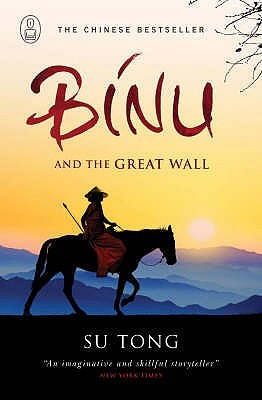
Binu and the Great Wall by Su Tong
Binu and the Great Wall is a retelling of the legend of Meng Jiangnu. If you haven't heard it, her husband was forced to work building the Great Wall of China. When she delivered him winter clothes, she found out that he died and cried so hard that the wall collapsed to reveal his bones. And it occurs to me that famous Chinese love stories don't have happy endings.
I had really high hopes for this because it's a retelling of a Chinese myth by a Chinese author and obviously I'm interested in a modern take on it. Binu and the Great Wall follows the same plot as the myth it inspires (I.e. Binu goes to deliver winter clothes), but there's not enough story in this myth and the book feels much longer than it is.
The good: I thought the world that this is set in was fascinating. Clearly there is magic, with the way Binu cries and the deer boys and the rest. There were lots of interesting elements and though there never was an explanation of the world, reading about it was the most interesting part of the book.
However, the book is let down by a poor plot and absolutely no character growth. The original tale is basically her travelling and most of the book centres on that. It's the perfect way to show an internal journey as well, but Binu stays exactly the same as she was in the start of the book. As a result, things just happen to Binu and she never really engages the reader's attention because she never really takes charge.
To be honest, I'm disappointed in this book. It's got an interesting world and it's based on a famous legend, which should resonate with all Chinese people. However, the execution of this story was poor and despite my best efforts, I found myself disappointed by the story.
I had really high hopes for this because it's a retelling of a Chinese myth by a Chinese author and obviously I'm interested in a modern take on it. Binu and the Great Wall follows the same plot as the myth it inspires (I.e. Binu goes to deliver winter clothes), but there's not enough story in this myth and the book feels much longer than it is.
The good: I thought the world that this is set in was fascinating. Clearly there is magic, with the way Binu cries and the deer boys and the rest. There were lots of interesting elements and though there never was an explanation of the world, reading about it was the most interesting part of the book.
However, the book is let down by a poor plot and absolutely no character growth. The original tale is basically her travelling and most of the book centres on that. It's the perfect way to show an internal journey as well, but Binu stays exactly the same as she was in the start of the book. As a result, things just happen to Binu and she never really engages the reader's attention because she never really takes charge.
To be honest, I'm disappointed in this book. It's got an interesting world and it's based on a famous legend, which should resonate with all Chinese people. However, the execution of this story was poor and despite my best efforts, I found myself disappointed by the story.
Labels:
Chinese
,
eastern
,
fiction
,
mythological
Thursday, June 16, 2016
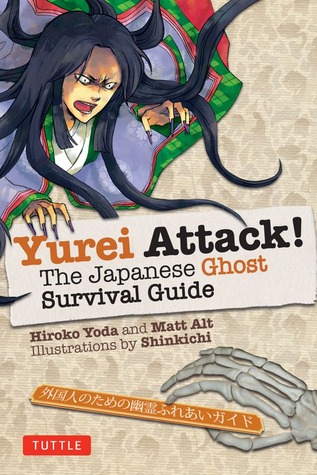
Yurei Attack by Hiroko Yoda and Matt Alt
I found this book quite by accident, but because I've read Ninja Attack, a different book by the same author, and enjoyed it, I decided to borrow this and read.
Luckily, it totally lived up to my expectations.
Yurei Attack is basically an introduction to the various kinds of Yurei (ghosts) haunting Japan. Of course, it's not exhaustive, but most of the main Yurei are featured (I think).
The Yurei in this book are divided into three categories: "Sexy and Scary" (aka famous lady ghosts), "Furious Phantoms" and "Sad Spectres". There's also a section on haunted areas in Japan and games related to the Yurei. Altogether, 36 Yurei/Yurei-related things are introduced. The last section is on the Japanese version of hell, a glossary, Yurei toys and an extensive bibliography.
Oh, and a list of resources they recommend.
I thought the book was very interesting, and I liked that each topic came with an illustration. So it was very easy to read and very colourful. It is not, however, and in-depth look into the Yurei - when I finished this, I wanted something meatier to sink my teeth into.
But first, I think I'll check out the other book in this series - Yokai Attack. I mean, the book did constantly refer to it after all.
Luckily, it totally lived up to my expectations.
Yurei Attack is basically an introduction to the various kinds of Yurei (ghosts) haunting Japan. Of course, it's not exhaustive, but most of the main Yurei are featured (I think).
The Yurei in this book are divided into three categories: "Sexy and Scary" (aka famous lady ghosts), "Furious Phantoms" and "Sad Spectres". There's also a section on haunted areas in Japan and games related to the Yurei. Altogether, 36 Yurei/Yurei-related things are introduced. The last section is on the Japanese version of hell, a glossary, Yurei toys and an extensive bibliography.
Oh, and a list of resources they recommend.
I thought the book was very interesting, and I liked that each topic came with an illustration. So it was very easy to read and very colourful. It is not, however, and in-depth look into the Yurei - when I finished this, I wanted something meatier to sink my teeth into.
But first, I think I'll check out the other book in this series - Yokai Attack. I mean, the book did constantly refer to it after all.
Labels:
eastern
,
japan
,
mythological
Saturday, June 11, 2016
Once Upon a Time X Reading Challenge (Early Roundup)
It's not quite June 21st yet, but I'm going to be busy on that day, so I might as well do an early round up of the challenge while I have the time and still remember what's going on. I can always come back and update if it turns out that I've read more books in the meantime.
Books I have read for the challenge:
The Complete Alice in Wonderland by C.S. Lewis, adapted by Leah Moore, John Reppion, Erica Awano (Fairytale)
Memories of Ash by Instisar Khanani (Fantasy)
The Penelopiad by Margaret Atwood (Mythology)
Princess of the Midnight Ball by Jessica Day George (Fairytale)
Sabriel by Garth Nix (Fantasy)
The Folklore of Discworld (Folklore)
That's six books in four categories, which means that I finish...
*drumroll*
Plus, I blogged about Grimm (and by the way, the season 5 ending was AMAZING, I can't wait for season 6!!), which means that I also finished
That's three quests, which is one more than I was aiming for. Plus, I read a few more books that I wouldn't have otherwise - as much as I love the Once Upon a Time tales, I don't tend to seek them out, rather, I pick them up when I stumble across them. It was a nice change to go looking for them, and I found two new authors to follow!
Although it would be hard to pick a favourite, I know which one I didn't enjoy as much - The Penelopiad. I do know a history major who loved it, though, so I'm probably just not intellectual enough for her :p
Yay for this challenge, and hopefully I can sneak in one more book before it official ends(:
Books I have read for the challenge:
The Complete Alice in Wonderland by C.S. Lewis, adapted by Leah Moore, John Reppion, Erica Awano (Fairytale)
Memories of Ash by Instisar Khanani (Fantasy)
The Penelopiad by Margaret Atwood (Mythology)
Princess of the Midnight Ball by Jessica Day George (Fairytale)
Sabriel by Garth Nix (Fantasy)
The Folklore of Discworld (Folklore)
That's six books in four categories, which means that I finish...
*drumroll*
AND
That's three quests, which is one more than I was aiming for. Plus, I read a few more books that I wouldn't have otherwise - as much as I love the Once Upon a Time tales, I don't tend to seek them out, rather, I pick them up when I stumble across them. It was a nice change to go looking for them, and I found two new authors to follow!
Although it would be hard to pick a favourite, I know which one I didn't enjoy as much - The Penelopiad. I do know a history major who loved it, though, so I'm probably just not intellectual enough for her :p
Yay for this challenge, and hopefully I can sneak in one more book before it official ends(:
Labels:
fairy-tales
,
fantasy
,
mythological
,
reading challenge
Monday, May 23, 2016
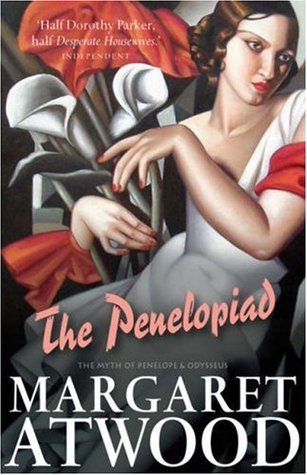
The Penelopiad by Margaret Atwood
My first Margaret Atwood book, read for the Once Upon a Time reading challenge and... I'm unimpressed.
But I guess I should add a disclaimer first: I'm not what you'd call a 'sophisticated reader'. Perhaps I was in Secondary School/IB when I was actually considering literature as a uni major (never seriously though, since my heart was pretty much set on business) and did my EE on Endo Shusaku. But not now. Now, all I want is a good story well told.
The Penelopiad is a retelling of The Odyessy from Penelope's point of view. And to me, the entire story was very bitter in tone. Everyone in the story is portrayed as a liar or proud or just plain unlikable EXCEPT for Penelope, who's the victim in all this. But she's not that likeable to me, because of the whole bitter thing.
To be sure, the retelling was interesting, but I don't really buy it. I like the original, where Odysseus and Penelope were both equally masterful weavers, both literally and in the plots they wove. This version... Is just strange. The Helen of Troy as Penelope's cousin was definitely interesting though. (And I found Helen more likeable than Penelope, even though I'm pretty sure that's not supposed to be the case)
Oh, and I didn't get the twelve maids as the Greek Chorus thing. Probably because I'm an ignoramus, but it just felt like Margaret Atwood wanted to be smart, and I started skipping them halfway through. I didn't really connect with them or see anything new from the choruses I read. Perhaps there was something in the later half, though the lecture thing and trial thing I skimmed through didn't really have it either.
Overall, this was a disappointing read. It's a pity too, because parts of it were enjoyable. But I didn't understand the Greek Chorus, and the bitterness throughout the whole thing was unpleasant.
Anyone know any mythology retellings that they'd recommend instead?
But I guess I should add a disclaimer first: I'm not what you'd call a 'sophisticated reader'. Perhaps I was in Secondary School/IB when I was actually considering literature as a uni major (never seriously though, since my heart was pretty much set on business) and did my EE on Endo Shusaku. But not now. Now, all I want is a good story well told.
The Penelopiad is a retelling of The Odyessy from Penelope's point of view. And to me, the entire story was very bitter in tone. Everyone in the story is portrayed as a liar or proud or just plain unlikable EXCEPT for Penelope, who's the victim in all this. But she's not that likeable to me, because of the whole bitter thing.
To be sure, the retelling was interesting, but I don't really buy it. I like the original, where Odysseus and Penelope were both equally masterful weavers, both literally and in the plots they wove. This version... Is just strange. The Helen of Troy as Penelope's cousin was definitely interesting though. (And I found Helen more likeable than Penelope, even though I'm pretty sure that's not supposed to be the case)
Oh, and I didn't get the twelve maids as the Greek Chorus thing. Probably because I'm an ignoramus, but it just felt like Margaret Atwood wanted to be smart, and I started skipping them halfway through. I didn't really connect with them or see anything new from the choruses I read. Perhaps there was something in the later half, though the lecture thing and trial thing I skimmed through didn't really have it either.
Overall, this was a disappointing read. It's a pity too, because parts of it were enjoyable. But I didn't understand the Greek Chorus, and the bitterness throughout the whole thing was unpleasant.
Anyone know any mythology retellings that they'd recommend instead?
Labels:
fiction
,
mythological
,
reading challenge
,
retelling
Monday, February 15, 2016
The Science of Monsters by Matt Kaplan
In the darkness it came. There was no way out. Cornered and helpless, all who found themselves in this dreaded place knew their fate.Can anyone guess which monster this opening quote is about? If you guessed the Minotaur, then congrats, you know your monsters extremely well!
I've actually been wanting to read this since I read The Science of the Magical (link leads to my review), although topically, this is a lot more similar to Monsters by David Gilmore (again, link leads to review. And I'll just italicise the title when talking about to, to prevent confusion from the actual monstrous topic). But unlike Monsters, this book is a lot more accessible. Not that Monsters wasn't readable, but it had this academic air throughout. The Science of Monsters is very casual, and has a lot of humour.
Especially the footnotes. Can I take a moment to express how much I love the footnotes here. I mean there is information, but most of it is just funny. I really looked forward to reading them, when normally I just ignore footnotes and end notes.
Although it isn't formally divided this way, I think the book can roughly be divided into two halves. The first is about how monsters came about. What inspired the Chimera? What inspired the stories of vampires? Of golems?
Most of the theories are interesting, and quite believable, although like the previous book, I think when it comes to the Bible-related stuff, his interpretation is a bit off, like for the Leviathan. But it's not a big deal or a cornerstone of the book. And anyway, it's all theories, right? Good to read something different.
The 'second half', is more on the possibilities of other monsters. Can dinosaurs be resurrected? What was going on with medicine in Frankenstein (can it happen?)? Can computers think can become like HAL? Stuff like that. Again, not agreeing with everything, but definitely food for thought.
If there's one weakness of the book, it's that it's almost exclusively Western oriented. Chinese dragon comes up briefly once, and Chinese ghosts once, but other than that, it's all about Western monsters. Compared to Monsters, it's a bit of a pity.
Actually, just to digress, why do we translate the Chinese "龙(long)" as dragon anyway? It seems to me that they're both two very separate creatures, not only in appearance, but in terms of how each culture treats the creature.
Overall, this was a good read. It was fun reading the theories of how mankind could have come up with various monsters, and the author definitely does a good job with making them all seem plausible. Totally recommended for people interested in monsters, along with his other book The Science of Magic, and Monsters by David Gilmore. I'll end with the last lines of the book, which I quite liked as well:
We can stand petrified as we gaze at the monsters we have be- come and allow worldwide nuclear and environmental destruction. Alternatively, we have the opportunity to take action, behead the beast, and claim a future where the mask of the monster safely sits somewhere else.
(A version of this review first appeared on my Dayre)
Labels:
mythological
,
non-fiction
,
reading challenge
,
western
Saturday, February 28, 2015
Mysticism & Myths Anthology
After a long, long time, I'm finally participating in another blog tour! I poked my head out because the subject matter sounded really interesting! (Also, I was hoping to see if any Asian ghosts made their way in). Since it's a collection of short stories, I thought I'd quickly review each story in the collection.
First up, Bound by Blood by Margo Bond Collins. It actually features a Filipino monster (a aswang), which made me really really happy. It did veer into a direction which I didn't completely expect, but I found it to be an interesting read, and it raised my expectations for the rest of the collection.
Second, Isa: Gift of the Baloma by Perri Forrest. I have to admit, I skipped this story. The first scene was rather explicit, and not something that I'd normally read. If you like steamy stories though, you should like it.
Third, Mico, Anguta's Reign by Dormaine G. I liked this one! It involved were-wolves, and a murder mystery. Personally, I would have loved it to be more in-depth, but that would make it a full-length novel instead. I sorta-but-not-really saw the twist coming (I'm not sure. I felt surprised yet not surprised), so yes, it's a pretty good story.
Fourth, Cursed: A Yorkshire Ghost Story by Karen Perkins. A pretty spooky ghost story for me with a vengeful ghost - if this was a movie, I'd avoid it because I'm a scaredy cat. The ending is pretty open, and like Mico, it has the potential to be a full length novel that made me stay up all night. The only small niggle I have is that for one character, the "thou" and "thees" seem to be rather mixed up with "you" arbitrarily. Either that, or the author was using it in the Shakespearean sense ("thou" being the more intimate form of expression), but it didn't really seem that way either.
Fifth, Carnem Levare by Jaxx Summers. I liked the descriptions of Venice in this city, but the story dragged a little. I think it was two different POVs (this involves another vengeful ghost - this time, that of a jilted lover), because I was pretty comfortable in one, and switching to another was a bit of a shock.
Last, but not least, The Life Keeper by Abby L. Vandiver. This was a really strong story to end the collection with. It looks at life in a small Romanian town, and the legend of the strigoi, a sort of vampire. I must say, the ending totally threw me, I did not expect it. But, the dynamics of an outsider coming into the family was interesting, and I enjoyed the narrative voice.
Overall, most of the stories are pretty solid. I wouldn't say that you can give this to any kid you know who likes mythologies, but if you know an older teen or adult that likes reading about different monsters, but doesn't have time to go through a whole novel, this collection would be a pretty good fit.
Disclaimer: I received a free copy of this book as part of Enchanted Book Promotions in exchange for a free and honest review.
Labels:
blog tours
,
eastern
,
fiction
,
mythological
,
western
Monday, May 19, 2014
Inquisitor by R.J. Blain
I first heard of Inquisitor the day before its release party last Friday. The name "R.J. Blain" rang a bell, and I realised that I've seen her around on Google+. Of course, I signed up to support a fellow Plusser, and in the process, received a review copy from her.
While I did put this book at the top of my TBR list, I can honestly say that the reason why I finished it so fast was because it was a gripping read. I was hooked from the first page.
Inquisitor follows Allison (I shalln't say her name, since in her world, true names has powers), who falls into trouble after a Halloween party. The truth is, Allison is a werewolf, and not just any werewolf. She is, as she puts it "wolf, woman, and occasional witch", making her very rare and (in my opinion) very powerful. She's also very old, which amounts for her immense wealth. When her witch Samantha is killed, she retreats to one of her identities (CEO of Marrodin, a huge company) to hunt down her killer. However, this leads her into more and more danger.
This book takes the idea of inner conflict and makes it literal. Allison has to balance the three parts of herself and it isn't easy. This can be clearly seen when you compare the narrative bits from her wolf and her normal point of view. Apart from this fascinating internal conflict, there's the external conflict and mystery.
While this book started as a mystery, the mystery ended up taking a seat as the book dove into twists and turns that result from Allison's contact with the Inquisition. The Inquisition is, as far as I can tell, a former "employer" of Allison's and they're ruthless. We're introduced to some key characters of the Inquisition, but I desperately want more information about them. I also want more about Allison's background. For example, why do some characters call her 'Lady Hanover'?
I honestly loved this book. It was a tightly written and well-paced book. Though there was a varied cast of characters, they all felt real to me, and I think enough focus was kept on Allison as the main character. There are some very interesting relationship developments which I'll be eagerly anticipating in the next book. At least, I hope there's a next book. This is a wonderfully crafted world and I love it!
I've really got to get me an Amazon card so I can go buy more of R.J's books.
Disclaimer: I got this book for free from the author in exchange for a free and honest review. Believe me, the gushing is real and heartfelt.
While I did put this book at the top of my TBR list, I can honestly say that the reason why I finished it so fast was because it was a gripping read. I was hooked from the first page.
Inquisitor follows Allison (I shalln't say her name, since in her world, true names has powers), who falls into trouble after a Halloween party. The truth is, Allison is a werewolf, and not just any werewolf. She is, as she puts it "wolf, woman, and occasional witch", making her very rare and (in my opinion) very powerful. She's also very old, which amounts for her immense wealth. When her witch Samantha is killed, she retreats to one of her identities (CEO of Marrodin, a huge company) to hunt down her killer. However, this leads her into more and more danger.
This book takes the idea of inner conflict and makes it literal. Allison has to balance the three parts of herself and it isn't easy. This can be clearly seen when you compare the narrative bits from her wolf and her normal point of view. Apart from this fascinating internal conflict, there's the external conflict and mystery.
While this book started as a mystery, the mystery ended up taking a seat as the book dove into twists and turns that result from Allison's contact with the Inquisition. The Inquisition is, as far as I can tell, a former "employer" of Allison's and they're ruthless. We're introduced to some key characters of the Inquisition, but I desperately want more information about them. I also want more about Allison's background. For example, why do some characters call her 'Lady Hanover'?
I honestly loved this book. It was a tightly written and well-paced book. Though there was a varied cast of characters, they all felt real to me, and I think enough focus was kept on Allison as the main character. There are some very interesting relationship developments which I'll be eagerly anticipating in the next book. At least, I hope there's a next book. This is a wonderfully crafted world and I love it!
I've really got to get me an Amazon card so I can go buy more of R.J's books.
Disclaimer: I got this book for free from the author in exchange for a free and honest review. Believe me, the gushing is real and heartfelt.
Labels:
fiction
,
mystery
,
mythological
,
western
Monday, July 8, 2013
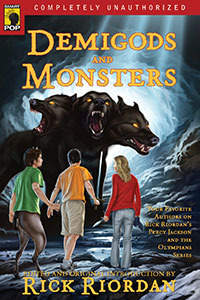
Demigods and Monsters (An Anthology)
I admittedly have a very on-off relationship with the Percy Jackson series. I probably saw The Lightning Thief in a Popular bookstore a long long time ago. Unfortunately, the only thing I remembered was a tagline that went something like "half-boy, half-god, all hero". How I managed to find the series again is something I still don't understand.
And when I finally read the first book, well I loved it! But then, left the series alone (I don't actually own any of the books - I think my sister has one as a present though, I remember reading it). It seems like if I can get my hands on a copy, I read it and enjoy myself immensely, but if I can't, well, life goes on.
But I do know what the series is about - and I think that this companion book is perfect not just for fans, but for anyone interested in Greek Mythology. You see, while the book does analyse/talk about the Percy Jackson series, they also cover a lot about Greek Mythology - for example, would you want to take the vow or Artemis?
I might have gone on a myth-reading kick in Secondary School, but this book still managed to give out a lot of interesting things that I didn't know off. Including Mayan Mythology - that sounds really interesting (yes, it appears, but I won't tell you why(; )
At the end of the book is an A-Z guide to the different characters in Greek Myth (not just the Percy Jackson series). Personally, I found it very interesting, but it's something that you should read in small bites, not in one go.
This review is more of me and my relationship to the Percy Jackson series. Oops. Anyway, I really like this book, and I heartily recommend it.
Disclaimer: I got a free copy of this book from the publishers via NetGalley in exchange for a free and honest review.
And when I finally read the first book, well I loved it! But then, left the series alone (I don't actually own any of the books - I think my sister has one as a present though, I remember reading it). It seems like if I can get my hands on a copy, I read it and enjoy myself immensely, but if I can't, well, life goes on.
But I do know what the series is about - and I think that this companion book is perfect not just for fans, but for anyone interested in Greek Mythology. You see, while the book does analyse/talk about the Percy Jackson series, they also cover a lot about Greek Mythology - for example, would you want to take the vow or Artemis?
I might have gone on a myth-reading kick in Secondary School, but this book still managed to give out a lot of interesting things that I didn't know off. Including Mayan Mythology - that sounds really interesting (yes, it appears, but I won't tell you why(; )
At the end of the book is an A-Z guide to the different characters in Greek Myth (not just the Percy Jackson series). Personally, I found it very interesting, but it's something that you should read in small bites, not in one go.
This review is more of me and my relationship to the Percy Jackson series. Oops. Anyway, I really like this book, and I heartily recommend it.
Disclaimer: I got a free copy of this book from the publishers via NetGalley in exchange for a free and honest review.
Labels:
mythological
,
NetGalley
,
non-fiction
,
western
Wednesday, June 20, 2012
Till We Have Faces by C.S. Lewis
I love love love C. S. Lewis. And not just for the Narnia Chronicles, I love almost all his books, especially The Great Divorce and Mere Christianity. So when I first heard of this book on IntoTheBook, I knew that I had to read it. And when I saw this at the Christian Bookstore at Ochanomizu, the price tag wasn't even a consideration (but for the record, it's the most expensive book I've bought, and the only one I paid full price for, since coming to Japan).
Till We Have Faces is a retelling of the Cupid and Psyche myth. In the original story, the two sisters of Psyche are evil and jealous. But like Wicked, C. S. Lewis shines a different light on one of the oldest sisters - Orual (or so he calls her).
Orual grew up ugly and unloved. But when Psyche is born (and her mother dies as a result), Orual transfers all her love to the beautiful Psyche. Eventually, this love is twisted into hate after Psyche's "sacrifice" to the Shadowbrute.
Bred on a mixture of Glom (the country where Till We Have Faces is set) superstition and Greek logic (courtesy of the Greek Slave The Fox/Grandfather), Orual is conflicted inside. Indeed, after she becomes Queen of Glom (a very capable queen I might add), she's still tormented by what she did to Psyche by convincing her to betray her husband. So what she does is to push Orual inside her and let the Queen take her place. In this way, she becomes numb.
It is only after she hears the twisted version of Cupid and Psyche (or to the reader, the conventional version), is she inspired to pen her version (or the 'true' version) of the story as a complaint to the gods. But when she is truly heard, she sees that her complaint was very different from the tale she told. Her complaint is one of bitterness, that she could not wholly possess the love of her sister.
The writing in this book is marvellous. I really do wonder why it's not more popular. C. S. Lewis has spun a marvellous story and got me to look at the original myth in a whole new light. It felt as though it was an ancient myth, but it also felt modern at the same time. The language is easy to understand and very absorbing.
In short, this is an excellent book (I love how I've been finding a lot of excellent books since coming to Japan). It's not only an entertaining tale, it's also a story about love, what it is, and what it is not.
Till We Have Faces is a retelling of the Cupid and Psyche myth. In the original story, the two sisters of Psyche are evil and jealous. But like Wicked, C. S. Lewis shines a different light on one of the oldest sisters - Orual (or so he calls her).
Orual grew up ugly and unloved. But when Psyche is born (and her mother dies as a result), Orual transfers all her love to the beautiful Psyche. Eventually, this love is twisted into hate after Psyche's "sacrifice" to the Shadowbrute.
Bred on a mixture of Glom (the country where Till We Have Faces is set) superstition and Greek logic (courtesy of the Greek Slave The Fox/Grandfather), Orual is conflicted inside. Indeed, after she becomes Queen of Glom (a very capable queen I might add), she's still tormented by what she did to Psyche by convincing her to betray her husband. So what she does is to push Orual inside her and let the Queen take her place. In this way, she becomes numb.
It is only after she hears the twisted version of Cupid and Psyche (or to the reader, the conventional version), is she inspired to pen her version (or the 'true' version) of the story as a complaint to the gods. But when she is truly heard, she sees that her complaint was very different from the tale she told. Her complaint is one of bitterness, that she could not wholly possess the love of her sister.
The writing in this book is marvellous. I really do wonder why it's not more popular. C. S. Lewis has spun a marvellous story and got me to look at the original myth in a whole new light. It felt as though it was an ancient myth, but it also felt modern at the same time. The language is easy to understand and very absorbing.
In short, this is an excellent book (I love how I've been finding a lot of excellent books since coming to Japan). It's not only an entertaining tale, it's also a story about love, what it is, and what it is not.
Labels:
Christianity
,
fiction
,
love
,
mythological
,
retelling
,
western
Sunday, December 4, 2011
Matantei Loki
I took my JLPT N4 (Japanese Language Proficiency Test) today and quite naturally, as soon as I got home, I went to read. Manga. To be even more specific, I finished the series Matantei Loki (Mythical Detective Loki).
Matantei Loki is basically about the Norse gods, with Loki the trickster god finding himself human and having to vanquish evil spirits. Along the way, other gods appear, some (unwillingly) to help and some to kill him. And ever present are the Norns, who know the past, present and future.
Despite my rather boring and insufficient description, you really have to read this manga. It's funny, exciting and best of all, all the girl characters are likeable. If you have heard me rant in person, you'll know that I can't stand a lot of girl characters in manga (like all those in Prince of Tennis), because their characterisation is terrible. Here, there is no such thing. This alone should convince you to read it.
Just a small warning. The first few mysteries are particularly gruesome. Like Detective Conan, Matantei Loki is deceptively cute, with the graphics masking the rather bloody (and I mean it literally) mysteries. If this was a live-action, it would definitely be at least NC-16, if only for the body count.
Other than the blood, it's actually a really tame manga, without most of the perverted things that occur in most other stories.
And if you can't find it in a bookshop or library, never fear, sites like mangaeden.com have the series for you to view online.
Labels:
eastern
,
fiction
,
manga/anime
,
mystery
,
mythological
Subscribe to:
Posts
(
Atom
)