After reading Dollars and Cents, I decided to pick up another book about money. But unlike Dollars and Cents, Pound Foolish isn't about the wrong ways we think about money, it's an expose of the personal finance and financial industry.
Pound Foolish starts by taking a look at the history of personal finance, starting with S.F. Porter, a personal finance guru who rose to dizzying heights before falling into obscurity. The next chapter continues the examination of personal finance gurus by looking at the controversial Suze Orman and how she changes personalities and advice to suit her audience. Chapter three shifts from people to ideas as the author debunks the latte myth - that our small little luxury spends are what's keeping us from being millionaires. Instead, the book argues that the changes to the economy are so huge and the financial difficulties most Americans face so huge that such small changes will not help.
And that really is the central idea of the book - that personal finance is not personal and that Americans have to change the system of things before they can be financially secure.
Which is why as we read through Chapter four and the rest of the book, the focus slowly shifts from the personal finance gurus to the larger financial industry. Chapter four talks about retirement and criticises the American 401(k) as being inadequate. This chapter also introduces the 'most dangerous woman in America', Teresa Ghilarducci, and her hope to "create a pension plan for all of us by having workers and their employers contribute a minimum of 5 percent of pay into a guaranteed account via mandatory automatic deduction. The government, in turn, would contribute a $600 annual tax credit [...] All this money would be placed in United States bonds which would promise an annual minimum return of 3 percent above the rate of inflation."
That sounded a lot like the Singapore CPF system, in that employees and employers must contribute a certain percentage to a savings account (well actually there are three accounts for different purposes), which have interests rates that range from 3.5% to 5%. Not identical, but similar.
After talking about retirement (and whether Americans can afford it), the book goes on to talk about the culture of commissions in the financial service sector. This was actually pretty disturbing because it's clear that there are people preying on the elderly and not much is being done about it. When the chapter is done, the book continues on the idea of making money through investments (although not necessarily for retirement) by talking about the quest for the perfect investment.
The last three chapters bring the topic back to the topic of personal finance, as they discuss women and money (I know a few people who would have a lot to say about it), how real estate may not actually make you money, and the myth of financial literacy (the author doesn't believe it's possible to be financial literate).
Like I mentioned above, the central idea of this book is that personal finance is not financial and that Americans have been tricked into thinking that it is. To be honest, while a lot of the things here are eye-opening, I'm not entirely convinced by the argument. While it's true that sudden accidents or events can knock you off a financially secure position, advice such as getting rid of debt and cutting down on needless spending isn't bad (that said, some of the debt advice wasn't the best). It almost feels as though the author has no trust in the average American and wants to absolve them of any financial mistakes they might have made because it's the big bad financial industry and personal finance gurus to blame.
I'm not so sure if that's true. I do think that if you teach people how to think about money and to recognise the blind spots in their thinking, it's possible for them to make good decisions. While we probably shouldn't be asking financial institutions to teach people how to be financially responsible, given the conflict of interest, I think trying to make people financially literate is a good goal.
Overall, this was a pretty good book about how the financial environment affects personal finance. Perhaps its because I'm not in America, but I do follow quite a few responsible financial bloggers (although I will admit that there are many irresponsible ones) and I think that they are doing a good job educating people, which is probably why I'm not as pessimistic about the whole thing as the author.
Tuesday, July 31, 2018
Monday, July 30, 2018
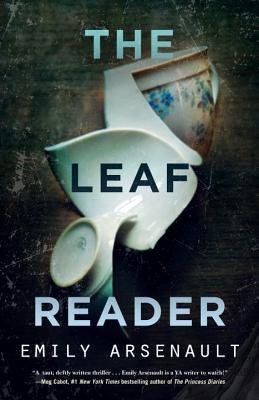
The Leaf Reader by Emily Arsenault
I borrowed this book because tea was mentioned. Unfortunately, despite the fact that tea leaf reading is central to the story, tea didn’t play a huge part.
The Leaf Reader starts with the disappearance of Andrea Quinley. Though Marnie doesn’t know her, the news affects the whole town. That said, Marnie didn’t think it would affect her personally. Not until she started tea leaf reading for Matt and found out that it was about Andrea’s disappearance. Although a bit scared of the fact that the things she sees are sometimes accurate, she is convinced to help investigate Andrea’s disappearance.
I quite liked the set-up for this book and I was curious to know how it ended, but I felt that the middle part dragged. (MILD SPOILERS) Perhaps it’s because that the ‘reveal’ about Marnie having actual powers came so late, but a good part of the book felt like it was just Marnie and Matt guessing their way through the whole thing rather than being guided by what she saw in the teacups. It was only at the end that things came together.
That said, one thing I liked about the somewhat slow middle section were Marnie’s remembrances of Jimmy, the bad boy who may have had a connection to Andrea. It helped to humanise Jimmy, who never appeared directly in the story and who might have remained a bogey figure if not for the memories.
Marnie was also a pretty interesting character. I think part of the story is about her learning to accept herself, but like I mentioned before, because the ‘truth’ about herself came so late, I felt like the issue wasn’t dealt with fully. Instead, I had this wrong impression of her background and the issues she needed to deal with, which felt like a red-herring. Not to say that being in a ‘weird’ family isn’t a proper issue, but I thought the ‘family powers’ part needed more attention.
Overall, this is a pretty interesting story. While the middle felt like it dragged on a bit, I have to admit that I continued reading because I was sufficiently hooked and had to find out the truth about Andrea’s disappearance. So the book did do it’s job in getting me to pick it up and finish it. I just feel like it could have been stronger.
The Leaf Reader starts with the disappearance of Andrea Quinley. Though Marnie doesn’t know her, the news affects the whole town. That said, Marnie didn’t think it would affect her personally. Not until she started tea leaf reading for Matt and found out that it was about Andrea’s disappearance. Although a bit scared of the fact that the things she sees are sometimes accurate, she is convinced to help investigate Andrea’s disappearance.
I quite liked the set-up for this book and I was curious to know how it ended, but I felt that the middle part dragged. (MILD SPOILERS) Perhaps it’s because that the ‘reveal’ about Marnie having actual powers came so late, but a good part of the book felt like it was just Marnie and Matt guessing their way through the whole thing rather than being guided by what she saw in the teacups. It was only at the end that things came together.
That said, one thing I liked about the somewhat slow middle section were Marnie’s remembrances of Jimmy, the bad boy who may have had a connection to Andrea. It helped to humanise Jimmy, who never appeared directly in the story and who might have remained a bogey figure if not for the memories.
Marnie was also a pretty interesting character. I think part of the story is about her learning to accept herself, but like I mentioned before, because the ‘truth’ about herself came so late, I felt like the issue wasn’t dealt with fully. Instead, I had this wrong impression of her background and the issues she needed to deal with, which felt like a red-herring. Not to say that being in a ‘weird’ family isn’t a proper issue, but I thought the ‘family powers’ part needed more attention.
Overall, this is a pretty interesting story. While the middle felt like it dragged on a bit, I have to admit that I continued reading because I was sufficiently hooked and had to find out the truth about Andrea’s disappearance. So the book did do it’s job in getting me to pick it up and finish it. I just feel like it could have been stronger.
Wednesday, July 25, 2018
We Have Always Lived in the Castle by Shirley Jackson
To be honest, I was a little hesitant when I picked this up because I wasn’t sure if I would like it. The blurb sounded good but the cover was kind of creepy and I don’t even know if I like Gothic fiction. But when I started this, I quickly found myself hooked and finished the book in no time.
Warning: this book is pretty short so there will be mild spoilers in the review
Mary Katherine (Merricat) is an eighteen year old girl who lives with her uncle Julian and her sister Constance, to whom she is fiercely devoted to. The three of them are outcasts because six years ago, someone put arsenic in the sugar and killed most of the family. While Constance was eventually acquitted of the murders, suspicion still hangs over them, leaving Merricat as the only member of the family who ventures into the village.
Despite that, the three of them are happy. Until cousin Charles comes and Merricat finds that her sister and their household is rapidly changing.
This was a very creepy story, partly because Merricat is the main character and protagonist. If you read on, it’s pretty obvious that Constance is the normal one, full of love of her sister and while scared of the outside world, also longing to rejoin society.
Merricat, on the other hand, is contented with the way things are because she has her loving sister all to herself (and uncle Julian). To her, the outside world is nothing more than an intrusion on what could be a happy life. Which is why although she’s eighteen, Merricat feels like she’s much younger - almost childlike - mentally.
The family dynamics alone would be creepy, but when you add in the village, things go up a notch. There is so much unmasked hostility in the villagers that it’s scary. In the first chapter alone, a grown man corners Merricat and insinuates (almost saying it point blank) that he wants her and her family gone. That interaction was so uncomfortable that I almost stopped reading.
Overall, this was a great book. It’s definitely not something comfortable to read - the tension in this book can be really high at times - but it is addictive and fascinating in its own way. If this is Gothic fiction, I should try reading more of it.
Warning: this book is pretty short so there will be mild spoilers in the review
Mary Katherine (Merricat) is an eighteen year old girl who lives with her uncle Julian and her sister Constance, to whom she is fiercely devoted to. The three of them are outcasts because six years ago, someone put arsenic in the sugar and killed most of the family. While Constance was eventually acquitted of the murders, suspicion still hangs over them, leaving Merricat as the only member of the family who ventures into the village.
Despite that, the three of them are happy. Until cousin Charles comes and Merricat finds that her sister and their household is rapidly changing.
This was a very creepy story, partly because Merricat is the main character and protagonist. If you read on, it’s pretty obvious that Constance is the normal one, full of love of her sister and while scared of the outside world, also longing to rejoin society.
Merricat, on the other hand, is contented with the way things are because she has her loving sister all to herself (and uncle Julian). To her, the outside world is nothing more than an intrusion on what could be a happy life. Which is why although she’s eighteen, Merricat feels like she’s much younger - almost childlike - mentally.
The family dynamics alone would be creepy, but when you add in the village, things go up a notch. There is so much unmasked hostility in the villagers that it’s scary. In the first chapter alone, a grown man corners Merricat and insinuates (almost saying it point blank) that he wants her and her family gone. That interaction was so uncomfortable that I almost stopped reading.
Overall, this was a great book. It’s definitely not something comfortable to read - the tension in this book can be really high at times - but it is addictive and fascinating in its own way. If this is Gothic fiction, I should try reading more of it.
Monday, July 23, 2018
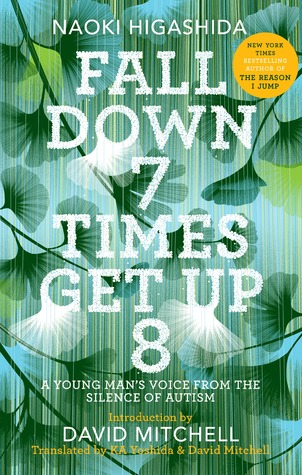
Fall Down 7 Times Get Up 8 by Naoki Higashida
Someone from Church lent me this and it is so good! Written by the same author of The Reason I Jump (which I haven’t read but really want to now), this book contains the thoughts of a young man who happens to be severely autistic.
Naoki Higashida writes using an alphabet grid, without anyone else’s hand touching his, so you can be sure that the words in this book really did come out of his mind. And when you look at the subjects he muses about, his poetry, and his short story, it’s clear that he has an extra-ordinary mind.
In this books, he talks about his struggles to learn and communicate, as well as encourage all neurotypical people not to give up on people with autism, because they do want to live their best life and they can pick up our emotions. If this wasn’t a library book, I would have highlighted so many quotes, such as:
I would totally recommend this book! It’s a moving and uplifting insight into a person that we might not even think we can communicate with. The beauty of his words show that there is deep potential within everyone, and that we should not be so quick to write off people as unable to contribute to society.
Definitely read this if you have the chance!
Naoki Higashida writes using an alphabet grid, without anyone else’s hand touching his, so you can be sure that the words in this book really did come out of his mind. And when you look at the subjects he muses about, his poetry, and his short story, it’s clear that he has an extra-ordinary mind.
In this books, he talks about his struggles to learn and communicate, as well as encourage all neurotypical people not to give up on people with autism, because they do want to live their best life and they can pick up our emotions. If this wasn’t a library book, I would have highlighted so many quotes, such as:
"On the surface, a sheltered life spent on your favourite activities might look like paradise but I believe that unless you come into contact with some of the hardships other people endure, your own personal development will be impaired."And I probably would have bookmarked all his poetry. I’m normally not a poetry type of person, but I find that his poems inspire and uplift, even when they look on the slightly more unpleasant side of life. Two that I particularly liked are Rumours and Words - look out for them if you're reading the book!
I would totally recommend this book! It’s a moving and uplifting insight into a person that we might not even think we can communicate with. The beauty of his words show that there is deep potential within everyone, and that we should not be so quick to write off people as unable to contribute to society.
Definitely read this if you have the chance!
Labels:
autobiography/biography
,
Best Of
,
japan
Subscribe to:
Posts
(
Atom
)