One of my favourite memories from when I was younger would be the smell of the library. While we never haunted it as frequently as the author of this book, going there was always a treat and now, I make it a point to visit the library regularly (although this is more for sanity and cost-saving reasons). And so, with a title like this, how could I resist requesting it from NetGalley? I barely needed to read that it was about the 1986 fire at the Los Angeles Public Library before I was hooked.
The Library Book has two stories: the first is the history of the Los Angeles Public Library - how it started and how it grew, and the second is, as mentioned before, on the 1986 fire at the Los Angeles Public Library.
Obviously, I found this fascinating. Of the two stories, I thought the story of the Los Angeles library to be more interesting. While I've never been to that particular library, I can definitely see the beauty of it and I love how all the people working there are so passionate about the library. The book definitely brings the library to life.
On the other hand, I thought the story about the 1986 fire was a bit of a let down. Perhaps its because I thought this was a solved mystery (the way the book opens definitely implies that Harry Peak is the culpirt) and so the sudden open end was a bit of a shock. Or maybe it's because the book alternates between the history and workings of the library and the 1986 fire, which means that the case never really has time to build up steam. In any case, I found that I would have much preferred to read about about the library with this case being just a small component of it, rather than half the book.
Overall, I thought that this was a beautiful tribute to libraries, and to the Los Angeles Public Library in particular. While I'm not sure if the libraries in Singapore work the same way, I found it very eye-opening to read about how libraries in America work, how they used to work, and how they are changing for the future.
Disclaimer: I got a free copy of this book from the publisher via NetGalley in exchange for a free and honest review.
Showing posts with label ARC. Show all posts
Thursday, October 11, 2018
Tuesday, June 5, 2018
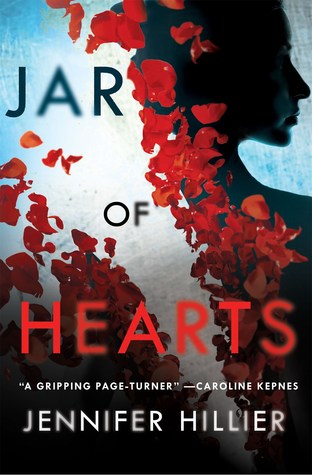
Jar of Hearts by Jennifer Hillier
I requested this book because murders + hidden childhood secrets always interest me and luckily for me, I was not disappointed.
Jar of Hearts opens with Geo being sentenced to five years of jail for the involvement in the murder of her best friend, Angela. And to be honest, I almost gave up during the section on her years in jail because there was a lot of violence - both sexual and non-sexual.
But if you can get through the prison section to when she gets out, things start to get interesting. Because just before Geo gets out, two bodies turn up near Geo’s home - a mother and child murdered the way Angela was. Kaiser, Angela and Geo’s childhood best friend, is investigating and he quickly confirms that this case is connected to their shared past. I shan’t say anything more about the plot because I might give too much away. But it was really well-paced and I liked how the past informed the present.
Geo was a good protagonist. Even though she did a horrible horrible thing (and didn’t ‘fess up for 14 years), she clearly regrets it. And the more I read about her and Angela’s relationship, the more I saw how complicated it was and even though it doesn’t excuse what she did at all, it did help me to understand her.
On the other hand, I was a bit meh about Kaiser. I thought he had a pretty strong start, but he soon faded away and it felt like his purpose was more for plot than for character. I know him not really changing is his schtick in the book, but he felt a little two-dimensional at times, which is a pity because I thought he was an interesting foil to Geo at first (and would be the childhood friend who’d keep her accountable).
The ending was pretty good. Not something that could be deduced from hints in the book (except for the few chapters before) but everything flowed nicely and it was pretty satisfying. Overall, if you like darker thrillers, you should check this book out. Despite the slightly rough start, I got hooked and flew through the second half because I wanted to find out what happened.
Disclaimer: I got a free copy of this book from the publisher via NetGalley in exchange for a free and honest review
Jar of Hearts opens with Geo being sentenced to five years of jail for the involvement in the murder of her best friend, Angela. And to be honest, I almost gave up during the section on her years in jail because there was a lot of violence - both sexual and non-sexual.
But if you can get through the prison section to when she gets out, things start to get interesting. Because just before Geo gets out, two bodies turn up near Geo’s home - a mother and child murdered the way Angela was. Kaiser, Angela and Geo’s childhood best friend, is investigating and he quickly confirms that this case is connected to their shared past. I shan’t say anything more about the plot because I might give too much away. But it was really well-paced and I liked how the past informed the present.
Geo was a good protagonist. Even though she did a horrible horrible thing (and didn’t ‘fess up for 14 years), she clearly regrets it. And the more I read about her and Angela’s relationship, the more I saw how complicated it was and even though it doesn’t excuse what she did at all, it did help me to understand her.
On the other hand, I was a bit meh about Kaiser. I thought he had a pretty strong start, but he soon faded away and it felt like his purpose was more for plot than for character. I know him not really changing is his schtick in the book, but he felt a little two-dimensional at times, which is a pity because I thought he was an interesting foil to Geo at first (and would be the childhood friend who’d keep her accountable).
The ending was pretty good. Not something that could be deduced from hints in the book (except for the few chapters before) but everything flowed nicely and it was pretty satisfying. Overall, if you like darker thrillers, you should check this book out. Despite the slightly rough start, I got hooked and flew through the second half because I wanted to find out what happened.
Disclaimer: I got a free copy of this book from the publisher via NetGalley in exchange for a free and honest review
Wednesday, March 7, 2018
The Queens of Innis Lear by Tessa Gratton
I requested this book as soon as I saw it because:
1. The blurb makes it sound similar to Three Dark Crowns which was something I really loved
2. I studied King Lear in IB and heard that this was a retelling.
Anyway, this retelling of King Lear is infused with magic of both the stars and sky. King Lear is obsessed by what the stars say to him, leading him to require his daughters to publicly declare their love for him (among other things). His two older daughters, Gaelan and Reagan are one in mind, but his favourite, Elia surprises him with his answer. If you've watched or studied King Lear, you know how it goes.
Because this is a series, we don't get as far as say, the Storm Scene. Well, this book is really a set-up for the world, so it ends a little after the public declaration contest, which you may recognise as the start of the play. But I can see why this world and the new characters require so much word-space, so I don't mind waiting to see my favourite parts of this play retold.
As for characters, the three daughters of Lear definitely steal the show. Elia is my favourite because she's the kindest, but both Gaela and Reagan were very well-written and true to their inspiration. The book also introduces new characters, such as Ban the Fox and the Fool's daughter (who's also Elia's lady-in-waiting).
The only thing I wasn't too crazy about was the language. It's very deliberately lyrical, sometimes to its detriment because it distracted me from the story. Then again, if you know me, you know I put story first and feel that language should be used to enhance the story rather than placed in the limelight for its own sake.
Overall, though, this is definitely a book for fans of King Lear and those that like darker retellings. Even though I know the ending (or at least, I hope I know the ending), I cannot wait to see how the later books will interpret the rest of the play.
Disclaimer: I got a free copy of this book from the publisher via NetGalley in exchange for a free and honest review.
1. The blurb makes it sound similar to Three Dark Crowns which was something I really loved
2. I studied King Lear in IB and heard that this was a retelling.
Anyway, this retelling of King Lear is infused with magic of both the stars and sky. King Lear is obsessed by what the stars say to him, leading him to require his daughters to publicly declare their love for him (among other things). His two older daughters, Gaelan and Reagan are one in mind, but his favourite, Elia surprises him with his answer. If you've watched or studied King Lear, you know how it goes.
Because this is a series, we don't get as far as say, the Storm Scene. Well, this book is really a set-up for the world, so it ends a little after the public declaration contest, which you may recognise as the start of the play. But I can see why this world and the new characters require so much word-space, so I don't mind waiting to see my favourite parts of this play retold.
As for characters, the three daughters of Lear definitely steal the show. Elia is my favourite because she's the kindest, but both Gaela and Reagan were very well-written and true to their inspiration. The book also introduces new characters, such as Ban the Fox and the Fool's daughter (who's also Elia's lady-in-waiting).
The only thing I wasn't too crazy about was the language. It's very deliberately lyrical, sometimes to its detriment because it distracted me from the story. Then again, if you know me, you know I put story first and feel that language should be used to enhance the story rather than placed in the limelight for its own sake.
Overall, though, this is definitely a book for fans of King Lear and those that like darker retellings. Even though I know the ending (or at least, I hope I know the ending), I cannot wait to see how the later books will interpret the rest of the play.
Disclaimer: I got a free copy of this book from the publisher via NetGalley in exchange for a free and honest review.
Monday, January 29, 2018
High King of Heaven edited by John MacArthur
I've got to admit, the title for this book is fantastic (or conversely, annoying) because I had Be Thou My Vision playing in my head every time I opened this book. Talk about a catchy title!
High King of Heaven is basically a book on Christ. There are 23 chapters by 23 pastors and theologians, including John MacArthur. The book is organised into four parts: the person of Christ, the work of Christ, the word of Christ, and the witness of Christ, with each chapter focusing on a specific topic, such as Christ in the Old Testament, the atonement, Christ’s relationship with God the Father, etc.
According to another reviewer (Doug on Goodreads), these essays are from the sermons preached at the 2017 Shepherd’s Conference. Since I didn’t listen to the sermons, all the essays were new to me. And with 23 essays, there’s a lot of material in here. There are some good parts, like a clear explanation of the Arian heresy, and the chapter on how Jesus read the Old Testament using a literal-grammatical-historical hermeneutic.
Then there are some things don’t ring true. There’s a statement that there’s “no extra-biblical evidence that Caesar Augustus ever called for an empire-wide census” and that “there is uncertainty that Quirinius was a Roman governor in Syria as early as 6 to 2BC”, and the Joseph didn’t need to return argument as though these are facts when there are also arguments to the contrary. I feel that at the very least, they should present both sides.
There’s also a statement that “in the early Church, there was no political activism. Rather, there was preaching and prayer.” I suppose this depends on what you define as political activism, but religion was a very integral part of being a Roman citizen, which means that the early Church was making a political stand just by believing in Christ. So I don’t really agree with wording that makes it seem like early Christianity was 100% apolitical.
Most importantly, this book writes from the Calvinist viewpoint, which isn’t disclosed (it might be in the introduction but that wasn’t in my review copy). This was most obvious in the chapter of definite atonement, which completely leaves out general atonement. Unsurprisingly, this was the most unconvincing chapter to an Arminian like me.
Given the narrow theological perspective here, I wouldn’t recommend this book as the book on Christology or even an introductory book to Christology, even if you are a Calvinist because I believe it’s important for us believers to know about Christianity as a whole because people do ask about these differences. It is, however, a pretty decent book on the subject and contains some good points, so I would recommend reading it along with other books.
Disclaimer: I received a free copy of this book from the publisher via NetGalley in exchange for a free and honest review.
High King of Heaven is basically a book on Christ. There are 23 chapters by 23 pastors and theologians, including John MacArthur. The book is organised into four parts: the person of Christ, the work of Christ, the word of Christ, and the witness of Christ, with each chapter focusing on a specific topic, such as Christ in the Old Testament, the atonement, Christ’s relationship with God the Father, etc.
According to another reviewer (Doug on Goodreads), these essays are from the sermons preached at the 2017 Shepherd’s Conference. Since I didn’t listen to the sermons, all the essays were new to me. And with 23 essays, there’s a lot of material in here. There are some good parts, like a clear explanation of the Arian heresy, and the chapter on how Jesus read the Old Testament using a literal-grammatical-historical hermeneutic.
Then there are some things don’t ring true. There’s a statement that there’s “no extra-biblical evidence that Caesar Augustus ever called for an empire-wide census” and that “there is uncertainty that Quirinius was a Roman governor in Syria as early as 6 to 2BC”, and the Joseph didn’t need to return argument as though these are facts when there are also arguments to the contrary. I feel that at the very least, they should present both sides.
There’s also a statement that “in the early Church, there was no political activism. Rather, there was preaching and prayer.” I suppose this depends on what you define as political activism, but religion was a very integral part of being a Roman citizen, which means that the early Church was making a political stand just by believing in Christ. So I don’t really agree with wording that makes it seem like early Christianity was 100% apolitical.
Most importantly, this book writes from the Calvinist viewpoint, which isn’t disclosed (it might be in the introduction but that wasn’t in my review copy). This was most obvious in the chapter of definite atonement, which completely leaves out general atonement. Unsurprisingly, this was the most unconvincing chapter to an Arminian like me.
Given the narrow theological perspective here, I wouldn’t recommend this book as the book on Christology or even an introductory book to Christology, even if you are a Calvinist because I believe it’s important for us believers to know about Christianity as a whole because people do ask about these differences. It is, however, a pretty decent book on the subject and contains some good points, so I would recommend reading it along with other books.
Disclaimer: I received a free copy of this book from the publisher via NetGalley in exchange for a free and honest review.
Labels:
ARC
,
Christianity
,
non-fiction
Thursday, October 19, 2017
The Scarecrow Princess by Federico Rossi Edrig
I requested this from NetGalley because the blurb mentioned myths, a crow king and basically sounded like a modern day fairytale. The actual comic was a bit different.
The story starts when Morrigan, her mother, and her brother move to a small town. Morrigan is upset because this move was for her mother and brother's new project, and she reacts by acting like the 14-year-old girl she is. But when the crow king from the myth turns out to be true, Morrigan finds that she is the appointed scarecrow princess meant to stop him.
The first thing I didn't like was the drawing style. I realise this was on the cover and really is a personal thing, but it didn't grow on me at all. I suppose the rough style could be reminiscent of Morrigan's prickly character and the dark nature of a fairytale, but it just felt unfinished most of the time.
The second thing I didn't like was the pacing. I think this is actually the main reason why the book disappointed me. Everything was wrapped up in this one volume and that means things had to move at a quick pace. Morrigan must grow up, she must meet (and then quarrel with) friends, there must be a twist, etc. I suppose if this was spread over a few volumes, the story could have had enough room to breath, but as it is everything felt rushed.
And there is one more thing: the ending section of the story was weird. (Spoiler alert!) At the end of the book, after what felt like sexual talk from the crow king, Morrigan and the crow king have a heart-to-heart conversation (as much as two enemies can) while the two of them are completely naked.
Let me remind you that Morrigan is a 14-year-old girl and the crow king, while not explicitly given an age, appears to be an adult.
It feels like the more I think about the book, the more I dislike it. It's a real pity because the premise had a lot of promise and I think if the story was given more room to breathe (and remembered that the protagonist is a young girl), it could have been a great story. But as it, it's just disappointing.
Disclaimer: I got a free copy of this book from the publisher via NetGalley in exchange for a free and honest review.
(To be honest, I'm still not sure about whether I'm going to give this one or two stars on NetGalley, but the more I think about the fact that a fourteen-year-old girl was unnecessarily sexualised, the more I lean towards a one star.)
The story starts when Morrigan, her mother, and her brother move to a small town. Morrigan is upset because this move was for her mother and brother's new project, and she reacts by acting like the 14-year-old girl she is. But when the crow king from the myth turns out to be true, Morrigan finds that she is the appointed scarecrow princess meant to stop him.
The first thing I didn't like was the drawing style. I realise this was on the cover and really is a personal thing, but it didn't grow on me at all. I suppose the rough style could be reminiscent of Morrigan's prickly character and the dark nature of a fairytale, but it just felt unfinished most of the time.
The second thing I didn't like was the pacing. I think this is actually the main reason why the book disappointed me. Everything was wrapped up in this one volume and that means things had to move at a quick pace. Morrigan must grow up, she must meet (and then quarrel with) friends, there must be a twist, etc. I suppose if this was spread over a few volumes, the story could have had enough room to breath, but as it is everything felt rushed.
And there is one more thing: the ending section of the story was weird. (Spoiler alert!) At the end of the book, after what felt like sexual talk from the crow king, Morrigan and the crow king have a heart-to-heart conversation (as much as two enemies can) while the two of them are completely naked.
Let me remind you that Morrigan is a 14-year-old girl and the crow king, while not explicitly given an age, appears to be an adult.
It feels like the more I think about the book, the more I dislike it. It's a real pity because the premise had a lot of promise and I think if the story was given more room to breathe (and remembered that the protagonist is a young girl), it could have been a great story. But as it, it's just disappointing.
Disclaimer: I got a free copy of this book from the publisher via NetGalley in exchange for a free and honest review.
(To be honest, I'm still not sure about whether I'm going to give this one or two stars on NetGalley, but the more I think about the fact that a fourteen-year-old girl was unnecessarily sexualised, the more I lean towards a one star.)
Thursday, September 14, 2017
The Man From the Train by Bill James
I requested this from NetGalley because I find true crime fascinating and I read that the author is a baseball statistician so I was hoping that this is a book that uses data to solve the crime. Unfortunately, while the cases are extremely tragic and told in a fascinating way, the book suffers from a lack of focus.
So from around 1900 to 1912, a series of murders started to take place near railway lines. All of them were senseless, cruel murders which had a few points in common - such as an axe being a weapon, no robbery, no warning, and a few more. The authors are convinced that this is the work of one man, something that the press only seemed to realise a few years after the murders start (and by then a few people had been convicted for the murders).
While I do agree that the there was probably a serial on the loose, I'm not really satisfied with the arguments made. There are sentences like "No source says so, but the Meadows family had to have hunting dogs; I just can't see a family like this not having hunting dogs" (used when hypothesising how the crime might have taken place) which are quite scary because I would not want anyone to assume things that cannot be proven as fact.
Plus I was expecting a more mathematical look at the crime and the closest that the book came to maths was to ask how many murders would one expect there to be with the characteristics of the crime and say "the mathematical answer is 0."
I don't know if I'm remembering my stats wrong but while the answer may by very close to zero, I wouldn't have expected an answer like this. I did expect the author to calculate the probability of such a case happening and then derive the number of murders so a flat out "answer is 0" with no working made me disappointed.
Narrative-wise, the book basically goes through all related crimes and only discusses the probable murder at the end. This is probably a personal preference but I wish only the relevant cases were discussed. There are a lot of murders as it is, and to read something horrific and then see something along the lines of "but we don't think this was part of the serial killing" feels like there wasn't much thought into what should have ended up in the book.
As for the murderer, he seems to have been identified with a gut feeling because all I saw was an account of his 'first case' which was like all the others. Not much else was presented to show how he was linked to the murders, although the authors did theorise that he's behind a gruesome killing in Kaifeck a few years later.
This book also has one of the strongest authorial voices that I've read and I suppose it's so that we end up believing what the author believes. I suppose whether you like or dislike the book will also depend a lot on whether you like the authorial voice and how heavy it was. Personally, I'm not a fan of the puns and the digressions but it didn't make me want to stop reading the book.
Basically, this book introduced me to this horrific crime that I never knew existed. I do agree with the authors that this was the work of a serial killer, but I'm not a fan of how the case was made and I'm not entirely convinced that the man that they fingered is the real culprit (although he did commit a terrible murder too). It's too bad that the book didn't use much maths to make a case - that would have been interesting.
Disclaimer: I got a free copy of this book from the publisher via NetGalley in exchange for a free and honest review.
So from around 1900 to 1912, a series of murders started to take place near railway lines. All of them were senseless, cruel murders which had a few points in common - such as an axe being a weapon, no robbery, no warning, and a few more. The authors are convinced that this is the work of one man, something that the press only seemed to realise a few years after the murders start (and by then a few people had been convicted for the murders).
While I do agree that the there was probably a serial on the loose, I'm not really satisfied with the arguments made. There are sentences like "No source says so, but the Meadows family had to have hunting dogs; I just can't see a family like this not having hunting dogs" (used when hypothesising how the crime might have taken place) which are quite scary because I would not want anyone to assume things that cannot be proven as fact.
Plus I was expecting a more mathematical look at the crime and the closest that the book came to maths was to ask how many murders would one expect there to be with the characteristics of the crime and say "the mathematical answer is 0."
I don't know if I'm remembering my stats wrong but while the answer may by very close to zero, I wouldn't have expected an answer like this. I did expect the author to calculate the probability of such a case happening and then derive the number of murders so a flat out "answer is 0" with no working made me disappointed.
Narrative-wise, the book basically goes through all related crimes and only discusses the probable murder at the end. This is probably a personal preference but I wish only the relevant cases were discussed. There are a lot of murders as it is, and to read something horrific and then see something along the lines of "but we don't think this was part of the serial killing" feels like there wasn't much thought into what should have ended up in the book.
As for the murderer, he seems to have been identified with a gut feeling because all I saw was an account of his 'first case' which was like all the others. Not much else was presented to show how he was linked to the murders, although the authors did theorise that he's behind a gruesome killing in Kaifeck a few years later.
This book also has one of the strongest authorial voices that I've read and I suppose it's so that we end up believing what the author believes. I suppose whether you like or dislike the book will also depend a lot on whether you like the authorial voice and how heavy it was. Personally, I'm not a fan of the puns and the digressions but it didn't make me want to stop reading the book.
Basically, this book introduced me to this horrific crime that I never knew existed. I do agree with the authors that this was the work of a serial killer, but I'm not a fan of how the case was made and I'm not entirely convinced that the man that they fingered is the real culprit (although he did commit a terrible murder too). It's too bad that the book didn't use much maths to make a case - that would have been interesting.
Disclaimer: I got a free copy of this book from the publisher via NetGalley in exchange for a free and honest review.
Labels:
ARC
,
crime
,
NetGalley
,
non-fiction
Friday, September 8, 2017
Only Dead on the Inside by James Breakwell
If you don't follow James Breakwell on Twitter, you should go do so. He's hilarious and I really love reading his tweets - I don't go on twitter often so I kinda "binge read" when I'm there which is often. So when I saw that he had a book on NetGalley I immediately requested it and put it on the front of my TBR list.
And luckily, it lived up to expectations!
I mean, a book is a lot longer than 140 characters. I wouldn't have been surprised if it ran out of steam halfway. But Breakwell did an excellent job of pacing the jokes and I laughed during every chapter.
Written in a pseudo-serious tone, Only Dead on the Inside is a handbook to help parents survive a zombie attack while keeping their kids alive. Illustrated with very crudely drawn Microsoft Paint-style comics (the comics were probably the weakest point of the book but I laughed at quite a few of them so it's not like they are complete failures), topics include:
- How to convince your kids to hide
- Food during a zombie apocalypse
- Why minivans are awesome (and what else you can use as a weapon against zombies)
- Why a zombie apocalypse means you never have to clean your house
- And what to do if you need to amputate your arm.
I would definitely recommend this to everyone and I would pick up a copy if I ever found it in a bookshop. It's funny and I really enjoyed reading it. If you've had experiences with kids (and everyone has, since you either were one or know one), you'll probably enjoy this. And his Twitter account. You should definitely check that out!
Disclaimer: I got a free copy of this book from the publisher via NetGalley in exchange for a free and honest review.
And luckily, it lived up to expectations!
I mean, a book is a lot longer than 140 characters. I wouldn't have been surprised if it ran out of steam halfway. But Breakwell did an excellent job of pacing the jokes and I laughed during every chapter.
Written in a pseudo-serious tone, Only Dead on the Inside is a handbook to help parents survive a zombie attack while keeping their kids alive. Illustrated with very crudely drawn Microsoft Paint-style comics (the comics were probably the weakest point of the book but I laughed at quite a few of them so it's not like they are complete failures), topics include:
- How to convince your kids to hide
- Food during a zombie apocalypse
- Why minivans are awesome (and what else you can use as a weapon against zombies)
- Why a zombie apocalypse means you never have to clean your house
- And what to do if you need to amputate your arm.
I would definitely recommend this to everyone and I would pick up a copy if I ever found it in a bookshop. It's funny and I really enjoyed reading it. If you've had experiences with kids (and everyone has, since you either were one or know one), you'll probably enjoy this. And his Twitter account. You should definitely check that out!
Disclaimer: I got a free copy of this book from the publisher via NetGalley in exchange for a free and honest review.
Thursday, April 27, 2017
Rosé All Day by Katherine Cole (ARC)
I'm not knowledgeable about wine, but I do prefer it to beer. So when I saw this book, I thought it was a good time to learn a little bit more about rosé, which I didn't even realise was a separate category (I thought it was a little bit like champagne rather than a third category).Basically, rosé can be made many different ways. You can use red grapes, you can use white grapes and red grapes and you can basically mix them in a bunch of different ways. And that's everything that I got out of the technical aspect. I will probably have to reread that section.
After the first chapter, which talks about the history what makes rosé, rosé, the book goes into detail on the different regions that produce the wine, as well as the recommended wines from each region. There's a helpful price guide, so if you're budget conscious, you can just look for the single $ sign wines and ignore the rest. Unfortunately, there isn't a list of all the names of wines categorised by price, but there is a list of top 5 wines for each price range, which could be helpful. The book also has a list of websites that you can buy rosé from, though I don't know which countries it sells to.
If you're interested in drinking more rosé and/or learning about it, I think this book will be a helpful guide. Even if you don't want to learn about its history, you could use the rest of the book as a guide to picking out wines.
Disclaimer: I got a free copy of this book from the publisher via NetGalley in exchange for a free and honest review.
Labels:
ARC
,
food
,
NetGalley
,
non-fiction
Wednesday, August 10, 2016
Someone Else's Child by Helen Klein Ross (ARC)
I finished this book during the summer, before I got the motivation to study (and now I'm posting this review, after I finished my exams :p). Someone Else's Child started rather slowly for me, but soon, it gripped me and I finished the later half of the book in two sittings (mostly on the train, and luckily I did not miss any stops).
Someone Else's Child is a multi-POV novel about kidnapping. It's not a thriller though. Basically, Lucy (whose ethnicity I'm not too clear about?) wants a baby very badly. When she finds a baby seemingly abandoned in a supermarket, it seems like her dreams have come true. For Marilyn, it's her worst nightmare. All she did was leave baby Natalie alone for a little and then she's gone. Natalie grows up as Mia, until one day, Marilyn finds her, and everyone has to figure out what is going to happen.
I say 'figure out' because Mia is confused, Marilyn is confused and Lucy basically flew off to China to hide. The police don't play much of a presence either - in the latter half of the book, Mia is clearly the main character.
Unlike most books, I did read some of the reviews on Goodreads before reading (had to get a cover for Teaser Tuesday), and I must say, I don't feel as much hate towards Lucy as some of the other readers do.
True, she did a horrendous thing and she does have a lot of making up to do for it, but... I don't know. She didn't seem like an evil person in the sense that most villains are. She seemed like someone who gave in to human nature and made a huge mistake, then never got to courage to own up to it.
Maybe I saw too much of her perspective or something.
Don't get me wrong here, my favourite characters are Mia and Wendy (Wendy is the Chinese nanny). I don't like or condone what Lucy does, but I didn't find myself very angry either, which is weird because these things can get me hopping. In fact, I have the same amount of empathy for Lucy as I do for Marilyn.
Conclusion: I probably reacted to this book weirdly, but I won't deny that after a slow start, it grabbed hold of me and would not let go.
Disclaimer: I got a free copy of this book from the publisher via NetGalley in exchange for a free and honest review.
Someone Else's Child is a multi-POV novel about kidnapping. It's not a thriller though. Basically, Lucy (whose ethnicity I'm not too clear about?) wants a baby very badly. When she finds a baby seemingly abandoned in a supermarket, it seems like her dreams have come true. For Marilyn, it's her worst nightmare. All she did was leave baby Natalie alone for a little and then she's gone. Natalie grows up as Mia, until one day, Marilyn finds her, and everyone has to figure out what is going to happen.
I say 'figure out' because Mia is confused, Marilyn is confused and Lucy basically flew off to China to hide. The police don't play much of a presence either - in the latter half of the book, Mia is clearly the main character.
Unlike most books, I did read some of the reviews on Goodreads before reading (had to get a cover for Teaser Tuesday), and I must say, I don't feel as much hate towards Lucy as some of the other readers do.
True, she did a horrendous thing and she does have a lot of making up to do for it, but... I don't know. She didn't seem like an evil person in the sense that most villains are. She seemed like someone who gave in to human nature and made a huge mistake, then never got to courage to own up to it.
Maybe I saw too much of her perspective or something.
Don't get me wrong here, my favourite characters are Mia and Wendy (Wendy is the Chinese nanny). I don't like or condone what Lucy does, but I didn't find myself very angry either, which is weird because these things can get me hopping. In fact, I have the same amount of empathy for Lucy as I do for Marilyn.
Conclusion: I probably reacted to this book weirdly, but I won't deny that after a slow start, it grabbed hold of me and would not let go.
Disclaimer: I got a free copy of this book from the publisher via NetGalley in exchange for a free and honest review.
Friday, August 5, 2016
Business Cat by Tom Fonder
I requested, downloaded and read this comic book in less than an hour, so... I guess you shouldn't expect a very long review.
Business Cat is precisely what it's title says - about a Cat CEO. Since I'm one of those people that like Dilbert, Garfield AND Texts from Mittens (wait, does that mean I have to go for the 'racial sensitivity training' thing? (; ), I was obviously going to read this book. And I was not disappointed.
This 130 page book is pretty short, but I chuckled quite a few times throughout it. I'm not a follower of the website, so I don't know how much new material there is. I did like the cat vs dog story (especially towards the end) and I really love how the cat CEO interacts with his employees. It's really funny.
There's really nothing much more I can say. I enjoyed it, and I'm guessing that if you like cats and business humour, you will too.
Disclaimer: I got a free copy of this book from the publisher via NetGalley in exchange for a free and honest review.
Business Cat is precisely what it's title says - about a Cat CEO. Since I'm one of those people that like Dilbert, Garfield AND Texts from Mittens (wait, does that mean I have to go for the 'racial sensitivity training' thing? (; ), I was obviously going to read this book. And I was not disappointed.
This 130 page book is pretty short, but I chuckled quite a few times throughout it. I'm not a follower of the website, so I don't know how much new material there is. I did like the cat vs dog story (especially towards the end) and I really love how the cat CEO interacts with his employees. It's really funny.
There's really nothing much more I can say. I enjoyed it, and I'm guessing that if you like cats and business humour, you will too.
Disclaimer: I got a free copy of this book from the publisher via NetGalley in exchange for a free and honest review.
Monday, November 23, 2015
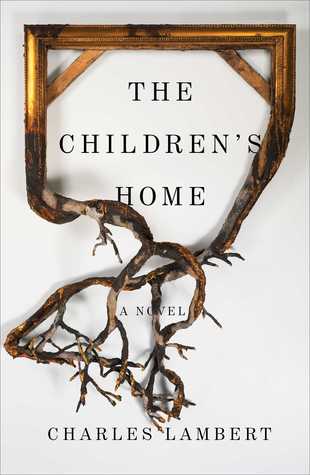
The Children's Home by Charles Lambert (ARC)
This book was intensely frustrating. It was an interesting read, that's for sure, but it was also really frustrating. Also, I'm not really seeing the resemblance to Neil Gaiman and Roald Dahl. Again, it's not that the book is bad, but I'm not seeing it.The Children's Home is sort about Morgan, although it might also be about the mysterious children that he picks up. Morgan used to be handsome (his own words), but after a terrible accident that isn't really an accident, he's now disfigured. Living alone, with a housekeeper that he thinks his sister sent, he's secluded from the world. But as the children come, he starts to open up, and lets more people into his life, including his new friend, Dr. Crane. But the children are not normal, and they're looking for something.
One thing about this book that frustrated me was that I never knew what was going on. I'm used to having at least a handle on the plot, so not knowing why things were happening, and who exactly these children were was frustrating. Things are somewhat explained at the end, but not enough to feel satisfying.
By the way, if you're like me and like to jump to the end of the book and spoiler yourself so you can then relax and enjoy the journey, don't bother. You have to read this book from the start to the end if you want to understand what's going on. I guess it's good training for me - must not rush.
I guess the good thing about this book is that it's unsettling. Something is wrong, and that sense of unease is carried out throughout the whole book - is that what they meant by the comparison to Roald Dahl? To his short stories and not his longer works? But I think I understood Roald Dahl a bit more.
All in all, this is a short, strange little book. It's a bit unsettling, and after reading it, I'm still not sure what a lot of the book is about. It's not bad, per se, but it didn't wow me.
Disclaimer: I got a free copy of this book from the publisher via NetGalley in exchange for a free and honest review.
Monday, July 21, 2014
The Frozen Dead by Bernard Minier
Why would the police investigate the murder of a horse? Even if it's a creepy, nightmare inducing murder? Well, if the owner of the horse is rich and influential, you can be sure the police won't have much of a choice. And with that unsettling case where money decides which cases are more important, The Frozen Dead starts.
This book isn't just limited to the murder of a horse though. As Commandant Servaz starts to investigate, people start dying. The more the police find, the more people seem to die. And with more knowledge comes plot twists. The more I read, the more I wondered "who is the criminal?" because all my guesses were wrong.
First written in French, this book is an excellent Police Procedural from France. There are some procedural differences from a normal novel (such as the way cases are investigated), which the book explains in a note in the beginning of the book. Another difference would be cultural difference. Once, a character mentions changing to use "tu" to the judge. This marks a change in their relationship, because "tu" is a more intimate form of "vous", which means "you" in English. I wonder how many of these nuances had to be left out when the book was translated into English.
Wait, that means I really should go learn French. It'll be there, on my "to-do" list of languages.
There are only two things about the book that I wasn't happy about. The first was the ending, in which one of the characters was revealed to have this big secret (unrelated to the case) which I didn't see coming and frankly, thought was a bit unbelievable. The second would be that a case mentioned in the beginning (the murder of a homeless man by three boys) as a contrast to the horse case seemed to be neglected and then forgotten about by the book. I would have liked to know how the case ended, and if proper justice was given.
All in all, this is a well-written police procedural. It's interesting, there are twists and turns, and generally, the characters are well thought out.
Disclaimer: I got this book free from the publisher via NetGalley in exchange for a free and honest review.
This book isn't just limited to the murder of a horse though. As Commandant Servaz starts to investigate, people start dying. The more the police find, the more people seem to die. And with more knowledge comes plot twists. The more I read, the more I wondered "who is the criminal?" because all my guesses were wrong.
First written in French, this book is an excellent Police Procedural from France. There are some procedural differences from a normal novel (such as the way cases are investigated), which the book explains in a note in the beginning of the book. Another difference would be cultural difference. Once, a character mentions changing to use "tu" to the judge. This marks a change in their relationship, because "tu" is a more intimate form of "vous", which means "you" in English. I wonder how many of these nuances had to be left out when the book was translated into English.
Wait, that means I really should go learn French. It'll be there, on my "to-do" list of languages.
There are only two things about the book that I wasn't happy about. The first was the ending, in which one of the characters was revealed to have this big secret (unrelated to the case) which I didn't see coming and frankly, thought was a bit unbelievable. The second would be that a case mentioned in the beginning (the murder of a homeless man by three boys) as a contrast to the horse case seemed to be neglected and then forgotten about by the book. I would have liked to know how the case ended, and if proper justice was given.
All in all, this is a well-written police procedural. It's interesting, there are twists and turns, and generally, the characters are well thought out.
Disclaimer: I got this book free from the publisher via NetGalley in exchange for a free and honest review.
Wednesday, July 2, 2014
The End of Innocence by Allegra Jordan
This is rather off-topic, but when I first saw this title, I was reminded of another book. It wasn't until I finished the book that I remembered - The Age of Innocence by Edith Wharton. However those two books are nothing alike, although they do involve love and relationships.
In The End of Innocence, Helen Brooks is struggling to find her place in male-dominated Harvard. At the same time, Wils, a German noble (who's talented at poetry) is struggling to survive an increasingly anti-German American society. When the two of them meet, they fall in love. Complicating matters would be that Wils's cousin Riley, who also falls in love with Helen.
Personally, I loved the first part of the novel. The ending and later half? Not so much. While the current ending is definitely more realistic than the one I was hoping for, I felt as though the book ended, and a new book began. I can't talk about specifics without giving away spoilers, but I think it would be obvious where the new section began.
As for the characters, I think Wils was my favourite. His chapters were very well-written, and I was rooting for him from the start. As for Helen, I'm neutral towards her. I think that I didn't completely understand her character (especially at the end, because it seems different from how she was portrayed at the start), but I'm guessing most people will like her. These are the two main characters, and the other characters just feel like background characters to me.
But what I really liked about the book was how it explored issues such as women in higher education and American neutrality in the war. The second issue is definitely what drives this novel forward, and the book really opened my eyes. I remember reading about how Japanese-Americans were treated in World War II (Kira kira anyone?), but this is the first I've read about Germans in America during World War I.
All in all, this is a pretty good World War I novel. I like how it covers issues such as America's neutrality in the war. The main characters are well-written, and it's definitely an enjoyable novel.
Disclaimer: I received a free galley from the publisher via NetGalley in exchange for a free and honest review.
In The End of Innocence, Helen Brooks is struggling to find her place in male-dominated Harvard. At the same time, Wils, a German noble (who's talented at poetry) is struggling to survive an increasingly anti-German American society. When the two of them meet, they fall in love. Complicating matters would be that Wils's cousin Riley, who also falls in love with Helen.
Personally, I loved the first part of the novel. The ending and later half? Not so much. While the current ending is definitely more realistic than the one I was hoping for, I felt as though the book ended, and a new book began. I can't talk about specifics without giving away spoilers, but I think it would be obvious where the new section began.
As for the characters, I think Wils was my favourite. His chapters were very well-written, and I was rooting for him from the start. As for Helen, I'm neutral towards her. I think that I didn't completely understand her character (especially at the end, because it seems different from how she was portrayed at the start), but I'm guessing most people will like her. These are the two main characters, and the other characters just feel like background characters to me.
But what I really liked about the book was how it explored issues such as women in higher education and American neutrality in the war. The second issue is definitely what drives this novel forward, and the book really opened my eyes. I remember reading about how Japanese-Americans were treated in World War II (Kira kira anyone?), but this is the first I've read about Germans in America during World War I.
All in all, this is a pretty good World War I novel. I like how it covers issues such as America's neutrality in the war. The main characters are well-written, and it's definitely an enjoyable novel.
Disclaimer: I received a free galley from the publisher via NetGalley in exchange for a free and honest review.
Labels:
ARC
,
fiction
,
historical
,
NetGalley
,
western
Monday, June 23, 2014
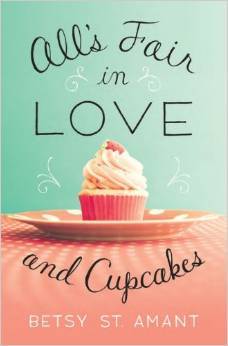
All's Fair in Love and Cupcakes by Betsy St. Amant
This was a pretty cute read. Like the title indicates, this is about cupcakes and love.
Kat bakes for her aunt's cupcake shop Sweetie Pies. But while she yearns to make gourmet/"weird" cupcakes, she's restricted to chocolate, vanilla and strawberry. One day, her best friend/crush Lucas enters her in a TV show called Cupcake Combat - the grand prize? A year's internship at Bloom, a prestigious bakery. When she gets chosen, Kat drags Lucas along as her assistant. Will Kat win? And what about her relationship with Lucas?
Ok, this was a fairly cute book. Because the book has two narrators (Kat and Lucas), the romance angle was less suspense and more "I want to knock some sense into the two of them". The dual narrators also work well for the cupcake contest angle, which is arguably the main plot of the book (but looking at the characters angst over each other, it's a bit hard to tell).
Personally, I'm conflicted over this book. I liked the cupcake contest storyline, and the love story wasn't too bad (remember, I'm not a big fan of love stories), but I felt like the book handled certain aspects of the story really badly.
One aspect would be Kat's relationship with her family. Throughout the whole book, Kat is stifled and criticised by her family. Yet the problem "magically" goes away at the end of the book. Or does it? Are these relationship problems solved, or are they just postponed till a later date? The fact that there are no confrontations, no acknowledgement of previous hurts, no sense of starting afresh makes me wonder why Kat's relationship with her family was ever mentioned if this angle wasn't going to be developed.
Side note: On a related issue, I'm very unconvinced by Kat's sudden about turn about her feelings towards her hometown. After yearning to leave for so many years, her feelings should be pretty strong, yet they were changed in an instant.
Another aspect would be the presence of God in this story. I realised this was a Christian story from the start because I saw that the publisher was Zondervan, but other than that, there was no indication that this book had Christian themes. Until the end, that is. It felt as though the author crammed in a mention of God so that He would be there. Personally, it feels a bit forced to me,.
In conclusion, this is an okay book. The main plots were fairly well-written, but a few loose ends kept this book from being awesome.
Disclaimer: I got a free copy of this book from the publishers via NetGalley in exchange for a free and honest review.
Kat bakes for her aunt's cupcake shop Sweetie Pies. But while she yearns to make gourmet/"weird" cupcakes, she's restricted to chocolate, vanilla and strawberry. One day, her best friend/crush Lucas enters her in a TV show called Cupcake Combat - the grand prize? A year's internship at Bloom, a prestigious bakery. When she gets chosen, Kat drags Lucas along as her assistant. Will Kat win? And what about her relationship with Lucas?
Ok, this was a fairly cute book. Because the book has two narrators (Kat and Lucas), the romance angle was less suspense and more "I want to knock some sense into the two of them". The dual narrators also work well for the cupcake contest angle, which is arguably the main plot of the book (but looking at the characters angst over each other, it's a bit hard to tell).
Personally, I'm conflicted over this book. I liked the cupcake contest storyline, and the love story wasn't too bad (remember, I'm not a big fan of love stories), but I felt like the book handled certain aspects of the story really badly.
One aspect would be Kat's relationship with her family. Throughout the whole book, Kat is stifled and criticised by her family. Yet the problem "magically" goes away at the end of the book. Or does it? Are these relationship problems solved, or are they just postponed till a later date? The fact that there are no confrontations, no acknowledgement of previous hurts, no sense of starting afresh makes me wonder why Kat's relationship with her family was ever mentioned if this angle wasn't going to be developed.
Side note: On a related issue, I'm very unconvinced by Kat's sudden about turn about her feelings towards her hometown. After yearning to leave for so many years, her feelings should be pretty strong, yet they were changed in an instant.
Another aspect would be the presence of God in this story. I realised this was a Christian story from the start because I saw that the publisher was Zondervan, but other than that, there was no indication that this book had Christian themes. Until the end, that is. It felt as though the author crammed in a mention of God so that He would be there. Personally, it feels a bit forced to me,.
In conclusion, this is an okay book. The main plots were fairly well-written, but a few loose ends kept this book from being awesome.
Disclaimer: I got a free copy of this book from the publishers via NetGalley in exchange for a free and honest review.
Labels:
ARC
,
Christianity
,
fiction
,
NetGalley
,
western
Thursday, June 19, 2014
In the Field of Grace by Tessa Afshar
Thankfully, In The Field of Grace managed to put my doubts to rest. It's a well-written re-telling of the story of Ruth, from the point of the Ruth herself. If you've read the Bible before, you'd be familiar with the basic story of Ruth, a woman who left her homeland to follow her mother-in-law to a foreign country, cared for her and eventually married the prosperous Boaz and became an ancestor of King David. In The Field of Grace takes this story and adds more detail: What was their journey like? How did Ruth and Boaz fall in love (They did fall in love right?)? Who wrote the book of Ruth?
By the way, the author admits that the plot involving who wrote the book of Ruth is all a product of her imagination, and she is by no means trying to assert this as truth. The afterword of this book, which talks about the inspiration behind the book, and contains explanation of certain parts, should definitely be read after the story.
What I liked about this story was that throughout the whole book, there is the sense that Ruth is being called by God. It's a powerful reminder that God loves all of us, and he can use even the most unlikely "outsider" for his purposes.
The strength of this book is that it makes you feel the trials and tribulations of Ruth very deeply. Through the imagination of the author, I managed to understand how hard it must have been for Ruth to leave her country and move to Israel, where she would be ostracised as an outsider. The bitterness of Naomi was also powerfully written, and I could feel her pain when she called for her friends to call her "Mara".
All in all, this is a wonderful retelling of Ruth. While a lot of artistic license has been taken (after all, the book goes into Ruth's friendships in Israel, which is definitely not in the original book of the Bible), the book stays faithful to the spirt of the original book.
Disclaimer: I got a free copy of this book from the publisher via NetGalley in exchange for a free and honest review.
Labels:
ARC
,
Christianity
,
fiction
,
NetGalley
Monday, May 5, 2014
Roald Dahl and Philosophy edited by Jacob M. Heid
I think most kids read Roald Dahl. Well, I'm not sure about kids today, but when I was a kid, everyone was reading Roald Dahl. Him and Enid Blyton. But today, I want to talk about Roald Dahl.
Roald Dahl was the guy that wrote Charlie and the Chocolate Factory. And Matilda. And well, a bunch of other stuff, including the short stories that I only discovered when I grew up (and that's a good thing because his short stories are dark). The whole premise of this book is that Roald Dahl's books are excellent material to use when talking about philosophy because of that element of darkness in the books. After all, all this books start of with people in dire straits - Charlie is starving to death, Matilda is neglected and abused, James is an orphan abused by his guardians, etc.
Topics in this book include:
- Matilda, Existentialist Superhero
- Of Mice and (Posthu)Man: Roald Dahl's The Witches and Ethics beyond Humanism
- Matilda and the Philosophy of Education: or, What's an Education for?
- Shattering the Glass Elavator: Authencity and Social Order in the Works of Roald Dahl
- The Fantasically Just Mr. Fox: Property and Distributive Justice According to Foxes and Other diggers
and so on. There is a total of 16 topics in this book. Some are easier to digest than others, but on the whole, if you're familiar with Roald Dahl, you should be able to understand what the authors are talking about,
My favourite chapter is Matilda and the Philosophy of Education: or, What's an Education for? In this chapter, three schools of education - essentialism, progressivism and romanticism is examined through the book Matilda and its various characters. I admit, it's not the first topic that comes to mind when I think of Matilda (I think of bullying when I think of this book - bullying by adults), but I found this to be an eye-opening read.
I'm definitely saving up for a hard-copy of this book.
Disclaimer: I got a free copy of this book from the publisher via NetGalley in exchange for a free and honest review.
Roald Dahl was the guy that wrote Charlie and the Chocolate Factory. And Matilda. And well, a bunch of other stuff, including the short stories that I only discovered when I grew up (and that's a good thing because his short stories are dark). The whole premise of this book is that Roald Dahl's books are excellent material to use when talking about philosophy because of that element of darkness in the books. After all, all this books start of with people in dire straits - Charlie is starving to death, Matilda is neglected and abused, James is an orphan abused by his guardians, etc.
Topics in this book include:
- Matilda, Existentialist Superhero
- Of Mice and (Posthu)Man: Roald Dahl's The Witches and Ethics beyond Humanism
- Matilda and the Philosophy of Education: or, What's an Education for?
- Shattering the Glass Elavator: Authencity and Social Order in the Works of Roald Dahl
- The Fantasically Just Mr. Fox: Property and Distributive Justice According to Foxes and Other diggers
and so on. There is a total of 16 topics in this book. Some are easier to digest than others, but on the whole, if you're familiar with Roald Dahl, you should be able to understand what the authors are talking about,
My favourite chapter is Matilda and the Philosophy of Education: or, What's an Education for? In this chapter, three schools of education - essentialism, progressivism and romanticism is examined through the book Matilda and its various characters. I admit, it's not the first topic that comes to mind when I think of Matilda (I think of bullying when I think of this book - bullying by adults), but I found this to be an eye-opening read.
I'm definitely saving up for a hard-copy of this book.
Disclaimer: I got a free copy of this book from the publisher via NetGalley in exchange for a free and honest review.
Labels:
ARC
,
non-fiction
,
philosophy
,
western
Monday, April 21, 2014
The Butterfly and the Violin by Kirsty Cambron
This book's not coming out for another two months or so, but I'm giving you an early review so you know whether you should pre-order the book or not.
The Butterfly and the Violin follows Sera James, an art gallery owner obsessed with finding a painting she once saw as a child; and Adele Von Bron, a famous Viennese violinist who gets arrested by the Nazis for hiding the Jews. The two stories are connected by that one painting and yes, there is a love interest for both girls (although Sera's love story was much more prominent).
To be honest, I basically read the book for Adele's side of the story. Sera had an interesting plot, but for some reason, I wasn't drawn in. Perhaps its because the impact her past had on her didn't impact me as strongly - what happened to her was terrible, but by skipping over it (and key events), I felt distanced.
On the other hand, I was fully engaged in Adele's story. It helped that it wasn't totally a love story, well, it was, but it had familial (the kind of family that isn't bound by blood but you don't choose either) and romantic love. And of course, the music.
I would have been happier if this book focused only on Adele and fleshed out her story more. Or, if the dual-plotline was important, expanded the book by fleshing out both Sera and Adele's plots. Because while Adele's side of the story was very well-written (although a bit short for my liking), I felt that Sera's side of the story was rather rushed.
All in all though, this is a good book. It was absorbing and moving. It's length makes it a quick read, although I think that with its subject matter, it's not a fluffy book that you'd want to take to the beach. It's more of a book that you curl up with.
Disclaimer: I received a free copy of this book from the publisher via NetGalley in exchange for a free and honest review.
The Butterfly and the Violin follows Sera James, an art gallery owner obsessed with finding a painting she once saw as a child; and Adele Von Bron, a famous Viennese violinist who gets arrested by the Nazis for hiding the Jews. The two stories are connected by that one painting and yes, there is a love interest for both girls (although Sera's love story was much more prominent).
To be honest, I basically read the book for Adele's side of the story. Sera had an interesting plot, but for some reason, I wasn't drawn in. Perhaps its because the impact her past had on her didn't impact me as strongly - what happened to her was terrible, but by skipping over it (and key events), I felt distanced.
On the other hand, I was fully engaged in Adele's story. It helped that it wasn't totally a love story, well, it was, but it had familial (the kind of family that isn't bound by blood but you don't choose either) and romantic love. And of course, the music.
I would have been happier if this book focused only on Adele and fleshed out her story more. Or, if the dual-plotline was important, expanded the book by fleshing out both Sera and Adele's plots. Because while Adele's side of the story was very well-written (although a bit short for my liking), I felt that Sera's side of the story was rather rushed.
All in all though, this is a good book. It was absorbing and moving. It's length makes it a quick read, although I think that with its subject matter, it's not a fluffy book that you'd want to take to the beach. It's more of a book that you curl up with.
Disclaimer: I received a free copy of this book from the publisher via NetGalley in exchange for a free and honest review.
Labels:
ARC
,
Christianity
,
fiction
,
historical
,
western
Monday, March 24, 2014
Reading Style: A Life in Sentences by Jenny Davidson
I think all of us have experienced this before. Sometimes, when we're reading, we come across a passage that moves us, even though we don't know why. While there are many many passages, there's one quote that moved an entire cohort:
So it was with great excitement that I started reading Reading Style: A Life in Sentences. This book is about examining how style impacts writing and it's emotional impact on the reader. Through a wide range of authors, from Anthony Burgess to George Eliot, Austen and even Stephen King, the author explores writing style. What makes this book different from a normal literary textbook is that the author's reading life and the impact these books have had on her is a focus of this book.
What I liked about this book is that the author doesn't claim to be The Authority when it comes to literature. She says that "it would be absurd to construe my preferences as objective verdicts on the respective merits of those two [books]". I heartily concur with this.
However, I found this book a bit hard to understand. Sometimes I don't know what the author is saying or why she finds it beautiful, but the passage is beautiful it makes me want to cry because I want to know more. Also, it makes me feel stupid that I have no idea what's going on. Of course, this is probably because I haven't touched literature in two years and even when I was studying literature, I found things like "theme" and "character" easier to understand than "diction".
If you're a literature student (or have some knowledge of literature) wanting to go deeper into writing style, this is the book for you. If you're a casual reader, well, it's worth picking up this book, but don't expect to be able to breeze through it.
Disclaimer: I got a free copy from the publisher via Netgalley in exchange for a free and honest review.
"I'm seventeen and I'm crazy. My uncle says the two always go together. When people ask your age, he said, always say seventeen and insane." (Fahrenheit 451 by Ray Bradbury)It's probably because we read this book while we were sixteen, but it impacted us more than what a school book normally would. I think it taught us that it's ok, normal even, to be very different from the norm.
So it was with great excitement that I started reading Reading Style: A Life in Sentences. This book is about examining how style impacts writing and it's emotional impact on the reader. Through a wide range of authors, from Anthony Burgess to George Eliot, Austen and even Stephen King, the author explores writing style. What makes this book different from a normal literary textbook is that the author's reading life and the impact these books have had on her is a focus of this book.
What I liked about this book is that the author doesn't claim to be The Authority when it comes to literature. She says that "it would be absurd to construe my preferences as objective verdicts on the respective merits of those two [books]". I heartily concur with this.
However, I found this book a bit hard to understand. Sometimes I don't know what the author is saying or why she finds it beautiful, but the passage is beautiful it makes me want to cry because I want to know more. Also, it makes me feel stupid that I have no idea what's going on. Of course, this is probably because I haven't touched literature in two years and even when I was studying literature, I found things like "theme" and "character" easier to understand than "diction".
If you're a literature student (or have some knowledge of literature) wanting to go deeper into writing style, this is the book for you. If you're a casual reader, well, it's worth picking up this book, but don't expect to be able to breeze through it.
Disclaimer: I got a free copy from the publisher via Netgalley in exchange for a free and honest review.
Labels:
ARC
,
literature
,
non-fiction
,
western
Thursday, March 6, 2014
White Hart by Sarah Dalton
Nooooo, I need the next book now!That was basically my reaction to the ending of White Hart.
Wait, let me go back to the beginning. In White Hart, Mae is the only one in her generation to be craft-born. And guess what? The lucky craft-born gets to marry the heir to the throne. But Mae doesn't want to marry the Prince (though she has never met him) and so, she's relieved when Ellen, a girl from her village, manages to trick everyone into thinking that she was craft-born.
But unfortunately, through a really unfortunate incident, her father is killed and Ellen kidnapped. And so, Mae goes into the enchanted Waerg Wood with her white stag Anta (how cool is that?) and the Casimir, the prince.
My favourite character was definitely Mae. She grows a lot in the novel, and I could see her change from a hot-headed and rather vicious young lady (if you read how she treated Sasha at first you'll understand) to a well, she's still hot-headed, but she's also rather self-sacrificial and really nice. The only thing I didn't understand about her was why she fell in love with Casimir. I mean, one moment their sniping and each other and the next, she likes him? Personally, I hope that she finds someone way better in the next book.
Which brings me to the ending. At the ending I was all... WHY IS MAE SO NICE?!?! and I NEED THE NEXT BOOK!
What this novel has going for it is that it's addictive and it has a great protagonist. It's weaknesses are the cliched "I like him but he doesn't like me" and a few personality changes in characters that don't make sense. For example. Sasha and Ellen's sudden friendship with Mae. But overall, I loved this book.
Ok, so now I'm conflicted. I don't know whether I should recommend you buy the book now (it just came out yesterday after all) and have you suffer the agony of the cliff hanger, or whether I should tell you to wait for the next book.
Wait... Good cliffhanger = higher chance of fanfiction. Ok, everyone go buy it, read it and write some fanfiction!
Disclaimer: I got a free copy of this book from the publisher via NetGalley in exchange for a free and honest review.
Wednesday, February 19, 2014
You Are The Music by Victoria Williamson
Here's the thing, while I've been taking piano lessons since kindergarten (although I stopped for about 3 years from age 12-15), I'm a lousy piano player. Very very lousy. So, I've always wondered, did these music lessons even help? Well, the answer is, probably. But not that much.
You Are The Music is supposed to explain music to the layman. Or rather, "to read this book requires no expert knowledge of or training in music, psychology, brain science, or any other kind of academic discipline." And that's mostly true. There were some (brain science) parts that I didn't quite understand, but for the most part, the book was easy to understand.
The book is divided into three sections. The first looks at the impact of music on childhood development, the second looks at how music affects the brain, what it's like to struggle with music, and how it impacts working life. The third section looks at music memory and how music can be used to support health and well-being at all life-stages.
Without a doubt, my favourite section was the first section, followed by the second section. For some reason, I had some trouble understanding the third section.
One of the things that I took from this book was the discussion about music and work (in my case, studying). I've always found it difficult to study without music. The only thing is that the music should be (preferably) in a language different from the one that I'm studying in (i.e. it becomes background music).
If you're looking to study more about music, I think this is a good introduction book because the author helpfully summarises different research studies and explains what they mean. And it's interesting, so if you have an interest in music, you should consider reading this.
Disclaimer: I got a free copy of this book from the publisher via NetGalley in exchange for a free and honest review.
You Are The Music is supposed to explain music to the layman. Or rather, "to read this book requires no expert knowledge of or training in music, psychology, brain science, or any other kind of academic discipline." And that's mostly true. There were some (brain science) parts that I didn't quite understand, but for the most part, the book was easy to understand.
The book is divided into three sections. The first looks at the impact of music on childhood development, the second looks at how music affects the brain, what it's like to struggle with music, and how it impacts working life. The third section looks at music memory and how music can be used to support health and well-being at all life-stages.
Without a doubt, my favourite section was the first section, followed by the second section. For some reason, I had some trouble understanding the third section.
One of the things that I took from this book was the discussion about music and work (in my case, studying). I've always found it difficult to study without music. The only thing is that the music should be (preferably) in a language different from the one that I'm studying in (i.e. it becomes background music).
If you're looking to study more about music, I think this is a good introduction book because the author helpfully summarises different research studies and explains what they mean. And it's interesting, so if you have an interest in music, you should consider reading this.
Disclaimer: I got a free copy of this book from the publisher via NetGalley in exchange for a free and honest review.
Labels:
ARC
,
music
,
NetGalley
,
non-fiction
Subscribe to:
Comments
(
Atom
)


