This is another one of those "saw in the library and had to borrow it" sort of books. And after reading it, well, I want my own copy.
Unlike the previous ninja-related book I read, The Kouga Ninja Scrolls, Samurai and Ninja is neither a novel, nor does it take an idealistic/unrealistic view of ninja/samurai. Instead, the book tries to strip away the misconceptions that most of us hold about these two groups of warriors, and tries to give us an accurate picture of what they are.
The book is broken into four parts. The first part basically just tries to get rid of all those mistaken impressions we've gotten from movies and books (like the Kouga Ninja Scrolls, I suppose). The second and third parts, which actually make up the bulk of the book, focus on the samurai and ninja respectively. The last part is about how the author is trying to resurrect the samurai and ninja school Natori-ryu.
It sounds weird, but what convinced me that the author knows his stuff is was how he kept trying to avoid generalisations. Apart from the fact that samurai and ninja changed as time went on, he also took great pains to emphasise that not all samurai and ninja were the same. Some were richer than others, some were hired in plain sight, and some were hired in secret, etc.
Since I'm not very familiar with the samurai and ninja world, a lot of this was new to me. I found the skills of the ninja interesting, and the translations of the Japanese texts were fascinating (and also, I still can't read them. I guess it's a sign to study ancient Japanese?). But the most surprising thing I learnt was that the samurai were headhunters. And that heads could be used to divine the future. The section of head-hunting was pretty detailed, like how they cut of the head, what they did with it, the five types of heads, etc. I was reading it on the train, so hopefully no one thought I was planning to revive that particular aspect of the samurai.
Basically, this book is very accessible, and I think a really good introduction into the world of samurai and ninja. If I ever write a story featuring them, you can bet that I'll buy this book as reference. Or maybe I'll just buy it because it's interesting.
This review is also published to my other blog: With Love from Japan, Eustacia
Monday, September 7, 2015
Friday, September 4, 2015
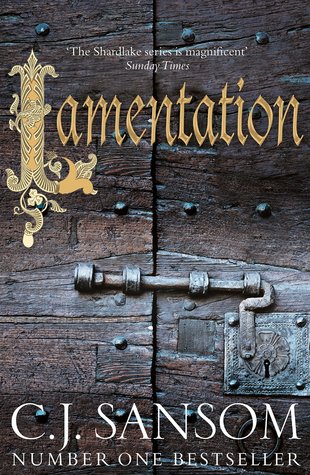
Lamentation by C.J. Sansom
Despite the fact that I don't read that much historical fiction, I felt compelled to borrow this book when I saw it at the library. And thankfully, my bookish instincts did not lead me astray - this book was fantastic, and luckily for me, the library has all the previous books in the series!
So Lamentations is 6th book in the William Shardlake series (I think, according to the covers at the back of the book). William Shardlake is a lawyer, but for some reason, he's always been called to help the great personages of the realm. In this case, it's Queen Catherine, the last wife of Henry VIII. She lost a book she penned, which was shortened to Lamentations in the story (hence the title). This book could, if found and given to the king, could hurt the reformist cause (the Protestants). Since he really likes the Queen (although she doesn't feel the same way), and he was in the Protestant camp in the past, he agrees to help. And thus starts a long and captivating tale of intrigue.
For me, the details and characters in the book were what held my attention. I managed to read the book for long-stretches of time, like a plane ride to Tokyo, and every time I looked up from the book, I felt a bit surprised that I wasn't in olden-time England (good thing though, because it doesn't sound like a nice place to live).
The book had twist after twist. I definitely did not expect the ending, but it felt very plausible to it. And speaking of endings, I thought it brought the current case to a close, but also made me want to read the next book. And the previous books. It's strange, but I want to go back to this world, even though it's full of people who must live tiring lives, always having to plot and backstab and read the wind.
I loved the details in the book, and found the characters to be very realistic. Even though I entered the series halfway, I didn't have any problems connecting to the characters, and look forward to reading more books about them.
So Lamentations is 6th book in the William Shardlake series (I think, according to the covers at the back of the book). William Shardlake is a lawyer, but for some reason, he's always been called to help the great personages of the realm. In this case, it's Queen Catherine, the last wife of Henry VIII. She lost a book she penned, which was shortened to Lamentations in the story (hence the title). This book could, if found and given to the king, could hurt the reformist cause (the Protestants). Since he really likes the Queen (although she doesn't feel the same way), and he was in the Protestant camp in the past, he agrees to help. And thus starts a long and captivating tale of intrigue.
For me, the details and characters in the book were what held my attention. I managed to read the book for long-stretches of time, like a plane ride to Tokyo, and every time I looked up from the book, I felt a bit surprised that I wasn't in olden-time England (good thing though, because it doesn't sound like a nice place to live).
The book had twist after twist. I definitely did not expect the ending, but it felt very plausible to it. And speaking of endings, I thought it brought the current case to a close, but also made me want to read the next book. And the previous books. It's strange, but I want to go back to this world, even though it's full of people who must live tiring lives, always having to plot and backstab and read the wind.
I loved the details in the book, and found the characters to be very realistic. Even though I entered the series halfway, I didn't have any problems connecting to the characters, and look forward to reading more books about them.
Labels:
fiction
,
historical
,
mystery
,
western
Thursday, September 3, 2015
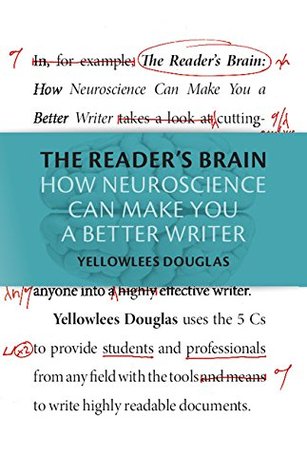
The Reader's Brain by Yellowlees Douglas
I requested this book mainly because it held the promise of being able to make my writing better. While I won't have many opportunities to write academic papers in English (for now), there's always the chance I'll need it for my future job.
Basically, The Reader's Brain is supposed to teach you how to use the 5Cs - clarity, continuity, coherence, concision, and cadence, to write more effectively. The book contains a fair amount of research about how reading works, and provides lots of examples. There'll be an example one (normally the horrible writing), and then an example two, so the reader can see what the author means. At the end of the book is a quick grammar guide.
I admit, I skimmed the parts about reading. I'm not sure why, since that was why I got the book, but it turned out that the parts that interested me the most were probably the expert tips, since they were short and basically summarisations of what the author just said, written in a "how to apply it to writing" format.
What I learnt from the book can be summed up as: use active voice, and put what you want people to remember in the front. And make sure you vary your sentence lengths and structure. So, KISS with an addition of "mix it up now and then".
Oh, and how to identify passive voice. Basically, if you can insert the phrase "by zombies" after the verb and the sentence still makes sense, it's passive voice. So, if I'm applying this right,
"After consuming penicillin, Tim was was healed by zombies" - passive.
"The penicillin healed Tim by zombies" - active voice.
All in all, this book is a clearly written guide on how to improve your non-fiction writing. I like that lots of example were raised, and it seems be be backed up by science. It is, however, not a grammar book, despite the brief guide at the end, so think of this as for the middle-to-advanced writer.
Disclaimer: I got a free copy of this book from the publisher via NetGalley in exchange for a free and honest review.
Basically, The Reader's Brain is supposed to teach you how to use the 5Cs - clarity, continuity, coherence, concision, and cadence, to write more effectively. The book contains a fair amount of research about how reading works, and provides lots of examples. There'll be an example one (normally the horrible writing), and then an example two, so the reader can see what the author means. At the end of the book is a quick grammar guide.
I admit, I skimmed the parts about reading. I'm not sure why, since that was why I got the book, but it turned out that the parts that interested me the most were probably the expert tips, since they were short and basically summarisations of what the author just said, written in a "how to apply it to writing" format.
What I learnt from the book can be summed up as: use active voice, and put what you want people to remember in the front. And make sure you vary your sentence lengths and structure. So, KISS with an addition of "mix it up now and then".
Oh, and how to identify passive voice. Basically, if you can insert the phrase "by zombies" after the verb and the sentence still makes sense, it's passive voice. So, if I'm applying this right,
"After consuming penicillin, Tim was was healed by zombies" - passive.
"The penicillin healed Tim by zombies" - active voice.
All in all, this book is a clearly written guide on how to improve your non-fiction writing. I like that lots of example were raised, and it seems be be backed up by science. It is, however, not a grammar book, despite the brief guide at the end, so think of this as for the middle-to-advanced writer.
Disclaimer: I got a free copy of this book from the publisher via NetGalley in exchange for a free and honest review.
Labels:
NetGalley
,
non-fiction
,
writing
Tuesday, September 1, 2015
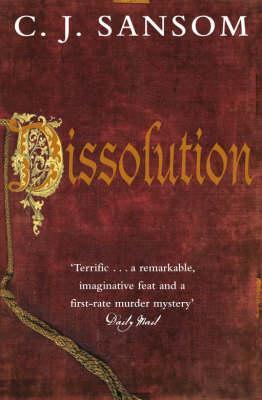
Teaser Tuesday - Dissolution by C.J. Sansom
Hey everyone! I've got my Teaser Tuesday this week, it's from Dissolution, the first in the Matthew Shardlake series. Since I started with Lamentation, which is the latest in the book, the characters here are quite different from the same I encountered. Still enjoying the story though.
Teaser:
Teaser:
"That morning, for all I sat behind the stinking coffin of a murdered man, I found myself lulled along by the monks' beautiful, polyphonic chant. The psalms, and the Latin readings from Job, struck a chord." (page 255)So, what is your teaser this week?
Labels:
fiction
,
historical
,
teaser tuesday
Subscribe to:
Posts
(
Atom
)