Wednesday, May 7, 2014

Conspiracy Theories and Other Dangerous Ideas by Cass R. Sunstein

This book is a series of essays by America's "most cited legal scholar" who has been at the "forefront of applied behavioural economics" for decades. Basically, I picked up this book because of the phrase "behavoural economics", which is a topic I'm interested in.

Basically, this book is about different issues and what the author thinks of them. These issues include:
- Animal rights
- Conspiracy theories and why people believe them
- The second bill of rights
- Climate Change
- Trimming

and more. There are a total of 11 essays in this book.

Personally, I didn't find the essays to be as "inflammatory" as the blurb had me believing. Even for the pieces where I disagreed with the authors stance, I wasn't so much 'inflamed' as 'interested and perhaps mildly amused'.

Why? Because it's easy to see where the author's bias lies. I'm not sure if the author even tried being objective, but I'm assuming that he wrote these essays aware of his various biases and his worldview. Since he has a worldview different from mine, I found it only natural that he and I disagreed over certain issues.

My favourite essay has got to be the one about Trimming. I've never heard of the term before, and I found this essay to be entertaining and informative.

If you're looking for an opinionated but not that in-your-face sort of book, you should consider giving this book a go. I wouldn't call it "factual", but it is good to read different opinions every now and then.

Disclaimer: I got a free copy of this book from the publisher via NetGalley in exchange for a free and honest review.

Tuesday, May 6, 2014

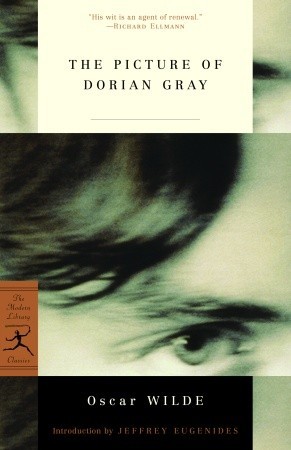
The Picture of Dorian Grey by Oscar Wilde

I think everyone knows this story. I'm pretty sure that even before I read this book, I've already read an abridged version. So we all know how it goes, pretty boy makes a wish to never grow old so his picture grows old instead. Eventually, he stabs the picture and turns into the hideous old man that he really is.

But when I read it, I was struck by one thing: that Dorian Grey isn't the real monster here. And when I thought about the book, I realised another thing: this book really is timeless.

So, thing one - Dorian Grey isn't the real monster. Although Dorian Grey does a lot of terrible thing, like driving a woman to suicide, he was actually a normal, if rather self-centered human, before the whole mess started. The one who corrupted him, and in my view is the real monster, would be Lord Henry. And if you think about it, Dorian Grey does eventually realise his faults, while Lord Henry doesn't. He is the real monster here, because of his influence on Dorian, and his lack of realisation of his sins. In fact, I feel that his role in the novel is rather ambiguous - does his lack of punishment for his sins mean that his philosophy is condoned? The contrast between him and Dorian suggest that the book's message is that the self-awareness of our sins is the real evil. The awareness of the state of his soul is, at the very least, what drove Dorian to his unhappy end.

And then thing two - This book is timeless. We live in a society that's ever increasing obsessed with how we look. If you're pretty and look innocent, you can be excused for a multitude of sins, just like Dorian Grey. Sure, there will be some people who will judge by actions, but what I've found is that for every controversial personality, part of her/her appeal would be his/her looks. There is an instinct that says "looking innocent = innocent". Even though this book was published over a hundred years ago, it still reflects a society very much like our own.

The Picture of Dorian Grey is a prettily written book that made me ponder for a while. It is also in public domain, so you can download it legally here (this is the manybooks link. There's probably a copy at Project Gutenberg too)

Monday, May 5, 2014

Roald Dahl and Philosophy edited by Jacob M. Heid

I think most kids read Roald Dahl. Well, I'm not sure about kids today, but when I was a kid, everyone was reading Roald Dahl. Him and Enid Blyton. But today, I want to talk about Roald Dahl.

Roald Dahl was the guy that wrote Charlie and the Chocolate Factory. And Matilda. And well, a bunch of other stuff, including the short stories that I only discovered when I grew up (and that's a good thing because his short stories are dark). The whole premise of this book is that Roald Dahl's books are excellent material to use when talking about philosophy because of that element of darkness in the books. After all, all this books start of with people in dire straits - Charlie is starving to death, Matilda is neglected and abused, James is an orphan abused by his guardians, etc.

Topics in this book include:
- Matilda, Existentialist Superhero
- Of Mice and (Posthu)Man: Roald Dahl's The Witches and Ethics beyond Humanism
- Matilda and the Philosophy of Education: or, What's an Education for?
- Shattering the Glass Elavator: Authencity and Social Order in the Works of Roald Dahl
- The Fantasically Just Mr. Fox: Property and Distributive Justice According to Foxes and Other diggers

and so on. There is a total of 16 topics in this book. Some are easier to digest than others, but on the whole, if you're familiar with Roald Dahl, you should be able to understand what the authors are talking about,

My favourite chapter is Matilda and the Philosophy of Education: or, What's an Education for? In this chapter, three schools of education - essentialism, progressivism and romanticism is examined through the book Matilda and its various characters. I admit, it's not the first topic that comes to mind when I think of Matilda (I think of bullying when I think of this book - bullying by adults), but I found this to be an eye-opening read.

I'm definitely saving up for a hard-copy of this book.

Disclaimer: I got a free copy of this book from the publisher via NetGalley in exchange for a free and honest review.

Thursday, May 1, 2014

I am Half-Sick of Shadows by Alan Bradley

When I read a Flavia de Luce book, one thing that I take note of, other than the mystery, would be her relationship with her sisters. After all, our positions are nearly reversed, I'm the oldest sister of the three girls in my family. In this book... do my eyes deceive me? Does Daffy and Feely show some form of emotion besides hate towards Flavia? Could it be that they're not completely heartless? Well, I'll have to continue until I catch up to the latest book (which was the first book I read) in order to find out. Oooh, I can do a re-reading of the latest book too!

Ah... I'm digressing again. As usual, a Flavia de Luce mystery is an extremely enjoyable mystery. Flavia is endearing, and there's the normal new cast of characters where the victim and the murderer come from.

In this mystery, Flavia's home is being rented out to a movie-production company over Christmas due to the ever-increasing strain on their finances. Of course, Flavia manages to endear herself to the famous Phyllis Wyvern, who is our victim in this book. But as usual, there's something wrong with the film company, like some dysfunctional family forced to stay together. So it's no surprise when Phyllis is murdered.

The surprise of this book is that it sets up the stage for the mystery in Book 6. I won't give away spoilers, but you should be on the lookout for hints. Well, not so much hints as conversations that will make sense in The Dead in their Vaulted Arches.

For me, the background of this book (i.e. the characters and their relationships with each other) overshadowed the mystery. It makes sense in a way, since murder is essentially a relationship that went very very wrong. But I find myself more interested in the relationship between Flavia and her sisters, Flavia and Antigone (Inspector Hewitt's wife) and basically Flavia and everybody else. She's such an endearing character.

Oh, and her side project this time is to capture Father Christmas. I actually forgot about this, because the characters took up my attention, but it's another naively ambitious project from our favourite 11 year old sleuth.